Classification
Dinosauria
Clade non classé
›
Theropoda
Clade non classé
›
Neotheropoda
Clade non classé
›
Averostra
Clade non classé
›
Ceratosauria
Sous-ordre
›
Abelisauridae
Famille
›
Brachyrostra
Clade non classé
›
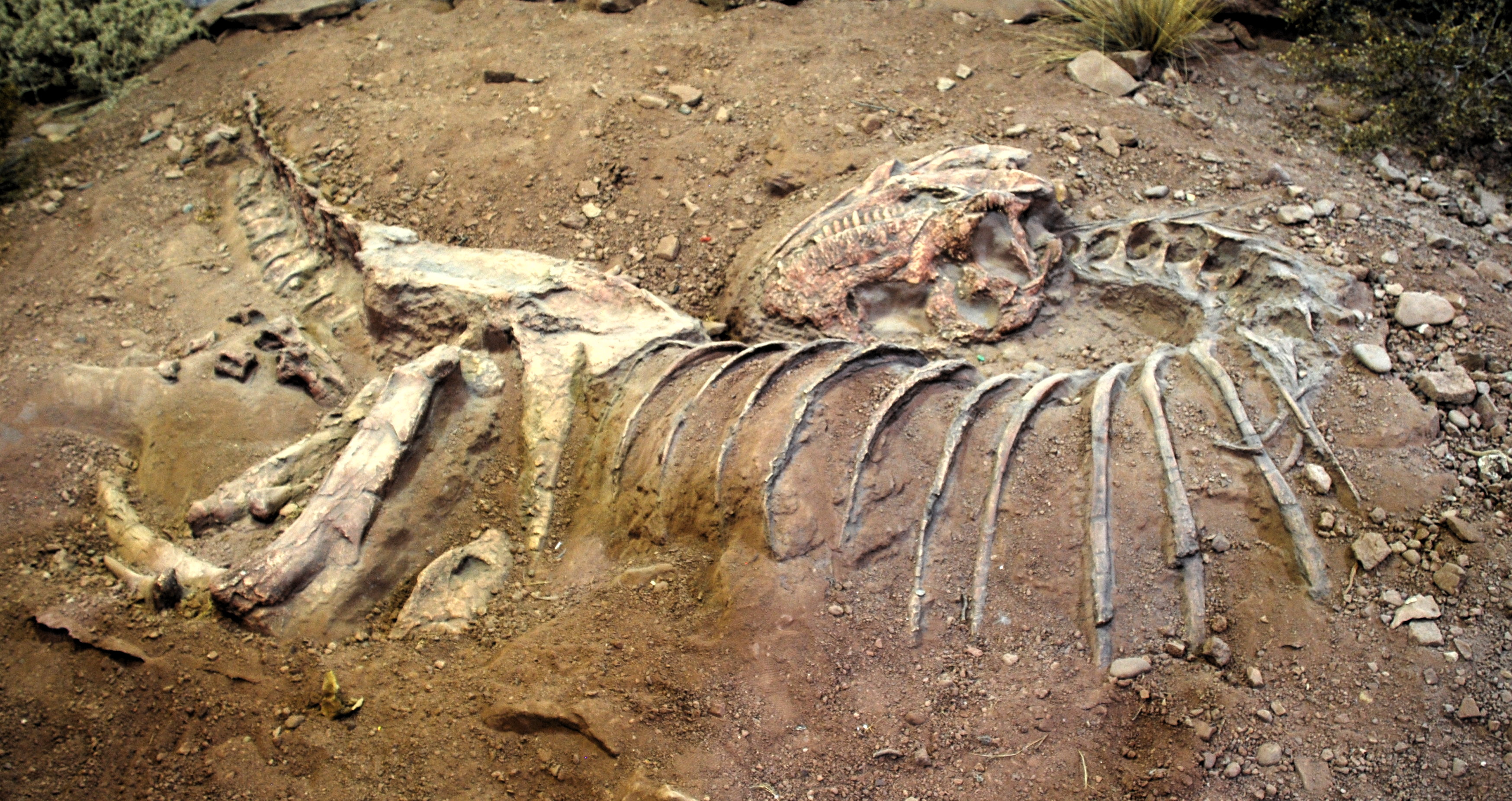
Skorpiovenator
Genre
Sites de découverte 2 sites géolocalisés
Répartition
Espèces (1)
Skorpiovenator bustingorryi
110 Ma
Images 3
Bibliographie
Description originale
J. I. Canale, C. A. Scanferla, and F. L. Agnolín, F. E. Novas. 2008. New carnivorous dinosaur from the Late Cretaceous of NW Patagonia and the evolution of abelisaurid theropods. Naturwissenschaften 96:409-414
DOI ↗
Bibliographie (2)
M. A. Cerroni, M. A. Baiano, and J. I. Canale, F. L. Agnolín, A. Otero, F. E. Novas. 2022. Appendicular osteology of Skorpiovenator bustingorryi (Theropoda, Abelisauridae) with comments on phylogenetic features of abelisaurids. Journal of Systematic Palaeontology 20(1):1–32
DOI ↗
J. I. Canale, C. A. Scanferla, and F. L. Agnolín, F. E. Novas. 2008. New carnivorous dinosaur from the Late Cretaceous of NW Patagonia and the evolution of abelisaurid theropods. Naturwissenschaften 96:409-414
DOI ↗