Period E

Ediacaran

635.0000 – 538.8000 Ma

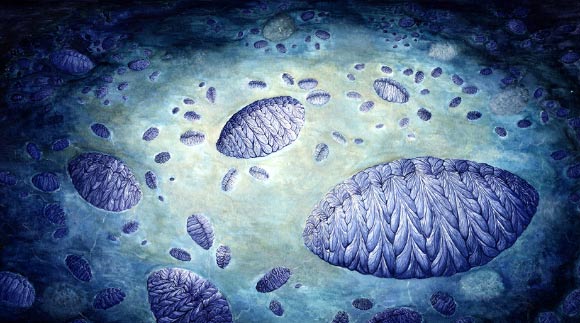
The Ediacaran is a geological period of the Neoproterozoic Era that spans 96 million years from the end of the Cryogenian Period 635 million years ago to the beginning of the Cambrian Period 538.8 million years ago. It is the last period of the Proterozoic Eon as well as the last of the so-called "Precambrian supereon", before the beginning of the subsequent Cambrian Period marks the start of the Phanerozoic Eon, where recognizable fossil evidence of life becomes common.

← Geological time scale
Ediacaran
click to enlarge
© Scotese, Christopher R.; Vérard, Christian; Burgener, Landon; Elling, Reece P.; Kocsis, Ádám T. · CC BY 4.0
News 2
Ediacaran Sea Creature May Hold Earliest Evidence of Right-Handedness
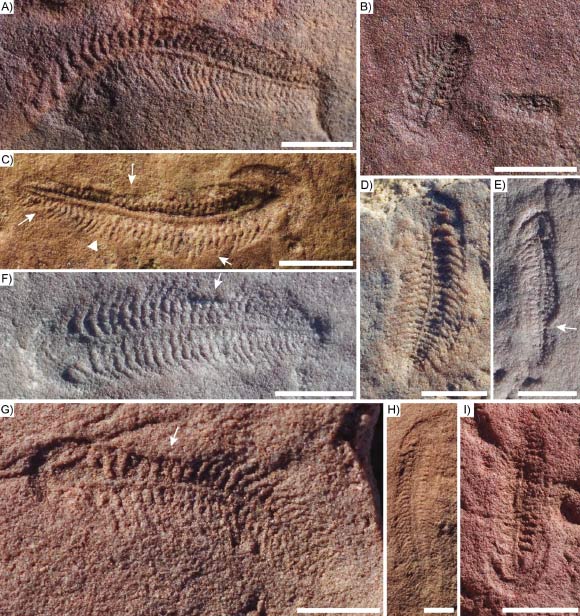
Spriggina floundersi, a marine species that lived during the Ediacaran period 550 million years ago, is one of Earth’s earliest bilaterally symmetrical animals. The post Ediacaran Sea Creature May Hold Earliest Evidence of Right-Handedness appeared first on Sci.News: Breaking Science News.
10/07/2026 sci-news
Earth’s Earliest Animals May Have Thrived Too Easily to Evolve
Fossils from some of the oldest-known animals on Earth, dating from 574 million years ago (Ediacaran period), suggest that cloning, not competition, dominated the Ediacaran seas, slowing evolution until environmental stress helped drive the rise of sexual reproduction and a burst of biodiversity. The post Earth’s Earliest Animals May Have Thrived Too Easily to Evolve appeared first on Sci.News: Breaking Science News.
10/06/2026 sci-news
Parent interval
Neoproterozoic Era