⚠ This taxon is a local entry, absent from the Paleobiology Database. Data may be incomplete or unverified.
Genus
Valid

Invictibellatrix

Morrison et al., 2026

Invictibellatrix is an extinct genus of megaraptoran theropod dinosaur known from the Early Cretaceous Wessex Formation of England. The genus contains a single species, Invictibellatrix amberina, known from a single braincase. Invictibellatrix is estimated to have a body mass between 200–300 kg (440–660 lb) and a body length of around 4 m (13 ft).

Temporal range
Triassic
Jurassic
Cretaceous
Paleogene
Neogene
252 201 145 66 0 Ma
PBDB occurrences
0
Group
Dinosaures
Carnivore
Invictibellatrix
click to enlarge
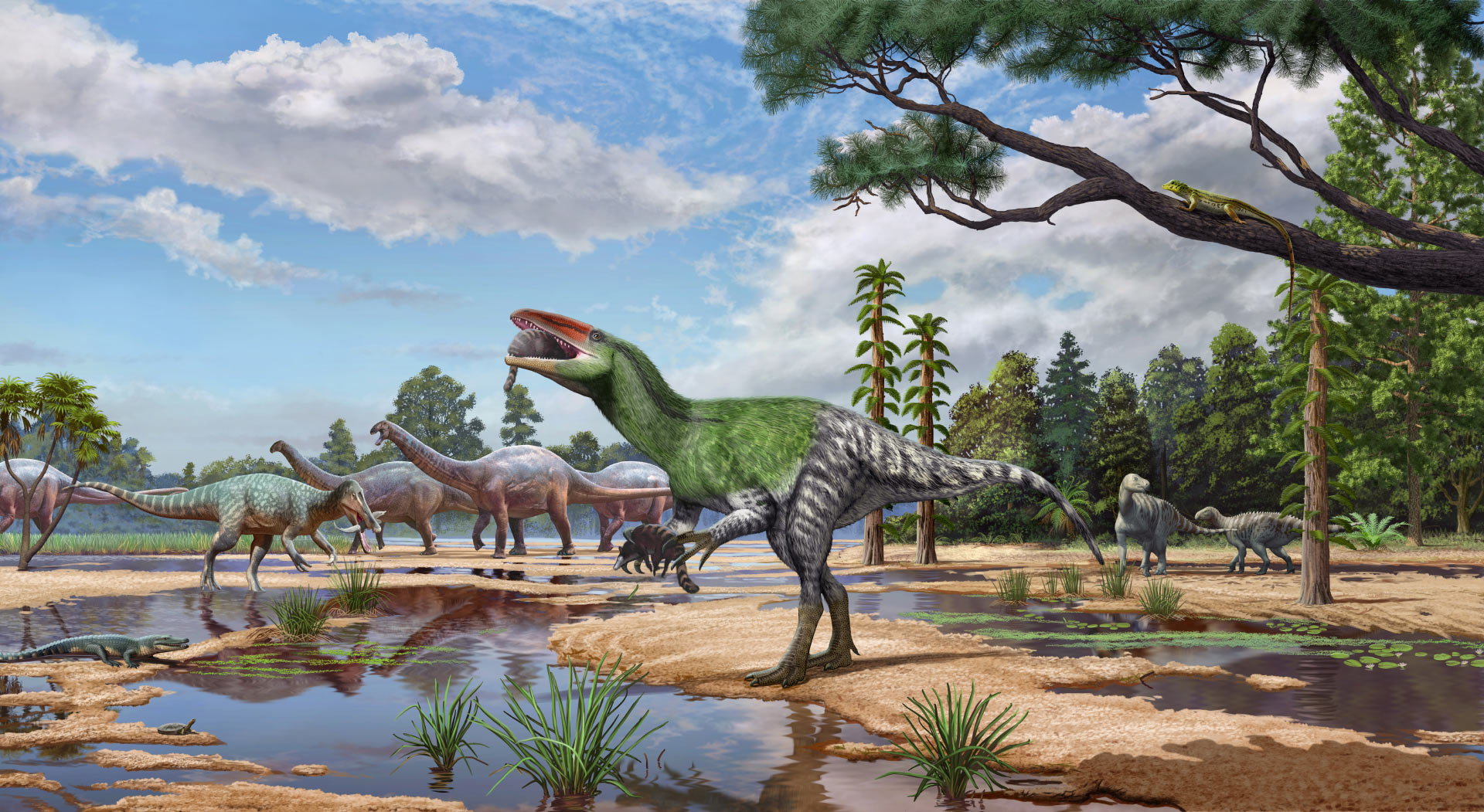
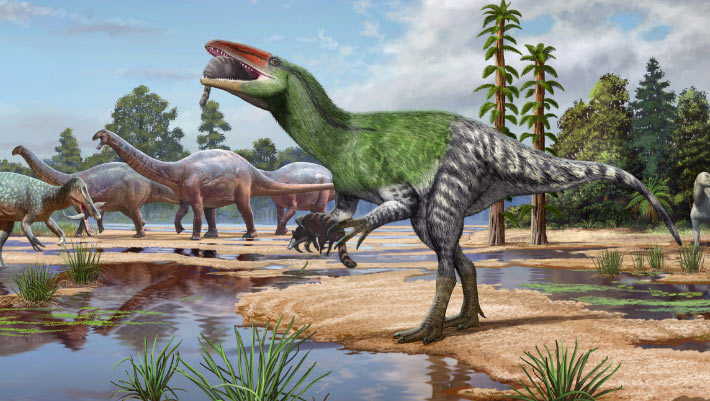
Artists’ rendition of Invictibellatrix amberina with contemporary fauna in the lower part of the Wessex Formation. © Sergey Krasovskiy / Pedro Salas · Other
Invictibellatrix
Invictibellatrix
Invictibellatrix
Invictibellatrix
Invictibellatrix
Invictibellatrix
Invictibellatrix
Wikipedia ↗
Classification
Dinosauria Unranked clade
›
Theropoda Unranked clade
›
Neotheropoda Unranked clade
›
Averostra Unranked clade
›
Tetanurae Unranked clade
›
Coelurosauria Unranked clade
›
Megaraptora Unranked clade
›
Invictibellatrix Genus
News 1
New Species of Predatory Dinosaur Identified in UK
museum United Kingdom Dinosauria Invictibellatrix Megaraptora +1
A fossilized braincase that sat in in the collection of the Natural History Museum in London for a century has been identified as Europe’s first megaraptoran dinosaur, a lineage once thought to have flourished mainly in the southern hemisphere. The post New Species of Predatory Dinosaur Identified in UK appeared first on Sci.News: Breaking Science News.
14/10/2026 sci-news
Images 1
Référence bibliographique
Publication originale
2026 C. Morrison, C. R. Scherer, and P. Mannion, L. B. Porro, B. Clark, D. D. Folkes, P. M. Barrett. 2026. A new megaraptoran dinosaur from the Lower Cretaceous Wessex Formation, UK, and its implications for theropod evolution and biogeography. Royal Society Open Science 13(10):1-33