Genus
Valid Extinct

Kank

Motta et al. 2026

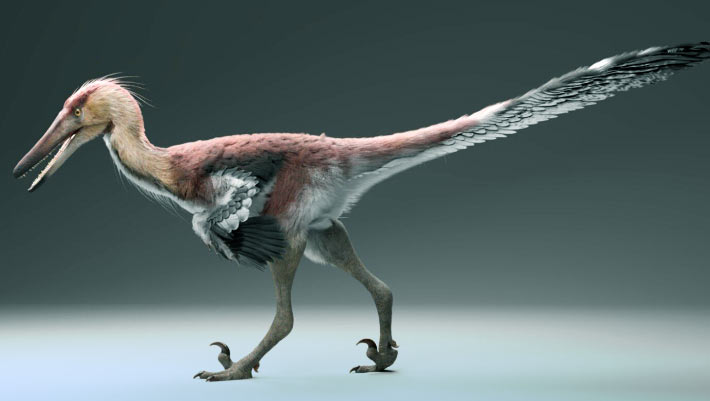
Kank is a genus of paravian dinosaur that belongs to the family Unenlagiidae. It lived in southwestern Patagonia in Argentina during the Maastrichtian age of the Late Cretaceous period.

Temporal range
Triassic
Jurassic
Cretaceous
Paleogene
Neogene
252 201 145 66 0 Ma
PBDB occurrences
2
Group
Dinosaures
Carnivore Ground dwelling, solitary Terrestrial
Kank
click to enlarge
Wikimedia
PBDB Wikipedia
Classification
Dinosauria Unranked clade
Theropoda Unranked clade
Unenlagiidae Family
Kank Genus
Fossil sites 2 geolocated sites
Distribution
Top countries
🇦🇷 Argentina
2
Geological formations
Chorrillo
2
Temporal distribution
Maastrichtian (72.2–66 Ma)
2
Species (1)
Kank australis 72 Ma
News 3
A New Unenlagiid Dinosaur from Patagonia (Argentina)
Argentina Japan Cretaceous Late Cretaceous fossil +6
A team of scientists from Argentina and Japan has described a new species of unenlagiid dinosaur from southern Patagonia. Named Kank australis, this small, theropod dinosaur lived around 70 million years ago during the Late Cretaceous. The fossil remains were discovered in the Chorrillo Formation of Santa Cruz Province, Argentina. The discovery helps palaeontologists better
02/06/2026 everythingdinosaur
New Dinosaur Species from Argentina May Have Specialized in Catching Fish
Argentina Cretaceous Late Cretaceous Dinosauria Kank +1
Paleontologists in Argentina have identified a previously unknown species of unenlagiid dinosaur that stalked freshwater wetlands during the Late Cretaceous epoch, adding to evidence that some dinosaurs specialized in catching fish. The post New Dinosaur Species from Argentina May Have Specialized in Catching Fish appeared first on Sci.News: Breaking Science News.
29/05/2026 sci-news
This newly discovered raptor may have hunted like a giant heron
vertebra predator Dinosauria Kank
A newly discovered raptor-like dinosaur from Patagonia is changing how scientists think about ancient predators. Named Kank australis, the 70-million-year-old dinosaur appears to have hunted fish much like modern herons, using a long, flexible neck and specialized vertebrae adapted for swift, precise movements.
29/05/2026 sciencedaily
Bibliography
Original description
M. J. Motta, A. M. Aranciaga Rolando, and S. Rozadilla, F. L. Agnolín, F. B. Egli, G. P. Álvarez Herrera, N. R. Chimento, G. L. Coco, T. Tsuihiji, M. Manabe, D. Pol, F. E. Novas. 2026. New unenlagiid from the Chorrillo Formation (Late Cretaceous, Maastrichtian), SW Patagonia, Argentina. Journal of Vertebrate Paleontology (e2656456):18 DOI ↗
Bibliography (1)
M. J. Motta, A. M. Aranciaga Rolando, and S. Rozadilla, F. L. Agnolín, F. B. Egli, G. P. Álvarez Herrera, N. R. Chimento, G. L. Coco, T. Tsuihiji, M. Manabe, D. Pol, F. E. Novas. 2026. New unenlagiid from the Chorrillo Formation (Late Cretaceous, Maastrichtian), SW Patagonia, Argentina. Journal of Vertebrate Paleontology (e2656456):18 DOI ↗