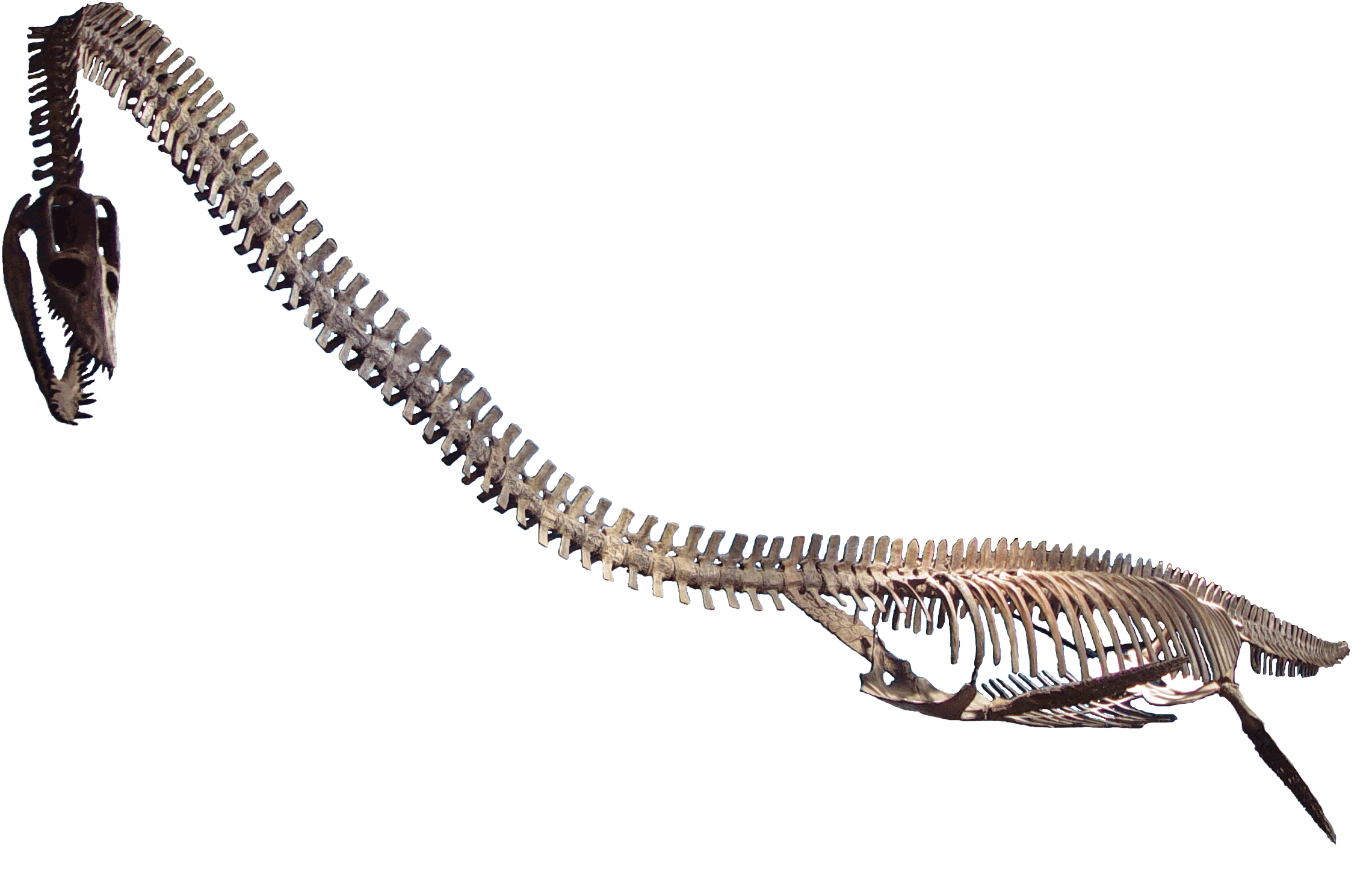
Classification
Sauropterygia
Sous-ordre
›
Plesiosauria
Ordre
›
Plesiosauroidea
Superfamille
›
Elasmosauridae
Famille
›
Weddellonectia
Clade non classé
›
Aristonectinae
Sous-famille
Sites de découverte 33 sites géolocalisés
Répartition
Principaux pays
Formations géologiques
Distribution temporelle
Synonymes (3)
Mauisaurus
nomen dubium Aristonectinae
Mauisaurus haasti
nomen dubium, species not entered Aristonectinae
Tuarangisaurus cabazai
nomen dubium, species not entered Aristonectinae
Images 1
Bibliographie
Description originale
R. A. Otero, S. Soto-Acuña, and D. Rubilar-Rogers. 2012. A postcranial skeleton of an elasmosaurid plesiosaur from the Maastrichtian of central Chile, with comments on the affinities of Late Cretaceous plesiosauroids from the Weddellian Biogeographic Province. Cretaceous Research 37:89-99
DOI ↗
Bibliographie (19)
R. A. Otero. 2025. Review of two marine vertebrate assemblages from the Arauco Basin (central Chile) reveals diversity changes throughout the Maastrichtian. Cretaceous Research 166(78):105996
DOI ↗
R. A. Otero and S. Soto-Acuña. 2021. Wunyelfia maulensis gen. et sp. nov., a new basal aristonectine (Plesiosauria,
Elasmosauridae) from the Upper Cretaceous of central Chile. Cretaceous Research 118:104651
DOI ↗
J. P. O'Gorman, S. Santillana, and R. Otero, M. Reguero. 2019. A giant elasmosaurid (Sauropterygia; Plesiosauria) from Antarctica: New information on elasmosaurid body size diversity and aristonectine evolutionary scenarios. Cretaceous Research 102:37-58
DOI ↗
J. P. O'Gorman, M. Talevi, and M. S. Fernández. 2016. Osteology of a perinatal aristonectine (Plesiosauria; Elasmosauridae). Antarctic Science 29(1):61-72
DOI ↗
R. A. Otero, J. P. O'Gorman, and N. Hiller, F. R. O.'Keefe, R. E. Fordyce. 2016. Alexandronectes zealandiensis gen. et sp. nov., a new aristonectine plesiosaur from the lower Maastrichtian of New Zealand. Journal of Vertebrate Paleontology 36(2):e1054494:1-14
DOI ↗
R. Araujo, M. J. Polcyn, and J. Lindgren, L. L. Jacobs, A. S. Schulp, O. Mateus, A. Olímpio Gonçalves, M.-L. Morais. 2015. New aristonectine elasmosaurid plesiosaur specimens from the Early Maastrichtian of Angola and comments on paedomorphism in plesiosaurs. Netherlands Journal of Geosciences —– Geologie en Mijnbouw 94(1):93-108
DOI ↗
R. A. Otero, S. Soto-Acuña, and C. Salazar, J. L. Oyarzún. 2015. New elasmosaurids (Sauropterygia, Plesiosauria) from the Late Cretaceous of the Magallanes Basin, Chilean Patagonia: Evidence of a faunal turnover during the Maastrichtian along the Weddellian Biogeographic Province. Andean Geology 42(2):237-267
DOI ↗
R. A. Otero, S. Soto-Acuña, and D. Rubilar-Rogers. 2015. El registro fósil de plesiosaurios (Sauropterigia) en Chile. Publicación Ocasional del Museo Nacional de Historia Natural, Chile 63:151-188
R. A. Otero, J. P. O'Gorman, and N. Hiller. 2015. Reassessment of the upper Maastrichtian material from Chile referred to Mauisaurus Hector, 1874 (Plesiosauroidea: Elasmosauridae) and the taxonomical value of the hemispherical propodial head among austral elasmosaurids. New Zealand Journal of Geology and Geophysics 58(3):252-261
DOI ↗
R. A. Otero, S. Soto-Acuña, and F. R. O.'Keefe, J. P. O.'Gorman, W. Stinnesbeck, M. E. Suárez, D. Rubilar-Rogers, C. Salazar, L. A. Quinzio-Sinn. 2014. Aristonectes quiriquinensis sp. nov., a new highly derived elasmosaurid from the upper Maastrichtian of central Chile. Journal of Vertebrate Paleontology 34(1):100-125
DOI ↗
J. P. O'Gorman, Z. Gasparini, and L. Salgado. 2013. Postcranial morphology of Aristonectes (Plesiosauria, Elasmosauridae) from the Upper Cretaceous of Patagonia and Antarctica. Antarctic Science 25(1):71-82
DOI ↗
R. A. Otero and J. P. O'Gorman. 2013. Identification of the first postcranial skeleton of Aristonectes Cabrera (Plesiosauroidea, Elasmosauridae) from the upper Maastrichtian of the south-eastern Pacific, based on a bivariate graphic analysis. Cretaceous Research 41:86-89
DOI ↗
J. P. O'Gorman, Z. Gasparini, and M. Reguero. 2010. Aristonectes parvidens Cabrera (Sauropterygia, Plesiosauria) from Cape Lamb, Vega Island (Upper Cretaceous), Antarctica. XXXI SCAR (Scientific committee on Antarctic Research)
G. J. Wilson, P. Schiøler, and N. Hiller, C. M. Jones. 2005. Age and provenance of Cretaceous marine reptiles from the South Island and
Chatham Islands, New Zealand. New Zealand Journal of Geology & Geophysics 48(2):377-387
DOI ↗
Z. Gasparini, N. Bardet, and J. E. Martin, M. Fernandez. 2003. The elasmosaurid plesiosaur Aristonectes Cabrera from the latest Cretaceous of South America and Antarctica. Journal of Vertebrate Paleontology 23(1):104-115
DOI ↗
J. Wiffen and W. L. Moisley. 1986. Late Cretaceous reptiles (families Elasmosauridae and Pliosauridae) from the Mangahouanga Stream, North Island, New Zealand. New Zealand Journal of Geology and Geophysics 29(2):205-252
DOI ↗
G. Warren and I. Speden. 1977. The Piripauan and Haumurian stratotypes (Mata Series, Upper Cretaceous) and correlative sequences in the Haumuri Bluff District, South Marlborough. New Zealand Geological Survey Bulletin 92:1-60
S. P. Welles and D. R. Gregg. 1971. Late Cretaceous marine reptiles of New Zealand. Records of the Canterbury Museum 9(1):1-111
J. Hector. 1874. On the fossil Reptilia of New Zealand. Transactions and Proceedings of the Royal Society of New Zealand 6:333-358