News

Latest palaeontology news

All FR EN everythingdinosaur futura-terre palaeocast prehistoricbeastoftheweek sci-news sciencedaily sciencedaily-fossils sciencedaily-human-evo sciencedaily-paleo sciencesetavenir
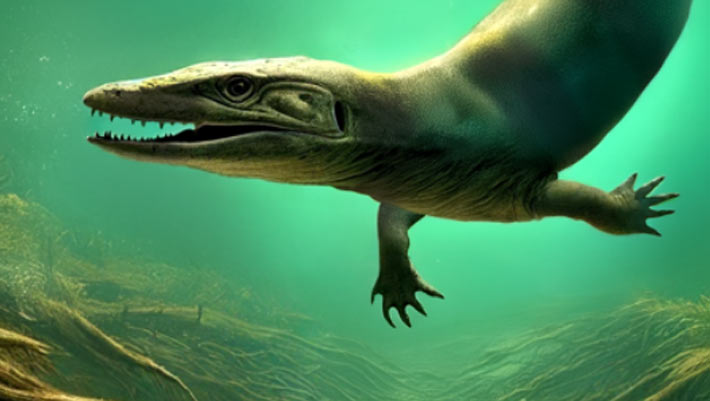
New Species of Freshwater Mosasaur Identified in France
Fossils from southeastern France reveal a previously unknown, roughly 2.5-m (8-foot) long tethysaurine mosasaur that appears to have lived in a freshwater lake, not the sea. The post New Species of Freshwater Mosasaur Identified in France appeared first on Sci.News: Breaking Science News.
05/10/2026 sci-news
Exclusive Spinosaurus Scale Drawing Celebrating a New Species
scale drawing Niger Dinosauria Spinosauria Spinosauridae formation new species
Everything Dinosaur has commissioned a Spinosaurus mirabilis scale drawing as the company prepares for the arrival of the new Haolonggood S. mirabilis models.  This illustration will be used in the company's fact sheet about this recently described spinosaurid known from the Farak Formation of Niger (Africa).  Creating the scale drawing for this dinosaur was challenging. 
04/10/2026 everythingdinosaur
New Haolonggood Purussaurus Models Coming into Stock
United Kingdom Miocene Dinosauria Ouranosaurus Spinosauria
The two, recently announced Haolonggood Purussaurus models are coming into stock at Everything Dinosaur. The UK-based mail order company already stocks the Haolonggood Sarcosuchus figures. They make an excellent accompaniment to Haolonggood's Spinosaurus and Ouranosaurus models.  Purussaurus lived during the Miocene Epoch. Therefore, this crocodilian is geologically much younger than Sarcosuchus. Two colour variants
03/10/2026 everythingdinosaur
First Animals May Have Appeared 200 Million Years Earlier than Their Oldest Fossils Suggest
Ediacaran fossil evolution
The oldest undisputed animal fossils, from the Ediacaran biota, are about 574 million years old, but chemical traces left by sponges, known as lipid biomarkers, hint that animals were around before 635 million years ago. The post First Animals May Have Appeared 200 Million Years Earlier than Their Oldest Fossils Suggest appeared first on Sci.News: Breaking Science News.
02/10/2026 sci-news
97-million-year-old fossils reveal the earliest known animal “GPS”
fossil
Mysterious 97-million-year-old magnetic fossils may be the oldest evidence of an animal using Earth’s magnetic field like a built-in GPS. Their sophisticated magnetic structure could have helped an unknown ocean creature navigate thousands of kilometers with surprising precision.
02/10/2026 sciencedaily-paleo
Why Do Different Dinosaur Models of the Same Animal Look Different?
Dinosauria Stegosauria
If you collect dinosaur and prehistoric animal models, you may have noticed something curious. Two models representing exactly the same dinosaur can look surprisingly different. The arrangement of the armour plates on a stegosaur might differ.  One T. rex figure might be heavily built with extremely wide hips, whereas another model could look slimmer.  A
02/10/2026 everythingdinosaur
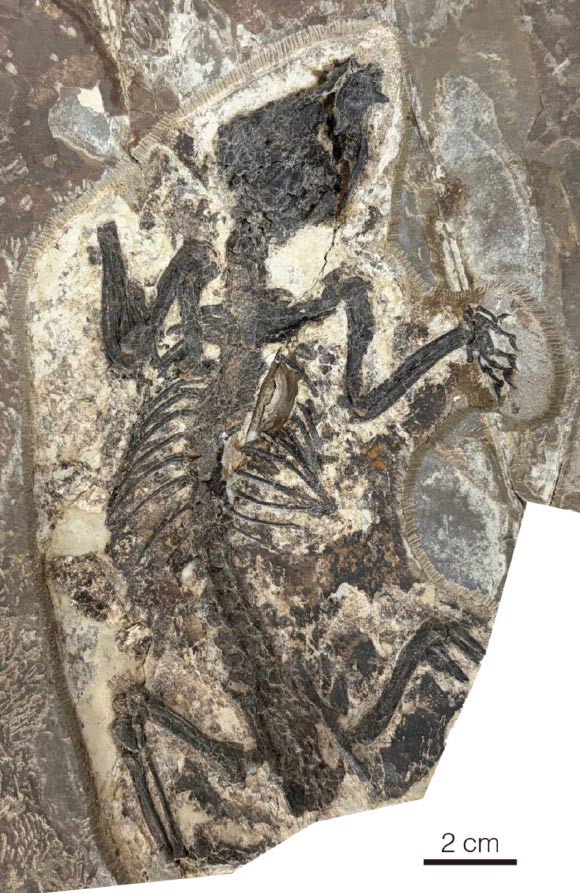
Dinosaur-Era Mammal Swam Like Platypus and Replaced Its Teeth Multiple Times
China Dinosauria mammals
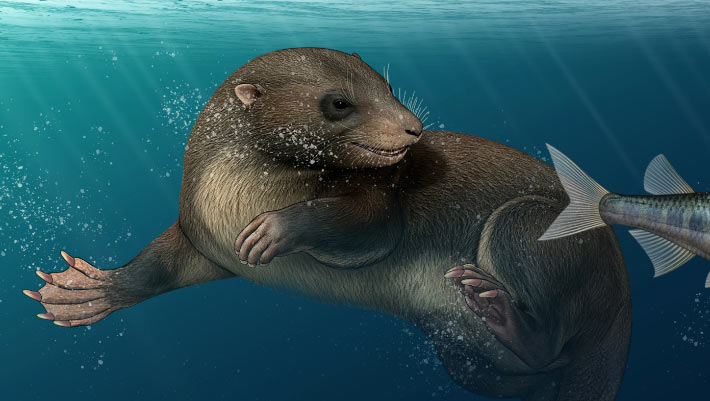
Dongoconodon platycauda, a small eutriconodontan mammal that lived alongside dinosaurs in what is now northeastern China paddled through the water with webbed, platypus-like hands and feet, and replaced its teeth multiple times. The post Dinosaur-Era Mammal Swam Like Platypus and Replaced Its Teeth Multiple Times appeared first on Sci.News: Breaking Science News.
01/10/2026 sci-news
Dinosaurs May Have Dined on Seaweed, Study Suggests
Cretaceous fossil Dinosauria isotope study
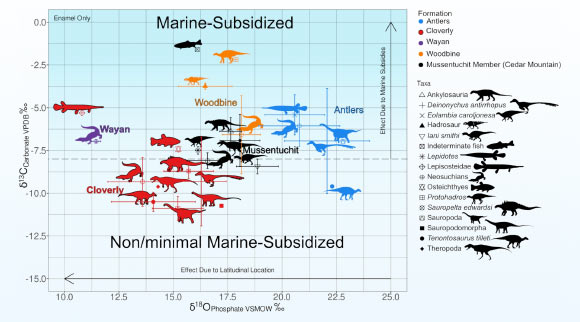
Paleontologists studying Cretaceous fossils have repeatedly found that the teeth of many ancient animals contain more of a heavier carbon isotope, carbon-13, than their presumed plant-based diets would predict. The post Dinosaurs May Have Dined on Seaweed, Study Suggests appeared first on Sci.News: Breaking Science News.
01/10/2026 sci-news
New Research Provides Data on the Body Temperature of Tyrannosaurus
tooth Dinosauria Tyrannosaurus isotope
Scientists, using an innovative isotope method have calculated Tyrannosaurus rex body temperature.  The novel research, published in the journal "Science Advances" sheds new light on the "King of the Tyrant Lizards". Remarkably, this famous, carnivorous dinosaur had a body temperature comparable to our own. Researchers used fossilised tooth enamel to estimate the T. rex body
01/10/2026 everythingdinosaur
New Feathered Dinosaur Suggests Flight Evolved More Than Once among Birds’ Closest Relatives
flight China Dinosauria Norellraptor bird new species
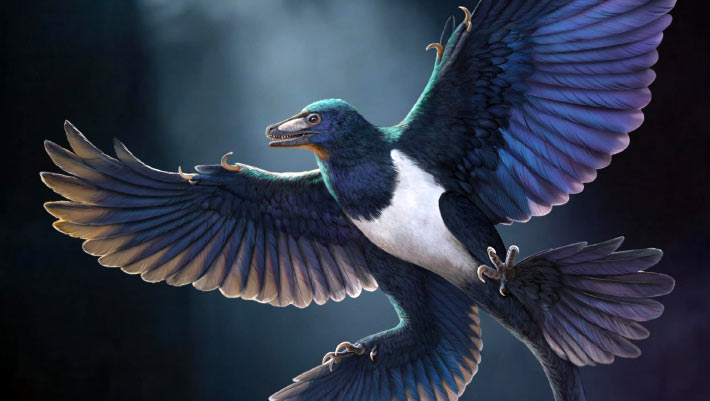
Norellraptor barsboldi, a new species of small microraptorine dinosaur from the 120-million-year-old rock beds of China’s Liaoning province, challenges the idea that the earliest fliers shared a common blueprint for taking to the air. The post New Feathered Dinosaur Suggests Flight Evolved More Than Once among Birds’ Closest Relatives appeared first on Sci.News: Breaking Science News.
01/10/2026 sci-news
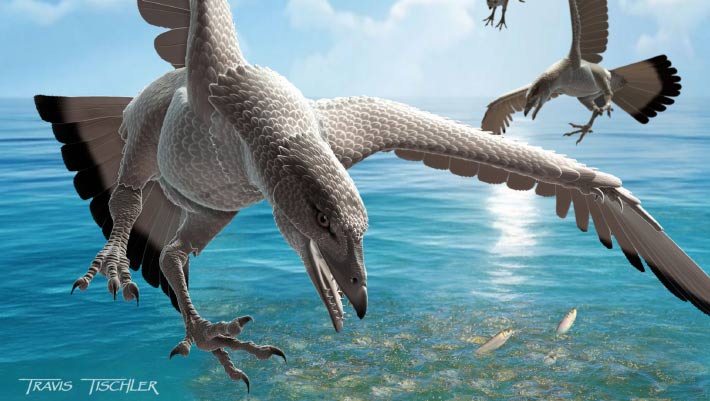
New Enantiornithine Bird Joins Australia’s Sparse Fossil Record
Australia Cretaceous fossil bird
Tenuicruris piscanexum is only the second Cretaceous bird species named from the Australian continent. The post New Enantiornithine Bird Joins Australia’s Sparse Fossil Record appeared first on Sci.News: Breaking Science News.
30/09/2026 sci-news
Natural History Museums Unite in Powerful Call for Co-ordinated Biodiversity Action
museum Armenia
Five leading German natural history and biodiversity research institutions have issued a joint call for decisive action to protect global biodiversity. The appeal comes ahead of the 17th Conference of the Parties to the Convention on Biological Diversity (CBD COP17). The conference takes place in Yerevan, Armenia, from 19th to 30th October 2026. The institutions
30/09/2026 everythingdinosaur
Bats may have first evolved in Europe 65 million years ago
flight fossil communication evolution mammals study
A huge genomic and fossil study suggests bats first evolved in Europe around 65 to 60 million years ago before spreading across the globe. The findings also indicate that flight and echolocation emerged near the beginning of bat evolution, potentially helping explain how bats became one of the most successful mammal groups on Earth.
30/09/2026 sciencedaily-paleo
New Dicynodont Taxon Could Transform the Timeline of Dinosaur Origins
Tanzania Triassic fossil Dinosauria new species
Scientists have described a new species of dicynodont from fossils discovered in Tanzania. These fossils could help palaeontologists refine the timeline for the origin of the dinosaurs. The new species has been named Dinodontosaurus isiyavamanda. It lived around 240 million years ago during the Triassic Period. Importantly, Dinodontosaurus was not a dinosaur.
29/09/2026 everythingdinosaur
This 245-million-year-old fossil still has its stomach and intestines
fossil discovery
A 245-million-year-old marine reptile fossil preserves an astonishing amount of detail, including its stomach, liver, and intestines. The discovery reveals that Austronaga minuta was highly adapted for swimming even though its digestive system remained surprisingly simple.
29/09/2026 sciencedaily
120-Million-Year-Old Fossil Pushes Back Origin of Marsupial Lineage
China fossil mammals new species
A new species of deltatheroidan mammal from China may be the oldest confirmed ancestor of marsupials yet found, offering fresh evidence that Asia played a central role in the deep evolutionary split between marsupials and placental mammals. The post 120-Million-Year-Old Fossil Pushes Back Origin of Marsupial Lineage appeared first on Sci.News: Breaking Science News.
28/09/2026 sci-news
Celebrating Early 20th Century Prehistoric Animal Artwork
Germany Dinosauria
We are living in a golden age of palaeoart, so we are told.  At least until AI generated images take over completely.  At Everything Dinosaur, we create a great deal of our own content.  However, we also do our best to support photographers, artists and other creators. For example, on a recent trip to Germany
28/09/2026 everythingdinosaur
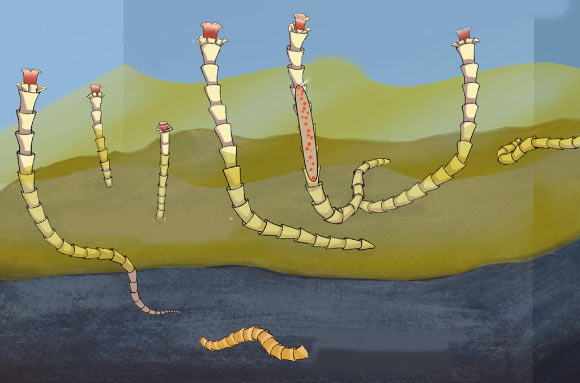
Chemosymbiosis between Animals and Microbes May Predate the Cambrian: Study
Cambrian study
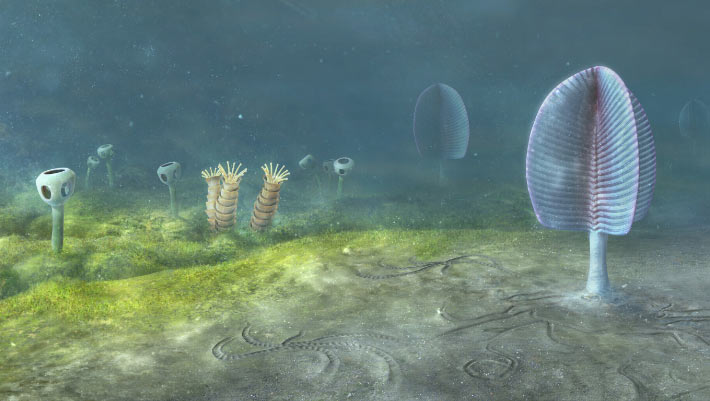
A tubular marine creature that lived on the seafloor more than 540 million years ago may have survived in toxic, sulfur-rich waters by teaming up with bacteria. The post Chemosymbiosis between Animals and Microbes May Predate the Cambrian: Study appeared first on Sci.News: Breaking Science News.
28/09/2026 sci-news
Scientists were wrong about this strange mammal for nearly 40 years
Mongolia Cretaceous fossil mammals
A beautifully preserved fossil from Mongolia’s Gobi Desert has solved a mystery that puzzled paleontologists for nearly 40 years. Tamirkhan balcarceli shows that zhelestids were not early relatives of modern placental mammals, despite having teeth that seemed to suggest they were. Instead, the rabbit-like animal belonged to a separate lineage of small Cretaceous mammals.
28/09/2026 sciencedaily
160-million-year-old proteins show surprising power against superbugs
protein mammals
Scientists resurrected antimicrobial peptides from mammals that lived millions of years ago and found that some were more potent against drug-resistant bacteria than modern human versions. These evolutionary relics could provide new clues for designing treatments as antibiotic resistance becomes an increasingly serious threat.
28/09/2026 sciencedaily-paleo
1 2 3 4 5 6 7 8 9 10 11 12 13 14 15 16 17 18 19 20 21 22 23 24 25 26 27 28 29