Galerie d'images

Toutes les images de la base — taxons, formations et intervalles géologiques.

⚠ La fonctionnalité de récupération des images est en cours de test, des images non pertinentes peuvent apparaître.

Tous Taxons Formations Intervalles
Thème : Old school Film Jeu Jouet

296 image(s)

Danian
Intervalles
Danien

Eekaulostomus cuevasae gen. and sp. nov. from the Danian marine deposits of the Belisario Domínguez quarry, near Palenque, Chiapas, southeastern Mexico. 1, General view of IGM 4716, holotype and single specimen known. 2, Idealized line drawing of the same specimen.

Kleyton Magno Cantalice, Jesús Alvarado-Ortega CC BY 4.0

Danian
Intervalles
Danien

Danian microflora - Lefipán Formation, Cañadón Asfalto Basin, Patagonia, Argentina

Barreda et al., 2012 CC BY-SA 4.0

Danian
Intervalles
Danien

Bryozobanker i Stevns klint, set fra stranden ved Boesdal kalkbrud (i let diset vejr)

Jens Galsgaard CC BY-SA 3.0

Danian
Intervalles
Danien

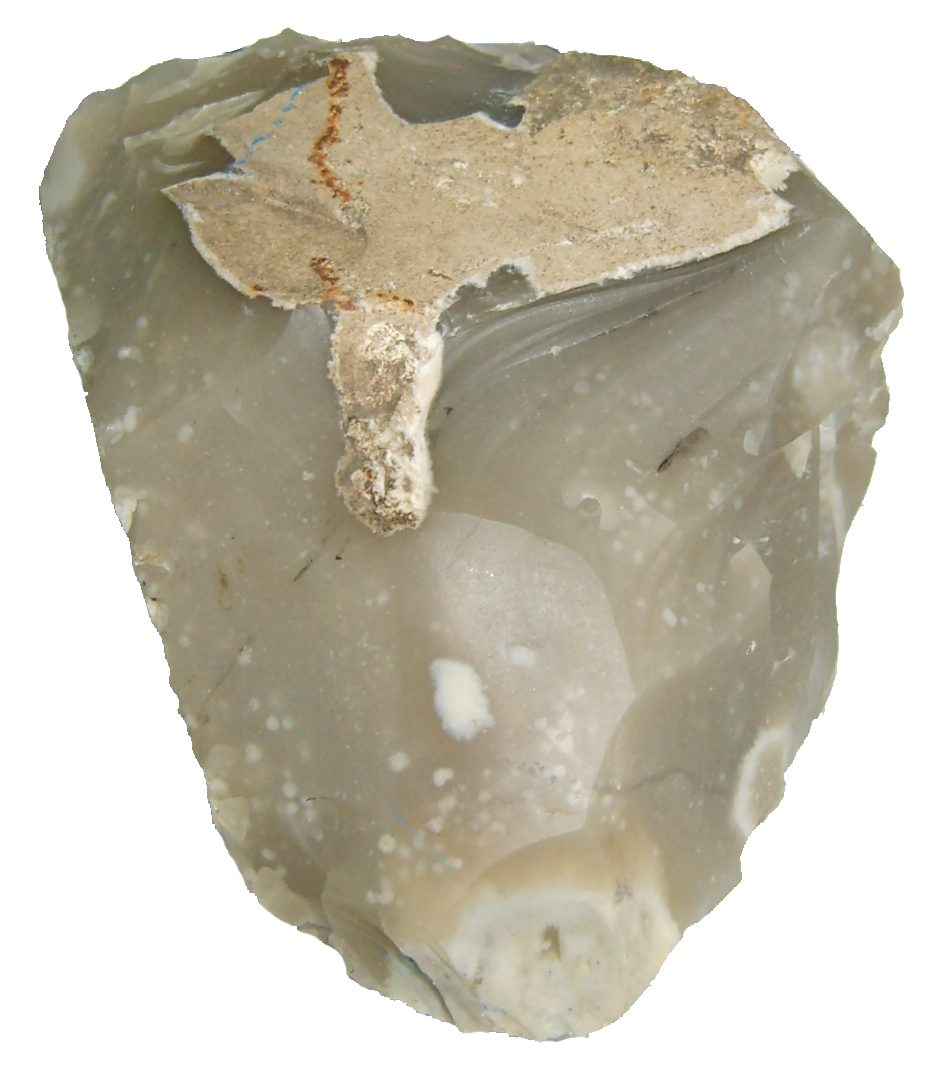
Grå flint med fossiler af søpindsvin, Krauseparken i København

Jens Galsgaard CC BY-SA 3.0

Coniacian
Intervalles
Coniacien

Abri sous falaise à Voulgézac (Charente, France)

Jack ma CC BY-SA 3.0

Coniacian
Intervalles
Coniacien

Rock shelter (abri) in Coniacian limestone in the Boulou valley (left-hand side) near La Tabaterie, commune of La Gonterie-Boulouneix, Dordogne, France. In the abri there is a natural spring and next to it a deep well - dangerous!

Rudolf Pohl CC BY-SA 3.0

Coniacian
Intervalles
Coniacien

Iron trapped in Cretaceous limestone, forming tables

Jack ma CC BY-SA 3.0

Coniacian
Intervalles
Coniacien

Limestone cliff with the stratigraphic stage of Cretaceous Coniacian near the eponym town of Cognac, Charente, Poitou-Charentes, France.

Sémhur CC BY-SA 4.0

Coniacian
Intervalles
Coniacien

crétacé limestone at Cognac, Charente, SW France

Jack ma CC BY-SA 3.0

Coniacian
Intervalles
Coniacien

Cretaceous limestone at Cognac, Charente, SW France

Jack ma CC BY-SA 3.0

Coniacian
Intervalles
Coniacien

Ivy and limestone cliff of Cretaceous Coniacian, Cognac, Charente, France.

JLPC CC BY-SA 3.0

Coniacian
Intervalles
Coniacien

Limestone Cretaceous cornices (Coniacian type), valley of the river Voultron; Blanzaguet-Saint-Cybard, Charente, France.

JLPC CC BY-SA 3.0

Chattian
Intervalles
Chattien

“Sternberger Kuchen” (“Sternberg cake”), a large late Pleistocene glaciofluvial pebble of a highly fossiliferous, shallow marine sandstone of the North German Paleogene (Sülstorf beds, formerly known as “Sternberg rock”, Chattian, Oligocene, about 25 million years old). The fossil content is mainly made up of mollusks (pelecypods, gastropods, scaphopods). Provenance: Sternberg, Mecklenburg-Vorpommern, Northeast Germany.

Stadtmuseum Berlin CC BY 3.0

Chattian
Intervalles
Chattien

Palaeohypsodontus zinensis sp. nov., late Oligocene (Chattian), Lundo J2, Bugti Hills, Balochistan, Pakistan. Holotype (ISEM DBJ2−A1). A. Stereophoto of occlusal view. B. Stereophoto of labial view. Scale bars 1 cm.

Métais, G., Antoine, P.−O., Marivaux, L., Welcomme, J.−L., and Ducrocq, S. CC BY-SA 4.0

Chattian
Intervalles
Chattien

4 Tonnen schwerer Findling mit Muscheln einer Art der Gattung Pectunculus, der wohl ungefähr 25 Millionen Jahre alt ist

Sönke Rahn CC BY-SA 3.0

Cenomanian
Intervalles
Cénomanien

Stein aus Sandstein aus dem Cenoman im Alpengarten in Pfronten-Steinach, Obere Kreide, Herkunft Pfronten-Röfleuten

Bruno413 CC0

Cenomanian
Intervalles
Cénomanien

Quarry called “Ratssteinbruch” at Plauenscher Grund (gorge-like valley of the river Weißeritz nearby/in the city of Dresden, Saxony, Germany), Upper Carboniferous Monzonite (historically identified as Syenite) of the Meißen Massif (Paleozoic basement) unconformably overlain by Upper Cenomanian beds of the Dölzschen Formation, yellowish basal conglomerate and overlying bluish silty clay-marlstone (“plenus-Pläner”) of the Saxo-Bohemian Cretaceous Basin (Mesozoic platform).[1]
Dryhand58 CC BY-SA 4.0

Cenomanian
Intervalles
Cénomanien

A light coloured sample of Miorcani flint from the Cenomanian chalky marl layer of the Moldavian Plateau. This sample came from the flint mine near Rădăuţi-Prut. (ca. 7.5 cm wide)

Otis Crandell CC BY-SA 3.0

Cenomanian
Intervalles
Cénomanien

Pilares de Los Gigantes, provincia de Río Negro, correspondientes la la Formación Candeleros.

Brancasaurio CC BY-SA 4.0

Campanian
Intervalles
Campanien

landscape of Montmorélien (Cretaceous Campanian), Charente, SW France

Jack ma CC BY-SA 3.0

Campanian
Intervalles
Campanien

Typical landscape of the hills around Montmoreau. Saint-Amant, Charente, France.

JLPC CC BY-SA 3.0

Campanian
Intervalles
Campanien

Typical landscape of the hills around Montmoreau. Saint-Amant, Charente, France.

JLPC CC BY-SA 3.0

Campanian
Intervalles
Campanien

Sandstones of the lower Kirtland Formation (Late Campanian), outcropping near Coal Creek. New Mexico. Photo by Nick Longrich

NickLongrich CC BY-SA 4.0

Campanian
Intervalles
Campanien

Chalky hillside with its characteristic vegetation (dry lawn, juniper, orchids, pines on the top). Juignac, Charente, France.

JLPC CC BY-SA 3.0

Campanian
Intervalles
Campanien

A fossil tree from the Coal Creek region, Fruitland Formation, latest Cretaceous (Late Campanian), San Juan Basin, New Mexico

NickLongrich CC BY-SA 4.0

Campanian
Intervalles
Campanien

Holotype skull of the centrosaurine ceratopsian dinosaur Diabloceratops eatoni from the Late Cretaceous (Campanian) of the Wahweap Formation, Grand Staircase-Escalante National Monument, Utah. Photograph by Nick Longrich, 2023.

NickLongrich CC BY-SA 4.0

Campanian
Intervalles
Campanien

Outcrops of the Late Cretaceous (Campanian) aged Aguja Formation, Big Bend National Park, Texas, USA

NickLongrich CC BY-SA 4.0

Campanian
Intervalles
Campanien

Restoration of the sturgeon "Acipenser" gigantissimus, from Campanian marine strata in Saratov

Apokryltaros CC BY-SA 4.0

Campanian
Intervalles
Campanien

It is the southern flank of a syncline Campanian, Maastrichtian and Eocene age(35-55 million ys)flakes represented by conglomerates overlying gypsum marls in the syncline; but also an undeveloped alabaster deposit giving way to a beautiful landscape 

Djennane Taoufik CC BY-SA 4.0

Callovian
Intervalles
Callovien

Osgodby Formation (Middle Jurassic) exposed on the shore of Cayton Bay, North Yorkshire.

Wilson44691 CC0

Callovian
Intervalles
Callovien

Matmor Formation (Jurassic, Callovian) exposed in Makhtesh Gadol, Israel. (Electricity pylon for scale).

Wilson44691 Public domain

Callovian
Intervalles
Callovien

Marnes du Callovien, localement nommées les « terres grises », sur le territoire de la commune de Quissac, dans le Gard (région Occitanie, France).

Anthony Morel CC BY-SA 4.0

Burdigalian
Intervalles
Burdigalien

Tripneustes parkinsoni . Stage : Burdigalian between 20.43 ± 0.05 Ma and 15.97 ± 0.05 Ma (million years ago).

Didier Descouens CC BY-SA 4.0

Burdigalian
Intervalles
Burdigalien

Ein Stein aus sand-/ kalkhaltigen Ablagerungen aus dem Hemmorium (vor 17 Mio Jahren)

Ra Boe CC BY-SA 2.5

Burdigalian
Intervalles
Burdigalien

Glyptostrobus europaeus fossil leaves of Burdigalian stage in the early Miocene epoch, from a brown coal mine in Bilina, Czech Republic.

Omar hoftun CC BY-SA 4.0

Burdigalian
Intervalles
Burdigalien

Brachipotherium aurelianense, from Rubí. Fossils. Collection of paleontology of the Geological Museum of the Barcelona Seminari (Museu Geològic del Seminari de Barcelona).

Jordiferrer CC BY-SA 3.0

Burdigalian
Intervalles
Burdigalien

Ficus truncata fossil leaf from the early Miocene epoch 20 Ma, of the Třetihorní flóra from Bílina, Czech Republic.

Omar hoftun CC BY-SA 4.0

Burdigalian
Intervalles
Burdigalien

Comptonia acutiloba fossil leaves from the early Miocene epoch 20 Ma, of the Třetihorní flóra from Bílina, Czech Republic.

Omar hoftun CC BY-SA 4.0

Burdigalian
Intervalles
Burdigalien

A l'intérieur d'une vitrine à ciel ouvert, on voit des milliers de turritelles, gastéropode typique du Burdigalien local

Rngsaucats CC BY-SA 4.0

Burdigalian
Intervalles
Burdigalien

Boules de Buoux

Cluaranis CC BY-SA 4.0

Burdigalian
Intervalles
Burdigalien

Boules de Buoux

Cluaranis CC BY-SA 4.0

Bathonian
Intervalles
Bathonien

Talus de route entaillant des grèzes litées

J. R. Villers CC BY-SA 4.0

Bathonian
Intervalles
Bathonien

Falaises marneuses à l'ouest de Port en Bessin à marée haute. (coefficent 80)

Patrice78500 CC BY-SA 4.0

Bathonian
Intervalles
Bathonien

Falaises marneuses à l'est de Port-en-Bessin-Huppain (Calvados, France).

Patrice78500 CC BY-SA 4.0

Bathonian
Intervalles
Bathonien

Acrosalenia_hemicidaroides Stage : Bathonian 167.7 Ma to around 164.7 Ma (million years ago) .

Didier Descouens CC BY-SA 3.0

Bathonian
Intervalles
Bathonien

A lampshell of the genus Acanthothiris, Class Rhynchonellata, Order Rhynchonellida, Family Acanthothirididae, 20mm along the axis, view of the pedunculate valve, from Woodeaton, Oxfordshire, UK, middle Middle Jurassic (Bathonian)

Dwergenpaartje CC BY-SA 3.0

Bathonian
Intervalles
Bathonien

A lampshell of the genus Acanthothiris, Class Rhynchonellata, Order Rhynchonellida, Family Acanthothirididae, 20mm along the axis, view of the opening, from Woodeaton, Oxfordshire, UK, middle Middle Jurassic (Bathonian)

Dwergenpaartje CC BY-SA 3.0

Bathonian
Intervalles
Bathonien

A lampshell of the genus Acanthothiris, Class Rhynchonellata, Order Rhynchonellida, Family Acanthothirididae, 20mm along the axis, lateral view, from Woodeaton, Oxfordshire, UK, middle Middle Jurassic (Bathonian)

Dwergenpaartje CC BY-SA 3.0

Bathonian
Intervalles
Bathonien

A lampshell of the genus Acanthothiris, Class Rhynchonellata, Order Rhynchonellida, Family Acanthothirididae, 20mm along the axis, view of the hinge, from Woodeaton, Oxfordshire, UK, middle Middle Jurassic (Bathonian)

Dwergenpaartje CC BY-SA 3.0

Bajocian
Intervalles
Bajocien

Neptunidraco ammoniticus, risalente al Bajociano-Bathoniano, Giurassico Medio, esemplare di Metriorinchide dalle cave di Ambrogio Veronese. Coll. Museo di geologia Giovanni Capellini, visitato in occasione del Wikiraduno Bologna giugno 2023.

Patafisik CC BY-SA 4.0

Bajocian
Intervalles
Bajocien

Sinter deposits on Upper Bajocian oolite at the new entry to the Villars Cave, Villars, Dordogne, France.

Rudolf Pohl CC BY-SA 3.0

Bajocian
Intervalles
Bajocien

Dolomitic, brownish-reddish Lower Bajocian from Ribeyrolles, Saint-Martin-le-Pin, Dordogne, France. The rock is recrystallized and slightly karstified.

Rudolf Pohl CC BY-SA 4.0

Bajocian
Intervalles
Bajocien

Completely recrystallized Middle Bajocian limestone from Saint-Martial-de-Valette, Dordogne, France. The rock shows radially arranged fibrous calcite prisms in intense red colour.

Rudolf Pohl CC BY-SA 4.0

Bajocian
Intervalles
Bajocien

White bioclastic Upper Bajocian limestone from the Sabouret quarry in Saint-Martial-de-Valette, Dordogne, France. The weathered surface reveals the bioclastic nature (and therefore high energy deposition) of the limestone with all kinds of broken debris, tiny oolites and some urchin spines.

Rudolf Pohl CC BY-SA 4.0

Bajocian
Intervalles
Bajocien

Identifier: ridpathshistoryo01ridp (find matches) Title: Ridpath's history of the world; being an account of the ethnic origin, primitive estate, early migrations, social conditions and present promise of the principal families of men .. Year: 1897 (1890s) Authors: Ridpath, John Clark, 1840-1900 Subjects: World history Ethnology Publisher: New York, Merrill & Baker Contributing Library: Mugar Memorial Library, Boston University Digitizing Sponsor: Boston University View Book Page: Book Viewer About This Book: Catalog Entry View All Images: All Images From Book Click here to view book online to see this illustration in context in a browseable online version of this book. Text Appearing Before Image: the belief that the ap-pearance of man on the planet wouldoccur at the earliest practicable moment(so to speak), and that mankind wouldcontinue to nourish to the latest practi-cable date. It is one of the novel con- 82 GREAT RACES OF MANKIND. tradictions in the philosophy of a certainschool of thinkers that they would haveus believe that the earth, fitted up as itwere for the dwelling place of man, laygreen and virgin, waiting for his ap-pearance through eons of useless time—all this for no better reason than to sat-isfy the preconceptions of some impossi-ble system of chronology. Such short-sighted views of nature consistent with the astronomical andgeological preparation of the globe.Reason and fact alike require us to ac-cept as early a date for the appearanceof man as the design of the world andits conditions of habitability will admit.The results of reason must be acceptedin a world governed by law. That thedate of mans appearance was coinci-dent, or nearly coincident, with the Text Appearing After Image: .ANDSCAPE OF THE LOWER OOLITE (BEFORE THE AGE OF MAN).—Drawn by Riou. and of man we may at once dismiss asbelonging to the ignorance and blindnessRight reason de- of a former age. WhiledaTeforappS- the demands of right reason anceofman. ft0 not call for a limitless extension of man-life into the past, andwhile such a view is contradicted by sci-entific data which may not be doubted,a rational concept of the human race inrelation with the planetary life uponwhich it is maintained does call for aswide and far-reaching an arena as is astronomical changes in the characterof the earths orbit heretofore described,can not well be doubted by any onewhose mind has been freed from nar-row preconceptions on the subject.That our race career, measuring back-ward through the brief historical andtraditional periods of our ethnic life, hasextended far enough into the past tocover a considerable part of the planetlife with which it is associated, is a con-clusion warranted by every condition of TIME Note About Images Please note that these images are extracted from scanned page images that may have been digitally enhanced for readability - coloration and appearance of these illustrations may not perfectly resemble the original work.

Internet Archive Book Images No restrictions

Bajocian
Intervalles
Bajocien

An atypical (without intertidal and supratidal environment) carbonate platform settles down along the margin. Shallow water oolithes and oncoids are deposited in a narrow zone between a basin with Cancellophycus to the north and a marine/swampy plain with abundants mollusc fauna. However the Mytilus formation, rich in bathonian and callovian foraminifera (Septfontaine, 1984 etc.), develop thick limestone beds tenth of meter above, wrongly attributed to the upper Jurassic. See discussion in Septfontaine (1984).

Septfontaine CC BY-SA 3.0

Bathonian
Intervalles
Bathonien

Falaises marneuses à l'est de Port en Bessin

Patrice78500 CC BY-SA 4.0

Bajocian
Intervalles
Bajocien

Falaises marneuses à l'est de Port en Bessin

Patrice78500 CC BY-SA 4.0

Artinskian
Intervalles
Artinskien

Comparaison de la deuxième dent prémaxillaire d'Oromycter (A) et d'Arisierpeton (B) vue au microscope électronique à balayage

Robert R. Reisz CC BY-SA 4.0

Artinskian
Intervalles
Artinskien

Helicoprion bessonovi - edestid "shark" from Early Permian (Artinskian) of Ural region. Highly hypothetical reconstruction.

Creator: Dmitry Bogdanov CC BY 3.0

1 2 3 4 5