←

Maastrichtien

Intervalle géologique

34 image(s) · 3 Actualités

Voir la fiche

Galerie d'images

Montanoceratops cerorhynchus (Brown & Schlaikjer, 1942) - fossil ceratopsian dinosaur skeleton from the Cretaceous of Montana, USA. (MOR 542, Museum of the Rockies, Bozeman, Montana, USA)
The species name is sometimes incorrectly spelled "cerorhynchos".  The original publication spells it "cerorhynchus".  The genus name is sometimes incorrectly spelled "Montanaceratops".
Ceratopsians are the "horned dinosaurs".  They were large, quadrupedal, herbivorous dinosaurs having a beaked skull and a frill - an extension of bone behind the skull that partially covered the neck.  Ceratopsian dinosaurs are known from the Jurassic and Cretaceous.  The last members of the group died out at the Cretaceous-Tertiary boundary, 65 million years ago.
This is a partial skeleton of a juvenile Montanoceratops, a ceratopsian from the near-latest Cretaceous of western North America.  This type of ceratopsian lacked facial horns.


From exhibit signage:
Sixty-eight million years ago, when the horned dinosaurs Triceratops and Torosaurus inhabited the coastal plain near the inland ocean, primitive "horned" dinosaurs named Montanoceratops lived in uplands near the young Rocky Mountains.  These little protoceratopsians fed on plants with slicing teeth and narrow beaks similar to their giant three-horned relatives.


Classification: Animalia, Chordata, Vertebrata, Reptilia, Archosauria, Dinosauria, Ornithischia, Marginocephalia, Ceratopsia, Leptoceratopsidae
Stratigraphy: St. Mary River Formation, Maastrichtian Stage, Upper Cretaceous
Locality: Little Rocky Coulee, north of the town of Cut Bank, eastern Glacier County, northwestern Montana, USA


Info. at:

en.wikipedia.org/wiki/Montanoceratops
Taxons Montanoceratops

Montanoceratops cerorhynchus (Brown & Schlaikjer, 1942) - fossil ceratopsian dinosaur skeleton from the Cretaceous of Montana, USA. (MOR 542, Museum of the Rockies, Bozeman, Montana, USA) The species name is sometimes incorrectly spelled "cerorhynchos". The original publication spells it "cerorhynchus". The genus name is sometimes incorrectly spelled "Montanaceratops". Ceratopsians are the "horned dinosaurs". They were large, quadrupedal, herbivorous dinosaurs having a beaked skull and a frill - an extension of bone behind the skull that partially covered the neck. Ceratopsian dinosaurs are known from the Jurassic and Cretaceous. The last members of the group died out at the Cretaceous-Tertiary boundary, 65 million years ago. This is a partial skeleton of a juvenile Montanoceratops, a ceratopsian from the near-latest Cretaceous of western North America. This type of ceratopsian lacked facial horns. From exhibit signage: Sixty-eight million years ago, when the horned dinosaurs Triceratops and Torosaurus inhabited the coastal plain near the inland ocean, primitive "horned" dinosaurs named Montanoceratops lived in uplands near the young Rocky Mountains. These little protoceratopsians fed on plants with slicing teeth and narrow beaks similar to their giant three-horned relatives. Classification: Animalia, Chordata, Vertebrata, Reptilia, Archosauria, Dinosauria, Ornithischia, Marginocephalia, Ceratopsia, Leptoceratopsidae Stratigraphy: St. Mary River Formation, Maastrichtian Stage, Upper Cretaceous Locality: Little Rocky Coulee, north of the town of Cut Bank, eastern Glacier County, northwestern Montana, USA Info. at: en.wikipedia.org/wiki/Montanoceratops

os musée États-Unis Crétacé +17
Drawing of lectoholotype skull BMNH R.3386 (desigated by Weishampel et al., 1993)[1][2] of Limnosaurus transsylvanicus NOPCSA 1900 (later renamed Telmatosaurus transsylvanicus), a basal hadrosaurid dinosaur from the Late Maastrichtian (latest Upper Cretaceous) Sanpetru Formation of West Central Romania.
Taxons Telmatosaurus

Drawing of lectoholotype skull BMNH R.3386 (desigated by Weishampel et al., 1993)[1][2] of Limnosaurus transsylvanicus NOPCSA 1900 (later renamed Telmatosaurus transsylvanicus), a basal hadrosaurid dinosaur from the Late Maastrichtian (latest Upper Cretaceous) Sanpetru Formation of West Central Romania.

dessin Roumanie Crétacé Maastrichtien +6
The European troodontid Tamarro insperatus (MCD-7073) gen. et sp. nov. from the uppermost Maastrichtian of the Tremp Group, Tremp Basin, Southern Pyrenees. Photographic and interpretative ilustrations of the right second metatarsal in anterior (A-A’), lateral (B-B’), posterior (C–C’), medial (D-D’), and distal (F-F’) views. Scheme illustrating the gradual transition of the articular surface–grey arrow–for the accommodation of the metatarsal III (E). Detail of the distal end of the metatarsal II in anterior view showing the anterior contact surface of the metatarsal III (G). Detail of the articular surface of the metatarsal IV in the posterodistal part of the second metatarsal (H) ant anterior; f foramen; lat lateral; lc medial condyle; mc, lateral condyle; II–III contact between the second and third metatarsals; II–IV contact between the second and fourth metatarsals; plr plantar ridge; s sulcus.
Taxons Tamarro

The European troodontid Tamarro insperatus (MCD-7073) gen. et sp. nov. from the uppermost Maastrichtian of the Tremp Group, Tremp Basin, Southern Pyrenees. Photographic and interpretative ilustrations of the right second metatarsal in anterior (A-A’), lateral (B-B’), posterior (C–C’), medial (D-D’), and distal (F-F’) views. Scheme illustrating the gradual transition of the articular surface–grey arrow–for the accommodation of the metatarsal III (E). Detail of the distal end of the metatarsal II in anterior view showing the anterior contact surface of the metatarsal III (G). Detail of the articular surface of the metatarsal IV in the posterodistal part of the second metatarsal (H) ant anterior; f foramen; lat lateral; lc medial condyle; mc, lateral condyle; II–III contact between the second and third metatarsals; II–IV contact between the second and fourth metatarsals; plr plantar ridge; s sulcus.

Maastrichtien Tamarro Troodontidae
Holotype maxilla of the lambeosaurine hadrosaurid Ajnabia odysseus from the Late Cretaceous (late Maastrichtian) of Sidi Chennane, Morocco
Taxons Ajnabia

Holotype maxilla of the lambeosaurine hadrosaurid Ajnabia odysseus from the Late Cretaceous (late Maastrichtian) of Sidi Chennane, Morocco

Maroc Crétacé Crétacé supérieur Maastrichtien +3
This file represents a possible life appearance of the Indian Titanosaurian Sauropod dinosaur Jainosaurus septentrionalis from the Late Cretaceous (Maastrichtian) of India, belonging to the Lameta Formation.
References used: 
Huene & Matley (1933)
Hunt et al. (1995)
Gunnar Bivens' skeletal diagram

Wilson et al. (2008) "Reassessment of Sauropod Dinosaur Jainosaurus (="Antarctosaurus") Septentrionalis from the Upper Cretaceous of India"
Taxons Jainosaurus

This file represents a possible life appearance of the Indian Titanosaurian Sauropod dinosaur Jainosaurus septentrionalis from the Late Cretaceous (Maastrichtian) of India, belonging to the Lameta Formation. References used: Huene & Matley (1933) Hunt et al. (1995) Gunnar Bivens' skeletal diagram Wilson et al. (2008) "Reassessment of Sauropod Dinosaur Jainosaurus (="Antarctosaurus") Septentrionalis from the Upper Cretaceous of India"

Inde Lameta Crétacé Crétacé supérieur +6
Plate 53. Borogovia gracilicrus gen. et sp. n.
1. Fragmentary right pes, in: a dorsal, b ventral, views; ZPAL MgD-11174, holotype, X 0.5.
2. Phalanx 11-1 of the left pes, medial view; same specimen, X 1.
3. Ungual of left second pedal digit, ventral view; same specimen, X 1.
4. Phalanx 111-3 of the left pes, lateral view; same specimen, X 1.
5. Phalanges IV-1 to IV-4 of the left pes, lateral view; same specimen, X 1.
6. Distal portion of right metatarsal 111, posterior view; same specimen, X 1.
7. Distal portion of left metatarsal IV, medial view; same specimen, X 1.
8. Distal portion of left metatarsal 11, lateral view; same specimen, X 1.
9. Right tibiotarsus, a distal portion and b proximal portion with fragment of the fibula attached, posterior views, c distal portion, anterior view, d distal portion, lateral view; same specimen, X 0.5.

Nemegt Formation, ?Late Campanian or ?Early Maastrichtian, Ultan Ula IV, Nemegt Basin, Gobi Desert, Mongolia
Taxons Borogovia

Plate 53. Borogovia gracilicrus gen. et sp. n. 1. Fragmentary right pes, in: a dorsal, b ventral, views; ZPAL MgD-11174, holotype, X 0.5. 2. Phalanx 11-1 of the left pes, medial view; same specimen, X 1. 3. Ungual of left second pedal digit, ventral view; same specimen, X 1. 4. Phalanx 111-3 of the left pes, lateral view; same specimen, X 1. 5. Phalanges IV-1 to IV-4 of the left pes, lateral view; same specimen, X 1. 6. Distal portion of right metatarsal 111, posterior view; same specimen, X 1. 7. Distal portion of left metatarsal IV, medial view; same specimen, X 1. 8. Distal portion of left metatarsal 11, lateral view; same specimen, X 1. 9. Right tibiotarsus, a distal portion and b proximal portion with fragment of the fibula attached, posterior views, c distal portion, anterior view, d distal portion, lateral view; same specimen, X 0.5. Nemegt Formation, ?Late Campanian or ?Early Maastrichtian, Ultan Ula IV, Nemegt Basin, Gobi Desert, Mongolia

Mongolie Campanien Maastrichtien holotype +4
Mandible in Bagaraatan ostromi gen. et sp. n. from the mid-Maastrichtian Nemegt Formation at Nemegt, Mongolia. A-B. Reconstruction on left mandible in lateral and medial views. Left dentary in dorsal view. D-E. Posterior part of left mandible in dorsal and posterior views. F. Cross-section through dentary at the end of preserved fragment.
Taxons Bagaraatan

Mandible in Bagaraatan ostromi gen. et sp. n. from the mid-Maastrichtian Nemegt Formation at Nemegt, Mongolia. A-B. Reconstruction on left mandible in lateral and medial views. Left dentary in dorsal view. D-E. Posterior part of left mandible in dorsal and posterior views. F. Cross-section through dentary at the end of preserved fragment.

Mongolie Maastrichtien Bagaraatan Nemegtia +1
Phosphatotitan khouribgaensis, holotype, MHNM.KHG.888; Sidi Chennane, Oulad Abdoun Basin, Khouribga Province, Morocco; Phosphates, lower Couche III, late Maastrichtian. Dorsal vertebra in (A) anterior view; and (B) lateral view. Abbreviations: acpl, anterior centroparapophyseal lamina; cen, centrum; con, condyle; lpl, lamina dividing pleurocoels; nec, neural canal; nsp, neural spine; pcdl, posterior centrodiapophyseal lamina; pcpl, posterior centroparapophyseal lamina; pl1, primary pleurocoel; pl2, secondary pleurocoel; prcdf, prezygocentrodiapophyseal fossa; pre, prezygapophyses; tp, transverse process.
Taxons Phosphatotitan

Phosphatotitan khouribgaensis, holotype, MHNM.KHG.888; Sidi Chennane, Oulad Abdoun Basin, Khouribga Province, Morocco; Phosphates, lower Couche III, late Maastrichtian. Dorsal vertebra in (A) anterior view; and (B) lateral view. Abbreviations: acpl, anterior centroparapophyseal lamina; cen, centrum; con, condyle; lpl, lamina dividing pleurocoels; nec, neural canal; nsp, neural spine; pcdl, posterior centrodiapophyseal lamina; pcpl, posterior centroparapophyseal lamina; pl1, primary pleurocoel; pl2, secondary pleurocoel; prcdf, prezygocentrodiapophyseal fossa; pre, prezygapophyses; tp, transverse process.

vertèbre Maroc Maastrichtien holotype +1
Ceratopsipes goldenensis Lockley & Hunt, 1995 - ceratopsian dinosaur trackway in the Cretaceous of Colorado, USA.
Ceratopsians are the "horned dinosaurs".  They were large, quadrupedal, herbivorous dinosaurs having a beaked skull and a frill - an extension of bone behind the skull that partially covered the neck.  Ceratopsian dinosaurs are known from the Jurassic and Cretaceous.  The last members of the group died out at the Cretaceous-Tertiary boundary, 65 million years ago.
Seen here is a ceratopsian dinosaur trackway.  Ceratopsian footprints are very rare.  The best examples are in Colorado's Laramie Formation, a nonmarine, coastal plain to deltaic succession of mostly mixed siliciclastic sedimentary rocks - sandstones, siltstones, claystones, and coals.  The footprints here consist of convex bulges on the basal surfaces of structurally-tilted sandstone beds.
The ichnospecies Ceratopsipes goldenensis was named based on footprints at this locality.  The trackmaker was very likely Triceratops, the # 1 most famous ceratopsian dinosaur.


From on-site signage:
Triceratops Tracks
Several tracks of Triceratops, or a closely related horned dinosaur were first discovered in this area and named Ceratopsipes goldenensis (meaning tracks of a horned dinosaur from Golden).  By happy coincidence, the first Triceratops known to science also comes from the greater Denver area near 13th Avenue and Federal Blvd.  Growing to a length of almost 25 feet, Triceratops and other members of the horned dinosaur family were herbivorous animals that roamed in herds.  Their trademark horns and frills that covered their necks probably served for defense.  A replica Triceratops skull is on display in the clubhouse at the Fossil Trace Golf Club.
These tracks (identified by small signs) help us understand that Triceratops walked with a narrow gait and erect front limbs  than with a wide, sprawling gait as previously depicted.  In 1887, the first Triceratops bones known to science were also discovered locally at a site near 13th Avenue and Federal Boulevard in Denver.
Nearby one may see many other traces of life such as burrows, probably made by invertebrates and impressions of plant debris.  Note that you are looking at all tracks and traces from the underside - in negative aspect - what one might call a worm’s eye view.  All of these trace fossils indicate that the Golden area once had a warm, temperate to subtropical climate.


Classification: Animalia, Chordata, Vertebrata, Reptilia, Archosauria, Dinosauria, Ornithischia, Marginocephalia, Ceratopsia, Ceratopsidae
Stratigraphy: Laramie Formation, Maastrichtian Stage, upper Upper Cretaceous
Locality: outcrop along Triceratops Trail, Parfet Prehistoric Preserve, southern side of the town of Golden, Colorado, USA (~vicinity of 39° 44' 35.24" North latitude, 105° 13’ 09.69" West longitude)


Some info. from:

Lockley & Hunt (1995) - Ceratopsid tracks and associated ichnofauna from the Laramie Formation (Upper Cretaceous: Maastrichtian) of Colorado.  Journal of Vertebrate Paleontology 15: 592-614.
Taxons Ceratopsipes

Ceratopsipes goldenensis Lockley & Hunt, 1995 - ceratopsian dinosaur trackway in the Cretaceous of Colorado, USA. Ceratopsians are the "horned dinosaurs". They were large, quadrupedal, herbivorous dinosaurs having a beaked skull and a frill - an extension of bone behind the skull that partially covered the neck. Ceratopsian dinosaurs are known from the Jurassic and Cretaceous. The last members of the group died out at the Cretaceous-Tertiary boundary, 65 million years ago. Seen here is a ceratopsian dinosaur trackway. Ceratopsian footprints are very rare. The best examples are in Colorado's Laramie Formation, a nonmarine, coastal plain to deltaic succession of mostly mixed siliciclastic sedimentary rocks - sandstones, siltstones, claystones, and coals. The footprints here consist of convex bulges on the basal surfaces of structurally-tilted sandstone beds. The ichnospecies Ceratopsipes goldenensis was named based on footprints at this locality. The trackmaker was very likely Triceratops, the # 1 most famous ceratopsian dinosaur. From on-site signage: Triceratops Tracks Several tracks of Triceratops, or a closely related horned dinosaur were first discovered in this area and named Ceratopsipes goldenensis (meaning tracks of a horned dinosaur from Golden). By happy coincidence, the first Triceratops known to science also comes from the greater Denver area near 13th Avenue and Federal Blvd. Growing to a length of almost 25 feet, Triceratops and other members of the horned dinosaur family were herbivorous animals that roamed in herds. Their trademark horns and frills that covered their necks probably served for defense. A replica Triceratops skull is on display in the clubhouse at the Fossil Trace Golf Club. These tracks (identified by small signs) help us understand that Triceratops walked with a narrow gait and erect front limbs than with a wide, sprawling gait as previously depicted. In 1887, the first Triceratops bones known to science were also discovered locally at a site near 13th Avenue and Federal Boulevard in Denver. Nearby one may see many other traces of life such as burrows, probably made by invertebrates and impressions of plant debris. Note that you are looking at all tracks and traces from the underside - in negative aspect - what one might call a worm’s eye view. All of these trace fossils indicate that the Golden area once had a warm, temperate to subtropical climate. Classification: Animalia, Chordata, Vertebrata, Reptilia, Archosauria, Dinosauria, Ornithischia, Marginocephalia, Ceratopsia, Ceratopsidae Stratigraphy: Laramie Formation, Maastrichtian Stage, upper Upper Cretaceous Locality: outcrop along Triceratops Trail, Parfet Prehistoric Preserve, southern side of the town of Golden, Colorado, USA (~vicinity of 39° 44' 35.24" North latitude, 105° 13’ 09.69" West longitude) Some info. from: Lockley & Hunt (1995) - Ceratopsid tracks and associated ichnofauna from the Laramie Formation (Upper Cretaceous: Maastrichtian) of Colorado. Journal of Vertebrate Paleontology 15: 592-614.

os membre défense États-Unis +16
Rendering of CT scan segmentation of Xenodens calminechari, MHNM.KHG.331 (holotype), left maxilla; Sidi Chennane, Oulad Abdoun Basin, Morocco; Phosphates, Upper Couche III, uppermost Maastrichtian. (A), lateral view; (B), dorsal view; (C), medial view; (D), ventral view; (E), anterior view. Scale = 50 mm.
Taxons Xenodens

Rendering of CT scan segmentation of Xenodens calminechari, MHNM.KHG.331 (holotype), left maxilla; Sidi Chennane, Oulad Abdoun Basin, Morocco; Phosphates, Upper Couche III, uppermost Maastrichtian. (A), lateral view; (B), dorsal view; (C), medial view; (D), ventral view; (E), anterior view. Scale = 50 mm.

écaille Maroc Maastrichtien holotype +2
Stelladens, teeth of S. mysteriosus (MHNM.KHG.1436, holotype), in (a,f) labial view, (b,g) lingual view, (c,h) anterior view, (d,i) posterior view, (e,j) occlusal view. Abbreviations: ac = accessory carinae; ca = anterior carina, pc = posterior carina. Scale = 5 cm. Sidi Chennane, Oulad Abdoun Basin, Morocco, Lower Couche III, Maastrichtian.
Taxons Stelladens

Stelladens, teeth of S. mysteriosus (MHNM.KHG.1436, holotype), in (a,f) labial view, (b,g) lingual view, (c,h) anterior view, (d,i) posterior view, (e,j) occlusal view. Abbreviations: ac = accessory carinae; ca = anterior carina, pc = posterior carina. Scale = 5 cm. Sidi Chennane, Oulad Abdoun Basin, Morocco, Lower Couche III, Maastrichtian.

écaille Maroc Maastrichtien holotype +1
Dentary of the hadrosauroid dinosaur Fylax thyrakolasus gen. et sp. nov. (IPS-36338, holotype) from the uppermost Maastrichtian Fontllonga-R locality; in posterior (A1), medial (A2), dorsal (A4), anterior (A5), lateral (A6), and ventral (A7) views. A detailed lingual view of the tooth crowns appears in A3.
Taxons Fylax

Dentary of the hadrosauroid dinosaur Fylax thyrakolasus gen. et sp. nov. (IPS-36338, holotype) from the uppermost Maastrichtian Fontllonga-R locality; in posterior (A1), medial (A2), dorsal (A4), anterior (A5), lateral (A6), and ventral (A7) views. A detailed lingual view of the tooth crowns appears in A3.

dent Maastrichtien holotype Dinosauria +1
Reconstructed skull of Jaxartosaurus aralensis Riabinin, 1937. Only a posterior portion of the skull, as well as a surangular is known, with the rest of the skull being based mostly upon File:Aralosaurus skull.png. Jaxartosaurus is currently classified as a basal lambeosaurine, more derived than Aralosaurini, but more primitive than Parasaurolophini and Lambeosaurini. It might be more derived than Tsintaosaurini (Godefroit et al., 2004). References: 
Riabinin, A.M. (1937). "A New Finding of Dinosaurs in the Trans-Baikal Region". Ezhegodn. Vserossijskogo Palaeont. Obstcg. 11: 142–144
Godefroit, P.; Bolotsky, Y.L.; Van Itterbeeck, J. (2004). "The lambeosaurine dinosaur Amurosaurus riabinini, from the
Maastrichtian of Far Eastern Russia". Acta Palaeontologica Polonica 49(4): 585–618
Taxons Jaxartosaurus

Reconstructed skull of Jaxartosaurus aralensis Riabinin, 1937. Only a posterior portion of the skull, as well as a surangular is known, with the rest of the skull being based mostly upon File:Aralosaurus skull.png. Jaxartosaurus is currently classified as a basal lambeosaurine, more derived than Aralosaurini, but more primitive than Parasaurolophini and Lambeosaurini. It might be more derived than Tsintaosaurini (Godefroit et al., 2004). References: Riabinin, A.M. (1937). "A New Finding of Dinosaurs in the Trans-Baikal Region". Ezhegodn. Vserossijskogo Palaeont. Obstcg. 11: 142–144 Godefroit, P.; Bolotsky, Y.L.; Van Itterbeeck, J. (2004). "The lambeosaurine dinosaur Amurosaurus riabinini, from the Maastrichtian of Far Eastern Russia". Acta Palaeontologica Polonica 49(4): 585–618

Russie Maastrichtien Amurosaurus Aralosaurini +7
Map of Cretaceous-aged dinosaur fossil localities of Mongolia.
Gobihadros mongoliensis was collected from Bayshin Tsav in Area C. Open squares indicate Late Cretaceous sites, solid squares represent Early Cretaceous localities. Abbreviations: A, Localities of Western Gobi Desert in Mongolia, mainly group of localities of Nemegtian age (early Maastrichtian), Late Cretaceous; B, Localities of Central Gobi Desert in Mongolia, mainly Djadokhtian age (Campanian), Late Cretaceous; C & D- Localities of Eastern Gobi Desert in Mongolia, mainly Baynshirenian age (Cenomanian-Santonian), Late Cretaceous. Figure has been modified from Tsogtbaatar et al. 2014, Figure 1 [24].
Formations Baynshire

Map of Cretaceous-aged dinosaur fossil localities of Mongolia. Gobihadros mongoliensis was collected from Bayshin Tsav in Area C. Open squares indicate Late Cretaceous sites, solid squares represent Early Cretaceous localities. Abbreviations: A, Localities of Western Gobi Desert in Mongolia, mainly group of localities of Nemegtian age (early Maastrichtian), Late Cretaceous; B, Localities of Central Gobi Desert in Mongolia, mainly Djadokhtian age (Campanian), Late Cretaceous; C & D- Localities of Eastern Gobi Desert in Mongolia, mainly Baynshirenian age (Cenomanian-Santonian), Late Cretaceous. Figure has been modified from Tsogtbaatar et al. 2014, Figure 1 [24].

Mongolie Campanien Cénomanien Crétacé +8
Life reconstruction of a pair of Galgadraco zephyrius in a late Maastrichtian environment, showcasing the palaeobiota of the Serra da Galga Geosite. Artwork by Matheus Gadelha.
Formations Serra da Galga

Life reconstruction of a pair of Galgadraco zephyrius in a late Maastrichtian environment, showcasing the palaeobiota of the Serra da Galga Geosite. Artwork by Matheus Gadelha.

Serra da Galga Maastrichtien
Kaikaifilu pectorals, done on inkscape.
Based on pictures and diagrams from "Kaikaifilu hervei  gen. et sp. nov., a new large mosasaur (Squamata, Mosasauridae) from the upper Maastrichtian of Antarctica. Cretaceous Research".
Taxons Kaikaifilu

Kaikaifilu pectorals, done on inkscape. Based on pictures and diagrams from "Kaikaifilu hervei gen. et sp. nov., a new large mosasaur (Squamata, Mosasauridae) from the upper Maastrichtian of Antarctica. Cretaceous Research".

Antarctique Crétacé Maastrichtien Kaikaifilu +1
1 2 3

Actualités

Une piste extraordinaire et probable pour T. rex découverte dans le Dakota du Nord
musée Denver Crétacé Crétacé supérieur Maastrichtien fossile Tyrannosaurus
Une trace fossile extraordinaire, probablement une trace de Tyrannosaurus rex, a été découverte dans le Dakota du Nord. Il offre un rare aperçu d’un théropode géant marchant dans le paysage du Crétacé supérieur. Les quatre énormes empreintes datent d'il y a environ 66,5 millions d'années (stade faunique maastrichtien). Scientifiques du Denver Museum of Nature & Science et de Liverpool
13/09/2026 everythingdinosaur ⚙ Traduction automatique
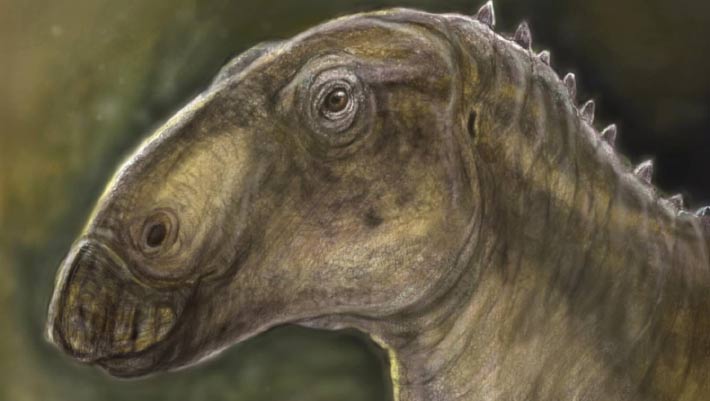
New Duck-Billed Dinosaur Unearthed in Romania
Un nouveau dinosaure à bec de canard découvert en Roumanie
bassin Hongrie Italie Roumanie Royaume-Uni Maastrichtien Dinosauria Kryptohadros nouvelle espèce squelette
Une équipe internationale de paléontologues de Roumanie, de Hongrie et d'Italie a identifié un nouveau genre et une nouvelle espèce de dinosaure herbivore à bec de canard à partir d'un squelette incomplet découvert dans le bassin de Hațeg, une dépression en forme de bol dans les Carpates de l'actuelle Roumanie. L'article Un nouveau dinosaure à bec de canard découvert en Roumanie est apparu en premier sur Sci.News : Breaking Science News.
16/06/2026 sci-news ⚙ Traduction automatique
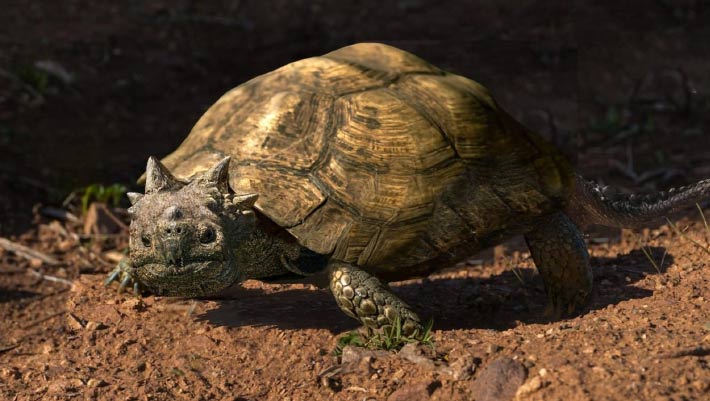
Fossil Discovery in Patagonia Reveals New Species of Horned Turtle
La découverte de fossiles en Patagonie révèle de nouvelles espèces de tortues à cornes
Argentine Maastrichtien fossile Dinosauria découverte extinction nouvelle espèce autres reptiles
Les paléontologues ont identifié une nouvelle espèce de tortue méiolaniforme du nord de la Patagonie, en Argentine, qui vivait à l'époque maastrichtienne, juste avant l'extinction massive déclenchée par un astéroïde qui a anéanti tous les dinosaures non aviaires. L'article La découverte de fossiles en Patagonie révèle de nouvelles espèces de tortues à cornes apparaît en premier sur Sci.News : Breaking Science News.
09/06/2026 sci-news ⚙ Traduction automatique