France

Pays

45 image(s) · 3 Actualités

Galerie d'images

Photographed at the Cité de l'Automobile, France.
Taxons Velocipes

Photographed at the Cité de l'Automobile, France.

France Velocipes
Solitary tooth of a sauropod from Angeac-Charente in France. Based on its morphology, it is not from an unnamed titanosaur like other material from this site, but from an unnamed titanosauriform similar to Ligabuesaurus or Veneosaurus.
Taxons Ligabuesaurus

Solitary tooth of a sauropod from Angeac-Charente in France. Based on its morphology, it is not from an unnamed titanosaur like other material from this site, but from an unnamed titanosauriform similar to Ligabuesaurus or Veneosaurus.

dent France Ligabuesaurus Titanosauria +1
this sponge of the Santonien chalk is on a flint nivel "Brasspoint" . it's probably Ventriculites - it was found in a subterranean quarry in the "Forêt de La Londe" Normandie - France (cliché Jean-Claude Staigre - CNEK 2017

this sponge of the Santonien chalk is on a flint nivel "Brasspoint" . it's probably Ventriculites - it was found in a subterranean quarry in the "Forêt de La Londe" Normandie - France (cliché Jean-Claude Staigre - CNEK 2017

France Santonien
Lower Santonian from Les Âges, commune of Saint-Crépin-de-Richemont, Dordogne, France. The limestone is very rich in bryozoans.

Lower Santonian from Les Âges, commune of Saint-Crépin-de-Richemont, Dordogne, France. The limestone is very rich in bryozoans.

France Santonien
The Pectinida fossil Neithea in Lower Santonian bioclastic limestone. Found near Les Âges in the commune of Saint-Crépin-de-Richemont, Dordogne, France.
Intervalles Santonian

The Pectinida fossil Neithea in Lower Santonian bioclastic limestone. Found near Les Âges in the commune of Saint-Crépin-de-Richemont, Dordogne, France.

France Santonien fossile
Crommium angustatum Grateloup, 1827 fossil snail shell (apical view) from the Oligocene of France. (42 mm across at its widest)
Of all the molluscs, the gastropods (snails) have made the most ecological adaptations.  They can be found in almost all fundamental environments: marine, freshwater, terrestrial.  Most gastropods live in the ocean, and have a single, asymmetrically coiled, external shell of calcium carbonate (CaCO3 - usually aragonite).  The hard calcareous shell is the most easily fossilized part of the gastropod.  The soft parts of a snail (the “slug” portion) include a well developed head having eyes, tentacles, and a mouth, and a well developed, strong, muscular foot used principally for locomotion.  The shell is carried upright on the snail’s back, or is partially dragged behind.  When threatened by a predator, many snails can retract their soft parts into the shell’s interior for protection.
Many fossil snails in the Paleozoic rock record are often not well preserved, or are preserved as internal molds.  The original aragonite of many gastropod shells is not stable on geologic time scales, and often recrystallizes or dissolves completely away.  Fossil snail shells in Mesozoic and Cenozoic rocks are usually better preserved.
Classification: Animalia, Mollusca, Gastropoda, Naticoidea, Ampullinidae
Age: Rupelian Stage (Stampian Stage), Lower Oligocene

Locality: Gaas, Landes Department, Aquitaine, southwestern France

Crommium angustatum Grateloup, 1827 fossil snail shell (apical view) from the Oligocene of France. (42 mm across at its widest) Of all the molluscs, the gastropods (snails) have made the most ecological adaptations. They can be found in almost all fundamental environments: marine, freshwater, terrestrial. Most gastropods live in the ocean, and have a single, asymmetrically coiled, external shell of calcium carbonate (CaCO3 - usually aragonite). The hard calcareous shell is the most easily fossilized part of the gastropod. The soft parts of a snail (the “slug” portion) include a well developed head having eyes, tentacles, and a mouth, and a well developed, strong, muscular foot used principally for locomotion. The shell is carried upright on the snail’s back, or is partially dragged behind. When threatened by a predator, many snails can retract their soft parts into the shell’s interior for protection. Many fossil snails in the Paleozoic rock record are often not well preserved, or are preserved as internal molds. The original aragonite of many gastropod shells is not stable on geologic time scales, and often recrystallizes or dissolves completely away. Fossil snail shells in Mesozoic and Cenozoic rocks are usually better preserved. Classification: Animalia, Mollusca, Gastropoda, Naticoidea, Ampullinidae Age: Rupelian Stage (Stampian Stage), Lower Oligocene Locality: Gaas, Landes Department, Aquitaine, southwestern France

écaille locomotion prédateur France +6
Crommium angustatum Grateloup, 1827 fossil snail shell (apical view) from the Oligocene of France. (42 mm across at its widest)
Of all the molluscs, the gastropods (snails) have made the most ecological adaptations.  They can be found in almost all fundamental environments: marine, freshwater, terrestrial.  Most gastropods live in the ocean, and have a single, asymmetrically coiled, external shell of calcium carbonate (CaCO3 - usually aragonite).  The hard calcareous shell is the most easily fossilized part of the gastropod.  The soft parts of a snail (the “slug” portion) include a well developed head having eyes, tentacles, and a mouth, and a well developed, strong, muscular foot used principally for locomotion.  The shell is carried upright on the snail’s back, or is partially dragged behind.  When threatened by a predator, many snails can retract their soft parts into the shell’s interior for protection.
Many fossil snails in the Paleozoic rock record are often not well preserved, or are preserved as internal molds.  The original aragonite of many gastropod shells is not stable on geologic time scales, and often recrystallizes or dissolves completely away.  Fossil snail shells in Mesozoic and Cenozoic rocks are usually better preserved.
Classification: Animalia, Mollusca, Gastropoda, Naticoidea, Ampullinidae
Age: Rupelian Stage (Stampian Stage), Lower Oligocene

Locality: Gaas, Landes Department, Aquitaine, southwestern France

Crommium angustatum Grateloup, 1827 fossil snail shell (apical view) from the Oligocene of France. (42 mm across at its widest) Of all the molluscs, the gastropods (snails) have made the most ecological adaptations. They can be found in almost all fundamental environments: marine, freshwater, terrestrial. Most gastropods live in the ocean, and have a single, asymmetrically coiled, external shell of calcium carbonate (CaCO3 - usually aragonite). The hard calcareous shell is the most easily fossilized part of the gastropod. The soft parts of a snail (the “slug” portion) include a well developed head having eyes, tentacles, and a mouth, and a well developed, strong, muscular foot used principally for locomotion. The shell is carried upright on the snail’s back, or is partially dragged behind. When threatened by a predator, many snails can retract their soft parts into the shell’s interior for protection. Many fossil snails in the Paleozoic rock record are often not well preserved, or are preserved as internal molds. The original aragonite of many gastropod shells is not stable on geologic time scales, and often recrystallizes or dissolves completely away. Fossil snail shells in Mesozoic and Cenozoic rocks are usually better preserved. Classification: Animalia, Mollusca, Gastropoda, Naticoidea, Ampullinidae Age: Rupelian Stage (Stampian Stage), Lower Oligocene Locality: Gaas, Landes Department, Aquitaine, southwestern France

écaille locomotion prédateur France +6
Crommium angustatum Grateloup, 1827 fossil snail shell (abapertural view) from the Oligocene of France. (57 mm tall)
Of all the molluscs, the gastropods (snails) have made the most ecological adaptations.  They can be found in almost all fundamental environments: marine, freshwater, terrestrial.  Most gastropods live in the ocean, and have a single, asymmetrically coiled, external shell of calcium carbonate (CaCO3 - usually aragonite).  The hard calcareous shell is the most easily fossilized part of the gastropod.  The soft parts of a snail (the “slug” portion) include a well developed head having eyes, tentacles, and a mouth, and a well developed, strong, muscular foot used principally for locomotion.  The shell is carried upright on the snail’s back, or is partially dragged behind.  When threatened by a predator, many snails can retract their soft parts into the shell’s interior for protection.
Many fossil snails in the Paleozoic rock record are often not well preserved, or are preserved as internal molds.  The original aragonite of many gastropod shells is not stable on geologic time scales, and often recrystallizes or dissolves completely away.  Fossil snail shells in Mesozoic and Cenozoic rocks are usually better preserved.
Classification: Animalia, Mollusca, Gastropoda, Naticoidea, Ampullinidae
Age: Rupelian Stage (Stampian Stage), Lower Oligocene

Locality: Gaas, Landes Department, Aquitaine, southwestern France

Crommium angustatum Grateloup, 1827 fossil snail shell (abapertural view) from the Oligocene of France. (57 mm tall) Of all the molluscs, the gastropods (snails) have made the most ecological adaptations. They can be found in almost all fundamental environments: marine, freshwater, terrestrial. Most gastropods live in the ocean, and have a single, asymmetrically coiled, external shell of calcium carbonate (CaCO3 - usually aragonite). The hard calcareous shell is the most easily fossilized part of the gastropod. The soft parts of a snail (the “slug” portion) include a well developed head having eyes, tentacles, and a mouth, and a well developed, strong, muscular foot used principally for locomotion. The shell is carried upright on the snail’s back, or is partially dragged behind. When threatened by a predator, many snails can retract their soft parts into the shell’s interior for protection. Many fossil snails in the Paleozoic rock record are often not well preserved, or are preserved as internal molds. The original aragonite of many gastropod shells is not stable on geologic time scales, and often recrystallizes or dissolves completely away. Fossil snail shells in Mesozoic and Cenozoic rocks are usually better preserved. Classification: Animalia, Mollusca, Gastropoda, Naticoidea, Ampullinidae Age: Rupelian Stage (Stampian Stage), Lower Oligocene Locality: Gaas, Landes Department, Aquitaine, southwestern France

écaille locomotion prédateur France +6
Pleuroceras spinatum (Bruguière 1789)- Amaltheidae; Pyritic specimen. biozone index to the end of Pliensbachian.
Stage : Pliensbachian from 189,6 ± 1,5 Ma to -183,0 ± 1,5 Ma (million years ago) (Domerian)
Locality: Lanuéjols, Gard, France
Size : 4.5x3.8x1.45 cm 30.6g

Pleuroceras spinatum (Bruguière 1789)- Amaltheidae; Pyritic specimen. biozone index to the end of Pliensbachian. Stage : Pliensbachian from 189,6 ± 1,5 Ma to -183,0 ± 1,5 Ma (million years ago) (Domerian) Locality: Lanuéjols, Gard, France Size : 4.5x3.8x1.45 cm 30.6g

France Pliensbachien spécimen
Fossil shell of Aulacostephanus yo from France, on display at Gallery of Paleontology and Comparative Anatomy, Paris.
Intervalles Kimmeridgian

Fossil shell of Aulacostephanus yo from France, on display at Gallery of Paleontology and Comparative Anatomy, Paris.

France fossile anatomie
Crioceratites fabreae fossils on display at the French National Museum of Natural History in Paris, France.

Crioceratites fabreae fossils on display at the French National Museum of Natural History in Paris, France.

musée France fossile
Crioceratites duvali fossil on display at the French National Museum of Natural History in Paris, France.

Crioceratites duvali fossil on display at the French National Museum of Natural History in Paris, France.

musée France fossile
Abri sous falaise à Voulgézac (Charente, France)

Abri sous falaise à Voulgézac (Charente, France)

France
Rock shelter (abri) in Coniacian limestone in the Boulou valley (left-hand side) near La Tabaterie, commune of La Gonterie-Boulouneix, Dordogne, France. In the abri there is a natural spring and next to it a deep well - dangerous!

Rock shelter (abri) in Coniacian limestone in the Boulou valley (left-hand side) near La Tabaterie, commune of La Gonterie-Boulouneix, Dordogne, France. In the abri there is a natural spring and next to it a deep well - dangerous!

France Coniacien
Limestone cliff with the stratigraphic stage of Cretaceous Coniacian near the eponym town of Cognac, Charente, Poitou-Charentes, France.

Limestone cliff with the stratigraphic stage of Cretaceous Coniacian near the eponym town of Cognac, Charente, Poitou-Charentes, France.

France Coniacien Crétacé
crétacé limestone at Cognac, Charente, SW France

crétacé limestone at Cognac, Charente, SW France

France Crétacé
1 2 3

Actualités

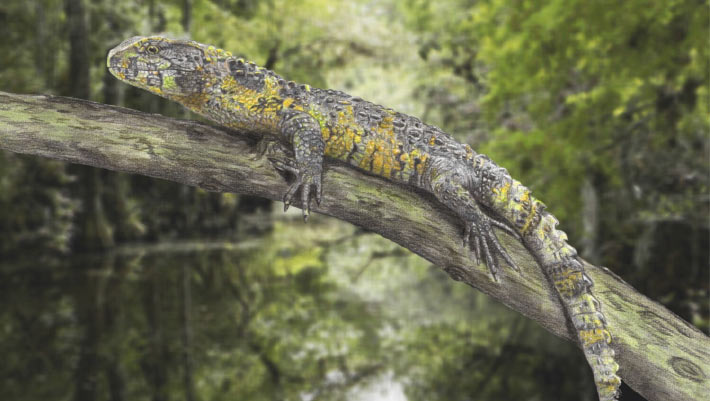
83-Million-Year-Old Crocodile Lizard Fossil Unearthed in France
Un fossile de lézard crocodile vieux de 83 millions d'années découvert en France
mâchoire France fossile découverte nouvelle espèce partiel
Les paléontologues ont identifié un nouveau genre et une nouvelle espèce de lézard pan-shinisaure à partir d'une mâchoire supérieure partielle découverte dans le sud de la France, repoussant la présence de sa lignée en Europe d'au moins 30 millions d'années. L'article Un fossile de lézard crocodile vieux de 83 millions d'années découvert en France est apparu en premier sur Sci.News : Breaking Science News.
22/05/2026 sci-news ⚙ Traduction automatique
Des ossements anciens révèlent des rituels de victoire effrayants après les premières guerres d’Europe
os dent France
De nouvelles preuves provenant de charniers néolithiques dans le nord-est de la France suggèrent que certaines des premières confrontations violentes en Europe n’étaient pas des actes de brutalité aléatoires, mais des démonstrations de pouvoir soigneusement mises en scène. En analysant des indices chimiques contenus dans des os et des dents anciennes, les chercheurs ont découvert que de nombreuses victimes étaient des étrangers qui avaient subi une violence extrême et ritualisée après le conflit. Les armes coupées semblent avoir été prises sur des ennemis locaux tués au combat, tandis que des captifs venus de plus loin ont été exécutés dans un gri
08/02/2026 sciencedaily ⚙ Traduction automatique
Mirasaura: Beast of the Week
Mirasaura : la bête de la semaine
reconstitution France Trias supérieur Trias
 Cette semaine, nous allons découvrir une petite créature super unique et récemment publiée, Mirasaura grouvogeli ! Reconstitution à l'aquarelle de Mirasaura grouvogeli par Christopher DiPiazza. Mirasaura était un reptile qui vivait dans ce qui est aujourd'hui la France, à la fin du Trias, il y a 247 millions d'années.  Les adultes de cette espèce peuvent avoir atteint environ 8 à 10 pouces (20 à 25 cm). Le nom du genre se traduit par « Reptile merveilleux ».  Le nom de l'espèce, grouvogeli, rend hommage à Louis Grouvogel, qui a découvert à l'origine
27/07/2025 prehistoricbeastoftheweek ⚙ Traduction automatique