datation

Thématique

3 image(s) · 8 Actualités

Galerie d'images

Tooth of extinct Hybodontidae

View: Occlusal
Datation: Jurássic Sup., Kimmerdgian/Tithonian ~150 Millions years
Geologic horizon: Sub bacia Bombarral-Alcobaça / Lourinhã Fm. - PORTUGAL
Deposit Number: PE02-VET-00087 in CCN Coll.
Scale:  1 mm

Tooth of extinct Hybodontidae View: Occlusal Datation: Jurássic Sup., Kimmerdgian/Tithonian ~150 Millions years Geologic horizon: Sub bacia Bombarral-Alcobaça / Lourinhã Fm. - PORTUGAL Deposit Number: PE02-VET-00087 in CCN Coll. Scale: 1 mm

écaille dent Portugal Alcobaça +3
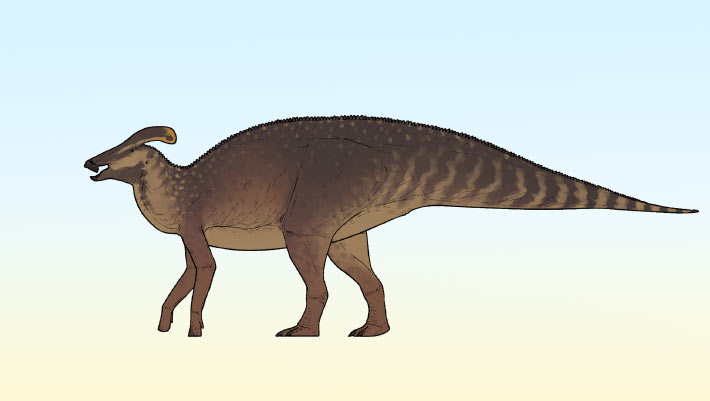
Rates of skeletal character evolution in the skull and postcranial skeleton of hadrosauroids. Cladograms illustrate the results from branch likelihood tests for two morphological partitions: skull (cranium and mandible) (A) and postcranial skeleton (B). In both cladograms, results from the branch likelihood tests are summarized on a strict consensus tree derived from four separately analyzed MPTs, each with 100 dating replicates (a total of 400 Hedman-dated phylogenies). Pie charts on branches illustrate the proportion of dating replicates that showed significantly high rates (red), slow rates (blue), or nonsignificant average rates (white). No pie charts are plotted on branches that showed nonsignificant rates in 100% of dating replicates. Branches that showed high rates (red) in more than 50% of dating replicates are doubled in length. See the Supplementary Material for Hedman-based results plotted separately for each MPT (Supplementary Fig. S2) and for results using the MBL dating method (Supplementary Fig. S3). Silhouettes were created by Scott Hartman and were downloaded from http://phylopic.org (Creative Commons license CC BY 3.0).

Rates of skeletal character evolution in the skull and postcranial skeleton of hadrosauroids. Cladograms illustrate the results from branch likelihood tests for two morphological partitions: skull (cranium and mandible) (A) and postcranial skeleton (B). In both cladograms, results from the branch likelihood tests are summarized on a strict consensus tree derived from four separately analyzed MPTs, each with 100 dating replicates (a total of 400 Hedman-dated phylogenies). Pie charts on branches illustrate the proportion of dating replicates that showed significantly high rates (red), slow rates (blue), or nonsignificant average rates (white). No pie charts are plotted on branches that showed nonsignificant rates in 100% of dating replicates. Branches that showed high rates (red) in more than 50% of dating replicates are doubled in length. See the Supplementary Material for Hedman-based results plotted separately for each MPT (Supplementary Fig. S2) and for results using the MBL dating method (Supplementary Fig. S3). Silhouettes were created by Scott Hartman and were downloaded from http://phylopic.org (Creative Commons license CC BY 3.0).

Protohadros datation évolution squelette +1
Natural-colour satellite image of part of the Kaiparowits Basin (a central portion of Grand Staircase-Escalante). The branch-like shapes are networks of canyons carved by rivers that dried up millions of years ago. The ridge running roughly north-south through the scene is the Cockscomb, which is surrounded by distinct rock formations deposited at different times in the geologic past. West of the Cockscomb is the Navajo Sandstone, dating from the Triassic. East of the Cockscomb are two formations from the Cretaceous: the light-toned Wahweap and darker Kaiparowits.

Natural-colour satellite image of part of the Kaiparowits Basin (a central portion of Grand Staircase-Escalante). The branch-like shapes are networks of canyons carved by rivers that dried up millions of years ago. The ridge running roughly north-south through the scene is the Cockscomb, which is surrounded by distinct rock formations deposited at different times in the geologic past. West of the Cockscomb is the Navajo Sandstone, dating from the Triassic. East of the Cockscomb are two formations from the Cretaceous: the light-toned Wahweap and darker Kaiparowits.

Allen Kaiparowits Navajo Sandstone Crétacé +3

Actualités

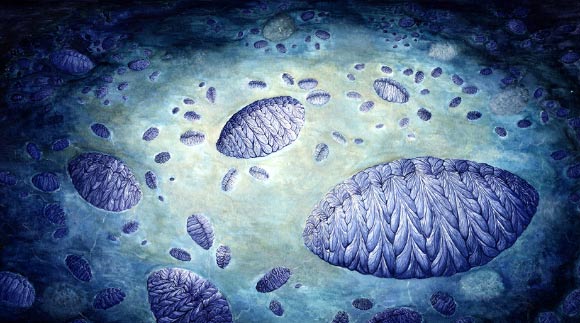
Earth’s Earliest Animals May Have Thrived Too Easily to Evolve
Les premiers animaux de la Terre ont peut-être prospéré trop facilement pour évoluer
reproduction Édiacarien fossile datation évolution
Les fossiles de certains des animaux les plus anciens connus sur Terre, datant d'il y a 574 millions d'années (période Édiacarienne), suggèrent que le clonage, et non la compétition, a dominé les mers de l'Édiacarien, ralentissant l'évolution jusqu'à ce que le stress environnemental contribue à l'essor de la reproduction sexuée et à un éclatement de la biodiversité. L’article Les premiers animaux de la Terre ont peut-être prospéré trop facilement pour évoluer est apparu en premier sur Sci.News : Breaking Science News.
10/06/2026 sci-news ⚙ Traduction automatique
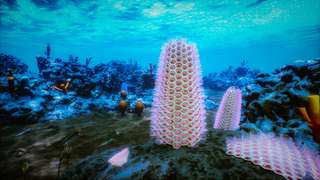
Une découverte en Chine bouscule l’histoire d’étranges animaux vieux de 520 millions d’années
Chine Cambrien fossile datation découverte
Discrets mais omniprésents dans les océans actuels, les bryozoaires cachent une histoire bien plus ancienne qu’on ne le pensait. Des fossiles exceptionnels découverts en Chine montrent qu’il y a 520 millions d’années, ces animaux coloniaux étaient déjà des structures complexes, pleinement...
03/06/2026 futura-terre
Incroyable découverte : des formes de vie ont survécu dans l’obscurité totale il y a 180 millions d’années
Maroc datation découverte
Des chercheurs ont mis au jour, dans les montagnes du Maroc, des traces biologiques vieilles de 180 millions d'années enfouies dans des sédiments marins abyssaux. Ces structures, normalement absentes de tels environnements, remettent en question ce que l'on croyait savoir sur les écosystèmes...
08/05/2026 futura-terre
Cet animal vieux de 275 millions d'années avait une mâchoire tordue comme aucun animal vivant aujourd'hui
mâchoire Brésil fossile datation
Au fond d'un lit de rivière asséché au Brésil, des scientifiques ont découvert un étrange mystère préhistorique : les mâchoires tordues d'un étrange animal perdu depuis longtemps, comme on n'en avait jamais vu auparavant. Datant de 275 millions d'années, cette créature, nommée Tanyka amnicola, appartenait à une lignée ancienne qui aurait déjà dû disparaître, ce qui en fait une sorte de « fossile vivant » de son époque.
01/05/2026 sciencedaily ⚙ Traduction automatique
Des scientifiques ont découvert un rhinocéros dans l'Arctique et cela change tout
fossile datation nouvelle espèce
Des scientifiques ont découvert une nouvelle espèce de rhinocéros dans l'Extrême-Arctique canadien, révélant que les rhinocéros vivaient autrefois bien plus au nord que prévu. Le fossile, datant de 23 millions d'années, est exceptionnellement complet et a contribué à remodeler les idées sur la façon dont ces animaux ont migré entre les continents. Les preuves suggèrent que les rhinocéros ont traversé l'Europe vers l'Amérique du Nord plus récemment que les scientifiques ne le pensaient autrefois.
24/03/2026 sciencedaily ⚙ Traduction automatique
1 2