prédateur

Comportement & Physiologie

11 image(s) · 39 Actualités

Galerie d'images

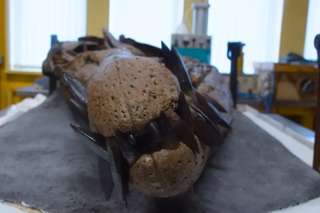
Pliosaurus (Luskhan itilensis) lived on the territory of the Volga region in the Hauterivian age of the Early Cretaceous period. Discovered in 2002 by G.N. Uspensky on the banks of the Volga near the village of Slantsevy Rudnik. This is the most complete pliosaurus skeleton found in Russia. This pliosaurus was not a predator and preferred to feed on fish and cephalopods.

Pliosaurus (Luskhan itilensis) lived on the territory of the Volga region in the Hauterivian age of the Early Cretaceous period. Discovered in 2002 by G.N. Uspensky on the banks of the Volga near the village of Slantsevy Rudnik. This is the most complete pliosaurus skeleton found in Russia. This pliosaurus was not a predator and preferred to feed on fish and cephalopods.

prédateur Russie Crétacé Crétacé inférieur +5
Huaxiazhoulong is a fairly large ankylosaurid dinosaur, at around 6 m in length. It was a robust quadruped with a beak and teeth adapted for processing its herbivorous diet. Huaxiazhoulong had an armor of osteoderms, and the characteristic ankylosaurid tail club which was likely used in defense against predators, as well as intraspecific combat.
Taxons Huaxiazhoulong

Huaxiazhoulong is a fairly large ankylosaurid dinosaur, at around 6 m in length. It was a robust quadruped with a beak and teeth adapted for processing its herbivorous diet. Huaxiazhoulong had an armor of osteoderms, and the characteristic ankylosaurid tail club which was likely used in defense against predators, as well as intraspecific combat.

armure défense prédateur Ankylosauridae +2
Crommium angustatum Grateloup, 1827 fossil snail shell (apical view) from the Oligocene of France. (42 mm across at its widest)
Of all the molluscs, the gastropods (snails) have made the most ecological adaptations.  They can be found in almost all fundamental environments: marine, freshwater, terrestrial.  Most gastropods live in the ocean, and have a single, asymmetrically coiled, external shell of calcium carbonate (CaCO3 - usually aragonite).  The hard calcareous shell is the most easily fossilized part of the gastropod.  The soft parts of a snail (the “slug” portion) include a well developed head having eyes, tentacles, and a mouth, and a well developed, strong, muscular foot used principally for locomotion.  The shell is carried upright on the snail’s back, or is partially dragged behind.  When threatened by a predator, many snails can retract their soft parts into the shell’s interior for protection.
Many fossil snails in the Paleozoic rock record are often not well preserved, or are preserved as internal molds.  The original aragonite of many gastropod shells is not stable on geologic time scales, and often recrystallizes or dissolves completely away.  Fossil snail shells in Mesozoic and Cenozoic rocks are usually better preserved.
Classification: Animalia, Mollusca, Gastropoda, Naticoidea, Ampullinidae
Age: Rupelian Stage (Stampian Stage), Lower Oligocene

Locality: Gaas, Landes Department, Aquitaine, southwestern France

Crommium angustatum Grateloup, 1827 fossil snail shell (apical view) from the Oligocene of France. (42 mm across at its widest) Of all the molluscs, the gastropods (snails) have made the most ecological adaptations. They can be found in almost all fundamental environments: marine, freshwater, terrestrial. Most gastropods live in the ocean, and have a single, asymmetrically coiled, external shell of calcium carbonate (CaCO3 - usually aragonite). The hard calcareous shell is the most easily fossilized part of the gastropod. The soft parts of a snail (the “slug” portion) include a well developed head having eyes, tentacles, and a mouth, and a well developed, strong, muscular foot used principally for locomotion. The shell is carried upright on the snail’s back, or is partially dragged behind. When threatened by a predator, many snails can retract their soft parts into the shell’s interior for protection. Many fossil snails in the Paleozoic rock record are often not well preserved, or are preserved as internal molds. The original aragonite of many gastropod shells is not stable on geologic time scales, and often recrystallizes or dissolves completely away. Fossil snail shells in Mesozoic and Cenozoic rocks are usually better preserved. Classification: Animalia, Mollusca, Gastropoda, Naticoidea, Ampullinidae Age: Rupelian Stage (Stampian Stage), Lower Oligocene Locality: Gaas, Landes Department, Aquitaine, southwestern France

écaille locomotion prédateur France +6
Crommium angustatum Grateloup, 1827 fossil snail shell (apical view) from the Oligocene of France. (42 mm across at its widest)
Of all the molluscs, the gastropods (snails) have made the most ecological adaptations.  They can be found in almost all fundamental environments: marine, freshwater, terrestrial.  Most gastropods live in the ocean, and have a single, asymmetrically coiled, external shell of calcium carbonate (CaCO3 - usually aragonite).  The hard calcareous shell is the most easily fossilized part of the gastropod.  The soft parts of a snail (the “slug” portion) include a well developed head having eyes, tentacles, and a mouth, and a well developed, strong, muscular foot used principally for locomotion.  The shell is carried upright on the snail’s back, or is partially dragged behind.  When threatened by a predator, many snails can retract their soft parts into the shell’s interior for protection.
Many fossil snails in the Paleozoic rock record are often not well preserved, or are preserved as internal molds.  The original aragonite of many gastropod shells is not stable on geologic time scales, and often recrystallizes or dissolves completely away.  Fossil snail shells in Mesozoic and Cenozoic rocks are usually better preserved.
Classification: Animalia, Mollusca, Gastropoda, Naticoidea, Ampullinidae
Age: Rupelian Stage (Stampian Stage), Lower Oligocene

Locality: Gaas, Landes Department, Aquitaine, southwestern France

Crommium angustatum Grateloup, 1827 fossil snail shell (apical view) from the Oligocene of France. (42 mm across at its widest) Of all the molluscs, the gastropods (snails) have made the most ecological adaptations. They can be found in almost all fundamental environments: marine, freshwater, terrestrial. Most gastropods live in the ocean, and have a single, asymmetrically coiled, external shell of calcium carbonate (CaCO3 - usually aragonite). The hard calcareous shell is the most easily fossilized part of the gastropod. The soft parts of a snail (the “slug” portion) include a well developed head having eyes, tentacles, and a mouth, and a well developed, strong, muscular foot used principally for locomotion. The shell is carried upright on the snail’s back, or is partially dragged behind. When threatened by a predator, many snails can retract their soft parts into the shell’s interior for protection. Many fossil snails in the Paleozoic rock record are often not well preserved, or are preserved as internal molds. The original aragonite of many gastropod shells is not stable on geologic time scales, and often recrystallizes or dissolves completely away. Fossil snail shells in Mesozoic and Cenozoic rocks are usually better preserved. Classification: Animalia, Mollusca, Gastropoda, Naticoidea, Ampullinidae Age: Rupelian Stage (Stampian Stage), Lower Oligocene Locality: Gaas, Landes Department, Aquitaine, southwestern France

écaille locomotion prédateur France +6
Crommium angustatum Grateloup, 1827 fossil snail shell (abapertural view) from the Oligocene of France. (57 mm tall)
Of all the molluscs, the gastropods (snails) have made the most ecological adaptations.  They can be found in almost all fundamental environments: marine, freshwater, terrestrial.  Most gastropods live in the ocean, and have a single, asymmetrically coiled, external shell of calcium carbonate (CaCO3 - usually aragonite).  The hard calcareous shell is the most easily fossilized part of the gastropod.  The soft parts of a snail (the “slug” portion) include a well developed head having eyes, tentacles, and a mouth, and a well developed, strong, muscular foot used principally for locomotion.  The shell is carried upright on the snail’s back, or is partially dragged behind.  When threatened by a predator, many snails can retract their soft parts into the shell’s interior for protection.
Many fossil snails in the Paleozoic rock record are often not well preserved, or are preserved as internal molds.  The original aragonite of many gastropod shells is not stable on geologic time scales, and often recrystallizes or dissolves completely away.  Fossil snail shells in Mesozoic and Cenozoic rocks are usually better preserved.
Classification: Animalia, Mollusca, Gastropoda, Naticoidea, Ampullinidae
Age: Rupelian Stage (Stampian Stage), Lower Oligocene

Locality: Gaas, Landes Department, Aquitaine, southwestern France

Crommium angustatum Grateloup, 1827 fossil snail shell (abapertural view) from the Oligocene of France. (57 mm tall) Of all the molluscs, the gastropods (snails) have made the most ecological adaptations. They can be found in almost all fundamental environments: marine, freshwater, terrestrial. Most gastropods live in the ocean, and have a single, asymmetrically coiled, external shell of calcium carbonate (CaCO3 - usually aragonite). The hard calcareous shell is the most easily fossilized part of the gastropod. The soft parts of a snail (the “slug” portion) include a well developed head having eyes, tentacles, and a mouth, and a well developed, strong, muscular foot used principally for locomotion. The shell is carried upright on the snail’s back, or is partially dragged behind. When threatened by a predator, many snails can retract their soft parts into the shell’s interior for protection. Many fossil snails in the Paleozoic rock record are often not well preserved, or are preserved as internal molds. The original aragonite of many gastropod shells is not stable on geologic time scales, and often recrystallizes or dissolves completely away. Fossil snail shells in Mesozoic and Cenozoic rocks are usually better preserved. Classification: Animalia, Mollusca, Gastropoda, Naticoidea, Ampullinidae Age: Rupelian Stage (Stampian Stage), Lower Oligocene Locality: Gaas, Landes Department, Aquitaine, southwestern France

écaille locomotion prédateur France +6
Illustration of a juvenile Tyrannosaurus rex.
Most of this restoration is mostly inspired from the models of 1-year old Tyrannosaurus from the exhibition "T.rex: The Ultimate Predator" at American Museum of Natural History, New York (2019-2021).[1]
[2] and the juvenile Tarbosaurus MPC-D 107/7 (2-3 years old at death).[3]

References

↑ [1]

↑ [2]

↑ Tsuihiji T et.al (2011). "Cranial osteology of a juvenile specimen of Tarbosaurus bataar (Theropoda, Tyrannosauridae) from the Nemegt Formation (Upper Cretaceous) of Bugin Tsav, Mongolia". Journal of Vertebrate Paleontology 31(3): p. 497-517

Illustration of a juvenile Tyrannosaurus rex. Most of this restoration is mostly inspired from the models of 1-year old Tyrannosaurus from the exhibition "T.rex: The Ultimate Predator" at American Museum of Natural History, New York (2019-2021).[1] [2] and the juvenile Tarbosaurus MPC-D 107/7 (2-3 years old at death).[3] References ↑ [1] ↑ [2] ↑ Tsuihiji T et.al (2011). "Cranial osteology of a juvenile specimen of Tarbosaurus bataar (Theropoda, Tyrannosauridae) from the Nemegt Formation (Upper Cretaceous) of Bugin Tsav, Mongolia". Journal of Vertebrate Paleontology 31(3): p. 497-517

prédateur musée Mongolie Crétacé +8
Alioramus altai skull in the exhibit, T. rex, The Ultimate Predator, in the American Museum of Natural History (with permission by Ben Miller).
Taxons Alioramini

Alioramus altai skull in the exhibit, T. rex, The Ultimate Predator, in the American Museum of Natural History (with permission by Ben Miller).

prédateur musée Alioramini Alioramus +1
The theropod skull displays the distinctive features of this apex predator, including a long, robust snout, conical teeth, and strong jaw muscles adapted for gripping and tearing prey.
Taxons Rajasaurus

The theropod skull displays the distinctive features of this apex predator, including a long, robust snout, conical teeth, and strong jaw muscles adapted for gripping and tearing prey.

prédateur proie Rajasaurus crâne
The Maastrichtian, Transylvanian giant azhdarchid pterosaur Hatzegopteryx sp. preys on the rhabdodontid iguanodontian Zalmoxes. Because large predatory theropods are unknown on Late Cretaceous Haţeg Island, giant azhdarchids may have played a key role as terrestrial predators in this community.

The Maastrichtian, Transylvanian giant azhdarchid pterosaur Hatzegopteryx sp. preys on the rhabdodontid iguanodontian Zalmoxes. Because large predatory theropods are unknown on Late Cretaceous Haţeg Island, giant azhdarchids may have played a key role as terrestrial predators in this community.

prédateur proie Crétacé Crétacé supérieur +8
Bones and remains of prehistoric animals
A massive marine lizard and apex predator, growing to length of 14 m (46 ft).[1]

Bones and remains of prehistoric animals A massive marine lizard and apex predator, growing to length of 14 m (46 ft).[1]

os prédateur Tylosaurus
Early Triassic marine vertebrate apex predators during the Griesbachian to Smithian interval (left) and the Spathian to Anisian interval (right). Predators not exactly to scale; see text and Tables S1–S2 for details on body size and stratigraphic occurrence. Marine vertebrate apex predators: 1, Wantzosaurus (trematosaurid ‘amphibian’); 2, Fadenia (eugeneodontiform chondrichthyan); 3, Saurichthys (actinopterygian ambush predator); 4, Rebellatrix (fork-tailed actinistian); 5, Hovasaurus (‘younginiform’ diapsid reptile); 6, Birgeria (fast-swimming predatory actinopterygian); 7, Aphaneramma (trematosaurid ‘amphibian’); 8, Bobasatrania (durophagous actinopterygian); 9, hybodontoid chondrichthyan with durophagous (e.g. Acrodus, Palaeobates) or tearing-type dentition (e.g. Hybodus); 10, e.g., Mylacanthus (durophagous actinistian); 11, Tanystropheus (protorosaurian reptile); 12, Corosaurus (sauropterygian reptile); 13, e.g., Ticinepomis (actinistian); 14, Mixosaurus (small ichthyosaur); 15, large cymbospondylid/shastasaurid ichthyosaur; 16, neoselachian chondrichthyan; 17, Omphalosaurus skeleton (possible durophagous ichthyosaur); 18, Placodus (durophagous sauropterygian reptile).
Taxons Corosaurus

Early Triassic marine vertebrate apex predators during the Griesbachian to Smithian interval (left) and the Spathian to Anisian interval (right). Predators not exactly to scale; see text and Tables S1–S2 for details on body size and stratigraphic occurrence. Marine vertebrate apex predators: 1, Wantzosaurus (trematosaurid ‘amphibian’); 2, Fadenia (eugeneodontiform chondrichthyan); 3, Saurichthys (actinopterygian ambush predator); 4, Rebellatrix (fork-tailed actinistian); 5, Hovasaurus (‘younginiform’ diapsid reptile); 6, Birgeria (fast-swimming predatory actinopterygian); 7, Aphaneramma (trematosaurid ‘amphibian’); 8, Bobasatrania (durophagous actinopterygian); 9, hybodontoid chondrichthyan with durophagous (e.g. Acrodus, Palaeobates) or tearing-type dentition (e.g. Hybodus); 10, e.g., Mylacanthus (durophagous actinistian); 11, Tanystropheus (protorosaurian reptile); 12, Corosaurus (sauropterygian reptile); 13, e.g., Ticinepomis (actinistian); 14, Mixosaurus (small ichthyosaur); 15, large cymbospondylid/shastasaurid ichthyosaur; 16, neoselachian chondrichthyan; 17, Omphalosaurus skeleton (possible durophagous ichthyosaur); 18, Placodus (durophagous sauropterygian reptile).

écaille prédateur Anisien Early Triassic +6
Early Triassic marine vertebrate apex predators during the Griesbachian to Smithian interval (left) and the Spathian to Anisian interval (right). Predators not exactly to scale; see text and Tables S1–S2 for details on body size and stratigraphic occurrence. Marine vertebrate apex predators: 1, Wantzosaurus (trematosaurid ‘amphibian’); 2, Fadenia (eugeneodontiform chondrichthyan); 3, Saurichthys (actinopterygian ambush predator); 4, Rebellatrix (fork-tailed actinistian); 5, Hovasaurus (‘younginiform’ diapsid reptile); 6, Birgeria (fast-swimming predatory actinopterygian); 7, Aphaneramma (trematosaurid ‘amphibian’); 8, Bobasatrania (durophagous actinopterygian); 9, hybodontoid chondrichthyan with durophagous (e.g. Acrodus, Palaeobates) or tearing-type dentition (e.g. Hybodus); 10, e.g., Mylacanthus (durophagous actinistian); 11, Tanystropheus (protorosaurian reptile); 12, Corosaurus (sauropterygian reptile); 13, e.g., Ticinepomis (actinistian); 14, Mixosaurus (small ichthyosaur); 15, large cymbospondylid/shastasaurid ichthyosaur; 16, neoselachian chondrichthyan; 17, Omphalosaurus skeleton (possible durophagous ichthyosaur); 18, Placodus (durophagous sauropterygian reptile).
Taxons Corosauridae

Early Triassic marine vertebrate apex predators during the Griesbachian to Smithian interval (left) and the Spathian to Anisian interval (right). Predators not exactly to scale; see text and Tables S1–S2 for details on body size and stratigraphic occurrence. Marine vertebrate apex predators: 1, Wantzosaurus (trematosaurid ‘amphibian’); 2, Fadenia (eugeneodontiform chondrichthyan); 3, Saurichthys (actinopterygian ambush predator); 4, Rebellatrix (fork-tailed actinistian); 5, Hovasaurus (‘younginiform’ diapsid reptile); 6, Birgeria (fast-swimming predatory actinopterygian); 7, Aphaneramma (trematosaurid ‘amphibian’); 8, Bobasatrania (durophagous actinopterygian); 9, hybodontoid chondrichthyan with durophagous (e.g. Acrodus, Palaeobates) or tearing-type dentition (e.g. Hybodus); 10, e.g., Mylacanthus (durophagous actinistian); 11, Tanystropheus (protorosaurian reptile); 12, Corosaurus (sauropterygian reptile); 13, e.g., Ticinepomis (actinistian); 14, Mixosaurus (small ichthyosaur); 15, large cymbospondylid/shastasaurid ichthyosaur; 16, neoselachian chondrichthyan; 17, Omphalosaurus skeleton (possible durophagous ichthyosaur); 18, Placodus (durophagous sauropterygian reptile).

écaille prédateur Anisien Early Triassic +6

Actualités

Ancient Sea Creature Pushes Back Origins of Spider Fangs to 518 Million Years Ago
Une ancienne créature marine repousse les origines des crocs d’araignées il y a 518 millions d’années
mâchoire prédateur Chine Cambrien évolution
Urokodia aequalis, un prédateur marin du début du Cambrien du biote de Chengjiang en Chine, préserve les premières traces connues de chélicères - des structures en forme de pinces qui ont ensuite évolué pour devenir les crocs des araignées et les pinces des scorpions. L'article Une ancienne créature marine repousse les origines des crocs d'araignées il y a 518 millions d'années est apparu en premier sur Sci.News : Breaking Science News.
01/07/2026 sci-news ⚙ Traduction automatique
Ce dinosaure à quatre ailes aurait terrorisé les premiers oiseaux de la Terre
os plume prédateur Chine Dinosauria Jian Velociraptor oiseau
Un dinosaure à plumes récemment découvert appelé Jian changmaensis pourrait être le prédateur disparu responsable de mystérieux tas d'os d'oiseaux préhistoriques écrasés en Chine. Le planeur à quatre ailes, un proche cousin du vélociraptor, aide à révéler comment les lève-tôt et leurs parents dinosaures partageaient le même paysage ancien.
23/06/2026 sciencedaily ⚙ Traduction automatique
Il a fallu 40 ans au T. rex pour atteindre sa taille maximale, selon les scientifiques
croissance prédateur fossile Tyrannosaurus étude
Le Tyrannosaurus rex a peut-être eu une croissance beaucoup plus lente que les scientifiques ne le pensaient. Une nouvelle étude portant sur 17 fossiles de tyrannosaures a révélé que le prédateur géant avait probablement mis environ 40 ans pour atteindre sa taille maximale d'environ huit tonnes, prolongeant les estimations précédentes de 15 ans.
22/06/2026 sciencedaily ⚙ Traduction automatique
Earth’s First Land Animals May Never Have Been Amphibian-Like After All
Les premiers animaux terrestres de la Terre n’ont peut-être jamais ressemblé à des amphibiens après tout
prédateur musée Carbonifère évolution
Les paléontologues du Field Museum of Natural History ont décrit les restes fossilisés de bébés embolomères, des prédateurs ressemblant à des crocodiles qui rôdaient dans d'anciennes rivières et marécages il y a entre 350 et 280 millions d'années. L’article Les premiers animaux terrestres de la Terre n’ont peut-être jamais ressemblé à des amphibiens après tout, apparu en premier sur Sci.News : Breaking Science News.
19/06/2026 sci-news ⚙ Traduction automatique
Une nouvelle étude révèle différentes stratégies de croissance chez les minuscules espèces de dimétrodon
croissance prédateur autres reptiles étude
Une étude récemment publiée examinant les taux de croissance de Dimetrodon teutonis et Dimetrodon natalis a fourni une nouvelle perspective sur une célèbre synapside primitive. Les chercheurs ont découvert que les plus petites espèces connues de Dimetrodon ont atteint leur petite taille de manière contrastée. L'étude fournit de nouveaux aperçus de la vie de ces prédateurs emblématiques à voile qui
17/06/2026 everythingdinosaur ⚙ Traduction automatique
1 2 3 4 5 6 7 8