News

Latest palaeontology news

All FR EN everythingdinosaur futura-terre palaeocast prehistoricbeastoftheweek sci-news sciencedaily sciencedaily-fossils sciencedaily-human-evo sciencedaily-paleo sciencesetavenir
Earliest Organisms on Earth Built Their Biochemistry around Molybdenum, Study Suggests
Archean study
New research reveals that 3.7 to 3.3 billion years ago (Archean Eon), ancient microbes relied on molybdenum -- a metal that was vanishingly rare at the time -- and even experimented with tungsten. The post Earliest Organisms on Earth Built Their Biochemistry around Molybdenum, Study Suggests appeared first on Sci.News: Breaking Science News.
05/05/2026 sci-news
What Was Dunkleosteus? Facts About the Giant Armoured Fish (Part 1)
predator Devonian Late Devonian Dinosauria
At Everything Dinosaur, we receive emails from fans of prehistoric animals.  We frequently receive questions about dinosaurs; however, we get asked questions about lots of other prehistoric animals too.  For example, we have compiled a list of questions about the giant, Late Devonian placoderm Dunkleosteus.  It seems that this apex predator has lots of fans. 
05/05/2026 everythingdinosaur
A 75-million-year-old fossil reveals a shocking tyrannosaur secret
bone predator fossil Tyrannosaurus behavior
Tyrannosaurs may be famous as fearsome apex predators, but new research reveals a more opportunistic—and slightly grim—side to their behavior. Using high-resolution 3D scans, a researcher identified precise bite marks on a massive tyrannosaur foot bone, showing that a smaller tyrannosaur had fed on the remains of a much larger relative over 75 million years ago.
05/05/2026 sciencedaily
4,000-year-old tablets reveal magic spells, kings feared, and a beer receipt
discovery
Long-forgotten ancient tablets have been decoded, uncovering a mix of magic, politics, and daily life from early civilizations. Among the discoveries are rare anti-witchcraft rituals meant to protect kings and a regnal list that could point to the real-life existence of Gilgamesh. Some texts reveal correspondence between rulers, while others show the rise of complex bureaucracies. One tablet even records something as ordinary—and relatable—as a receipt for beer.
05/05/2026 sciencedaily-fossils
Early Sauropodomorph Dinosaur Unearthed in China
China Early Jurassic Jurassic Dinosauria Massopoda new species partial skeleton
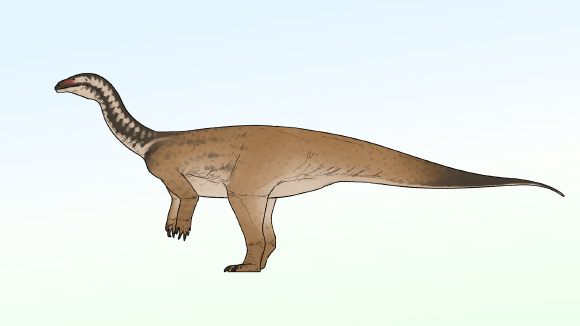
A new genus and species of massopodan sauropodomorph that lived during the Early Jurassic epoch has been identified from a partial skeleton unearthed in southwestern China. The post Early Sauropodomorph Dinosaur Unearthed in China appeared first on Sci.News: Breaking Science News.
04/05/2026 sci-news
Ammonite Model Proves Invaluable When on a Guided Fossil Walk
Jurassic fossil
Lyme Regis is famous for its fossils.  Indeed, thousands of tourists flock to this part of the "Jurassic Coast" on the hunt for fossils. It is sensible to book a fossil walk with an experienced guide. Our chum Brandon Lennon took the guys out from the "All the Gear" YouTube channel for a guided fossil
04/05/2026 everythingdinosaur
Mexidracon: Beast of the Week
Mexico Cretaceous Late Cretaceous Dinosauria
 This week we will be taking a look at a unusual theropod.  Check out Mexidracon longimanus!Mexidracon was a theropod dinosaur that lived in what is now Coahuila, Mexico, during the late Cretaceous period, about 72 million years ago.  From beak to tail it measured about 10 feet (3m) long.  Its genus name translates to "Mexican Dragon" and its species name to "long hand".  It may have been a plant-eater when alive or possibly eaten a mix of both plants and meat.  Mexidracon life reconstruction in
03/05/2026 prehistoricbeastoftheweek
Episode 175/176: Insect Gigantism
Carboniferous
Can respiration be key to understanding gigantism in Carboniferous insects
02/05/2026 palaeocast
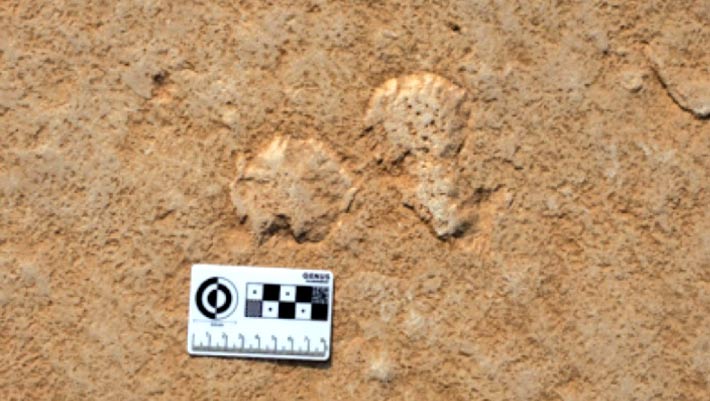
106-Million-Year-Old Pterosaur Footprints Discovered in Korea
South Korea tracks Neoazhdarchia Pterosauria discovery
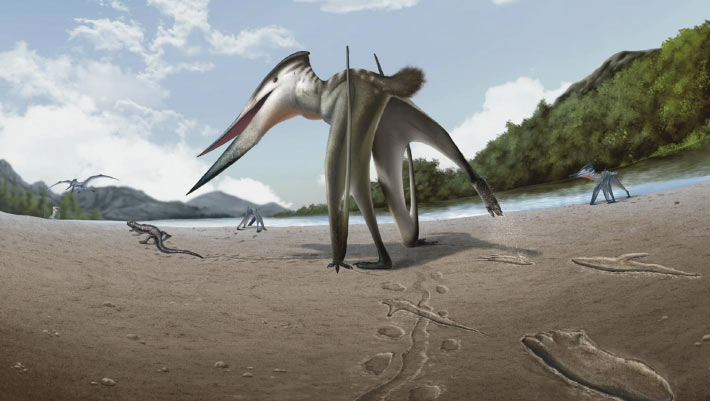
A set of neoazhdarchian pterosaur footprints discovered in South Korea is offering a rare glimpse into how some of the largest flying reptiles may have hunted on land. The post 106-Million-Year-Old Pterosaur Footprints Discovered in Korea appeared first on Sci.News: Breaking Science News.
01/05/2026 sci-news
This 275-million-year-old animal had a twisted jaw like nothing alive today
jaw Brazil fossil dating
Deep in a dried-up riverbed in Brazil, scientists uncovered a bizarre prehistoric mystery—twisted jawbones from a strange, long-lost animal unlike anything seen before. Dating back 275 million years, this creature, named Tanyka amnicola, belonged to an ancient lineage that should have already faded away, making it a kind of “living fossil” of its time.
01/05/2026 sciencedaily
Omnivorous, Rodent-Like Mammal Lived in Dinosaurs’ Shadow on Pacific Coast
Mexico fossil Dinosauria mammals new species
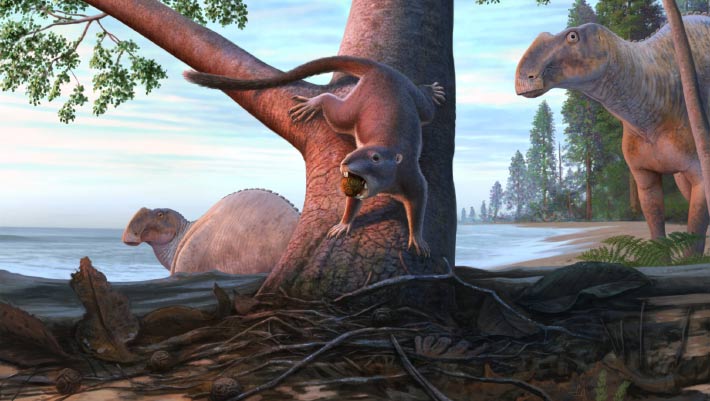
Paleontologists have descibed a new species of the multituberculate mammal genus Cimolodon based on a fossil found in Baja California, Mexico. The post Omnivorous, Rodent-Like Mammal Lived in Dinosaurs’ Shadow on Pacific Coast appeared first on Sci.News: Breaking Science News.
29/04/2026 sci-news
Bronze Age mines discovered in Spain may explain Scandinavian metal mystery
Spain discovery
Archaeologists have uncovered six previously unknown Bronze Age mines in southwestern Spain, offering a striking new clue about where the metal in ancient Scandinavian artifacts may have come from. Found near Cabeza del Buey, the sites include everything from small extraction zones to larger mining operations—one even packed with around 80 stone axes used to crush ore. These mines contain copper, lead, and silver, key materials that powered trade networks thousands of years ago.
29/04/2026 sciencedaily-fossils
50-foot ancient snake discovered in India may be one of the largest ever
vertebra India discovery
A massive prehistoric snake discovered in India may rank among the largest ever to slither across Earth. Named Vasuki indicus, this ancient giant lived around 47 million years ago and is estimated to have stretched an astonishing 11 to 15 meters long—rivaling the legendary Titanoboa. Fossilized vertebrae unearthed from a lignite mine in Gujarat reveal a thick-bodied, powerful snake likely built for slow, stealthy ambush attacks, similar to modern anacondas.
29/04/2026 sciencedaily-paleo
Small Titanosaur Species from Morocco Reveals Surprising South American Ties
Morocco Dinosauria Titanosauria new species
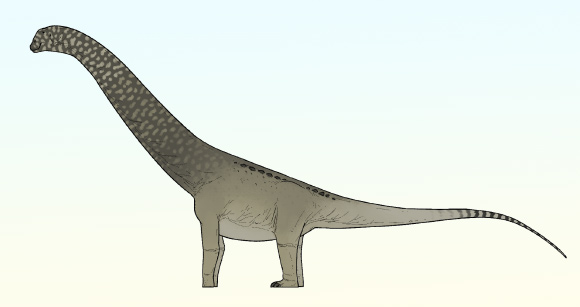
A new genus and species of titanosaurian sauropod dinosaur related to South American forms has been described by a team of paleontologist led by University of Bath’s Dr. Nick Longrich. The post Small Titanosaur Species from Morocco Reveals Surprising South American Ties appeared first on Sci.News: Breaking Science News.
28/04/2026 sci-news
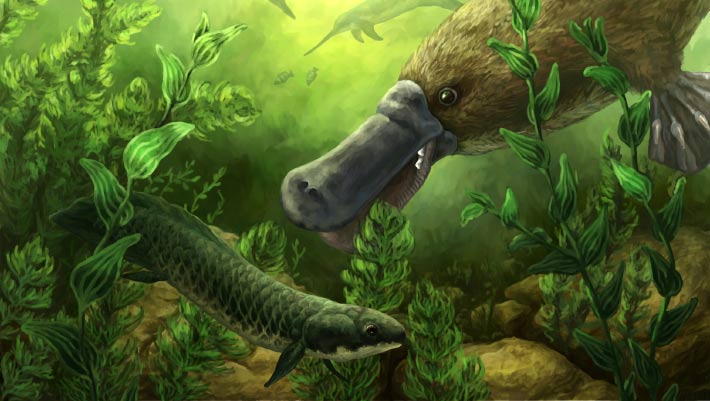
Early Platypuses Had Strong Teeth and Powerful Jaws, Fossils Show
jaw tooth Australia fossil formation
New fossils from the Namba Formation of South Australia reveal that 25 million years ago, Obdurodon insignis thrived in lush inland lakes alongside freshwater dolphins and other now-lost species. The post Early Platypuses Had Strong Teeth and Powerful Jaws, Fossils Show appeared first on Sci.News: Breaking Science News.
28/04/2026 sci-news
Ce fossile prouve enfin une théorie vieille de 200 ans
This fossil finally proves a 200-year-old theory
reproduction fossil evolution mammals
This small fossilized nodule was discovered in 2008. It has only just revealed its secrets: enough to validate a theory almost two centuries old on the evolution of reproduction among the ancestors of mammals.
28/04/2026 sciencesetavenir ⚙ Auto-translated
Scientists think they finally know why Neanderthals vanished
Homo sapiens study
A new study suggests Neanderthals didn’t go extinct simply because of climate change or competition with Homo sapiens. Instead, the key difference may have been social connectivity—Homo sapiens formed stronger, more flexible networks that helped them survive environmental shocks. Neanderthals had connections too, but they were more fragile and regionally limited. This made them less resilient as conditions became increasingly unpredictable.
28/04/2026 sciencedaily-paleo
Maya collapse mystery deepens as scientists find no drought at key site
migration Guatemala
The mysterious collapse of the Maya civilization may not have been driven solely by drought after all. New evidence from lake sediments in Guatemala reveals that one key city, Itzan, enjoyed a stable climate even as its population abruptly vanished. Instead of environmental collapse, the findings point to something more complex: a tightly interconnected network of cities unraveling under pressure. As drought struck neighboring regions, wars, migration, and economic breakdown likely rippled outwa
28/04/2026 sciencedaily-fossils
Why Geologists Love Pond Scum
If you’ve ever wondered how geologists know so much about ancient beaches and shallow oceans, they owe it all to the sand particles bound together by microbes, forming structures known as microbial mats. The post Why Geologists Love Pond Scum appeared first on Sci.News: Breaking Science News.
27/04/2026 sci-news
In Cretaceous Oceans, Giant ‘Kraken-Like’ Octopuses May Have Been Top Predators
predator Cretaceous
Massive, soft-bodied cephalopods up to 19 m (62 feet) long rivaled -- and perhaps hunted -- the ocean’s fiercest reptiles in the Cretaceous period, according to new research led by Hokkaido University paleontologists. The post In Cretaceous Oceans, Giant ‘Kraken-Like’ Octopuses May Have Been Top Predators appeared first on Sci.News: Breaking Science News.
27/04/2026 sci-news
1 2 3 4 5 6 7 8 9 10 11 12 13 14 15 16 17 18 19 20 21 22 23 24 25 26 27