Dinosauria

Taxon

412 image(s) · 210 Actualités

Voir la fiche

Galerie d'images

Reconstruction of Bravasaurus arreirosorum a titanosaur dinosaur from the Late Cretaceous of Argentina

Reconstruction of Bravasaurus arreirosorum a titanosaur dinosaur from the Late Cretaceous of Argentina

Argentine Crétacé Crétacé supérieur Bravasaurus +2
Gandititan is a basal titanosaurian sauropod dinosaur from the Late Cretaceous of what is now China. It was a long-necked herbivore, typical of sauropods, with a relatively short tail, a characteristic of titanosaurs compared to other sauropods. Titanosauria have a wide range of body sizes, and Gandititan falls around the middle, slightly on the smaller side. Discovered with a fairly well articluated spine from neck to tail, Gandititan is estimated at about 14 m in total body length.

Gandititan is a basal titanosaurian sauropod dinosaur from the Late Cretaceous of what is now China. It was a long-necked herbivore, typical of sauropods, with a relatively short tail, a characteristic of titanosaurs compared to other sauropods. Titanosauria have a wide range of body sizes, and Gandititan falls around the middle, slightly on the smaller side. Discovered with a fairly well articluated spine from neck to tail, Gandititan is estimated at about 14 m in total body length.

Chine Crétacé Crétacé supérieur Dinosauria +2
Skeletal reconstruction of the Sauropod dinosaur Abdarainurus barsboldi based on holotype PIN 5669/1, as figured in Averianov and Lopatin, 2020. Outline is based on related Sauropods, modified from SlvrHwk.

Skeletal reconstruction of the Sauropod dinosaur Abdarainurus barsboldi based on holotype PIN 5669/1, as figured in Averianov and Lopatin, 2020. Outline is based on related Sauropods, modified from SlvrHwk.

holotype Abdarainurus Dinosauria
This file represents a possible life appearance of the Indian Titanosaurian Sauropod dinosaur Jainosaurus septentrionalis from the Late Cretaceous (Maastrichtian) of India, belonging to the Lameta Formation.
References used: 
Huene & Matley (1933)
Hunt et al. (1995)
Gunnar Bivens' skeletal diagram

Wilson et al. (2008) "Reassessment of Sauropod Dinosaur Jainosaurus (="Antarctosaurus") Septentrionalis from the Upper Cretaceous of India"

This file represents a possible life appearance of the Indian Titanosaurian Sauropod dinosaur Jainosaurus septentrionalis from the Late Cretaceous (Maastrichtian) of India, belonging to the Lameta Formation. References used: Huene & Matley (1933) Hunt et al. (1995) Gunnar Bivens' skeletal diagram Wilson et al. (2008) "Reassessment of Sauropod Dinosaur Jainosaurus (="Antarctosaurus") Septentrionalis from the Upper Cretaceous of India"

Inde Lameta Crétacé Crétacé supérieur +6
Qunkasaura is a titanosaurian sauropod dinosaur that lived approximately 75 million years ago in the Late Cretaceous of what is now Spain. Specifically, it is a saltasaurid titanosaur, and its discovery marks the first instance of two distinct lineages of this group present in the same locality. In the Late Cretaceous, Europe was a large archipelago, and the coexistence of these differing lineages indicates that saltasaurids arrived in the Iberian Peninsula much later than other groups of dinosaurs.

Qunkasaura is a titanosaurian sauropod dinosaur that lived approximately 75 million years ago in the Late Cretaceous of what is now Spain. Specifically, it is a saltasaurid titanosaur, and its discovery marks the first instance of two distinct lineages of this group present in the same locality. In the Late Cretaceous, Europe was a large archipelago, and the coexistence of these differing lineages indicates that saltasaurids arrived in the Iberian Peninsula much later than other groups of dinosaurs.

Espagne Crétacé Crétacé supérieur Dinosauria +4
Saltasaurus (which means "lizard from Salta") was a sauropod dinosaur of the Late Cretaceous Period. Relatively small among sauropods, though still massive by human standards, it was characterized by a diplodocid-like head
Taxons Titanosauridae

Saltasaurus (which means "lizard from Salta") was a sauropod dinosaur of the Late Cretaceous Period. Relatively small among sauropods, though still massive by human standards, it was characterized by a diplodocid-like head

Crétacé Crétacé supérieur Balochisauridae Dinosauria +7
Saltasaurus (which means "lizard from Salta") was a sauropod dinosaur of the Late Cretaceous Period. Relatively small among sauropods, though still massive by human standards, it was characterized by a diplodocid-like head
Taxons Balochisauridae

Saltasaurus (which means "lizard from Salta") was a sauropod dinosaur of the Late Cretaceous Period. Relatively small among sauropods, though still massive by human standards, it was characterized by a diplodocid-like head

Crétacé Crétacé supérieur Balochisauridae Dinosauria +7
Saltasaurus (which means "lizard from Salta") was a sauropod dinosaur of the Late Cretaceous Period. Relatively small among sauropods, though still massive by human standards, it was characterized by a diplodocid-like head
Taxons Saltasaurini

Saltasaurus (which means "lizard from Salta") was a sauropod dinosaur of the Late Cretaceous Period. Relatively small among sauropods, though still massive by human standards, it was characterized by a diplodocid-like head

Crétacé Crétacé supérieur Balochisauridae Dinosauria +7
A visual representation of Yamanasaurus lojaensis, first dinosaur discovered in Ecuador

A visual representation of Yamanasaurus lojaensis, first dinosaur discovered in Ecuador

Équateur Dinosauria Yamanasaurus
Reconstruction of the holotype skull (PIN 3906/2) of the Late Cretaceous sauropod Quaesitosaurus orientalis. Based on Kurzanov & Bannikov 1983,[1] missing elements restored after Nemegtosaurus.[2]
Color Key
  Preserved
  Missing
References

↑ (1983). "A new sauropod from the Upper Cretaceous of Mongolia". Paleontological Journal 2: 90−96.

↑ (2005). "Redescription of the mongolian sauropod Nemegtosaurus mongoliensis nowinski (dinosauria: Saurischia) and comments on late cretaceous sauropod diversity". Journal of Systematic Palaeontology 3 (3): 283−318. DOI:10.1017/S1477201905001628.

Reconstruction of the holotype skull (PIN 3906/2) of the Late Cretaceous sauropod Quaesitosaurus orientalis. Based on Kurzanov & Bannikov 1983,[1] missing elements restored after Nemegtosaurus.[2] Color Key   Preserved   Missing References ↑ (1983). "A new sauropod from the Upper Cretaceous of Mongolia". Paleontological Journal 2: 90−96. ↑ (2005). "Redescription of the mongolian sauropod Nemegtosaurus mongoliensis nowinski (dinosauria: Saurischia) and comments on late cretaceous sauropod diversity". Journal of Systematic Palaeontology 3 (3): 283−318. DOI:10.1017/S1477201905001628.

Mongolie Crétacé Crétacé supérieur holotype +5
Restoration of Borealosaurus a potentially titanosaur dinosaur from the Cretaceous of China

Restoration of Borealosaurus a potentially titanosaur dinosaur from the Cretaceous of China

Chine Crétacé Borealosaurus Dinosauria +1
Map of the localities in the Bauru Basin where the sauropod dinosaurs were collected.
Taxons Ibirania

Map of the localities in the Bauru Basin where the sauropod dinosaurs were collected.

Dinosauria Ibirania
(A) A phylogenetic principal-component analysis (PCA) represents the projection of the Dinosauria supertree (STAR Methods) into a PCA of climatic variables. PC1 axis shows strong positive correlation with maximum temperature ([temp max), low positive correlation with precipitation seasonality ( precip season), strong negative correlation with minimum temperature (Ytemp min), and strong negative correlation with minimum precipitation (Yprecip min). PC2 axis shows strong positive correlation with minimum temperature ([temp min) and negative correlation with precipitation seasonality (Yprecip season). Shadows around points highlight the relative density in the principal compo- nent space of non-dinosaurian Dinosauromorpha (gray), Ornithischia (blue), Sauropodomorpha (green), and Theropoda (red).
(B) Lower left plot shows 95% confidence interval convex hulls for each dinosauromorph subclade. Blue thermometer (top left corner) symbolizes the direction of the vector in the PC space region for cold temper- atures; yellow thermometer (top right corner) indicates the direction of the vector in PC space for warm tem- peratures; brown shrub (top right corner) depicts dry conditions, while the same with a gray, rainy cloud (mid, lower side of the graph) illustrates seasonal conditions.
Silhouettes represent the following taxa (clockwise from the higher left corner): Minmi, Edmontosaurus, Pachyrhinosaurus, Tyrannosaurus, Asilisaurus, Graci- liceratops, Harpymimus, Altirhinus, Gobititan, Suz- housaurus, Marasuchus, Pampadromaeus, Herrer- asaurus, Vulcanodon, Diplodocus, Giraffatitan,

Coelophysis, Dromomeron, Gondwanatitan, Tapuiasaurus, Anchisaurus, Siamotyrannus, Diodorus, Suchomimus, Phuwiangosaurus, Ouranosaurus, Irritator, Tangvayosaurus, Nanshiungosaurus, Aeolosaurus, Rebbachisaurus, Chuxiongosaurus, Tethyshadros, Koreanosaurus. Genyodectes, Mapusaurus, Vegavis, Goyocephale, and Rhoetosaurus.
Taxons Pampadromaeus

(A) A phylogenetic principal-component analysis (PCA) represents the projection of the Dinosauria supertree (STAR Methods) into a PCA of climatic variables. PC1 axis shows strong positive correlation with maximum temperature ([temp max), low positive correlation with precipitation seasonality ( precip season), strong negative correlation with minimum temperature (Ytemp min), and strong negative correlation with minimum precipitation (Yprecip min). PC2 axis shows strong positive correlation with minimum temperature ([temp min) and negative correlation with precipitation seasonality (Yprecip season). Shadows around points highlight the relative density in the principal compo- nent space of non-dinosaurian Dinosauromorpha (gray), Ornithischia (blue), Sauropodomorpha (green), and Theropoda (red). (B) Lower left plot shows 95% confidence interval convex hulls for each dinosauromorph subclade. Blue thermometer (top left corner) symbolizes the direction of the vector in the PC space region for cold temper- atures; yellow thermometer (top right corner) indicates the direction of the vector in PC space for warm tem- peratures; brown shrub (top right corner) depicts dry conditions, while the same with a gray, rainy cloud (mid, lower side of the graph) illustrates seasonal conditions. Silhouettes represent the following taxa (clockwise from the higher left corner): Minmi, Edmontosaurus, Pachyrhinosaurus, Tyrannosaurus, Asilisaurus, Graci- liceratops, Harpymimus, Altirhinus, Gobititan, Suz- housaurus, Marasuchus, Pampadromaeus, Herrer- asaurus, Vulcanodon, Diplodocus, Giraffatitan, Coelophysis, Dromomeron, Gondwanatitan, Tapuiasaurus, Anchisaurus, Siamotyrannus, Diodorus, Suchomimus, Phuwiangosaurus, Ouranosaurus, Irritator, Tangvayosaurus, Nanshiungosaurus, Aeolosaurus, Rebbachisaurus, Chuxiongosaurus, Tethyshadros, Koreanosaurus. Genyodectes, Mapusaurus, Vegavis, Goyocephale, and Rhoetosaurus.

Dinosauria Ornithischia Pampadromaeus Sauropodomorpha +1
Simplified cladogram of Iguanodontia, drawn by me, based on Norman 2004 ("Basal Iguanodontia" in The Dinosauria 2nd Edition).

Simplified cladogram of Iguanodontia, drawn by me, based on Norman 2004 ("Basal Iguanodontia" in The Dinosauria 2nd Edition).

Dinosauria Iguanodontia Mochlodon
Herbivorous dinosaur found in the Al-khoudh area.  This dinosaur is similar to the Zalmoxes and Rhabdodon dinosaurs.  The skeleton in the Bait Al Baranda Museum was assembled from bones borrowed from several museums.

Herbivorous dinosaur found in the Al-khoudh area. This dinosaur is similar to the Zalmoxes and Rhabdodon dinosaurs. The skeleton in the Bait Al Baranda Museum was assembled from bones borrowed from several museums.

os musée Dinosauria Mochlodon +3
Locality map for Australian eurypodan thyreophoran fossils.

1, Stegosaurian? footprint (QM F5701), Walloon Coal Measures, Balgowan Colliery, Balgowan (Bajocian–Bathonian); 2, Minmi paravertebra holotype (QM F10329) (Molnar, 1980), Minmi Member, Bungil Formation (Valanginian–Barremian); 3, Thyreophoran trackways, Broome Sandstone, Dampier Peninsula, Western Australia (Valanginian–Barremian); 4, Ankylosauria indet. (see Barrett et al., 2010) ‘Flat Rocks’ Wonthaggi Formation (upper Hauterivian–Albian); 5, NMV P216739, ‘Lake Copco–Dinosaur Cove’ Eumeralla Formation (middle upper Aptian to lower middle Albian) (Barrett et al., 2010); 6, QM F33286; 7, AM F119849 and AM F35259; 8, Kunbarrasaurus ieversi gen. et sp. nov. (formerly Minmi sp.) (QM F18101); 9, QM F33565 and QM F33566; 10, QM F44324-28. Legend: Dark Green, Toolebuc Formation (late middle–early late Albian); Green, Allaru Formation (upper Albian–(?)lower Cenomanian); Light green, Mackunda Formation (upper Albian–lower Cenomanian); Lightest green, Winton Formation (late Albian–early Turonian).
Formations Toolebuc

Locality map for Australian eurypodan thyreophoran fossils. 1, Stegosaurian? footprint (QM F5701), Walloon Coal Measures, Balgowan Colliery, Balgowan (Bajocian–Bathonian); 2, Minmi paravertebra holotype (QM F10329) (Molnar, 1980), Minmi Member, Bungil Formation (Valanginian–Barremian); 3, Thyreophoran trackways, Broome Sandstone, Dampier Peninsula, Western Australia (Valanginian–Barremian); 4, Ankylosauria indet. (see Barrett et al., 2010) ‘Flat Rocks’ Wonthaggi Formation (upper Hauterivian–Albian); 5, NMV P216739, ‘Lake Copco–Dinosaur Cove’ Eumeralla Formation (middle upper Aptian to lower middle Albian) (Barrett et al., 2010); 6, QM F33286; 7, AM F119849 and AM F35259; 8, Kunbarrasaurus ieversi gen. et sp. nov. (formerly Minmi sp.) (QM F18101); 9, QM F33565 and QM F33566; 10, QM F44324-28. Legend: Dark Green, Toolebuc Formation (late middle–early late Albian); Green, Allaru Formation (upper Albian–(?)lower Cenomanian); Light green, Mackunda Formation (upper Albian–lower Cenomanian); Lightest green, Winton Formation (late Albian–early Turonian).

Australie Broome Sandstone Eumeralla Toolebuc +18
1 2 3 4 5 6 7 8 9 10 11 12 13 14 15 16 17 18 19 20 21 22 23 24 25 26

Actualités

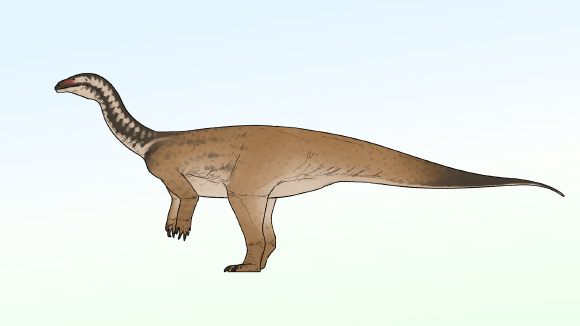
Early Sauropodomorph Dinosaur Unearthed in China
Un dinosaure sauropodomorphe découvert en Chine
Chine Jurassique inférieur Jurassique Dinosauria Massopoda nouvelle espèce partiel squelette
Un nouveau genre et une nouvelle espèce de sauropodomorphe massopodan qui vivaient au début du Jurassique ont été identifiés à partir d'un squelette partiel découvert dans le sud-ouest de la Chine. L'article Les premiers dinosaures sauropodomorphes découverts en Chine est apparu en premier sur Sci.News : Breaking Science News.
04/05/2026 sci-news ⚙ Traduction automatique
Mexidracon: Beast of the Week
Mexidracon : Bête de la semaine
Mexique Crétacé Crétacé supérieur Dinosauria
 Cette semaine, nous allons nous intéresser à un théropode inhabituel.  Découvrez Mexidracon longimanus !Mexidracon était un dinosaure théropode qui vivait dans ce qui est aujourd'hui Coahuila, au Mexique, à la fin du Crétacé, il y a environ 72 millions d'années.  Du bec à la queue, il mesurait environ 3 mètres de long.  Son nom de genre se traduit par « Dragon mexicain » et son nom d'espèce par « longue main ».  Il se peut qu'il ait mangé des plantes de son vivant ou qu'il ait peut-être mangé un mélange de plantes et de viande.  Reconstruction de la vie du Mexidracon dans
03/05/2026 prehistoricbeastoftheweek ⚙ Traduction automatique
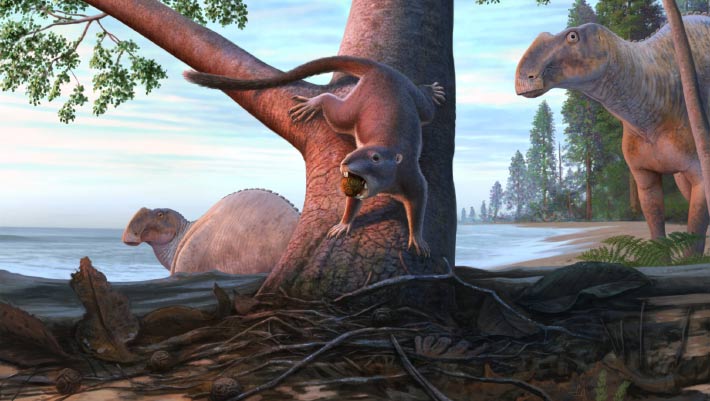
Omnivorous, Rodent-Like Mammal Lived in Dinosaurs’ Shadow on Pacific Coast
Un mammifère omnivore ressemblant à un rongeur vivait dans l’ombre des dinosaures sur la côte du Pacifique
Mexique fossile Dinosauria mammifères nouvelle espèce
Les paléontologues ont décrit une nouvelle espèce du genre de mammifères multituberculés Cimolodon sur la base d'un fossile trouvé en Basse-Californie, au Mexique. L'article Un mammifère omnivore ressemblant à un rongeur vivait dans l'ombre des dinosaures sur la côte du Pacifique est apparu en premier sur Sci.News : Breaking Science News.
29/04/2026 sci-news ⚙ Traduction automatique
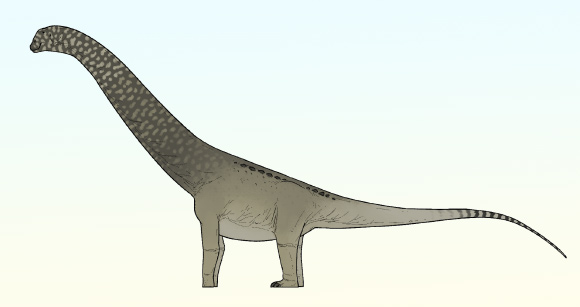
Small Titanosaur Species from Morocco Reveals Surprising South American Ties
Une petite espèce de titanosaure du Maroc révèle des liens surprenants avec l'Amérique du Sud
Maroc Dinosauria Titanosauria nouvelle espèce
Un nouveau genre et une nouvelle espèce de dinosaure sauropode titanosaure apparentés aux formes sud-américaines ont été décrits par une équipe de paléontologues dirigée par le Dr Nick Longrich de l’Université de Bath. L'article Une petite espèce de titanosaure du Maroc révèle des liens surprenants avec l'Amérique du Sud apparaît en premier sur Sci.News : Breaking Science News.
28/04/2026 sci-news ⚙ Traduction automatique
Ce petit mammifère a survécu à l'apocalypse des dinosaures et a changé la vie sur Terre
fossile Dinosauria extinction mammifères
Un mammifère préhistorique récemment découvert pourrait détenir des indices sur la façon dont la vie a survécu à l’extinction des dinosaures. La minuscule espèce, Cimolodon desosai, vivait il y a 75 millions d'années et possédait des caractéristiques, comme un petit corps et un régime alimentaire varié, qui augmentaient probablement ses chances de survie. Trouvé en Basse-Californie, le fossile comprend de rares restes squelettiques qui révèlent comment il se déplaçait et vivait. Les chercheurs pensent que sa lignée a aidé les mammifères à endurer l’un des événements les plus meurtriers sur Terre.
27/04/2026 sciencedaily ⚙ Traduction automatique
1 2 3 4 5 6 7 8 9 10 11 12 13 14 15 16 17 18 19 20 21 22 23 24 25 26 27 28 29 30 31 32 33 34 35 36 37 38 39 40 41 42