Dinosauria

Taxon

412 image(s) · 210 Actualités

Voir la fiche

Galerie d'images

Goyocephale lattimorei in the exhibition "Dinosaures. Tresors del desert de Gobi" ("Dinosaurs. Treasures of Gobi Desert") in CosmoCaixa, Barcelona.
Taxons Goyocephale

Goyocephale lattimorei in the exhibition "Dinosaures. Tresors del desert de Gobi" ("Dinosaurs. Treasures of Gobi Desert") in CosmoCaixa, Barcelona.

Dinosauria Goyocephalia
Qunkasaura is a titanosaurian sauropod dinosaur that lived approximately 75 million years ago in the Late Cretaceous of what is now Spain. Specifically, it is a saltasaurid titanosaur, and its discovery marks the first instance of two distinct lineages of this group present in the same locality. In the Late Cretaceous, Europe was a large archipelago, and the coexistence of these differing lineages indicates that saltasaurids arrived in the Iberian Peninsula much later than other groups of dinosaurs.
Taxons Qunkasaura

Qunkasaura is a titanosaurian sauropod dinosaur that lived approximately 75 million years ago in the Late Cretaceous of what is now Spain. Specifically, it is a saltasaurid titanosaur, and its discovery marks the first instance of two distinct lineages of this group present in the same locality. In the Late Cretaceous, Europe was a large archipelago, and the coexistence of these differing lineages indicates that saltasaurids arrived in the Iberian Peninsula much later than other groups of dinosaurs.

Espagne Crétacé Crétacé supérieur Dinosauria +4
Identifier: annalsofmedicalh01pack (find matches)
Title: Annals of medical history
Year: 1917 (1910s)
Authors:  Packard, Francis R. (Francis Randolph), 1870-1950
Subjects:  Medicine
Publisher:  New York P.B. Hoeber
Contributing Library:  Gerstein - University of Toronto
Digitizing Sponsor:  University of Toronto

View Book Page: Book Viewer
About This Book: Catalog Entry
View All Images: All Images From Book
Click here to view book online to see this illustration in context in a browseable online version of this book.

Text Appearing Before Image:
ail strongly Hexed, and the toescontracted and appressed. The whole atti-tude strongly suggests a spastic distress,possibly brought on by some form ofpoisoning of the central nervous system,from infection or the deglutition of somepoisonous substance. 14. Osteomalacia is evidently the causeof the hypertrophy of the bones of Lim-nocyron potens, an early carnivore from theWashakie Eocene of Wyoming, nearly3,000,000 years old. MATERIALS AND METHODS The material described in the presentpaper has been loaned the writer lor de-scription by the Field Museum of Chii Osborn: Hull. Amcr. \lus. Natl. Hist., 1917,vol. 35. !>• 733. P>- 28. Studies in Paleopathology 393 by the American Museum of Natural His-tory of New York City, by Walker Museumof the University of Chicago, and by the Uni-versity of Kansas Natural History Museum. made by the well-known petrographic meth-ods so common in all geological labora-tories. The diagnoses, where they are at-tempted, arc made from comparisons of the
Text Appearing After Image:
Fig. 20. The skeleton of Strutbiomimus altus, a small dinosaur from the BeliyRiver series (Cretaceous), Red Deer River, Alberta, Canada, now regarded as ofapproximately the same age as the Judith River series. The unique feature ofthe skull is the total absence of teeth, with a size of skull one-third larger thanthe ostrich and a length of body of about fifteen feet. The position of the skeletonis decidedly that of the opisthotonos which may be regarded as an indication ofdisease. (After Osborn). A beautiful specimen of an osteoma, theonly one known so far, on the vertebra of aKansas Cretaceous mosasaur, was given thewriter by Dr. J. M. Armstrong of St. Paul.The writer expresses his obligations to thegentlemen connected with the above-men-tioned institutions and to Dr. Armstrong.The methods used are a combination ofprocedures in the various lines involved.Microscopic sections, which can be madethin enough for immersion lens study, are material with similar lesions in recent hu-man mat

Note About Images

Please note that these images are extracted from scanned page images that may have been digitally enhanced for readability - coloration and appearance of these illustrations may not perfectly resemble the original work.
Taxons Hexing

Identifier: annalsofmedicalh01pack (find matches) Title: Annals of medical history Year: 1917 (1910s) Authors: Packard, Francis R. (Francis Randolph), 1870-1950 Subjects: Medicine Publisher: New York P.B. Hoeber Contributing Library: Gerstein - University of Toronto Digitizing Sponsor: University of Toronto View Book Page: Book Viewer About This Book: Catalog Entry View All Images: All Images From Book Click here to view book online to see this illustration in context in a browseable online version of this book. Text Appearing Before Image: ail strongly Hexed, and the toescontracted and appressed. The whole atti-tude strongly suggests a spastic distress,possibly brought on by some form ofpoisoning of the central nervous system,from infection or the deglutition of somepoisonous substance. 14. Osteomalacia is evidently the causeof the hypertrophy of the bones of Lim-nocyron potens, an early carnivore from theWashakie Eocene of Wyoming, nearly3,000,000 years old. MATERIALS AND METHODS The material described in the presentpaper has been loaned the writer lor de-scription by the Field Museum of Chii Osborn: Hull. Amcr. \lus. Natl. Hist., 1917,vol. 35. !>• 733. P>- 28. Studies in Paleopathology 393 by the American Museum of Natural His-tory of New York City, by Walker Museumof the University of Chicago, and by the Uni-versity of Kansas Natural History Museum. made by the well-known petrographic meth-ods so common in all geological labora-tories. The diagnoses, where they are at-tempted, arc made from comparisons of the Text Appearing After Image: Fig. 20. The skeleton of Strutbiomimus altus, a small dinosaur from the BeliyRiver series (Cretaceous), Red Deer River, Alberta, Canada, now regarded as ofapproximately the same age as the Judith River series. The unique feature ofthe skull is the total absence of teeth, with a size of skull one-third larger thanthe ostrich and a length of body of about fifteen feet. The position of the skeletonis decidedly that of the opisthotonos which may be regarded as an indication ofdisease. (After Osborn). A beautiful specimen of an osteoma, theonly one known so far, on the vertebra of aKansas Cretaceous mosasaur, was given thewriter by Dr. J. M. Armstrong of St. Paul.The writer expresses his obligations to thegentlemen connected with the above-men-tioned institutions and to Dr. Armstrong.The methods used are a combination ofprocedures in the various lines involved.Microscopic sections, which can be madethin enough for immersion lens study, are material with similar lesions in recent hu-man mat Note About Images Please note that these images are extracted from scanned page images that may have been digitally enhanced for readability - coloration and appearance of these illustrations may not perfectly resemble the original work.

os vertèbre livre musée +11
A diagram showing the bones and feathering preserved in IVPP V 12638, the holotype of Yixianosaurus longimanus, a feathered dinosaur.
Taxons Yixianosaurus

A diagram showing the bones and feathering preserved in IVPP V 12638, the holotype of Yixianosaurus longimanus, a feathered dinosaur.

os holotype Dinosauria Yixianosaurus
Holotype specimen (CRILAR-Pv 151) of Huayracursor jaguensis, a long-necked dinosaur that lived approximately 230 million years ago, placed in approximate anatomical articulation.
Taxons Huayracursor

Holotype specimen (CRILAR-Pv 151) of Huayracursor jaguensis, a long-necked dinosaur that lived approximately 230 million years ago, placed in approximate anatomical articulation.

holotype spécimen Dinosauria Huayracursor
Diagram featuring the holotype skull (ZPAL MgD-I/105) of Tylocephale gilmorei in left lateral view. Scale bar equals 5 cm (50 mm). Based on Maryańska & Osmólska, 1974,[1] and Sullivan, 2006.[2]
References

↑ (1974). "Pachycephalosauria, a new suborder of ornithischian dinosaurs". Palaeontologica Polonica (30): 45−102.

↑ (2006). "A taxonomic review of the Pachycephalosauridae (Dinosauria: Ornithischia)". New Mexico Museum of Natural History and Science Bulletin (35): 347–365.
Taxons Tylocephale

Diagram featuring the holotype skull (ZPAL MgD-I/105) of Tylocephale gilmorei in left lateral view. Scale bar equals 5 cm (50 mm). Based on Maryańska & Osmólska, 1974,[1] and Sullivan, 2006.[2] References ↑ (1974). "Pachycephalosauria, a new suborder of ornithischian dinosaurs". Palaeontologica Polonica (30): 45−102. ↑ (2006). "A taxonomic review of the Pachycephalosauridae (Dinosauria: Ornithischia)". New Mexico Museum of Natural History and Science Bulletin (35): 347–365.

écaille musée Mexique holotype +6
A visual representation of Yamanasaurus lojaensis, first dinosaur discovered in Ecuador
Taxons Yamanasaurus

A visual representation of Yamanasaurus lojaensis, first dinosaur discovered in Ecuador

Équateur Dinosauria Yamanasaurus
Fossil of Streptospondylus, a dinosaur from the Middle Jurassic period of France. Took the photo at the Gallery of Paleontology and Comparative Anatomy in the French National Museum of Natural History, Paris.
Taxons Streptospondylus

Fossil of Streptospondylus, a dinosaur from the Middle Jurassic period of France. Took the photo at the Gallery of Paleontology and Comparative Anatomy in the French National Museum of Natural History, Paris.

musée France Jurassique Jurassique moyen +4
Tongnanlong is a large mamenchisaurid sauropod dinosaur that lived in the Late Jurassic period of what is now China. Typical of mamenchisaurids, it had an extremely long neck, even by sauropod standards. Tongnanlong grew to approximately 25 m in length and weighed 20-30 t, making it one of the largest mamenchisaurids.
Taxons Tongnanlong

Tongnanlong is a large mamenchisaurid sauropod dinosaur that lived in the Late Jurassic period of what is now China. Typical of mamenchisaurids, it had an extremely long neck, even by sauropod standards. Tongnanlong grew to approximately 25 m in length and weighed 20-30 t, making it one of the largest mamenchisaurids.

Chine Jurassique Jurassique supérieur Dinosauria +2
Reconstruction of the holotype skull (PIN 3906/2) of the Late Cretaceous sauropod Quaesitosaurus orientalis. Based on Kurzanov & Bannikov 1983,[1] missing elements restored after Nemegtosaurus.[2]
Color Key
  Preserved
  Missing
References

↑ (1983). "A new sauropod from the Upper Cretaceous of Mongolia". Paleontological Journal 2: 90−96.

↑ (2005). "Redescription of the mongolian sauropod Nemegtosaurus mongoliensis nowinski (dinosauria: Saurischia) and comments on late cretaceous sauropod diversity". Journal of Systematic Palaeontology 3 (3): 283−318. DOI:10.1017/S1477201905001628.
Taxons Quaesitosaurus

Reconstruction of the holotype skull (PIN 3906/2) of the Late Cretaceous sauropod Quaesitosaurus orientalis. Based on Kurzanov & Bannikov 1983,[1] missing elements restored after Nemegtosaurus.[2] Color Key   Preserved   Missing References ↑ (1983). "A new sauropod from the Upper Cretaceous of Mongolia". Paleontological Journal 2: 90−96. ↑ (2005). "Redescription of the mongolian sauropod Nemegtosaurus mongoliensis nowinski (dinosauria: Saurischia) and comments on late cretaceous sauropod diversity". Journal of Systematic Palaeontology 3 (3): 283−318. DOI:10.1017/S1477201905001628.

Mongolie Crétacé Crétacé supérieur holotype +5
Jiangxititan a titanosaurian sauropod from the Late Cretaceous of China. Typical for a sauropod, it had a long neck and stood on four pillar-like legs to support its massive body. Jiangxititan is a member of the Lognkosauria, which include some of the largest dinosaurs known, and is one of the few from mainland Asia. The discovery of Jiangxititan demonstrates the presence of both early-diverging and late-diverging titanosauriform sauropods in that area during the Late Cretaceous.
Taxons Jiangxititan

Jiangxititan a titanosaurian sauropod from the Late Cretaceous of China. Typical for a sauropod, it had a long neck and stood on four pillar-like legs to support its massive body. Jiangxititan is a member of the Lognkosauria, which include some of the largest dinosaurs known, and is one of the few from mainland Asia. The discovery of Jiangxititan demonstrates the presence of both early-diverging and late-diverging titanosauriform sauropods in that area during the Late Cretaceous.

Chine Crétacé Crétacé supérieur Dinosauria +5
Restoration of Borealosaurus a potentially titanosaur dinosaur from the Cretaceous of China
Taxons Borealosaurus

Restoration of Borealosaurus a potentially titanosaur dinosaur from the Cretaceous of China

Chine Crétacé Borealosaurus Dinosauria +1
Garumbatitan is a sauropod dinosaur from the Early Cretaceous of what is now Spain. It is classified as a basal somphospondylan - a Titanosauriform, but not a true Titanosaur.
Taxons Garumbatitan

Garumbatitan is a sauropod dinosaur from the Early Cretaceous of what is now Spain. It is classified as a basal somphospondylan - a Titanosauriform, but not a true Titanosaur.

Espagne Crétacé Crétacé inférieur Dinosauria +4
Braincase of WSC 10058, holotype of Ornatops 
Braincase of Ornatops incantatus in digital 3D model in right lateral (A and C) and left lateral (D and F) views, with enlarged images of the right (B) and left (E) auditory regions.

Credit: McDonald AT, Wolfe DG, Freedman Fowler EA, Gates TA. 2021. A new brachylophosaurin (Dinosauria: Hadrosauridae) from the Upper Cretaceous Menefee Formation of New Mexico. PeerJ 9:e11084 https://doi.org/10.7717/peerj.11084
Taxons Ornatops

Braincase of WSC 10058, holotype of Ornatops Braincase of Ornatops incantatus in digital 3D model in right lateral (A and C) and left lateral (D and F) views, with enlarged images of the right (B) and left (E) auditory regions. Credit: McDonald AT, Wolfe DG, Freedman Fowler EA, Gates TA. 2021. A new brachylophosaurin (Dinosauria: Hadrosauridae) from the Upper Cretaceous Menefee Formation of New Mexico. PeerJ 9:e11084 https://doi.org/10.7717/peerj.11084

Mexique Crétacé holotype Dinosauria +3
Wudingloong is the earliest diverging, and oldest sauropodomorph dinosaur known from East Asia. Typical of basal sauropodomorphs, or "prosauropods," it was a bipedal herbivore with a long neck. Wudingloong was a fairly small prosauropod at approximately 4 m in length, and weighing around 400 kg.
Taxons Wudingloong

Wudingloong is the earliest diverging, and oldest sauropodomorph dinosaur known from East Asia. Typical of basal sauropodomorphs, or "prosauropods," it was a bipedal herbivore with a long neck. Wudingloong was a fairly small prosauropod at approximately 4 m in length, and weighing around 400 kg.

Dinosauria Wudingloong
The hadrosaurid dinosaur Wulagasaurus dongi gen. et sp. nov. from the Upper Cretaceous Yuliangze Formation at the Wulaga quarry, China.

A. Holotype GMH W184, right dentary in lateral (A1) and medial (A2) views. B. GMH W217, right dentary in lateral (B1) and medial (B2) views.
Taxons Wulagasaurus

The hadrosaurid dinosaur Wulagasaurus dongi gen. et sp. nov. from the Upper Cretaceous Yuliangze Formation at the Wulaga quarry, China. A. Holotype GMH W184, right dentary in lateral (A1) and medial (A2) views. B. GMH W217, right dentary in lateral (B1) and medial (B2) views.

Chine Crétacé holotype Dinosauria +3
1 2 3 4 5 6 7 8 9 10 11 12 13 14 15 16 17 18 19 20 21 22 23 24 25 26

Actualités

Et si les dinosaures n'avaient jamais disparu
Dinosauria extinction
Sans l'impact de l'astéroïde géant qui a frappé la Terre il y a 66 millions d'années et provoqué l'extinction de 75 % des espèces, une autre biodiversité aurait vu le jour… probablement sans nous.
27/06/2026 sciencesetavenir
Distant Cousin of Crocodiles Stalked Brazil 240 Million Years Ago
Un cousin éloigné des crocodiles parcourait le Brésil il y a 240 millions d'années
Brésil Dinosauria autres reptiles
Les paléontologues travaillant au Brésil ont identifié une espèce d'archosauriforme jusqu'alors inconnue qui vivait il y a environ 240 millions d'années et pourrait appartenir à un groupe mal compris d'anciens reptiles qui ressemblaient beaucoup aux ancêtres des crocodiles et des dinosaures. L'article Le cousin éloigné des crocodiles traquait le Brésil il y a 240 millions d'années est apparu en premier sur Sci.News : Breaking Science News.
26/06/2026 sci-news ⚙ Traduction automatique
Le nouveau modèle Schleich Woolly Mammoth arrive en stock
membre Allemagne juvénile Dinosauria
Le nouveau modèle Schleich Woolly Mammoth arrive en stock chez Everything Dinosaur. Les membres de l'équipe se préparent à l'arrivée de cette dernière figurine Schleich.  Le fabricant de modèles basé en Allemagne a déjà fabriqué des modèles d'animaux de glace.  Il avait auparavant fabriqué un mammouth laineux adulte et juvénile.  La nouvelle figurine de Mammuthus primigenius sera
26/06/2026 everythingdinosaur ⚙ Traduction automatique
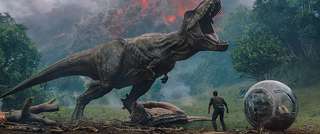
Examen de la nouvelle figurine de tyrannosaure dans un magazine prestigieux
jouet Hell Creek Dinosauria Tyrannosaurus évolution
Le modèle Everything Dinosaur Evolution Tyrannosaurus rex a reçu une autre approbation fantastique. La figurine inaugurale de notre nouvelle gamme Evolution a été revue dans le numéro 157 du prestigieux magazine "Prehistoric Times". La revue met en évidence le premier modèle de notre série Hell Creek. Il présente également la figurine aux côtés de plusieurs nouveaux modèles d'animaux préhistoriques.
25/06/2026 everythingdinosaur ⚙ Traduction automatique
New Feathered Dinosaur from China Had Peacock-Like Tail
Un nouveau dinosaure à plumes de Chine avait une queue semblable à celle d'un paon
plume Chine Crétacé Crétacé inférieur Dinosauria oiseau évolution nouvelle espèce
Un nouveau genre et une nouvelle espèce de dinosaure pennaraptoran à quatre ailes du Crétacé inférieur du nord de la Chine ajoutent une autre tournure à l'histoire de l'évolution des oiseaux à partir de leurs ancêtres dinosaures. L'article Un nouveau dinosaure à plumes de Chine avait une queue semblable à un paon est apparu en premier sur Sci.News : Breaking Science News.
23/06/2026 sci-news ⚙ Traduction automatique
1 2 3 4 5 6 7 8 9 10 11 12 13 14 15 16 17 18 19 20 21 22 23 24 25 26 27 28 29 30 31 32 33 34 35 36 37 38 39 40 41 42