fossile

Nature du spécimen

224 image(s) · 140 Actualités

Galerie d'images

Lower Triassic fossil footprint (ichnite) of the ichnogenus Chirotherium, probably caused by an early archosaur, and first discovered 1833 in Hildburghausen (Thuringia, Germany). This specimen, however, ist from the Helsby Sandstone of the Storeton Quarry near Liverpool. Its species name is Chirotherium storetonense.[1]
Taxons Anticheiropus

Lower Triassic fossil footprint (ichnite) of the ichnogenus Chirotherium, probably caused by an early archosaur, and first discovered 1833 in Hildburghausen (Thuringia, Germany). This specimen, however, ist from the Helsby Sandstone of the Storeton Quarry near Liverpool. Its species name is Chirotherium storetonense.[1]

Allemagne Trias fossile spécimen +9
Lower Triassic fossil footprint (ichnite) of the ichnogenus Chirotherium, probably caused by an early archosaur, and first discovered 1833 in Hildburghausen (Thuringia, Germany). This specimen, however, ist from the Helsby Sandstone of the Storeton Quarry near Liverpool. Its species name is Chirotherium storetonense.[1]
Taxons Argoides

Lower Triassic fossil footprint (ichnite) of the ichnogenus Chirotherium, probably caused by an early archosaur, and first discovered 1833 in Hildburghausen (Thuringia, Germany). This specimen, however, ist from the Helsby Sandstone of the Storeton Quarry near Liverpool. Its species name is Chirotherium storetonense.[1]

Allemagne Trias fossile spécimen +9
Lower Triassic fossil footprint (ichnite) of the ichnogenus Chirotherium, probably caused by an early archosaur, and first discovered 1833 in Hildburghausen (Thuringia, Germany). This specimen, however, ist from the Helsby Sandstone of the Storeton Quarry near Liverpool. Its species name is Chirotherium storetonense.[1]
Taxons Delatorrichnus

Lower Triassic fossil footprint (ichnite) of the ichnogenus Chirotherium, probably caused by an early archosaur, and first discovered 1833 in Hildburghausen (Thuringia, Germany). This specimen, however, ist from the Helsby Sandstone of the Storeton Quarry near Liverpool. Its species name is Chirotherium storetonense.[1]

Allemagne Trias fossile spécimen +9
Lower Triassic fossil footprint (ichnite) of the ichnogenus Chirotherium, probably caused by an early archosaur, and first discovered 1833 in Hildburghausen (Thuringia, Germany). This specimen, however, ist from the Helsby Sandstone of the Storeton Quarry near Liverpool. Its species name is Chirotherium storetonense.[1]
Taxons Dinehichnus

Lower Triassic fossil footprint (ichnite) of the ichnogenus Chirotherium, probably caused by an early archosaur, and first discovered 1833 in Hildburghausen (Thuringia, Germany). This specimen, however, ist from the Helsby Sandstone of the Storeton Quarry near Liverpool. Its species name is Chirotherium storetonense.[1]

Allemagne Trias fossile spécimen +9
Lower Triassic fossil footprint (ichnite) of the ichnogenus Chirotherium, probably caused by an early archosaur, and first discovered 1833 in Hildburghausen (Thuringia, Germany). This specimen, however, ist from the Helsby Sandstone of the Storeton Quarry near Liverpool. Its species name is Chirotherium storetonense.[1]
Taxons Dromaeosauripus

Lower Triassic fossil footprint (ichnite) of the ichnogenus Chirotherium, probably caused by an early archosaur, and first discovered 1833 in Hildburghausen (Thuringia, Germany). This specimen, however, ist from the Helsby Sandstone of the Storeton Quarry near Liverpool. Its species name is Chirotherium storetonense.[1]

Allemagne Trias fossile spécimen +9
Lower Triassic fossil footprint (ichnite) of the ichnogenus Chirotherium, probably caused by an early archosaur, and first discovered 1833 in Hildburghausen (Thuringia, Germany). This specimen, however, ist from the Helsby Sandstone of the Storeton Quarry near Liverpool. Its species name is Chirotherium storetonense.[1]
Taxons Eutynichnium

Lower Triassic fossil footprint (ichnite) of the ichnogenus Chirotherium, probably caused by an early archosaur, and first discovered 1833 in Hildburghausen (Thuringia, Germany). This specimen, however, ist from the Helsby Sandstone of the Storeton Quarry near Liverpool. Its species name is Chirotherium storetonense.[1]

Allemagne Trias fossile spécimen +9
fossil Europasaurus, Aathal Dinosaur Museum.
Taxons Europasaurus

fossil Europasaurus, Aathal Dinosaur Museum.

musée fossile Dinosauria Europasaurus
Left humerus of Haestasaurus becklesii (NHMUK R1870). A, anterior view; B, posterior view; Abbreviations: af, anconeal fossa; dp, deltopectoral crest; hh, humeral head; ltf, lateral triceps fossa; mtf, medial triceps fossa.

This fossil was found in strata of the Hastings Beds (late Berriasian—Valanginian in age) on the coast near Hastings, East Sussex, England.
Taxons Haestasaurus

Left humerus of Haestasaurus becklesii (NHMUK R1870). A, anterior view; B, posterior view; Abbreviations: af, anconeal fossa; dp, deltopectoral crest; hh, humeral head; ltf, lateral triceps fossa; mtf, medial triceps fossa. This fossil was found in strata of the Hastings Beds (late Berriasian—Valanginian in age) on the coast near Hastings, East Sussex, England.

crête humérus Berriasien Valanginien +2
Holotype fossils of Glacialisaurus (PR 1823); metatarsals, tibia, fibula, ankle bones
Taxons Glacialisaurus

Holotype fossils of Glacialisaurus (PR 1823); metatarsals, tibia, fibula, ankle bones

os fossile holotype Glacialisaurus
Fossil Panphagia
Taxons Panphagia

Fossil Panphagia

fossile Panphagia
Fossil of Sthenarosaurus, an extinct reptile - Took the picture at Museum of Paleontology, Tuebingen
Taxons Sthenarosaurus

Fossil of Sthenarosaurus, an extinct reptile - Took the picture at Museum of Paleontology, Tuebingen

musée fossile Sthenarosaurus
fossil of seeleyosaurus
Taxons Seeleyosaurus

fossil of seeleyosaurus

fossile Seeleyosaurus
Fossil of Peteinosaurus zambellii (paratype MCSNB 3359), an extinct reptile
Taxons Peteinosaurus

Fossil of Peteinosaurus zambellii (paratype MCSNB 3359), an extinct reptile

fossile Peteinosaurus
Fossil at the Museo Argentino de Ciencias Naturales in Caballito, Buenos Aires, Argentina.
Taxons Pterodaustro

Fossil at the Museo Argentino de Ciencias Naturales in Caballito, Buenos Aires, Argentina.

Argentine fossile Pterodaustro
Fossil of Santanadactylus pricei and Anhanguera santanae, an extinct pterosaur- Took the photo at Senckenberg Museum of Frankfurt
Taxons Santanadactylus

Fossil of Santanadactylus pricei and Anhanguera santanae, an extinct pterosaur- Took the photo at Senckenberg Museum of Frankfurt

musée fossile Anhanguera Pterosauria +1
Fossil of Santanadactylus pricei and Anhanguera santanae, an extinct pterosaur- Took the photo at Senckenberg Museum of Frankfurt
Formations Romualdo

Fossil of Santanadactylus pricei and Anhanguera santanae, an extinct pterosaur- Took the photo at Senckenberg Museum of Frankfurt

musée fossile Anhanguera Pterosauria +1
1 2 3 4 5 6 7 8 9 10 11 12 13 14

Actualités

Cette application d'IA peut déterminer quel dinosaure a laissé une empreinte
fossile empreintes Dinosauria oiseau datation découverte
Les empreintes de dinosaures ont toujours été mystérieuses, mais une nouvelle application d'IA perce leurs secrets. DinoTracker analyse les photos de traces de fossiles et prédit quel dinosaure les a créées, avec une précision rivalisant avec celle des experts humains. En cours de route, il a découvert des empreintes de pas qui ressemblent étonnamment à celles d'un oiseau, remontant à plus de 200 millions d'années. Cette découverte pourrait repousser l’origine des oiseaux bien plus loin dans la préhistoire.
01/02/2026 sciencedaily ⚙ Traduction automatique
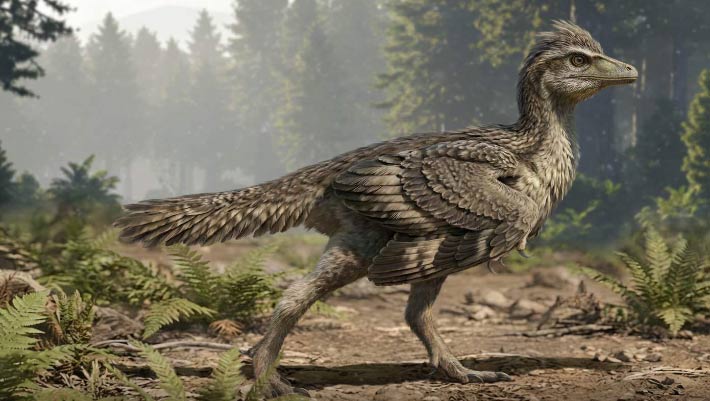
Hesperosuchus: Beast of the Week
Hesperosuchus : Bête de la semaine
Mexique États-Unis Trias supérieur Trias fossile squelette
Cette semaine, nous allons découvrir un parent de crocodiliens modernes qui a trompé les scientifiques à plusieurs reprises !  Entrez Hesperosuchus agilis ! Hesperosuchus était un pseudosuchien (lié aux crocodiliens) qui vivait dans ce qui est aujourd'hui l'Arizona et le Nouveau-Mexique, aux États-Unis, à la fin du Trias, il y a environ 210 millions d'années.  Il s'agissait probablement d'un mangeur de viande et, du museau à la queue, le squelette le plus complet mesure environ 1,2 m (4 pieds), mais d'autres fossiles suggèrent qu'il aurait pu devenir plus grand, jusqu'à environ 1,2 m.
01/02/2026 prehistoricbeastoftheweek ⚙ Traduction automatique
Les scientifiques expliquent enfin les fossiles les plus étranges de la Terre
Cambrien fossile découverte
Le biote d’Ediacara fait partie des fossiles les plus étranges jamais découverts : des organismes à corps mou préservés avec des détails remarquables là où la préservation ne devrait pas être possible. Les scientifiques pensent maintenant que leur survie dans le grès est due à une chimie ancienne et inhabituelle de l’eau de mer qui a créé des « ciments » d’argile autour de leur corps après l’enterrement. Ce processus a permis de capturer des formes délicates qui normalement disparaîtraient. Cette découverte aide à clarifier la façon dont la vie complexe est apparue avant l’explosion cambrienne.
27/01/2026 sciencedaily ⚙ Traduction automatique
Cette mâchoire vieille de 2,6 millions d’années change l’histoire de l’humanité
mâchoire Éthiopie fossile découverte
Une découverte de fossile rare en Éthiopie a poussé l'aire de répartition connue du Paranthropus à des centaines de kilomètres plus au nord que jamais auparavant. La mâchoire vieille de 2,6 millions d'années suggère que cet ancien parent des humains était étonnamment adaptable, et non un spécialiste restreint comme on le croyait autrefois. Au lieu d’être surpassé par les premiers humains, Paranthropus semble avoir été tout aussi répandu et résilient. Cette découverte oblige les scientifiques à repenser la façon dont les premiers parents humains vivaient et rivalisaient.
23/01/2026 sciencedaily-human-evo ⚙ Traduction automatique
Un fossile vieux de 250 millions d'années révèle les origines de l'audition des mammifères
os mâchoire fossile mammifères crâne
L’audition sensible pourrait avoir évolué chez les ancêtres des mammifères bien plus tôt que ne le croyaient les scientifiques. En modélisant la façon dont le son se déplaçait dans le crâne de Thrinaxodon, un prédécesseur mammifère vieux de 250 millions d'années, les chercheurs ont découvert qu'il utilisait probablement un tympan précoce pour entendre les sons aériens. Cela remet en question l’idée répandue selon laquelle ces animaux « écoutaient » principalement à travers leurs mâchoires ou leurs os. Les résultats révèlent qu’une caractéristique clé de l’audition des mammifères modernes prenait déjà forme au plus profond de la préhistoire.
20/01/2026 sciencedaily ⚙ Traduction automatique
1 2 3 4 5 6 7 8 9 10 11 12 13 14 15 16 17 18 19 20 21 22 23 24 25 26 27 28