←

fossile

Nature du spécimen

239 image(s) · 240 Actualités

Galerie d'images

fossil Craspedodon
Taxons Craspedodon

fossil Craspedodon

fossile Craspedodon
Fossil of Lurdusaurus, an ornithopod dinosaur
Took the photo at Musee d'Histoire Naturelle, Brussels
Taxons Lurdusaurus

Fossil of Lurdusaurus, an ornithopod dinosaur Took the photo at Musee d'Histoire Naturelle, Brussels

fossile Dinosauria Lurdusaurus
Dinosaur National Monument is a United States National Monument located on the southeast flank of the Uinta Mountains on the border between Colorado and Utah at the confluence of the Green and Yampa Rivers. Although most of the monument area is in Moffat County, Colorado, the Dinosaur Quarry is located in Utah just to the north of the town of Jensen, Utah.
The nearest communities are Jensen, Utah, and Dinosaur, Colorado. The park contains over 800 paleontological sites and has fossils of dinosaurs including Allosaurus, Deinonychus, Abydosaurus (a nearly complete skull, lower jaws and first four neck vertebrae of the specimen DINO 16488 found here at the base of the Mussentuchit Member of the Cedar Mountain Formation is the holotype for the description) and various long-neck, long-tail sauropods. It was declared a National Monument on October 4, 1915.
The rock layer enclosing the fossils is a sandstone and conglomerate bed of alluvial or river bed origin known as the Morrison Formation from the Jurassic Period some 150 million years old. The dinosaurs and other ancient animals were carried by the river system which eventually entombed their remains in Utah.
The pile of sediments were later buried and lithified into solid rock. The layers of rock were later uplifted and tilted to their present angle by the mountain building forces that formed the Uintas during the Laramide orogeny. The relentless forces of erosion exposed the layers at the surface to be found by paleontologists.
The dinosaur fossil beds (bone beds) were discovered in 1909 by Earl Douglass, a paleontologist working and collecting for the Carnegie Museum of Natural History. He and his crews excavated thousands of fossils and shipped them back to the museum in Pittsburgh, Pennsylvania for study and display. President Woodrow Wilson proclaimed the dinosaur beds as Dinosaur National Monument in 1915. The monument boundaries were expanded in 1938 from the original 80-acre (320,000 m2) tract surrounding the dinosaur quarry in Utah, to its present extent of over 200,000 acres (800 km²) in Utah and Colorado, encompassing the spectacular river canyons of the Green and Yampa.
Though lesser-known than the fossil beds, the petroglyphs in Dinosaur National Monument are another treasure the monument holds. Due to problems with vandals, many of the sites are not listed on area maps.
The "Wall of Bones" located within the Dinosaur Quarry building in the park consists of a steeply tilted (67° from horizontal) rock layer which contains hundreds of dinosaur fossils. The enclosing rock has been chipped away to reveal the fossil bones intact for public viewing. In July 2006, the Quarry Visitor Center was closed due to structural problems that since 1957 had plagued the building because it was built on unstable clay. The decision was made to build a new facility elsewhere in the monument to house the visitor center and administrative functions, making it easier to resolve the structural problems of the quarry building while still retaining a portion of the historic Mission 66 era exhibit hall. It was announced in April 2009 that Dinosaur National Monument would receive $13.1 million to refurbish and reopen the gallery as part of the Obama administration's $750 billion stimulus plan. The Park Service successfully rebuilt the Quarry Exhibit Hall, supporting its weight on 70-foot steel micropile columns that extend to the bedrock below the unstable clay. The Dinosaur Quarry was reopened in Fall 2011.
en.wikipedia.org/wiki/Dinosaur_National_Monument

en.wikipedia.org/wiki/Wikipedia:Text_of_Creative_Commons_...
Taxons Abydosaurus

Dinosaur National Monument is a United States National Monument located on the southeast flank of the Uinta Mountains on the border between Colorado and Utah at the confluence of the Green and Yampa Rivers. Although most of the monument area is in Moffat County, Colorado, the Dinosaur Quarry is located in Utah just to the north of the town of Jensen, Utah. The nearest communities are Jensen, Utah, and Dinosaur, Colorado. The park contains over 800 paleontological sites and has fossils of dinosaurs including Allosaurus, Deinonychus, Abydosaurus (a nearly complete skull, lower jaws and first four neck vertebrae of the specimen DINO 16488 found here at the base of the Mussentuchit Member of the Cedar Mountain Formation is the holotype for the description) and various long-neck, long-tail sauropods. It was declared a National Monument on October 4, 1915. The rock layer enclosing the fossils is a sandstone and conglomerate bed of alluvial or river bed origin known as the Morrison Formation from the Jurassic Period some 150 million years old. The dinosaurs and other ancient animals were carried by the river system which eventually entombed their remains in Utah. The pile of sediments were later buried and lithified into solid rock. The layers of rock were later uplifted and tilted to their present angle by the mountain building forces that formed the Uintas during the Laramide orogeny. The relentless forces of erosion exposed the layers at the surface to be found by paleontologists. The dinosaur fossil beds (bone beds) were discovered in 1909 by Earl Douglass, a paleontologist working and collecting for the Carnegie Museum of Natural History. He and his crews excavated thousands of fossils and shipped them back to the museum in Pittsburgh, Pennsylvania for study and display. President Woodrow Wilson proclaimed the dinosaur beds as Dinosaur National Monument in 1915. The monument boundaries were expanded in 1938 from the original 80-acre (320,000 m2) tract surrounding the dinosaur quarry in Utah, to its present extent of over 200,000 acres (800 km²) in Utah and Colorado, encompassing the spectacular river canyons of the Green and Yampa. Though lesser-known than the fossil beds, the petroglyphs in Dinosaur National Monument are another treasure the monument holds. Due to problems with vandals, many of the sites are not listed on area maps. The "Wall of Bones" located within the Dinosaur Quarry building in the park consists of a steeply tilted (67° from horizontal) rock layer which contains hundreds of dinosaur fossils. The enclosing rock has been chipped away to reveal the fossil bones intact for public viewing. In July 2006, the Quarry Visitor Center was closed due to structural problems that since 1957 had plagued the building because it was built on unstable clay. The decision was made to build a new facility elsewhere in the monument to house the visitor center and administrative functions, making it easier to resolve the structural problems of the quarry building while still retaining a portion of the historic Mission 66 era exhibit hall. It was announced in April 2009 that Dinosaur National Monument would receive $13.1 million to refurbish and reopen the gallery as part of the Obama administration's $750 billion stimulus plan. The Park Service successfully rebuilt the Quarry Exhibit Hall, supporting its weight on 70-foot steel micropile columns that extend to the bedrock below the unstable clay. The Dinosaur Quarry was reopened in Fall 2011. en.wikipedia.org/wiki/Dinosaur_National_Monument en.wikipedia.org/wiki/Wikipedia:Text_of_Creative_Commons_...

os description musée États-Unis +13
fossil Europasaurus, Aathal Dinosaur Museum.
Taxons Europasaurus

fossil Europasaurus, Aathal Dinosaur Museum.

musée fossile Dinosauria Europasaurus
Holotype fossils of Glacialisaurus (PR 1823); metatarsals, tibia, fibula, ankle bones
Taxons Glacialisaurus

Holotype fossils of Glacialisaurus (PR 1823); metatarsals, tibia, fibula, ankle bones

os fossile holotype Glacialisaurus
Fossil of Sthenarosaurus, an extinct reptile - Took the picture at Museum of Paleontology, Tuebingen
Taxons Sthenarosaurus

Fossil of Sthenarosaurus, an extinct reptile - Took the picture at Museum of Paleontology, Tuebingen

musée fossile Sthenarosaurus
fossil of seeleyosaurus
Taxons Seeleyosaurus

fossil of seeleyosaurus

fossile Seeleyosaurus
Illustration of a fossil of Chubutisaurus
Taxons Chubutisaurus

Illustration of a fossil of Chubutisaurus

fossile Chubutisaurus
Illustration of a fossil of Plateosauravus
Taxons Plateosauravus

Illustration of a fossil of Plateosauravus

fossile Plateosauravus
Fossil of Balaur, an extinct theropod- Took the photo at Fossil Show, Munich
Taxons Balaur

Fossil of Balaur, an extinct theropod- Took the photo at Fossil Show, Munich

fossile Balaur
The Canadian Fossil Discovery Centre in Morden boasts the largest collection of marine invertebrate fossils in Canada. Visitors to the museum not only get to see this collection, but can join a dig in search for more fossils at a 109-acre escarpment property.

Photo credit: Robyn Hanson
Taxons Tylosaurus

The Canadian Fossil Discovery Centre in Morden boasts the largest collection of marine invertebrate fossils in Canada. Visitors to the museum not only get to see this collection, but can join a dig in search for more fossils at a 109-acre escarpment property. Photo credit: Robyn Hanson

musée Canada fossile Tylosaurus +1
Caririchnium leonardii - dinosaur track from the Cretaceous of Colorado, USA. (replica; public display, Red Rocks Amphitheater visitor center, west of Denver, Colorado, USA)
Dinosaur Ridge, Colorado has numerous dinosaur fossils, including bones and tracks.  The most common track type at the site is Caririchnium leonardii, which was made by an iguanodontid dinosaur.  The large, wide, three-toed print was produced by a hindfoot.
Stratigraphy: Dakota Sandstone, upper Lower Cretaceous

Provenance: eastern side of Dinosaur Ridge, Dakota Hogback, west of Denver, north-central Colorado, USA
Taxons Caririchnium

Caririchnium leonardii - dinosaur track from the Cretaceous of Colorado, USA. (replica; public display, Red Rocks Amphitheater visitor center, west of Denver, Colorado, USA) Dinosaur Ridge, Colorado has numerous dinosaur fossils, including bones and tracks. The most common track type at the site is Caririchnium leonardii, which was made by an iguanodontid dinosaur. The large, wide, three-toed print was produced by a hindfoot. Stratigraphy: Dakota Sandstone, upper Lower Cretaceous Provenance: eastern side of Dinosaur Ridge, Dakota Hogback, west of Denver, north-central Colorado, USA

os États-Unis Denver Crétacé +6
Fossil of Mosasaurus, an extinct mosasaur, reconstruction of the Mosasaurus of Bemelen. Took the photo at Natural History Museum of Maastricht
Taxons Mosasaurus

Fossil of Mosasaurus, an extinct mosasaur, reconstruction of the Mosasaurus of Bemelen. Took the photo at Natural History Museum of Maastricht

musée fossile Moanasaurus Mosasaurus
Elangatoolithidae fossil dinosaur eggs, from China. Exhibit in the Academy of Natural Sciences, 1900 Benjamin Franklin Parkway, Philadelphia, Pennsylvania, USA. Photography was permitted in this area of the museum without restrictions.
Taxons Elongatoolithidae

Elangatoolithidae fossil dinosaur eggs, from China. Exhibit in the Academy of Natural Sciences, 1900 Benjamin Franklin Parkway, Philadelphia, Pennsylvania, USA. Photography was permitted in this area of the museum without restrictions.

musée Chine États-Unis fossile +2
Fossil specimen of Ornithomimus sp. (TMP 1995.110.1), Royal Tyrrell Museum. This specimen was recovered from the middle Dinosaur Park Formation of Alberta, Canada.
Taxons Ornithomimidae

Fossil specimen of Ornithomimus sp. (TMP 1995.110.1), Royal Tyrrell Museum. This specimen was recovered from the middle Dinosaur Park Formation of Alberta, Canada.

musée Canada Allemagne Dinosaur Park +6
Uses https://commons.wikimedia.org/wiki/File:Dromaeosaurus_in_Canadian_Museum_of_Nature.jpg
File:Alaskan_troodont_Perot_Museum.jpg
File:Unenlagia_fossils.jpg
File:Talos_sampsoni.png
https://en.wikipedia.org/wiki/File:Velociraptor_Wyoming_Dinosaur_Center.jpg
https://en.wikipedia.org/wiki/Saurornitholestes
File:Buitreraptor-Deinonychus.jpg

File:Dakotaraptor_lateral_Wiki.jpg
Taxons Deinonychosauria

Uses https://commons.wikimedia.org/wiki/File:Dromaeosaurus_in_Canadian_Museum_of_Nature.jpg File:Alaskan_troodont_Perot_Museum.jpg File:Unenlagia_fossils.jpg File:Talos_sampsoni.png https://en.wikipedia.org/wiki/File:Velociraptor_Wyoming_Dinosaur_Center.jpg https://en.wikipedia.org/wiki/Saurornitholestes File:Buitreraptor-Deinonychus.jpg File:Dakotaraptor_lateral_Wiki.jpg

musée fossile Buitreraptor Dakotaraptor +8
1 2 3 4 5 6 7 8 9 10 11 12 13 14 15

Actualités

Un nouveau tyrannosaure remarquable met en lumière un puzzle évolutif
prédateur Canada Campanien Crétacé Crétacé supérieur fossile Tyrannosauridae nouvelle espèce étude
Une nouvelle espèce de grand tyrannosaure a été nommée et décrite à partir de fossiles trouvés en Alberta (Canada). Le nouveau théropode, Tromerosaurus solumons, vivait il y a environ 76 millions d'années (stade faunique campanien du Crétacé supérieur). Curieusement, ce prédateur possédait un mélange de caractéristiques anatomiques associées à deux lignées majeures de tyrannosauridés. L'étude pourrait changer notre
05/10/2026 everythingdinosaur ⚙ Traduction automatique
First Animals May Have Appeared 200 Million Years Earlier than Their Oldest Fossils Suggest
Les premiers animaux pourraient être apparus 200 millions d’années plus tôt que ne le suggèrent leurs plus anciens fossiles
Édiacarien fossile évolution
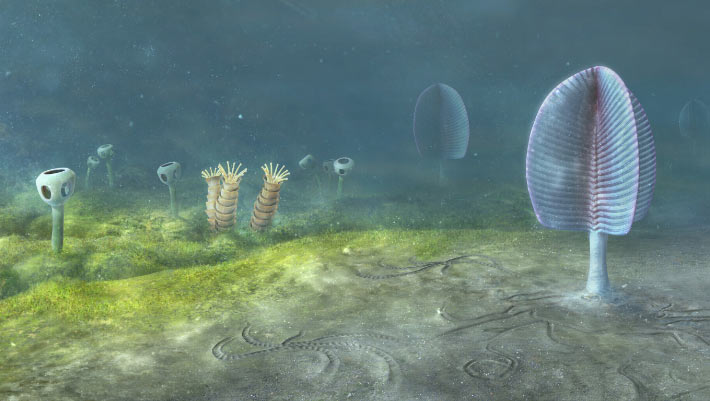
Les plus anciens fossiles d'animaux incontestés, provenant du biote de l'Édiacarien, datent d'environ 574 millions d'années, mais les traces chimiques laissées par les éponges, connues sous le nom de biomarqueurs lipidiques, suggèrent que les animaux existaient il y a avant 635 millions d'années. L’article Les premiers animaux pourraient être apparus 200 millions d’années plus tôt que ne le suggèrent leurs plus anciens fossiles est apparu en premier sur Sci.News : Breaking Science News.
02/10/2026 sci-news ⚙ Traduction automatique
Des fossiles vieux de 97 millions d’années révèlent le premier « GPS » animal connu
fossile
De mystérieux fossiles magnétiques vieux de 97 millions d’années pourraient être la preuve la plus ancienne d’un animal utilisant le champ magnétique terrestre comme un GPS intégré. Leur structure magnétique sophistiquée aurait pu aider une créature océanique inconnue à parcourir des milliers de kilomètres avec une précision surprenante.
02/10/2026 sciencedaily-paleo ⚙ Traduction automatique
Dinosaurs May Have Dined on Seaweed, Study Suggests
Les dinosaures auraient pu manger des algues, selon une étude
Crétacé fossile Dinosauria isotope étude
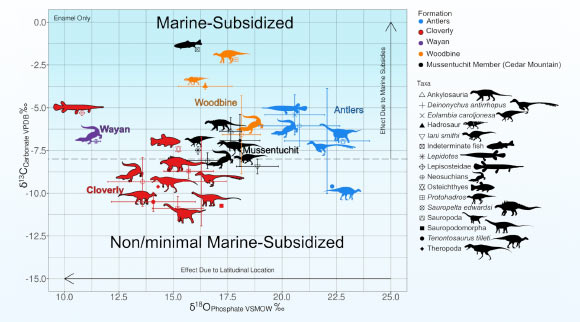
Les paléontologues qui étudient les fossiles du Crétacé ont découvert à plusieurs reprises que les dents de nombreux animaux anciens contiennent davantage d'un isotope de carbone plus lourd, le carbone 13, que ce que leur régime alimentaire présumé à base de plantes laisserait présager. L'article Les dinosaures ont peut-être dîné d'algues, selon une étude, est apparu en premier sur Sci.News : Breaking Science News.
01/10/2026 sci-news ⚙ Traduction automatique
New Enantiornithine Bird Joins Australia’s Sparse Fossil Record
Un nouvel oiseau énantiornithine rejoint le record australien de fossiles clairsemés
Australie Crétacé fossile oiseau
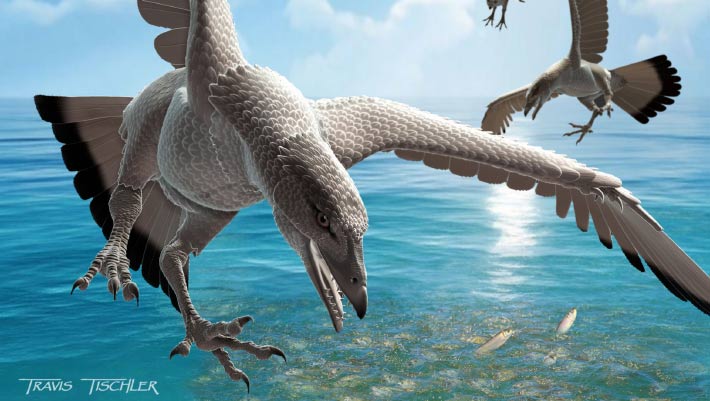
Tenuicruris piscanexum n'est que la deuxième espèce d'oiseau du Crétacé nommée sur le continent australien. L’article Un nouvel oiseau énantiornithine rejoint le record australien de fossiles clairsemés est apparu en premier sur Sci.News : Breaking Science News.
30/09/2026 sci-news ⚙ Traduction automatique
1 2 3 4 5 6 7 8 9 10 11 12 13 14 15 16 17 18 19 20 21 22 23 24 25 26 27 28 29 30 31 32 33 34 35 36 37 38 39 40 41 42 43 44 45 46 47 48