Cambrian

Geological interval

0 image(s) · 6 News

View page

News

Complex Colonial Life Was Already Thriving during Cambrian Explosion
Cambrian
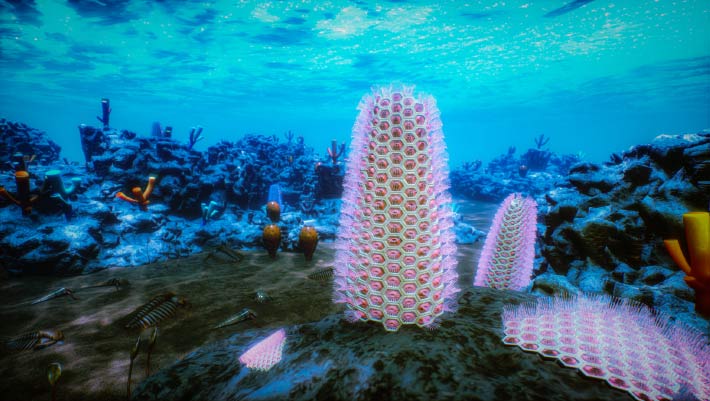
Tiny colonial animals called bryozoans were long thought to have appeared tens of millions of years after the Cambrian explosion. The post Complex Colonial Life Was Already Thriving during Cambrian Explosion appeared first on Sci.News: Breaking Science News.
03/06/2026 sci-news
Une découverte en Chine bouscule l’histoire d’étranges animaux vieux de 520 millions d’années
A discovery in China shakes up the story of strange animals dating back 520 million years
China Cambrian fossil dating discovery
Discreet but omnipresent in today's oceans, bryozoans hide a much older history than previously thought. Exceptional fossils discovered in China show that 520 million years ago, these colonial animals were already complex structures, fully...
03/06/2026 futura-terre ⚙ Auto-translated
490-Million-Year-Old Arthropod Fossil Fills Puzzling Gap in Fossil Record
Canada Cambrian Furongian fossil specimen new species
A new species of corcoraniid arthropod that lived during the Furongian epoch, between 497 and 487 million years ago, has been identified from an exceptionally preserved specimen found near Québec, Canada. The post 490-Million-Year-Old Arthropod Fossil Fills Puzzling Gap in Fossil Record appeared first on Sci.News: Breaking Science News.
29/05/2026 sci-news
Rethinking the Cambrian Explosion: Before Shells and Limbs, There Was the Brain
limb Cambrian evolution
A new hypothesis proposes that the Cambrian Explosion -- the sudden burst of animal diversity 500 million years ago -- was not driven by shells or limbs, but by the early evolution of complex nervous systems. The post Rethinking the Cambrian Explosion: Before Shells and Limbs, There Was the Brain appeared first on Sci.News: Breaking Science News.
06/05/2026 sci-news
This tiny claw in a 500-million-year-old fossil just rewrote the origin of spiders
claw Cambrian fossil specimen
What started as routine fossil cleaning turned into a major scientific surprise when researchers uncovered a tiny claw in a 500-million-year-old specimen where no claw should exist. That detail revealed Megachelicerax cousteaui, the oldest known relative of spiders, pushing the origins of this group back by 20 million years. The fossil shows that key features of modern spiders and horseshoe crabs were already emerging during the Cambrian Explosion.
03/04/2026 sciencedaily
1 2