Canada

Country

34 image(s) · 8 News

Image gallery

Pittsburgh-2013-05-18-058
Taxa Diabloceratops

Pittsburgh-2013-05-18-058

Canada Diabloceratops
Dinos at Courtenay Museum -20090628-7
Taxa Kourisodon

Dinos at Courtenay Museum -20090628-7

museum Canada Kourisodon
Puntledge River elasmosaur[1], Canadian Museum of Nature, Ottawa, Ontario, Canada
Taxa Traskasaura

Puntledge River elasmosaur[1], Canadian Museum of Nature, Ottawa, Ontario, Canada

museum Canada Traskasaura
Buitreraptor displayed at the Royal Ontario Museum, Toronto, Canada.
Taxa Buitreraptor

Buitreraptor displayed at the Royal Ontario Museum, Toronto, Canada.

museum Canada Buitreraptor
ROM Dinosaurs 019
Taxa Pteranodontidae

ROM Dinosaurs 019

Canada Dinosauria Pteranodontidae
Identifier: annalsofmedicalh01pack (find matches)
Title: Annals of medical history
Year: 1917 (1910s)
Authors:  Packard, Francis R. (Francis Randolph), 1870-1950
Subjects:  Medicine
Publisher:  New York P.B. Hoeber
Contributing Library:  Gerstein - University of Toronto
Digitizing Sponsor:  University of Toronto

View Book Page: Book Viewer
About This Book: Catalog Entry
View All Images: All Images From Book
Click here to view book online to see this illustration in context in a browseable online version of this book.

Text Appearing Before Image:
ail strongly Hexed, and the toescontracted and appressed. The whole atti-tude strongly suggests a spastic distress,possibly brought on by some form ofpoisoning of the central nervous system,from infection or the deglutition of somepoisonous substance. 14. Osteomalacia is evidently the causeof the hypertrophy of the bones of Lim-nocyron potens, an early carnivore from theWashakie Eocene of Wyoming, nearly3,000,000 years old. MATERIALS AND METHODS The material described in the presentpaper has been loaned the writer lor de-scription by the Field Museum of Chii Osborn: Hull. Amcr. \lus. Natl. Hist., 1917,vol. 35. !>• 733. P>- 28. Studies in Paleopathology 393 by the American Museum of Natural His-tory of New York City, by Walker Museumof the University of Chicago, and by the Uni-versity of Kansas Natural History Museum. made by the well-known petrographic meth-ods so common in all geological labora-tories. The diagnoses, where they are at-tempted, arc made from comparisons of the
Text Appearing After Image:
Fig. 20. The skeleton of Strutbiomimus altus, a small dinosaur from the BeliyRiver series (Cretaceous), Red Deer River, Alberta, Canada, now regarded as ofapproximately the same age as the Judith River series. The unique feature ofthe skull is the total absence of teeth, with a size of skull one-third larger thanthe ostrich and a length of body of about fifteen feet. The position of the skeletonis decidedly that of the opisthotonos which may be regarded as an indication ofdisease. (After Osborn). A beautiful specimen of an osteoma, theonly one known so far, on the vertebra of aKansas Cretaceous mosasaur, was given thewriter by Dr. J. M. Armstrong of St. Paul.The writer expresses his obligations to thegentlemen connected with the above-men-tioned institutions and to Dr. Armstrong.The methods used are a combination ofprocedures in the various lines involved.Microscopic sections, which can be madethin enough for immersion lens study, are material with similar lesions in recent hu-man mat

Note About Images

Please note that these images are extracted from scanned page images that may have been digitally enhanced for readability - coloration and appearance of these illustrations may not perfectly resemble the original work.
Taxa Hexing

Identifier: annalsofmedicalh01pack (find matches) Title: Annals of medical history Year: 1917 (1910s) Authors: Packard, Francis R. (Francis Randolph), 1870-1950 Subjects: Medicine Publisher: New York P.B. Hoeber Contributing Library: Gerstein - University of Toronto Digitizing Sponsor: University of Toronto View Book Page: Book Viewer About This Book: Catalog Entry View All Images: All Images From Book Click here to view book online to see this illustration in context in a browseable online version of this book. Text Appearing Before Image: ail strongly Hexed, and the toescontracted and appressed. The whole atti-tude strongly suggests a spastic distress,possibly brought on by some form ofpoisoning of the central nervous system,from infection or the deglutition of somepoisonous substance. 14. Osteomalacia is evidently the causeof the hypertrophy of the bones of Lim-nocyron potens, an early carnivore from theWashakie Eocene of Wyoming, nearly3,000,000 years old. MATERIALS AND METHODS The material described in the presentpaper has been loaned the writer lor de-scription by the Field Museum of Chii Osborn: Hull. Amcr. \lus. Natl. Hist., 1917,vol. 35. !>• 733. P>- 28. Studies in Paleopathology 393 by the American Museum of Natural His-tory of New York City, by Walker Museumof the University of Chicago, and by the Uni-versity of Kansas Natural History Museum. made by the well-known petrographic meth-ods so common in all geological labora-tories. The diagnoses, where they are at-tempted, arc made from comparisons of the Text Appearing After Image: Fig. 20. The skeleton of Strutbiomimus altus, a small dinosaur from the BeliyRiver series (Cretaceous), Red Deer River, Alberta, Canada, now regarded as ofapproximately the same age as the Judith River series. The unique feature ofthe skull is the total absence of teeth, with a size of skull one-third larger thanthe ostrich and a length of body of about fifteen feet. The position of the skeletonis decidedly that of the opisthotonos which may be regarded as an indication ofdisease. (After Osborn). A beautiful specimen of an osteoma, theonly one known so far, on the vertebra of aKansas Cretaceous mosasaur, was given thewriter by Dr. J. M. Armstrong of St. Paul.The writer expresses his obligations to thegentlemen connected with the above-men-tioned institutions and to Dr. Armstrong.The methods used are a combination ofprocedures in the various lines involved.Microscopic sections, which can be madethin enough for immersion lens study, are material with similar lesions in recent hu-man mat Note About Images Please note that these images are extracted from scanned page images that may have been digitally enhanced for readability - coloration and appearance of these illustrations may not perfectly resemble the original work.

bone vertebra museum Canada +10
Life restoration of the mosasaurine mosasaurid Eremiasaurus, with unknown portions and soft tissues based primarily on Prognathodon and supplemented with Mosasaurus where needed.
References
Leblanc, A.R.H.; Caldwell, M.W.; Bardet, N. (2012). "A new mosasaurine from the Maastrichtian (Upper Cretaceous) phosphates of Morocco and its implications for mosasaurine systematics". Journal of Vertebrate Paleontology 32 (1): 82–104.
Lindgren, J.; Kaddumi, H.; Polcyn, M. (2013). "Soft tissue preservation in a fossil marine lizard with a bilobed tail fin". Nature Communications 4: 2423. DOI:10.1038/ncomms3423.
Konishi, T.; Brinkman, D.; Massare, J.A.; Caldwell, M.W. (2011). "New exceptional specimens of Prognathodon overtoni (Squamata, Mosasauridae) from the upper Campanian of Alberta, Canada, and the systematics and ecology of the genus". Journal of Vertebrate Paleontology 31 (5): 1026–1046.
Russell, D.A. (1967). "Systematics and morphology of American mosasaurs". Bulletin of the Peabody Museum of Natural History 23: 1–241.

Life restoration of the mosasaurine mosasaurid Eremiasaurus, with unknown portions and soft tissues based primarily on Prognathodon and supplemented with Mosasaurus where needed. References Leblanc, A.R.H.; Caldwell, M.W.; Bardet, N. (2012). "A new mosasaurine from the Maastrichtian (Upper Cretaceous) phosphates of Morocco and its implications for mosasaurine systematics". Journal of Vertebrate Paleontology 32 (1): 82–104. Lindgren, J.; Kaddumi, H.; Polcyn, M. (2013). "Soft tissue preservation in a fossil marine lizard with a bilobed tail fin". Nature Communications 4: 2423. DOI:10.1038/ncomms3423. Konishi, T.; Brinkman, D.; Massare, J.A.; Caldwell, M.W. (2011). "New exceptional specimens of Prognathodon overtoni (Squamata, Mosasauridae) from the upper Campanian of Alberta, Canada, and the systematics and ecology of the genus". Journal of Vertebrate Paleontology 31 (5): 1026–1046. Russell, D.A. (1967). "Systematics and morphology of American mosasaurs". Bulletin of the Peabody Museum of Natural History 23: 1–241.

tissue ecology museum Canada +11
Jian Ghomeshi and I

Jian Ghomeshi and I

Canada
The Canadian Fossil Discovery Centre in Morden boasts the largest collection of marine invertebrate fossils in Canada. Visitors to the museum not only get to see this collection, but can join a dig in search for more fossils at a 109-acre escarpment property.

Photo credit: Robyn Hanson
Taxa Tylosaurus

The Canadian Fossil Discovery Centre in Morden boasts the largest collection of marine invertebrate fossils in Canada. Visitors to the museum not only get to see this collection, but can join a dig in search for more fossils at a 109-acre escarpment property. Photo credit: Robyn Hanson

museum Canada fossil Tylosaurus +1
Dinosaur sand sculptures at the Sand Sculpting Australia "Dinostory" exhibit held at Frankston, Victoria, Australia 2008/2009.The sculpture was the created with the combined efforts of an international team of sand sculpting artists: 
Karen Fralich (Canada) - children playing in foreground;
Peter Bignell (Tasmania, Australia) - Triceratops skull and logo;
Martijn Rijerse (Netherlands) - Tyrannosaurus rex scene;
Jino van Bruissenen and Christina Mija (NSW, Australia) - background panel.

Dinosaur sand sculptures at the Sand Sculpting Australia "Dinostory" exhibit held at Frankston, Victoria, Australia 2008/2009.The sculpture was the created with the combined efforts of an international team of sand sculpting artists: Karen Fralich (Canada) - children playing in foreground; Peter Bignell (Tasmania, Australia) - Triceratops skull and logo; Martijn Rijerse (Netherlands) - Tyrannosaurus rex scene; Jino van Bruissenen and Christina Mija (NSW, Australia) - background panel.

Australia Canada Netherlands Dinosauria +3
Fossil specimen of Ornithomimus sp. (TMP 1995.110.1), Royal Tyrrell Museum. This specimen was recovered from the middle Dinosaur Park Formation of Alberta, Canada.
Taxa Ornithomimidae

Fossil specimen of Ornithomimus sp. (TMP 1995.110.1), Royal Tyrrell Museum. This specimen was recovered from the middle Dinosaur Park Formation of Alberta, Canada.

museum Canada Germany Dinosaur Park +6
Chasmosaurus belli ROM 843, Royal Tyrrell Museum of Paleontology. Late Cretaceous 75-74.5 millions years ago. Found at Dinosaur Provincial Park, Alberta, and prepared at the Royal Tyrrell Museum of Paleontology, Drumheller, Alberta.
Taxa Chasmosaurinae

Chasmosaurus belli ROM 843, Royal Tyrrell Museum of Paleontology. Late Cretaceous 75-74.5 millions years ago. Found at Dinosaur Provincial Park, Alberta, and prepared at the Royal Tyrrell Museum of Paleontology, Drumheller, Alberta.

museum Canada Cretaceous Late Cretaceous +5
Chasmosaurus belli ROM 843, Royal Tyrrell Museum of Paleontology. Late Cretaceous 75-74.5 millions years ago. Found at Dinosaur Provincial Park, Alberta, and prepared at the Royal Tyrrell Museum of Paleontology, Drumheller, Alberta.
Taxa Triceratopsini

Chasmosaurus belli ROM 843, Royal Tyrrell Museum of Paleontology. Late Cretaceous 75-74.5 millions years ago. Found at Dinosaur Provincial Park, Alberta, and prepared at the Royal Tyrrell Museum of Paleontology, Drumheller, Alberta.

museum Canada Cretaceous Late Cretaceous +5
ROM Dinosaurs 019
Taxa Geosternbergia

ROM Dinosaurs 019

Canada Dinosauria Geosternbergia Pteranodontidae
Greenlandite (fuchsite-quartz gneiss) (2.7 cm across at its widest) from the Precambrian of southwestern Greenland.  Green = fuchsite; gray = quartz; a few small, scattered pyrite crystals (brassy gold-colored) are also visible.


Attractive greenish-colored gneisses in southwestern Greenland that contain the minerals fuchsite (green) and quartz (gray) have been informally called greenlandite.  Fuchsite is a chromian muscovite mica (K(Al,Cr)2AlSi3O10(OH,F)2 - potassium chromium hydroxy-fluoro-aluminosilicate); it is typically encountered in schistose rocks.
Greenland greenlandite is part of a 3.8 billion year old, highly metamorphosed succession of rocks.  These represent the oldest known supracrustal rocks on Earth (the oldest crustal Earth rocks include 4.03 billion year old Acasta Gneiss, 4.28 b.y. rocks from the eastern Hudson Bay area, and 4.45-4.55 b.y. rocks in the subsurface of Baffin Island, Canada).
Locality: undisclosed locality in the Godthåbsfjord area or Nuuk area, southwestern Greenland.

Age: Eoarchean boundary, 3.8 billion years.
Intervals Eoarchean

Greenlandite (fuchsite-quartz gneiss) (2.7 cm across at its widest) from the Precambrian of southwestern Greenland. Green = fuchsite; gray = quartz; a few small, scattered pyrite crystals (brassy gold-colored) are also visible. Attractive greenish-colored gneisses in southwestern Greenland that contain the minerals fuchsite (green) and quartz (gray) have been informally called greenlandite. Fuchsite is a chromian muscovite mica (K(Al,Cr)2AlSi3O10(OH,F)2 - potassium chromium hydroxy-fluoro-aluminosilicate); it is typically encountered in schistose rocks. Greenland greenlandite is part of a 3.8 billion year old, highly metamorphosed succession of rocks. These represent the oldest known supracrustal rocks on Earth (the oldest crustal Earth rocks include 4.03 billion year old Acasta Gneiss, 4.28 b.y. rocks from the eastern Hudson Bay area, and 4.45-4.55 b.y. rocks in the subsurface of Baffin Island, Canada). Locality: undisclosed locality in the Godthåbsfjord area or Nuuk area, southwestern Greenland. Age: Eoarchean boundary, 3.8 billion years.

Canada Greenland
Geographic and stratigraphic relationships of the holotype EMK 0012 and the Loki Quarry in northern Montana. (A) Regional relationships between the cross-border paleontological sites in the Oldman and Judith River formations along the Milk River and in Kennedy Coulee in Alberta and Montana. (B) Generalized stratigraphic section in the Kennedy Coulee area modified after Goodwin & Deino (1989) and Rogers, Eberth & Ramezani (2023) with the relationships between the Foremost and Oldman formations in Canada and the Judith River Formation in Montana. Relative placements of important taxa in this area are indicated. Position of 40Ar/39Ar dates originally obtained by Goodwin & Deino (1989) are shown in relation to the new U–Pb CA-ID-TIMS date for KC061517-1 by Ramezani et al. (2022). Bentonite ash beds are only 5 to 7 cm thick so they are exaggerated for clarity. Scale bars delineated in map view are indicated kilometers and in meters stratigraphically.

Geographic and stratigraphic relationships of the holotype EMK 0012 and the Loki Quarry in northern Montana. (A) Regional relationships between the cross-border paleontological sites in the Oldman and Judith River formations along the Milk River and in Kennedy Coulee in Alberta and Montana. (B) Generalized stratigraphic section in the Kennedy Coulee area modified after Goodwin & Deino (1989) and Rogers, Eberth & Ramezani (2023) with the relationships between the Foremost and Oldman formations in Canada and the Judith River Formation in Montana. Relative placements of important taxa in this area are indicated. Position of 40Ar/39Ar dates originally obtained by Goodwin & Deino (1989) are shown in relation to the new U–Pb CA-ID-TIMS date for KC061517-1 by Ramezani et al. (2022). Bentonite ash beds are only 5 to 7 cm thick so they are exaggerated for clarity. Scale bars delineated in map view are indicated kilometers and in meters stratigraphically.

scale Canada Foremost Judith River +4
1 2 3

News

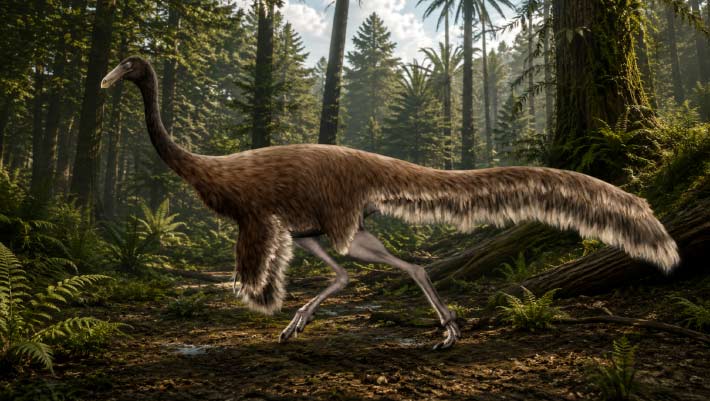
Rare Ostrich-Like Dinosaur Fossil Found on Canadian Island
vertebra Canada Colombia fossil Dinosauria Ornithomimosauria bird
Paleontologists in Canada say they have recovered a dinosaur tail vertebra from 75- to 80-million-year-old marine rocks on a small island off the coast of British Columbia, providing the clearest evidence yet that bird-like ornithomimosaurs once roamed the ancient Pacific coastline of North America. The post Rare Ostrich-Like Dinosaur Fossil Found on Canadian Island appeared first on Sci.News: Breaking Science News.
25/05/2026 sci-news
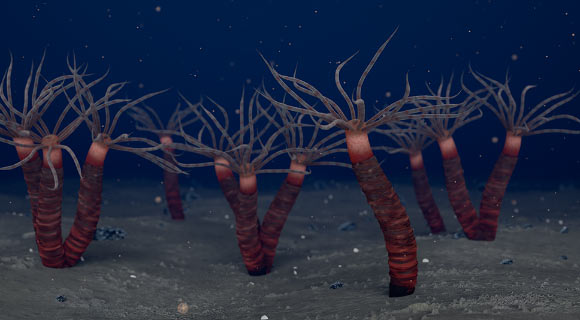
450-Million-Year-Old Fossils Reveal Strange, Tube-Dwelling Jellyfish Relative
Canada fossil specimen new species
Paleontologists have identified a new genus and species of soft-bodied, tubicolous polyp medusozoan from well-preserved specimens found about 50 km northeast of Quebec City in Canada. The post 450-Million-Year-Old Fossils Reveal Strange, Tube-Dwelling Jellyfish Relative appeared first on Sci.News: Breaking Science News.
21/04/2026 sci-news
Corythosaurus: Beast of the Week
crest Canada Canardia Corythosaurus Dinosauria Hadrosauria Hadrosauridae Hypacrosaurus Lambeosauria Parasaurolophus Velafrons
This week we will take a look at a well known duckbill dinosaur.  Enter Corythosaurus!  Corythosaurus was a plant eater that belonged to the lambiosaurine group within the family, Hadrosauridae. (duckbills)  Lambiosaurine hadrosaurs typically had hollow crests on their heads and narrower beaks compared to other kinds hadrosaurs.  It was closely related to other lambiosaurine hadrosaurs such as Parasaurolophus, Hypacrosaurus, Lambeosaurus, and Velafrons.  It lived in what is now Alberta, Canada,
15/02/2026 prehistoricbeastoftheweek
1 2