14 image(s) · 2 News
Lamplughsaura dharmarasensis, a basal sauropodomorph from the Lower Jurassic of India, after description by T.S. Kutty et al., 2007, pencil drawing, digital coloring
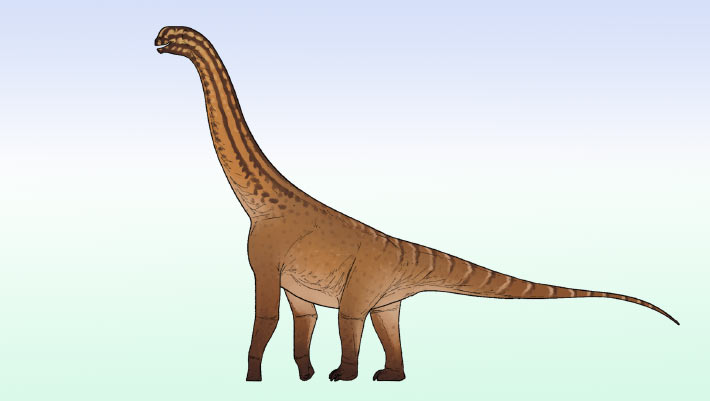
This file represents a possible life appearance of the Indian Titanosaurian Sauropod dinosaur Jainosaurus septentrionalis from the Late Cretaceous (Maastrichtian) of India, belonging to the Lameta Formation. References used: Huene & Matley (1933) Hunt et al. (1995) Gunnar Bivens' skeletal diagram Wilson et al. (2008) "Reassessment of Sauropod Dinosaur Jainosaurus (="Antarctosaurus") Septentrionalis from the Upper Cretaceous of India"
Opening of western Indian Ocean at 70 Ma: first oceanic crust between India and Madagascar.
Earth during the Middle Ordivician Period @ 460 Ma. Gondwana is seen above the equator (Australia & South China) and bellow the equator (North China, Kazakh terranes, Tarim, Antartica, India, Madagascar, Africa and South America). Laurentia, Baltica & Sibera are seperate continents, with Avalonia on its way to collide Baltica to form the Calledonian Orogeny, and Acadia on its way to collide Laurentia to form the Acadian Orogeny. Legend: Dark blue = ocean Light blue = shallow seas Tan = landmass Black outlines = modern day coastlines showing their respective positions
Life reconstruction of Maleriraptor kuttyi with the unaysaurid sauropodomorph Jaklapallisaurus asymmetricus, both from the lower Norian Upper Maleri Formation of south-central India.
Digital illustration of the Sauropod Dinosaur Isisaurus colberti from the Late Cretaceous (Maastrichtian) of India (72.2-66 MYA). References include Jain & Bandyopadhyay (1997), several papers from Wilson et al. and skeletal reconstruction by Scott Hartman. Illustrated by Ansh Saxena. About Isisaurus– Isisaurus colberti (=Titanosaurus colberti) was a species of Titanosaurian Sauropod Dinosaur from the Late Cretaceous (Maastrichtian) age in the Indian Subcontinent. Isisaurus lived sympatrically with another Titanosaurian Sauropod Jainosaurus. It also lived alongside Theropods like Rajasaurus, Rahiolisaurus, Indosuchus etc. Remains of Isisaurus come from the Lameta formation of Central India.
Outline of history by H. G. Wells Publication date 1920 Topics Archeological Survey, World history, Ancient civilization, World politics Collection digitallibraryindia; JaiGyan Language English Book from the Archaeological Survey of India Central Archaeological Library, New Delhi Book Number: 9651 Book Title: Outline of history Book Author: H. G. Wells Book Language: English Number of Pages: 1252 Publisher: Cassell; London; 1920 Subject: World history; Ancient civilization; World politics Source URL: http://asi.nic.in/asi_books/9651.pdf Year: 1920 Addeddate 2017-11-05 18:34:50 Identifier in.gov.ignca.9651 Identifier-ark ark:/13960/t1qg51s3g Ocr ABBYY FineReader 11.0 (Extended OCR) Ppi 600 Scanner Internet Archive Python library 1.7.3
Life reconstruction of Maleriraptor kuttyi with the unaysaurid sauropodomorph Jaklapallisaurus asymmetricus, both from the lower Norian Upper Maleri Formation of south-central India.
This file represents a possible life appearance of the Indian Titanosaurian Sauropod dinosaur Jainosaurus septentrionalis from the Late Cretaceous (Maastrichtian) of India, belonging to the Lameta Formation. References used: Huene & Matley (1933) Hunt et al. (1995) Gunnar Bivens' skeletal diagram Wilson et al. (2008) "Reassessment of Sauropod Dinosaur Jainosaurus (="Antarctosaurus") Septentrionalis from the Upper Cretaceous of India"
Opening of western Indian Ocean at 70 Ma: first oceanic crust between India and Madagascar.
Earth during the Middle Ordivician Period @ 460 Ma. Gondwana is seen above the equator (Australia & South China) and bellow the equator (North China, Kazakh terranes, Tarim, Antartica, India, Madagascar, Africa and South America). Laurentia, Baltica & Sibera are seperate continents, with Avalonia on its way to collide Baltica to form the Calledonian Orogeny, and Acadia on its way to collide Laurentia to form the Acadian Orogeny. Legend: Dark blue = ocean Light blue = shallow seas Tan = landmass Black outlines = modern day coastlines showing their respective positions
Lamplughsaura dharmarasensis, a basal sauropodomorph from the Lower Jurassic of India, after description by T.S. Kutty et al., 2007, pencil drawing, digital coloring
Digital illustration of the Sauropod Dinosaur Isisaurus colberti from the Late Cretaceous (Maastrichtian) of India (72.2-66 MYA). References include Jain & Bandyopadhyay (1997), several papers from Wilson et al. and skeletal reconstruction by Scott Hartman. Illustrated by Ansh Saxena. About Isisaurus– Isisaurus colberti (=Titanosaurus colberti) was a species of Titanosaurian Sauropod Dinosaur from the Late Cretaceous (Maastrichtian) age in the Indian Subcontinent. Isisaurus lived sympatrically with another Titanosaurian Sauropod Jainosaurus. It also lived alongside Theropods like Rajasaurus, Rahiolisaurus, Indosuchus etc. Remains of Isisaurus come from the Lameta formation of Central India.