←

Dinosauria

Taxon

279 image(s) · 276 Actualités

Voir la fiche

Galerie d'images

Ceratosaurus nasicornis reconstruction. Matches proportions shown in Gregory S. Paul (The Princeton Field Guide to Dinosaurs, 2010, p. 84)

Ceratosaurus nasicornis reconstruction. Matches proportions shown in Gregory S. Paul (The Princeton Field Guide to Dinosaurs, 2010, p. 84)

Averostra Ceratosauria Dinosauria
Sketch-drawing of the vertebrate faunal assemblage of the Lisowice site (modified from Niedźwiedzki)10. (a) Large, theropod-like predatory archosaur (Smok wawelski); (b) large temnospondyl amphibian (Cyclotosaurus sp.); (c) small predatory dinosaurs (Neotheropoda indet.); (d) temnospondyl amphibian (Gerrothorax sp.); (e) small basal crocodylomorph (Crocodylomorpha indet.); (f) small diapsid (Choristodere-like animal); (g) hybodont sharks (Polyacrodus and Hybodus); (h) coelacanth fish; (i) dipnoan fish (Ptychoceratodus sp.); (j) actinopterygian fish; (k) gigantic dicynodont; (l) dinosauriforms or early dinosaurs (Dinosauriformes indet. or Dinosauria indet.); (m) small lepidosauromorphs (Sphenodontia indet.); (n) pterosaurs (Pterosauria indet.); (o) early mammaliaform (Hallautherium sp.).

Sketch-drawing of the vertebrate faunal assemblage of the Lisowice site (modified from Niedźwiedzki)10. (a) Large, theropod-like predatory archosaur (Smok wawelski); (b) large temnospondyl amphibian (Cyclotosaurus sp.); (c) small predatory dinosaurs (Neotheropoda indet.); (d) temnospondyl amphibian (Gerrothorax sp.); (e) small basal crocodylomorph (Crocodylomorpha indet.); (f) small diapsid (Choristodere-like animal); (g) hybodont sharks (Polyacrodus and Hybodus); (h) coelacanth fish; (i) dipnoan fish (Ptychoceratodus sp.); (j) actinopterygian fish; (k) gigantic dicynodont; (l) dinosauriforms or early dinosaurs (Dinosauriformes indet. or Dinosauria indet.); (m) small lepidosauromorphs (Sphenodontia indet.); (n) pterosaurs (Pterosauria indet.); (o) early mammaliaform (Hallautherium sp.).

dessin Dinosauria Neotheropoda Pterosauria
Diagram made to illustrate the debate over the hands of theropod dinosaurs and their alleged descendants, the birds ( Aves ). In the last years, the difference between the hands of theropods and birds have been an important thing when it comes question the theory that birds evolved from dinosaurs, even though some scientists may could refute it. In the diagram, a Neotheropoda ( 1 ), basal tetanurae ( 2 ), a coelurosaurian ( 3 ), the bird (?)Archaeopteryx ( 4 ) and modern bird ( 5 ).
In 1997, birdexpert Alan Feduccia at University of North Carolina discovered that birds develop hands with the digits II, III and IV ( see The Cincinnati Enquirer, 25 - 10 - 1997 ). This is in contrast with the hands of tetanurae, which seems to have the digits I, II and III. This make it almost impossible for dinosaurs and birds to be closely related, according to Feduccia.
Since the discovery by Feduccia, scientific research have came up with a possible explanation to the mystery of the dinosaur - bird hand difference, called The frame shift hypothesis ( see http://scienceblogs.com/tetrapodzoology/2009/06/limusaurus_is_awesome.php ). This hypothesis is based on a discovery which shows that although bird embryos develop the fingers II, III and IV, the genes which is coding for the external appearance of the digits seems to be from the fingers I, II and III. Based on this, scientists belive this: when neotheropods evolved into tetanurae, the losed digit I ( not digit IV, as earlier suggested ). During this process, the genes which coded for how the digits should looks like ( the number of phalanges, for example ) became refurnished ( see the color spots in th upper section in the diagram to understan ). The discovery of Limusaurus has been said to support this theory ( see https://www.livescience.com/animals/090617-dinosaur-hands.html ).
One thing is that may can be used to refute that Limusaurus should support the Frame shift hypothesis is that Limusaurus was a ceratosaurian, and is dated to be much younger than the oldest tetanurae's.
Also, some tetanure´s may had 4 digits' like the Archaeornithomimus ( see number 4 in the diagram ) ( see also http://dml.cmnh.org/1998Oct/msg00443.html and the Allosaurus hand in the image here: http://upload.wikimedia.org/wikipedia/commons/6/69/Allosaurus-mounted.jpg ). If this is the digits I, II, III and IV. If so, it shows that tetanurae had the digits I, II and III, and not II, II and IV, like birds.
For more in this debate, see text section to my picture Raptor-Archaeopteryx-bird hands differens.JPG at http://commons.wikimedia.org/wiki/File:Raptor-Archaeopteryx-bird_hands_differens.JPG.

Diagram made to illustrate the debate over the hands of theropod dinosaurs and their alleged descendants, the birds ( Aves ). In the last years, the difference between the hands of theropods and birds have been an important thing when it comes question the theory that birds evolved from dinosaurs, even though some scientists may could refute it. In the diagram, a Neotheropoda ( 1 ), basal tetanurae ( 2 ), a coelurosaurian ( 3 ), the bird (?)Archaeopteryx ( 4 ) and modern bird ( 5 ). In 1997, birdexpert Alan Feduccia at University of North Carolina discovered that birds develop hands with the digits II, III and IV ( see The Cincinnati Enquirer, 25 - 10 - 1997 ). This is in contrast with the hands of tetanurae, which seems to have the digits I, II and III. This make it almost impossible for dinosaurs and birds to be closely related, according to Feduccia. Since the discovery by Feduccia, scientific research have came up with a possible explanation to the mystery of the dinosaur - bird hand difference, called The frame shift hypothesis ( see http://scienceblogs.com/tetrapodzoology/2009/06/limusaurus_is_awesome.php ). This hypothesis is based on a discovery which shows that although bird embryos develop the fingers II, III and IV, the genes which is coding for the external appearance of the digits seems to be from the fingers I, II and III. Based on this, scientists belive this: when neotheropods evolved into tetanurae, the losed digit I ( not digit IV, as earlier suggested ). During this process, the genes which coded for how the digits should looks like ( the number of phalanges, for example ) became refurnished ( see the color spots in th upper section in the diagram to understan ). The discovery of Limusaurus has been said to support this theory ( see https://www.livescience.com/animals/090617-dinosaur-hands.html ). One thing is that may can be used to refute that Limusaurus should support the Frame shift hypothesis is that Limusaurus was a ceratosaurian, and is dated to be much younger than the oldest tetanurae's. Also, some tetanure´s may had 4 digits' like the Archaeornithomimus ( see number 4 in the diagram ) ( see also http://dml.cmnh.org/1998Oct/msg00443.html and the Allosaurus hand in the image here: http://upload.wikimedia.org/wikipedia/commons/6/69/Allosaurus-mounted.jpg ). If this is the digits I, II, III and IV. If so, it shows that tetanurae had the digits I, II and III, and not II, II and IV, like birds. For more in this debate, see text section to my picture Raptor-Archaeopteryx-bird hands differens.JPG at http://commons.wikimedia.org/wiki/File:Raptor-Archaeopteryx-bird_hands_differens.JPG.

Archaeopteryx Coelurosauria Dinosauria Neotheropoda +3
Cladogram of amniotes. Based on File:Cladogram Amniota A.jpg

Cladogram of amniotes. Based on File:Cladogram Amniota A.jpg

Coelurosauria Dinosauria Maniraptora Ornithischia +2
Cladogram of the former "Reptilia" (red)

Cladogram of the former "Reptilia" (red)

Coelurosauria Dinosauria Maniraptora Ornithischia +2
Dinosaur art by me!

Dinosaur art by me!

Dinosauria
The Chicago specimen of Archaeopteryx (PA 830), a well-preserved fossil highlighting the transitional features between non-avian dinosaurs and birds, housed at the Field Museum of Natural History.

The Chicago specimen of Archaeopteryx (PA 830), a well-preserved fossil highlighting the transitional features between non-avian dinosaurs and birds, housed at the Field Museum of Natural History.

musée fossile spécimen Archaeopteryx +2
Life representation of Bicharracosaurus dionidei

Life representation of Bicharracosaurus dionidei

Bicharracosaurus Dinosauria
A badly drew sketch of Brontoholus (a placeholder for when an actual paleoart of Brontotholus is made.

A badly drew sketch of Brontoholus (a placeholder for when an actual paleoart of Brontotholus is made.

paléoart Brontotholus Dinosauria
Archeology center interior Svilajnac

Archeology center interior Svilajnac

Dinosauria
Apex Stegosaurus Reconstruction drawn Jan, 7, 2025 by Adam Treviño

Apex Stegosaurus Reconstruction drawn Jan, 7, 2025 by Adam Treviño

Dinosauria Stegosauria
Anteavis

Anteavis

Anteavis Dinosauria
Dinosaur art by me!

Dinosaur art by me!

Dinosauria
A scientifically accurate reconstruction of the dinosaur Spinosaurus aegyptiacus.

A scientifically accurate reconstruction of the dinosaur Spinosaurus aegyptiacus.

Dinosauria Spinosauria
Close-up of the traumatic lesion observed in the right squamosal bone of Big John, a fossilized specimen of the dinosaur species Triceratops horridus. This image shows plaque-like deposition of reactive bone (white arrows) and lytic lesions (black arrows) on the surface around the lesion. These suggest that the lesion was surrounded by newly-formed bone and, therefore, had started to heal.
This image was originally published as Figure 1c in the following journal article:
Ruggero D’Anastasio, Jacopo Cilli, Flavio Bacchia, Federico Fanti, Giacomo Gobbo & Luigi Capasso (2022) Histological and chemical diagnosis of a combat lesion in Triceratops Scientific Reports, 12, 3941 (2022). DOI: 10.1038/s41598-022-08033-2
This article was published with the following license:
"This article is licensed under a Creative Commons Attribution 4.0 International License, which permits use, sharing, adaptation, distribution and reproduction in any medium or format, as long as you give appropriate credit to the original author(s) and the source, provide a link to the Creative Commons licence, and indicate if changes were made. The images or other third party material in this article are included in the article's Creative Commons licence, unless indicated otherwise in a credit line to the material. If material is not included in the article's Creative Commons licence and your intended use is not permitted by statutory regulation or exceeds the permitted use, you will need to obtain permission directly from the copyright holder. To view a copy of this licence, visit http://creativecommons.org/licenses/by/4.0/."

Figure 1c is published without a credit line and, therefore, falls under the article's CC BY 4.0 licence.

Close-up of the traumatic lesion observed in the right squamosal bone of Big John, a fossilized specimen of the dinosaur species Triceratops horridus. This image shows plaque-like deposition of reactive bone (white arrows) and lytic lesions (black arrows) on the surface around the lesion. These suggest that the lesion was surrounded by newly-formed bone and, therefore, had started to heal. This image was originally published as Figure 1c in the following journal article: Ruggero D’Anastasio, Jacopo Cilli, Flavio Bacchia, Federico Fanti, Giacomo Gobbo & Luigi Capasso (2022) Histological and chemical diagnosis of a combat lesion in Triceratops Scientific Reports, 12, 3941 (2022). DOI: 10.1038/s41598-022-08033-2 This article was published with the following license: "This article is licensed under a Creative Commons Attribution 4.0 International License, which permits use, sharing, adaptation, distribution and reproduction in any medium or format, as long as you give appropriate credit to the original author(s) and the source, provide a link to the Creative Commons licence, and indicate if changes were made. The images or other third party material in this article are included in the article's Creative Commons licence, unless indicated otherwise in a credit line to the material. If material is not included in the article's Creative Commons licence and your intended use is not permitted by statutory regulation or exceeds the permitted use, you will need to obtain permission directly from the copyright holder. To view a copy of this licence, visit http://creativecommons.org/licenses/by/4.0/." Figure 1c is published without a credit line and, therefore, falls under the article's CC BY 4.0 licence.

os reproduction spécimen Dinosauria +1
Tawa is an early theropod from the Late Triassic. The genus is named after the Hopi word for the Puebloan sun god. It was a bipedal carnivore, estimated around 2.5 m in length, and weighing about 15 kg. A basal theropod, Tawa shares physical characteristics with coelophysoids and herrerasaurids, and its discovery supports the theory that dinosaurs originated in the southern supercontinent of Gondwanna, before diversifying as Pangea split apart.

Tawa is an early theropod from the Late Triassic. The genus is named after the Hopi word for the Puebloan sun god. It was a bipedal carnivore, estimated around 2.5 m in length, and weighing about 15 kg. A basal theropod, Tawa shares physical characteristics with coelophysoids and herrerasaurids, and its discovery supports the theory that dinosaurs originated in the southern supercontinent of Gondwanna, before diversifying as Pangea split apart.

Trias supérieur Trias Dinosauria Herrerasauridae +2
1 2 3 4 5 6 7 8 9 10 11 12 13 14 15 16 17 18

Actualités

Description d'un fossile de dinosaure rare du groupe de Nanaimo du Crétacé supérieur
os vertèbre description Canada Colombie Crétacé Crétacé supérieur fossile Dinosauria Ornithomimosauria
Les chercheurs ont décrit une seule vertèbre caudale de dinosaure (coccyx) de l'île Denman (Colombie-Britannique, Canada).  Il a été identifié comme une vertèbre caudale d'ornithomimosaure. Le fossile, censé représenter un os de la partie médiane de la queue, n'est que le deuxième fossile de dinosaure identifié dans le groupe de Nanaimo du Crétacé supérieur. De plus, il
10/06/2026 everythingdinosaur ⚙ Traduction automatique
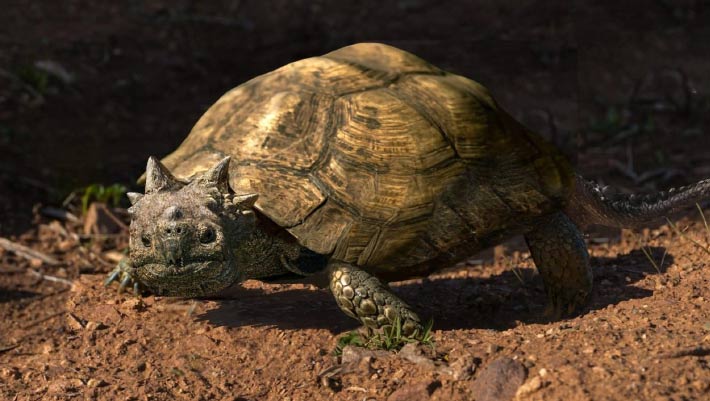
Fossil Discovery in Patagonia Reveals New Species of Horned Turtle
La découverte de fossiles en Patagonie révèle de nouvelles espèces de tortues à cornes
Argentine Maastrichtien fossile Dinosauria découverte extinction nouvelle espèce autres reptiles
Les paléontologues ont identifié une nouvelle espèce de tortue méiolaniforme du nord de la Patagonie, en Argentine, qui vivait à l'époque maastrichtienne, juste avant l'extinction massive déclenchée par un astéroïde qui a anéanti tous les dinosaures non aviaires. L'article La découverte de fossiles en Patagonie révèle de nouvelles espèces de tortues à cornes apparaît en premier sur Sci.News : Breaking Science News.
09/06/2026 sci-news ⚙ Traduction automatique
Un nouveau modèle de paraceratherium Haolonggood arrive en stock
jouet Oligocène Dinosauria mammifères
Everything Dinosaur proposera le nouveau modèle Haolonggood Paraceratherium pour 2026.  Il s’agit de la deuxième figure de mammifère préhistorique introduite par cette société. Récemment, une figurine de rhinocéros laineux (Coelodonta) a été annoncée.  Curieusement, le géant Paraceratherium est lointainement apparenté à Coelodonta.  Les deux animaux sont des ongulés aux doigts impairs (Perissodactyla). Patrouiller le paysage oligocène. Le nouveau
09/06/2026 everythingdinosaur ⚙ Traduction automatique
Description d'un nouveau dinosaure à quatre ailes en provenance de Chine
plume membre description Chine Crétacé Crétacé inférieur fossile Dinosauria Microraptorinae nouvelle espèce partiel
Les paléontologues ont décrit une nouvelle espèce de théropode microraptorine du nord-ouest de la Chine. Nommé Jian changmaensis, ce petit dinosaure à plumes planait probablement sur quatre ailes. Le fossile fournit de nouvelles informations sur les écosystèmes du Crétacé inférieur et étend l’aire de répartition connue des Microraptorinae. Le matériau fossile est constitué d'une ceinture pectorale gauche partielle articulée et d'un membre antérieur. Il
08/06/2026 everythingdinosaur ⚙ Traduction automatique
Leptoceratops: Beast of the Week
Leptocératops : la bête de la semaine
membre Canada Crétacé Crétacé supérieur Ceratopsia Dinosauria Leptoceratops
 Aujourd'hui, nous allons nous intéresser au petit dinosaure cératopsien, Leptoceratops gracilis ! Leptoceratops était un dinosaure cératopsien herbivore qui vivait dans ce qui est aujourd'hui l'Alberta, au Canada, à la fin du Crétacé, il y a entre 68 et 66 millions d'années.  Du bec à la queue, il mesurait environ 6,5 pieds (environ 2 m) et aurait pu marcher sur quatre ou deux membres de son vivant. Le nom du genre se traduit par « petit visage cornu ». Reconstitution de la vie du Leptoceratops à l'aquarelle par Christopher DiPiazza.L
08/06/2026 prehistoricbeastoftheweek ⚙ Traduction automatique
1 2 3 4 5 6 7 8 9 10 11 12 13 14 15 16 17 18 19 20 21 22 23 24 25 26 27 28 29 30 31 32 33 34 35 36 37 38 39 40 41 42 43 44 45 46 47 48 49 50 51 52 53 54 55 56