Dinosauria

Taxon

244 image(s) · 156 Actualités

Voir la fiche

Galerie d'images

Leaellynasaura amicagraphica, dinosaur, skull. Holotype. [P 185991]
Taxons Leaellynasaura

Leaellynasaura amicagraphica, dinosaur, skull. Holotype. [P 185991]

musée holotype Dinosauria Leaellynasaura +1
Material of the dinosaur Bahariasaurus ingens (1-4, 7-18, 24-26) and indeterminate theropods (5-6, 19-23) from the Bahariya Formation of Egypt.
Taxons Bahariasaurus

Material of the dinosaur Bahariasaurus ingens (1-4, 7-18, 24-26) and indeterminate theropods (5-6, 19-23) from the Bahariya Formation of Egypt.

Égypte Bahariasaurus Dinosauria formation
A cast of BYU 9025, the holotype fossil of the sauropod dinosaur Supersaurus, a giant scapulocoracoid measuring 2.4m long.
• The source photo was taken at the Dinosaur Journey Musuem.
• Notes regarding the file; This image was edited and extracted from the original seen here. [1] The Photoshop CC lens correction profile and a 'perspective warp' correction were applied.
Taxons Supersaurus

A cast of BYU 9025, the holotype fossil of the sauropod dinosaur Supersaurus, a giant scapulocoracoid measuring 2.4m long. • The source photo was taken at the Dinosaur Journey Musuem. • Notes regarding the file; This image was edited and extracted from the original seen here. [1] The Photoshop CC lens correction profile and a 'perspective warp' correction were applied.

moulage fossile holotype Dinosauria +1
Diamantinasaurus matildae gen. et sp. nov. (AODF 603)
A. Right side
B. Left side
(both silhouettes with sketched in bone parts of the material currently known at publishing date; scale bars: 5 x 5 = 25 m; complemented with height data here)
Taxons Diamantinasaurus

Diamantinasaurus matildae gen. et sp. nov. (AODF 603) A. Right side B. Left side (both silhouettes with sketched in bone parts of the material currently known at publishing date; scale bars: 5 x 5 = 25 m; complemented with height data here)

os écaille musée Diamantinasauria +1
Saurexallopus, a four toed dinosaur or bird trace fossil (jr syn Exallopus
Taxons Saurexallopus

Saurexallopus, a four toed dinosaur or bird trace fossil (jr syn Exallopus

fossile Dinosauria Exallopus Saurexallopus +1
* Wintonotitan wattsi gen. et sp. nov. (QMF 7292)
(Silhouette with sketched in bone parts of the material currently known at publishing date; scale bar: size unknown — not mentioned in original source)
Taxons Wintonotitan

* Wintonotitan wattsi gen. et sp. nov. (QMF 7292) (Silhouette with sketched in bone parts of the material currently known at publishing date; scale bar: size unknown — not mentioned in original source)

os écaille musée Dinosauria +1
Digital illustration of the Sauropod Dinosaur Isisaurus colberti from the Late Cretaceous (Maastrichtian) of India (72.2-66 MYA). References include Jain & Bandyopadhyay (1997), several papers from Wilson et al. and skeletal reconstruction by Scott Hartman.
Illustrated by Ansh Saxena.
About Isisaurus–

Isisaurus colberti (=Titanosaurus colberti) was a species of Titanosaurian Sauropod Dinosaur from the Late Cretaceous (Maastrichtian) age in the Indian Subcontinent. Isisaurus lived sympatrically with another Titanosaurian Sauropod Jainosaurus. It also lived alongside Theropods like Rajasaurus, Rahiolisaurus, Indosuchus etc. Remains of Isisaurus come from the Lameta formation of Central India.
Taxons Isisaurus

Digital illustration of the Sauropod Dinosaur Isisaurus colberti from the Late Cretaceous (Maastrichtian) of India (72.2-66 MYA). References include Jain & Bandyopadhyay (1997), several papers from Wilson et al. and skeletal reconstruction by Scott Hartman. Illustrated by Ansh Saxena. About Isisaurus– Isisaurus colberti (=Titanosaurus colberti) was a species of Titanosaurian Sauropod Dinosaur from the Late Cretaceous (Maastrichtian) age in the Indian Subcontinent. Isisaurus lived sympatrically with another Titanosaurian Sauropod Jainosaurus. It also lived alongside Theropods like Rajasaurus, Rahiolisaurus, Indosuchus etc. Remains of Isisaurus come from the Lameta formation of Central India.

Inde Lameta Crétacé Crétacé supérieur +9
Skeletal reconstructions of Dinosaur Park Formation caenagnathids. Skeletal reconstructions of Citipes elegans (left), Chirostenotes pergracilis (middle), and Caenagnathus collinsi (right), showing variation in skeletal representation and body size. Previously referred material is indicated in white and newly referred material is indicated in red for each taxon. Blue asterisks indicate elements that have been histologically sampled for each taxon. Citipes elegans: dentaries, metatarsal IV; Chirostenotes pergracilis: dentaries, tibia; Caenagnathus collinsi: pubis.
Taxons Caenagnathus

Skeletal reconstructions of Dinosaur Park Formation caenagnathids. Skeletal reconstructions of Citipes elegans (left), Chirostenotes pergracilis (middle), and Caenagnathus collinsi (right), showing variation in skeletal representation and body size. Previously referred material is indicated in white and newly referred material is indicated in red for each taxon. Blue asterisks indicate elements that have been histologically sampled for each taxon. Citipes elegans: dentaries, metatarsal IV; Chirostenotes pergracilis: dentaries, tibia; Caenagnathus collinsi: pubis.

Dinosaur Park Caenagnathidae Caenagnathus Chirostenotes +3
Megapnosaurus is a coelophysid theropod dinosaur from the Early Jurassic Period of Africa. It was a lightly built bipedal carnivore that grew to just over 2 m long and 13 kg in body mass. Its close relation to Coelophysis has caused some confusion in classifying the genus - it had a slender build and curved S-shaped neck, but was more robust. Comparisons between the scleral rings of Megapnosaurus and modern birds and reptiles indicate that it may have been nocturnal.
Taxons Megapnosaurus

Megapnosaurus is a coelophysid theropod dinosaur from the Early Jurassic Period of Africa. It was a lightly built bipedal carnivore that grew to just over 2 m long and 13 kg in body mass. Its close relation to Coelophysis has caused some confusion in classifying the genus - it had a slender build and curved S-shaped neck, but was more robust. Comparisons between the scleral rings of Megapnosaurus and modern birds and reptiles indicate that it may have been nocturnal.

Jurassique inférieur Jurassique Coelophysidae Coelophysis +3
Restoration of Asiaceratops salsopaludalis a ceratopsian dinosaur from the Late Cretaceous of Uzbekistan
Taxons Asiaceratops

Restoration of Asiaceratops salsopaludalis a ceratopsian dinosaur from the Late Cretaceous of Uzbekistan

Ouzbékistan Crétacé Crétacé supérieur Asiaceratops +2
Dinosaur skeleton.
Taxons Deinocheirus

Dinosaur skeleton.

Deinocheiridae Deinocheirus Dinosauria Garudimimidae +1
Dinosaur skeleton.
Taxons Deinocheiridae

Dinosaur skeleton.

Deinocheiridae Deinocheirus Dinosauria Garudimimidae +1
Dinosaur skeleton.
Taxons Garudimimidae

Dinosaur skeleton.

Deinocheiridae Deinocheirus Dinosauria Garudimimidae +1
Skull of Lesothosaurus - ornithischian dinosaur
Taxons Lesothosaurus

Skull of Lesothosaurus - ornithischian dinosaur

Dinosauria Lesothosauria Ornithischia Stormbergia +1
Skull of Lesothosaurus - ornithischian dinosaur
Taxons Stormbergia

Skull of Lesothosaurus - ornithischian dinosaur

Dinosauria Lesothosauria Ornithischia Stormbergia +1
The nodosaurid dinosaur, Glyptodontopelta is mostly known from isolated osteoderms ("armor plates"). The specimen SMP VP-1580 (State Museum of Pennysylvania) is however, the most complete known specimen, comprising parts of the skull, hundreds of osteoderms and fragments. This specimen was discovered in 2003 by Warwick Fowler, in the Naashoibito Member of the Ojo Alamo Formation (Maatrichtian, Late Cretaceous) of the San Juan Basin, New Mexico, during an expedition led by Dr. Robert Sullivan.
Taxons Glyptodontopelta

The nodosaurid dinosaur, Glyptodontopelta is mostly known from isolated osteoderms ("armor plates"). The specimen SMP VP-1580 (State Museum of Pennysylvania) is however, the most complete known specimen, comprising parts of the skull, hundreds of osteoderms and fragments. This specimen was discovered in 2003 by Warwick Fowler, in the Naashoibito Member of the Ojo Alamo Formation (Maatrichtian, Late Cretaceous) of the San Juan Basin, New Mexico, during an expedition led by Dr. Robert Sullivan.

armure musée Mexique Denver +9
1 2 3 4 5 6 7 8 9 10 11 12 13 14 15 16

Actualités

New Feathered Dinosaur from China Had Peacock-Like Tail
Un nouveau dinosaure à plumes de Chine avait une queue semblable à celle d'un paon
plume Chine Crétacé Crétacé inférieur Changzhousaurus Dinosauria oiseau évolution nouvelle espèce
Un nouveau genre et une nouvelle espèce de dinosaure pennaraptoran à quatre ailes du Crétacé inférieur du nord de la Chine ajoutent une autre tournure à l'histoire de l'évolution des oiseaux à partir de leurs ancêtres dinosaures. L'article Un nouveau dinosaure à plumes de Chine avait une queue semblable à un paon est apparu en premier sur Sci.News : Breaking Science News.
23/06/2026 sci-news ⚙ Traduction automatique
Modèle CollectA Deluxe Edmontosaurus se nourrissant de certains conifères
alimentation Crétacé Crétacé supérieur Dinosauria Edmontosaurus Hadrosauria
Merci Caldey de nous avoir envoyé une photo de votre CollectA Deluxe Edmontosaurus se nourrissant dans le jardin.  Le dinosaure a l’air très à l’aise en grignotant certains conifères.  Les paléontologues savent, grâce au contenu de l'estomac des hadrosaures, que ces herbivores du Crétacé supérieur se nourrissaient de conifères.  C'est une photographie délicieusement composée.  L'angle de vision donne l'impression
23/06/2026 everythingdinosaur ⚙ Traduction automatique
Ce dinosaure à quatre ailes aurait terrorisé les premiers oiseaux de la Terre
os plume prédateur Chine Dinosauria Jian Velociraptor oiseau
Un dinosaure à plumes récemment découvert appelé Jian changmaensis pourrait être le prédateur disparu responsable de mystérieux tas d'os d'oiseaux préhistoriques écrasés en Chine. Le planeur à quatre ailes, un proche cousin du vélociraptor, aide à révéler comment les lève-tôt et leurs parents dinosaures partageaient le même paysage ancien.
23/06/2026 sciencedaily ⚙ Traduction automatique
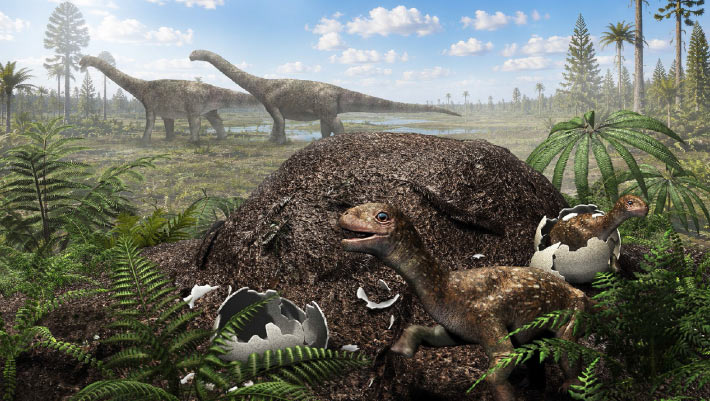
Que mangeaient les dinosaures ? Un guide utile sur les régimes alimentaires des dinosaures
os mâchoire dent fossile Dinosauria étude
Vous êtes-vous déjà demandé ce que mangeaient les dinosaures ? C’est l’une des questions les plus fréquemment posées chez Everything Dinosaur. La réponse est étonnamment variée. Certains dinosaures étaient de féroces mangeurs de viande, tandis que d’autres se nourrissaient de plantes. D'autres étaient omnivores (mangant à la fois des plantes et de la viande). Les scientifiques étudient les dents fossiles, les os de la mâchoire, le contenu de l'estomac et même les fossiles
22/06/2026 everythingdinosaur ⚙ Traduction automatique
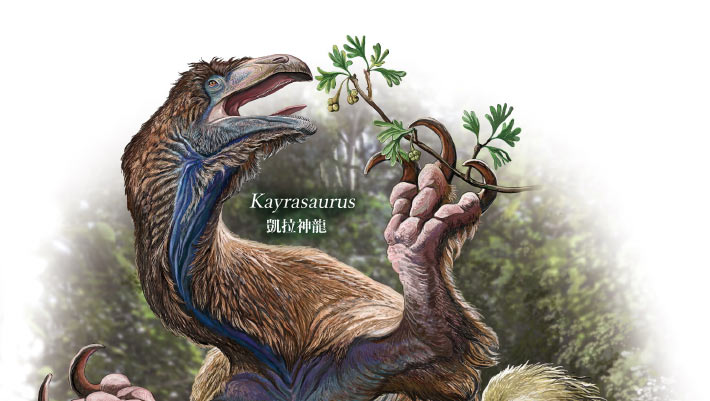
Paléontologie et paléoart connectés dans un événement exclusif
paléoart Dinosauria évolution
Les clients de Everything Dinosaur sont invités à rejoindre Mike pour une interview spéciale en direct explorant le lien entre la paléontologie et le paléoart.  Cette interview exclusive (événement Zoom) a lieu la semaine prochaine (mercredi). Le titre « Paléontologie et Paléoart Connecté » met en avant les différentes disciplines impliquées dans la conception de la gamme de modèles Everything Dinosaur Evolution. Mike de
21/06/2026 everythingdinosaur ⚙ Traduction automatique
1 2 3 4 5 6 7 8 9 10 11 12 13 14 15 16 17 18 19 20 21 22 23 24 25 26 27 28 29 30 31 32