Dinosauria

Taxon

211 image(s) · 103 Actualités

Voir la fiche

Galerie d'images

A visual representation of Yamanasaurus lojaensis, first dinosaur discovered in Ecuador
Taxons Yamanasaurus

A visual representation of Yamanasaurus lojaensis, first dinosaur discovered in Ecuador

Équateur Dinosauria Yamanasaurus
Reconstruction of the holotype skull (PIN 3906/2) of the Late Cretaceous sauropod Quaesitosaurus orientalis. Based on Kurzanov & Bannikov 1983,[1] missing elements restored after Nemegtosaurus.[2]
Color Key
  Preserved
  Missing
References

↑ (1983). "A new sauropod from the Upper Cretaceous of Mongolia". Paleontological Journal 2: 90−96.

↑ (2005). "Redescription of the mongolian sauropod Nemegtosaurus mongoliensis nowinski (dinosauria: Saurischia) and comments on late cretaceous sauropod diversity". Journal of Systematic Palaeontology 3 (3): 283−318. DOI:10.1017/S1477201905001628.
Taxons Quaesitosaurus

Reconstruction of the holotype skull (PIN 3906/2) of the Late Cretaceous sauropod Quaesitosaurus orientalis. Based on Kurzanov & Bannikov 1983,[1] missing elements restored after Nemegtosaurus.[2] Color Key   Preserved   Missing References ↑ (1983). "A new sauropod from the Upper Cretaceous of Mongolia". Paleontological Journal 2: 90−96. ↑ (2005). "Redescription of the mongolian sauropod Nemegtosaurus mongoliensis nowinski (dinosauria: Saurischia) and comments on late cretaceous sauropod diversity". Journal of Systematic Palaeontology 3 (3): 283−318. DOI:10.1017/S1477201905001628.

Mongolie Crétacé Crétacé supérieur holotype +5
Restoration of Borealosaurus a potentially titanosaur dinosaur from the Cretaceous of China
Taxons Borealosaurus

Restoration of Borealosaurus a potentially titanosaur dinosaur from the Cretaceous of China

Chine Crétacé Borealosaurus Dinosauria +1
Map of the localities in the Bauru Basin where the sauropod dinosaurs were collected.
Taxons Ibirania

Map of the localities in the Bauru Basin where the sauropod dinosaurs were collected.

Dinosauria Ibirania
(A) A phylogenetic principal-component analysis (PCA) represents the projection of the Dinosauria supertree (STAR Methods) into a PCA of climatic variables. PC1 axis shows strong positive correlation with maximum temperature ([temp max), low positive correlation with precipitation seasonality ( precip season), strong negative correlation with minimum temperature (Ytemp min), and strong negative correlation with minimum precipitation (Yprecip min). PC2 axis shows strong positive correlation with minimum temperature ([temp min) and negative correlation with precipitation seasonality (Yprecip season). Shadows around points highlight the relative density in the principal compo- nent space of non-dinosaurian Dinosauromorpha (gray), Ornithischia (blue), Sauropodomorpha (green), and Theropoda (red).
(B) Lower left plot shows 95% confidence interval convex hulls for each dinosauromorph subclade. Blue thermometer (top left corner) symbolizes the direction of the vector in the PC space region for cold temper- atures; yellow thermometer (top right corner) indicates the direction of the vector in PC space for warm tem- peratures; brown shrub (top right corner) depicts dry conditions, while the same with a gray, rainy cloud (mid, lower side of the graph) illustrates seasonal conditions.
Silhouettes represent the following taxa (clockwise from the higher left corner): Minmi, Edmontosaurus, Pachyrhinosaurus, Tyrannosaurus, Asilisaurus, Graci- liceratops, Harpymimus, Altirhinus, Gobititan, Suz- housaurus, Marasuchus, Pampadromaeus, Herrer- asaurus, Vulcanodon, Diplodocus, Giraffatitan,

Coelophysis, Dromomeron, Gondwanatitan, Tapuiasaurus, Anchisaurus, Siamotyrannus, Diodorus, Suchomimus, Phuwiangosaurus, Ouranosaurus, Irritator, Tangvayosaurus, Nanshiungosaurus, Aeolosaurus, Rebbachisaurus, Chuxiongosaurus, Tethyshadros, Koreanosaurus. Genyodectes, Mapusaurus, Vegavis, Goyocephale, and Rhoetosaurus.
Taxons Pampadromaeus

(A) A phylogenetic principal-component analysis (PCA) represents the projection of the Dinosauria supertree (STAR Methods) into a PCA of climatic variables. PC1 axis shows strong positive correlation with maximum temperature ([temp max), low positive correlation with precipitation seasonality ( precip season), strong negative correlation with minimum temperature (Ytemp min), and strong negative correlation with minimum precipitation (Yprecip min). PC2 axis shows strong positive correlation with minimum temperature ([temp min) and negative correlation with precipitation seasonality (Yprecip season). Shadows around points highlight the relative density in the principal compo- nent space of non-dinosaurian Dinosauromorpha (gray), Ornithischia (blue), Sauropodomorpha (green), and Theropoda (red). (B) Lower left plot shows 95% confidence interval convex hulls for each dinosauromorph subclade. Blue thermometer (top left corner) symbolizes the direction of the vector in the PC space region for cold temper- atures; yellow thermometer (top right corner) indicates the direction of the vector in PC space for warm tem- peratures; brown shrub (top right corner) depicts dry conditions, while the same with a gray, rainy cloud (mid, lower side of the graph) illustrates seasonal conditions. Silhouettes represent the following taxa (clockwise from the higher left corner): Minmi, Edmontosaurus, Pachyrhinosaurus, Tyrannosaurus, Asilisaurus, Graci- liceratops, Harpymimus, Altirhinus, Gobititan, Suz- housaurus, Marasuchus, Pampadromaeus, Herrer- asaurus, Vulcanodon, Diplodocus, Giraffatitan, Coelophysis, Dromomeron, Gondwanatitan, Tapuiasaurus, Anchisaurus, Siamotyrannus, Diodorus, Suchomimus, Phuwiangosaurus, Ouranosaurus, Irritator, Tangvayosaurus, Nanshiungosaurus, Aeolosaurus, Rebbachisaurus, Chuxiongosaurus, Tethyshadros, Koreanosaurus. Genyodectes, Mapusaurus, Vegavis, Goyocephale, and Rhoetosaurus.

Dinosauria Ornithischia Pampadromaeus Sauropodomorpha +1
Simplified cladogram of Iguanodontia, drawn by me, based on Norman 2004 ("Basal Iguanodontia" in The Dinosauria 2nd Edition).

Simplified cladogram of Iguanodontia, drawn by me, based on Norman 2004 ("Basal Iguanodontia" in The Dinosauria 2nd Edition).

Dinosauria Iguanodontia Mochlodon
Herbivorous dinosaur found in the Al-khoudh area.  This dinosaur is similar to the Zalmoxes and Rhabdodon dinosaurs.  The skeleton in the Bait Al Baranda Museum was assembled from bones borrowed from several museums.

Herbivorous dinosaur found in the Al-khoudh area. This dinosaur is similar to the Zalmoxes and Rhabdodon dinosaurs. The skeleton in the Bait Al Baranda Museum was assembled from bones borrowed from several museums.

os musée Dinosauria Mochlodon +3
Locality map for Australian eurypodan thyreophoran fossils.

1, Stegosaurian? footprint (QM F5701), Walloon Coal Measures, Balgowan Colliery, Balgowan (Bajocian–Bathonian); 2, Minmi paravertebra holotype (QM F10329) (Molnar, 1980), Minmi Member, Bungil Formation (Valanginian–Barremian); 3, Thyreophoran trackways, Broome Sandstone, Dampier Peninsula, Western Australia (Valanginian–Barremian); 4, Ankylosauria indet. (see Barrett et al., 2010) ‘Flat Rocks’ Wonthaggi Formation (upper Hauterivian–Albian); 5, NMV P216739, ‘Lake Copco–Dinosaur Cove’ Eumeralla Formation (middle upper Aptian to lower middle Albian) (Barrett et al., 2010); 6, QM F33286; 7, AM F119849 and AM F35259; 8, Kunbarrasaurus ieversi gen. et sp. nov. (formerly Minmi sp.) (QM F18101); 9, QM F33565 and QM F33566; 10, QM F44324-28. Legend: Dark Green, Toolebuc Formation (late middle–early late Albian); Green, Allaru Formation (upper Albian–(?)lower Cenomanian); Light green, Mackunda Formation (upper Albian–lower Cenomanian); Lightest green, Winton Formation (late Albian–early Turonian).
Formations Toolebuc

Locality map for Australian eurypodan thyreophoran fossils. 1, Stegosaurian? footprint (QM F5701), Walloon Coal Measures, Balgowan Colliery, Balgowan (Bajocian–Bathonian); 2, Minmi paravertebra holotype (QM F10329) (Molnar, 1980), Minmi Member, Bungil Formation (Valanginian–Barremian); 3, Thyreophoran trackways, Broome Sandstone, Dampier Peninsula, Western Australia (Valanginian–Barremian); 4, Ankylosauria indet. (see Barrett et al., 2010) ‘Flat Rocks’ Wonthaggi Formation (upper Hauterivian–Albian); 5, NMV P216739, ‘Lake Copco–Dinosaur Cove’ Eumeralla Formation (middle upper Aptian to lower middle Albian) (Barrett et al., 2010); 6, QM F33286; 7, AM F119849 and AM F35259; 8, Kunbarrasaurus ieversi gen. et sp. nov. (formerly Minmi sp.) (QM F18101); 9, QM F33565 and QM F33566; 10, QM F44324-28. Legend: Dark Green, Toolebuc Formation (late middle–early late Albian); Green, Allaru Formation (upper Albian–(?)lower Cenomanian); Light green, Mackunda Formation (upper Albian–lower Cenomanian); Lightest green, Winton Formation (late Albian–early Turonian).

Australie Broome Sandstone Eumeralla Toolebuc +18
Original figure caption: .mw-parser-output .smallcaps{font-variant:small-caps}The Middletown Slab covered with the Footprints of Carnivorous Dinosaurs. The tracks are in high relief. Additional notes: Most if not all of these tridactylous (i.e. three-toed) footprints/tracks (but not the actual trackmaker!) are referred to as Grallator or as Grallator-type trace fossils. “High relief” means that these are actually casts of footprints forming a positive relief on the lower surface of the sandstone slab (so-called positive hyporelief). The material that originally formed the mud over which the dinosaurs walked was too friable to be recovered from the quarry in one piece. The slab consists of so called ‘brownstone’ which is the trading name of the sandstone quarried at Middletown, Connecticut. This sandstone belongs to the Lower Jurassic Portland Formation of the Hartford Basin (“Connecticut Valley”) and thus to the upper part of the Newark Supergroup. The trackmakers probably were relatively small ‘primitive’ theropod dinosaurs (coelophysoids) such as Podokesaurus the remains of which were recovered from Lower Jurassic deposits of the Hartford Basin.
Formations Portland

Original figure caption: .mw-parser-output .smallcaps{font-variant:small-caps}The Middletown Slab covered with the Footprints of Carnivorous Dinosaurs. The tracks are in high relief. Additional notes: Most if not all of these tridactylous (i.e. three-toed) footprints/tracks (but not the actual trackmaker!) are referred to as Grallator or as Grallator-type trace fossils. “High relief” means that these are actually casts of footprints forming a positive relief on the lower surface of the sandstone slab (so-called positive hyporelief). The material that originally formed the mud over which the dinosaurs walked was too friable to be recovered from the quarry in one piece. The slab consists of so called ‘brownstone’ which is the trading name of the sandstone quarried at Middletown, Connecticut. This sandstone belongs to the Lower Jurassic Portland Formation of the Hartford Basin (“Connecticut Valley”) and thus to the upper part of the Newark Supergroup. The trackmakers probably were relatively small ‘primitive’ theropod dinosaurs (coelophysoids) such as Podokesaurus the remains of which were recovered from Lower Jurassic deposits of the Hartford Basin.

Portland Jurassique moulage fossile +4
Title: Dinosaur hunting in western Canada
Identifier: dinosaurhuntingi00russ (find matches)
Year: 1966 (1960s)
Authors: Russell, Loris Shano, 1904-; Royal Ontario Museum
Subjects: Dinosaurs; Paleontology
Publisher: (Toronto : Printed at the University of Toronto Press)
Contributing Library: ROM - University of Toronto
Digitizing Sponsor: University of Toronto

View Book Page: Book Viewer
About This Book: Catalog Entry
View All Images: All Images From Book
Click here to view book online to see this illustration in context in a browseable online version of this book.

Text Appearing Before Image: 
This season of 1921 George Sternberg became the first dinosaur col- lector on the Red Deer River to have his work recorded in motion pictures. This happened by a curious error. The Dominion Motion Picture Bureau, predecessor of the National Film Board of Canada, had decided to make a short motion picture based on the work being done by the Geological Survey of Canada in the collecting and displaying of Canadian dinosaurs. The camera party sent to Alberta was naturally supposed to visit the Geological Survey party under Charles M. Sternberg, but local directions sent them to the camp of George Sternberg. So this excellent little film records field work by the University of Alberta party and preparation being done at the National Museum of Canada in Ottawa. That winter George Sternberg continued the preparation of the speci- mens obtained during the two preceding field seasons, but in the spring he resigned to accept a position with the Field Museum of Natural History of Chicago, under Elmer S. Riggs. The summer of 1922 was the last time that the eldest of the Sternberg sons worked on the Red Deer River, his collec- tion going to Chicago. However, he returned to Edmonton for several months in 1935, to complete the preparation of the collection that he brought together in 1920 and 1921. When George Sternberg left the Geological Survey of Canada in 1918, the only one of the four Sternbergs remaining at Ottawa was Charles Mortram Sternberg, the second son of C. H. Sternberg. Actually, Charles had his first independent expedition to the Red Deer badlands in 1917, C. M. Sternberg ami G. E. Lindblad working on the skull of a horned dinosaur (Centrasaurus sp.), Oldman formation, Red Deer River, 1917. N.M.C., No. 39994.
Text Appearing After Image: 
22

Note About Images

Please note that these images are extracted from scanned page images that may have been digitally enhanced for readability - coloration and appearance of these illustrations may not perfectly resemble the original work.

Title: Dinosaur hunting in western Canada Identifier: dinosaurhuntingi00russ (find matches) Year: 1966 (1960s) Authors: Russell, Loris Shano, 1904-; Royal Ontario Museum Subjects: Dinosaurs; Paleontology Publisher: (Toronto : Printed at the University of Toronto Press) Contributing Library: ROM - University of Toronto Digitizing Sponsor: University of Toronto View Book Page: Book Viewer About This Book: Catalog Entry View All Images: All Images From Book Click here to view book online to see this illustration in context in a browseable online version of this book. Text Appearing Before Image: This season of 1921 George Sternberg became the first dinosaur col- lector on the Red Deer River to have his work recorded in motion pictures. This happened by a curious error. The Dominion Motion Picture Bureau, predecessor of the National Film Board of Canada, had decided to make a short motion picture based on the work being done by the Geological Survey of Canada in the collecting and displaying of Canadian dinosaurs. The camera party sent to Alberta was naturally supposed to visit the Geological Survey party under Charles M. Sternberg, but local directions sent them to the camp of George Sternberg. So this excellent little film records field work by the University of Alberta party and preparation being done at the National Museum of Canada in Ottawa. That winter George Sternberg continued the preparation of the speci- mens obtained during the two preceding field seasons, but in the spring he resigned to accept a position with the Field Museum of Natural History of Chicago, under Elmer S. Riggs. The summer of 1922 was the last time that the eldest of the Sternberg sons worked on the Red Deer River, his collec- tion going to Chicago. However, he returned to Edmonton for several months in 1935, to complete the preparation of the collection that he brought together in 1920 and 1921. When George Sternberg left the Geological Survey of Canada in 1918, the only one of the four Sternbergs remaining at Ottawa was Charles Mortram Sternberg, the second son of C. H. Sternberg. Actually, Charles had his first independent expedition to the Red Deer badlands in 1917, C. M. Sternberg ami G. E. Lindblad working on the skull of a horned dinosaur (Centrasaurus sp.), Oldman formation, Red Deer River, 1917. N.M.C., No. 39994. Text Appearing After Image: 22 Note About Images Please note that these images are extracted from scanned page images that may have been digitally enhanced for readability - coloration and appearance of these illustrations may not perfectly resemble the original work.

chasse film musée Canada +1
Locality map: Grand Staircase-Escalante National Monument, southern Utah.
Map showing locality (indicated by star) of Nasutoceratops titusi holotype UMNH VP 16800, recovered from the Kaiparowits Formation of Grand Staircase-Escalante National Monument (GSENM). GSENM is bounded by the red rectangle and silhouetted in dark gray on the inset of Utah and surrounding states (modified from [1]).

The original map has been modified to show Nasutoceratops instead of Machairoceratops as in the original source. New location based on map in Ceratopsid Dinosaurs from the Grand Staircase of Southern Utah, page 489.

Locality map: Grand Staircase-Escalante National Monument, southern Utah. Map showing locality (indicated by star) of Nasutoceratops titusi holotype UMNH VP 16800, recovered from the Kaiparowits Formation of Grand Staircase-Escalante National Monument (GSENM). GSENM is bounded by the red rectangle and silhouetted in dark gray on the inset of Utah and surrounding states (modified from [1]). The original map has been modified to show Nasutoceratops instead of Machairoceratops as in the original source. New location based on map in Ceratopsid Dinosaurs from the Grand Staircase of Southern Utah, page 489.

Kaiparowits holotype Ceratopsidae Dinosauria +3
Locality map: Grand Staircase-Escalante National Monument, southern Utah.
Map showing locality (indicated by star) of Kosmoceratops richardsoni holotype UMNH VP 17000 and assigned subadult UMNH VP 16878, recovered from the Kaiparowits Formation of Grand Staircase-Escalante National Monument (GSENM). GSENM is bounded by the red rectangle and silhouetted in dark gray on the inset of Utah and surrounding states (modified from [1]).

The original map has been modified to show Kosmoceratops instead of Machairoceratops as in the original source. New location based on map in Ceratopsid Dinosaurs from the Grand Staircase of Southern Utah, page 489.

Locality map: Grand Staircase-Escalante National Monument, southern Utah. Map showing locality (indicated by star) of Kosmoceratops richardsoni holotype UMNH VP 17000 and assigned subadult UMNH VP 16878, recovered from the Kaiparowits Formation of Grand Staircase-Escalante National Monument (GSENM). GSENM is bounded by the red rectangle and silhouetted in dark gray on the inset of Utah and surrounding states (modified from [1]). The original map has been modified to show Kosmoceratops instead of Machairoceratops as in the original source. New location based on map in Ceratopsid Dinosaurs from the Grand Staircase of Southern Utah, page 489.

Kaiparowits holotype Ceratopsidae Dinosauria +3
Psittacosaurus skeletal mount (Early Cretaceous, Jiufotang Formation) and unidentified Late Cretaceous dinosaur egg from Xixia, Hennan, on display in the Li Siguang Memorial Museum in Huangzhou.
Formations Jiufotang

Psittacosaurus skeletal mount (Early Cretaceous, Jiufotang Formation) and unidentified Late Cretaceous dinosaur egg from Xixia, Hennan, on display in the Li Siguang Memorial Museum in Huangzhou.

musée Jiufotang Crétacé Crétacé inférieur +4
Detail of the stratigraphic section of the El Castellar dinosaur footprints site, Teruel, Spain.

Detail of the stratigraphic section of the El Castellar dinosaur footprints site, Teruel, Spain.

Espagne El Castellar Dinosauria
Eubrontes dinosaur track from the Jurassic of Connecticut, USA.
Trace fossils are any indirect evidence of ancient life.  They refer to features in rocks that do not represent parts of the body of a once-living organism.  Traces include footprints, tracks, trails, burrows, borings, and bitemarks.  Body fossils provide information about the morphology of ancient organisms, while trace fossils provide information about the behavior of ancient life forms.  Interpreting trace fossils and determination of the identity of a trace maker can be straightforward (for example, a dinosaur footprint represents walking behavior) or not.  Sediments that have trace fossils are said to be bioturbated.  Burrowed textures in sedimentary rocks are referred to as bioturbation.  Trace fossils have scientific names assigned to them, in the same style & manner as living organisms or body fossils.
This track was made by a theropod, a group of small to large, carnivorous, bipedal dinosaurs.  The specimen comes from a Triassic to Jurassic terrestrial sedimentary succession that filled up a half graben, many of which occur along America's eastern seaboard.  Such half-graben basins formed during the Triassic as the Pangaea supercontinent tried to rift apart, but failed.  Pangaea successfully broke apart during the Jurassic.
Stratigraphy: East Berlin Formation, Newark Supergroup, Lower Jurassic
Locality: unrecorded / undisclosed site at or near the town of Rocky Hill, central Connecticut, USA


Info. at:
mrdata.usgs.gov/geology/state/sgmc-unit.php?unit=CTJeb%3B0
and

en.wikipedia.org/wiki/Eubrontes

Eubrontes dinosaur track from the Jurassic of Connecticut, USA. Trace fossils are any indirect evidence of ancient life. They refer to features in rocks that do not represent parts of the body of a once-living organism. Traces include footprints, tracks, trails, burrows, borings, and bitemarks. Body fossils provide information about the morphology of ancient organisms, while trace fossils provide information about the behavior of ancient life forms. Interpreting trace fossils and determination of the identity of a trace maker can be straightforward (for example, a dinosaur footprint represents walking behavior) or not. Sediments that have trace fossils are said to be bioturbated. Burrowed textures in sedimentary rocks are referred to as bioturbation. Trace fossils have scientific names assigned to them, in the same style & manner as living organisms or body fossils. This track was made by a theropod, a group of small to large, carnivorous, bipedal dinosaurs. The specimen comes from a Triassic to Jurassic terrestrial sedimentary succession that filled up a half graben, many of which occur along America's eastern seaboard. Such half-graben basins formed during the Triassic as the Pangaea supercontinent tried to rift apart, but failed. Pangaea successfully broke apart during the Jurassic. Stratigraphy: East Berlin Formation, Newark Supergroup, Lower Jurassic Locality: unrecorded / undisclosed site at or near the town of Rocky Hill, central Connecticut, USA Info. at: mrdata.usgs.gov/geology/state/sgmc-unit.php?unit=CTJeb%3B0 and en.wikipedia.org/wiki/Eubrontes

États-Unis Jurassique Trias fossile +5
Morrison Formation (lower half), Jurassic-Cretacous boundary (K1 Unconformity) at red and orange paleosol, Cedar Mountain Formation (drab gray), and capping Naturita Formation. West of Dinosaur National Monument.

Morrison Formation (lower half), Jurassic-Cretacous boundary (K1 Unconformity) at red and orange paleosol, Cedar Mountain Formation (drab gray), and capping Naturita Formation. West of Dinosaur National Monument.

Cedar Mountain Morrison Jurassique Dinosauria +1
1 2 3 4 5 6 7 8 9 10 11 12 13 14

Actualités

Model Collector propose un examen exclusif des bêtes de l'Allosaure mésozoïque à l'échelle 1:35
écaille Mésozoïque Allosauria Dinosauria
Nos remerciements au collectionneur dévoué de modèles de dinosaures qui a envoyé à Everything Dinosaur une revue des bêtes du Mésozoïque, Allosaurus fragilis.  L'Allosaure est l'un de nos dinosaures préférés et nous sommes également de grands fans de la gamme de modèles Les Bêtes du Mésozoïque.  C'est génial d'avoir les Bêtes du Mésozoïque
21/05/2026 everythingdinosaur ⚙ Traduction automatique
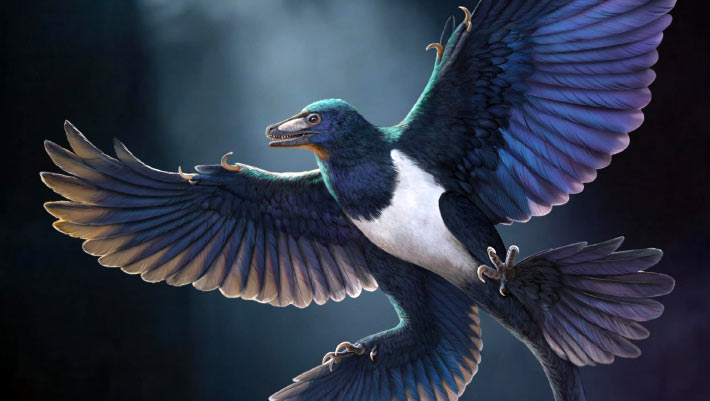
Une nouvelle étude résout le mystère des minuscules bras de dinosaures théropodes
membre Dinosauria Tyrannosaurus étude
Pourquoi le T. rex avait-il des bras minuscules ?  C’est une question qu’on nous pose souvent chez Everything Dinosaur.  Ironiquement, plusieurs lignées de théropodes non étroitement apparentées présentent une réduction des membres antérieurs. Le Tyrannosaure rex possédait des armes légères, tout comme de nombreux autres grands dinosaures carnivores. Une nouvelle étude suggère que les petits bras de certains théropodes
20/05/2026 everythingdinosaur ⚙ Traduction automatique
Before Dinosaur Extinction, Rodent-Like Mammals were Already Flourishing in Ancient Arctic
Avant l’extinction des dinosaures, les mammifères ressemblant à des rongeurs prospéraient déjà dans l’Arctique antique
Dinosauria extinction mammifères
Les paléontologues ont décrit trois espèces jusqu'alors inconnues de mammifères multituberculés – nommés Camurodon borealis, Qayaqgruk peregrinus et Kaniqsiqcosmodon polaris – qui vivaient dans les forêts polaires il y a environ 73 millions d'années. L'article Avant l'extinction des dinosaures, les mammifères ressemblant à des rongeurs prospéraient déjà dans l'Arctique antique est apparu en premier sur Sci.News : Breaking Science News.
20/05/2026 sci-news ⚙ Traduction automatique
Mystery of Tyrannosaurus rex’s Tiny Arms May Finally Have an Answer
Le mystère des petits bras du Tyrannosaurus rex pourrait enfin avoir une réponse
os mâchoire prédateur proie Dinosauria Tyrannosaurus
Les paléontologues de l'University College de Londres et de l'Université de Cambridge affirment que les bras minuscules des grands dinosaures prédateurs ont évolué aux côtés de têtes massives et de mâchoires broyantes, ce qui suggère que les anciens prédateurs comptaient de plus en plus sur la morsure plutôt que sur la saisie de leurs proies. L’article Le mystère des petits bras du Tyrannosaurus rex pourrait enfin avoir une réponse apparaît en premier sur Sci.News : Breaking Science News.
20/05/2026 sci-news ⚙ Traduction automatique
Les petits bras du T. rex pourraient avoir évolué pour une raison étonnamment brutale
mâchoire membre chasse prédateur proie Dinosauria crâne
Pourquoi le T. rex avait-il des bras si petits ? Les scientifiques pensent désormais que c’est parce que sa tête géante est devenue l’outil de chasse ultime. Dans plusieurs groupes de dinosaures, des crânes plus forts et des mâchoires écrasantes ont évolué parallèlement à des membres antérieurs rétrécis, en particulier chez les prédateurs chassant d'énormes proies. En d’autres termes, une fois que la morsure est devenue suffisamment mortelle, les bras ont peut-être cessé d’avoir de l’importance.
20/05/2026 sciencedaily ⚙ Traduction automatique
1 2 3 4 5 6 7 8 9 10 11 12 13 14 15 16 17 18 19 20 21