←

évolution

Thématique

17 image(s) · 72 Actualités

Galerie d'images

Rates of skeletal character evolution in the skull and postcranial skeleton of hadrosauroids. Cladograms illustrate the results from branch likelihood tests for two morphological partitions: skull (cranium and mandible) (A) and postcranial skeleton (B). In both cladograms, results from the branch likelihood tests are summarized on a strict consensus tree derived from four separately analyzed MPTs, each with 100 dating replicates (a total of 400 Hedman-dated phylogenies). Pie charts on branches illustrate the proportion of dating replicates that showed significantly high rates (red), slow rates (blue), or nonsignificant average rates (white). No pie charts are plotted on branches that showed nonsignificant rates in 100% of dating replicates. Branches that showed high rates (red) in more than 50% of dating replicates are doubled in length. See the Supplementary Material for Hedman-based results plotted separately for each MPT (Supplementary Fig. S2) and for results using the MBL dating method (Supplementary Fig. S3). Silhouettes were created by Scott Hartman and were downloaded from http://phylopic.org (Creative Commons license CC BY 3.0).

Rates of skeletal character evolution in the skull and postcranial skeleton of hadrosauroids. Cladograms illustrate the results from branch likelihood tests for two morphological partitions: skull (cranium and mandible) (A) and postcranial skeleton (B). In both cladograms, results from the branch likelihood tests are summarized on a strict consensus tree derived from four separately analyzed MPTs, each with 100 dating replicates (a total of 400 Hedman-dated phylogenies). Pie charts on branches illustrate the proportion of dating replicates that showed significantly high rates (red), slow rates (blue), or nonsignificant average rates (white). No pie charts are plotted on branches that showed nonsignificant rates in 100% of dating replicates. Branches that showed high rates (red) in more than 50% of dating replicates are doubled in length. See the Supplementary Material for Hedman-based results plotted separately for each MPT (Supplementary Fig. S2) and for results using the MBL dating method (Supplementary Fig. S3). Silhouettes were created by Scott Hartman and were downloaded from http://phylopic.org (Creative Commons license CC BY 3.0).

Protohadros datation évolution squelette +1
Phylogenetic affinities of Saltriovenator and evolution of the hand in Theropoda.

Reduced strict consensus of the shortest trees found by the phylogenetic analysis after pruning of Lewisuchus and Teleocrater. Numbers at nodes indicate decay index. Inferred manual phalangeal formula for selected nodes indicated below clade names. Hands of representative members of the avian stem (bold names) in extensor view (Herrerasaurus in flexor view), medial side at left, missing elements in white based on ancestral states inferred at least inclusive node containing the taxon. Red star indicates loss of metacarpal V, blue stars indicate multiple independent losses of metacarpal IV among tetanurans. Drawings by A. Cau.

Phylogenetic affinities of Saltriovenator and evolution of the hand in Theropoda. Reduced strict consensus of the shortest trees found by the phylogenetic analysis after pruning of Lewisuchus and Teleocrater. Numbers at nodes indicate decay index. Inferred manual phalangeal formula for selected nodes indicated below clade names. Hands of representative members of the avian stem (bold names) in extensor view (Herrerasaurus in flexor view), medial side at left, missing elements in white based on ancestral states inferred at least inclusive node containing the taxon. Red star indicates loss of metacarpal V, blue stars indicate multiple independent losses of metacarpal IV among tetanurans. Drawings by A. Cau.

dessin Herrerasaurus Lewisuchus Saltriovenator +2
Tylosaurus reconstruction. From Osborn, H. F. (1917). The origin and evolution of life, on the theory of action, reaction and interaction of energy.

Tylosaurus reconstruction. From Osborn, H. F. (1917). The origin and evolution of life, on the theory of action, reaction and interaction of energy.

Tylosaurus évolution
1 2

Actualités

Les pieds fossiles pourraient induire les scientifiques en erreur sur l’évolution humaine
fossile découverte évolution
Les singes sauvages d'Afrique de l'Ouest peuvent grimper sur des troncs d'arbres verticaux en utilisant la flexibilité de leurs pieds que les scientifiques ne soupçonnaient pas. Cette découverte remet en question une hypothèse clé sur l’apparence du dernier ancêtre commun des humains et des chimpanzés et sur la manière dont il s’est déplacé.
31/08/2026 sciencedaily-paleo ⚙ Traduction automatique
Épisode 177 : Révolution fécale cambrienne
Cambrien fossile évolution
L'explosion cambrienne est l'un des événements les plus importants de l'histoire de l'évolution. Classiquement, il décrit l'apparition soudaine de fossiles complexes (comprenant tous les principaux groupes animaux) au début de la période cambrienne. Auparavant, on pensait qu’il n’existait qu’une vie unicellulaire ou multicellulaire relativement simple. Nous comprenons maintenant que cet événement est [&hellip
17/08/2026 palaeocast ⚙ Traduction automatique
La paléontologie est ébranlée par des molécules organiques découvertes dans des os de dinosaures vieux de 66 millions d'années
os collagène protéine fossile Dinosauria découverte évolution
Les chercheurs ont trouvé des preuves solides que le collagène original peut survivre à l’intérieur des fossiles de dinosaures pendant des dizaines de millions d’années, renversant ainsi une hypothèse de longue date concernant la fossilisation. Cette découverte pourrait révéler des indices moléculaires cachés sur la biologie des dinosaures, leur évolution et la façon dont d’anciennes protéines ont réussi à survivre aussi longtemps.
14/08/2026 sciencedaily ⚙ Traduction automatique
L'interview de Everything Dinosaur Evolution révèle l'histoire dramatique derrière la figure du tyrannosaure
Dinosauria Tyrannosaurus évolution
L'interview Everything Dinosaur Evolution avec Extinct Fine Art explore l'histoire derrière notre passionnante gamme de modèles. Mike de Everything Dinosaur a rejoint l'intervieweur Karim Zanaty pour une conversation approfondie. La discussion examine les origines de Everything Dinosaur et le développement du T. rex Everything Dinosaur Evolution de la société. De plus, Mike explique comment la science, l'art et
14/08/2026 everythingdinosaur ⚙ Traduction automatique
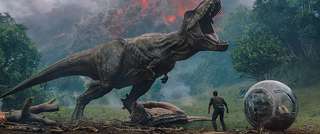
La lutte cachée qui a tout changé : pourquoi les dinosaures n’ont eu d'autre choix que de devenir géants
Dinosauria évolution mammifères
Au cours de l'évolution, les dinosaures sont parfois devenus monumentaux. En revanche, aucun processus n'a mené à les rendre plus petits, ce qui pourrait s'expliquer par une sorte de concurrence environnementale avec les mammifères.
14/08/2026 futura-terre
1 2 3 4 5 6 7 8 9 10 11 12 13 14 15