←

évolution

Thématique

17 image(s) · 72 Actualités

Galerie d'images

Rates of skeletal character evolution in the skull and postcranial skeleton of hadrosauroids. Cladograms illustrate the results from branch likelihood tests for two morphological partitions: skull (cranium and mandible) (A) and postcranial skeleton (B). In both cladograms, results from the branch likelihood tests are summarized on a strict consensus tree derived from four separately analyzed MPTs, each with 100 dating replicates (a total of 400 Hedman-dated phylogenies). Pie charts on branches illustrate the proportion of dating replicates that showed significantly high rates (red), slow rates (blue), or nonsignificant average rates (white). No pie charts are plotted on branches that showed nonsignificant rates in 100% of dating replicates. Branches that showed high rates (red) in more than 50% of dating replicates are doubled in length. See the Supplementary Material for Hedman-based results plotted separately for each MPT (Supplementary Fig. S2) and for results using the MBL dating method (Supplementary Fig. S3). Silhouettes were created by Scott Hartman and were downloaded from http://phylopic.org (Creative Commons license CC BY 3.0).

Rates of skeletal character evolution in the skull and postcranial skeleton of hadrosauroids. Cladograms illustrate the results from branch likelihood tests for two morphological partitions: skull (cranium and mandible) (A) and postcranial skeleton (B). In both cladograms, results from the branch likelihood tests are summarized on a strict consensus tree derived from four separately analyzed MPTs, each with 100 dating replicates (a total of 400 Hedman-dated phylogenies). Pie charts on branches illustrate the proportion of dating replicates that showed significantly high rates (red), slow rates (blue), or nonsignificant average rates (white). No pie charts are plotted on branches that showed nonsignificant rates in 100% of dating replicates. Branches that showed high rates (red) in more than 50% of dating replicates are doubled in length. See the Supplementary Material for Hedman-based results plotted separately for each MPT (Supplementary Fig. S2) and for results using the MBL dating method (Supplementary Fig. S3). Silhouettes were created by Scott Hartman and were downloaded from http://phylopic.org (Creative Commons license CC BY 3.0).

Protohadros datation évolution squelette +1
Phylogenetic affinities of Saltriovenator and evolution of the hand in Theropoda.

Reduced strict consensus of the shortest trees found by the phylogenetic analysis after pruning of Lewisuchus and Teleocrater. Numbers at nodes indicate decay index. Inferred manual phalangeal formula for selected nodes indicated below clade names. Hands of representative members of the avian stem (bold names) in extensor view (Herrerasaurus in flexor view), medial side at left, missing elements in white based on ancestral states inferred at least inclusive node containing the taxon. Red star indicates loss of metacarpal V, blue stars indicate multiple independent losses of metacarpal IV among tetanurans. Drawings by A. Cau.

Phylogenetic affinities of Saltriovenator and evolution of the hand in Theropoda. Reduced strict consensus of the shortest trees found by the phylogenetic analysis after pruning of Lewisuchus and Teleocrater. Numbers at nodes indicate decay index. Inferred manual phalangeal formula for selected nodes indicated below clade names. Hands of representative members of the avian stem (bold names) in extensor view (Herrerasaurus in flexor view), medial side at left, missing elements in white based on ancestral states inferred at least inclusive node containing the taxon. Red star indicates loss of metacarpal V, blue stars indicate multiple independent losses of metacarpal IV among tetanurans. Drawings by A. Cau.

dessin Herrerasaurus Lewisuchus Saltriovenator +2
Tylosaurus reconstruction. From Osborn, H. F. (1917). The origin and evolution of life, on the theory of action, reaction and interaction of energy.

Tylosaurus reconstruction. From Osborn, H. F. (1917). The origin and evolution of life, on the theory of action, reaction and interaction of energy.

Tylosaurus évolution
1 2

Actualités

Une oie fossile rare réécrit l'histoire des oiseaux géants de Nouvelle-Zélande
Nouvelle-Zélande fossile oiseau découverte évolution
Les scientifiques ont découvert une oie fossile jusqu'alors inconnue qui remet en question une théorie vieille de plusieurs décennies sur l'évolution des oiseaux de Nouvelle-Zélande. La découverte suggère que les oies géantes incapables de voler du pays ont évolué à partir d'arrivées beaucoup plus récentes, révélant une histoire évolutive beaucoup plus dynamique qu'on ne le pensait autrefois.
11/07/2026 sciencedaily ⚙ Traduction automatique
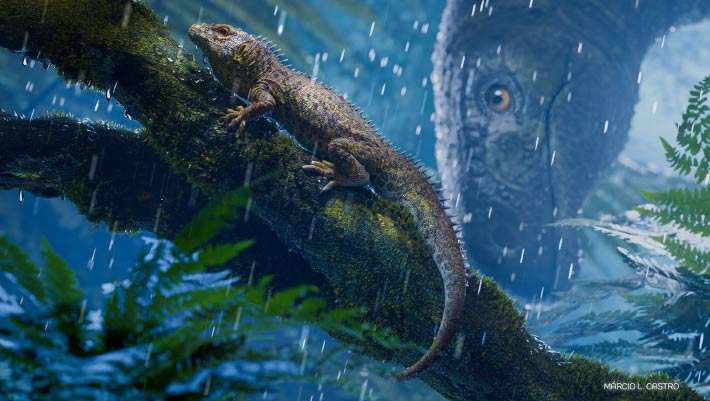
Tiny Triassic Reptile Sheds Light on Early Lizard Evolution
Un petit reptile du Trias met en lumière les premières évolutions des lézards
Nouvelle-Zélande Trias évolution autres reptiles
Aujourd'hui, les lépidosaures - le groupe de reptiles qui comprend les lézards, les serpents et les tuatara de Nouvelle-Zélande - comptent parmi les vertébrés les plus diversifiés sur Terre, mais leur première histoire évolutive reste mal comprise. L'article Un minuscule reptile du Trias fait la lumière sur l'évolution précoce des lézards est apparu en premier sur Sci.News : Breaking Science News.
10/07/2026 sci-news ⚙ Traduction automatique
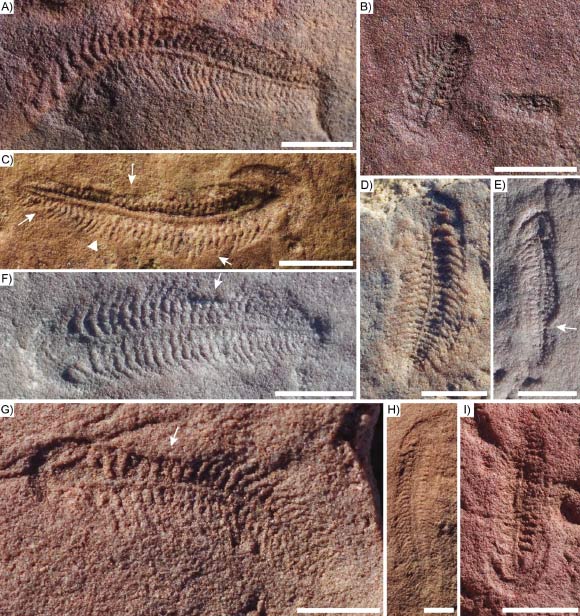
Ediacaran Sea Creature May Hold Earliest Evidence of Right-Handedness
La créature marine d'Édiacarien pourrait détenir la première preuve de droiterie
Édiacarien évolution
Spriggina floundersi, une espèce marine qui vivait pendant la période Édiacarienne il y a 550 millions d’années, est l’un des premiers animaux à symétrie bilatérale de la Terre. La créature marine d'Ediacaran pourrait détenir la première preuve de droiterie est apparue en premier sur Sci.News: Breaking Science News.
10/07/2026 sci-news ⚙ Traduction automatique
Des scientifiques ressuscitent une enzyme vieille de 3,2 milliards d’années pour révéler comment la vie a commencé sur Terre
métabolisme évolution génétique
Les chercheurs ont reconstruit des versions disparues depuis longtemps d’une enzyme essentielle qui contribue à rendre l’azote disponible à la vie, offrant ainsi un aperçu sans précédent du passé lointain de la Terre. Cette avancée pourrait faciliter la recherche de vie extraterrestre tout en aidant les scientifiques à relever les futurs défis de la production alimentaire sur Terre et au-delà.
08/07/2026 sciencedaily-paleo ⚙ Traduction automatique
L'évolution des yeux d'araignée explorée dans une nouvelle étude
chasse musée anatomie évolution étude
Une nouvelle étude scientifique a fourni des informations fascinantes sur l’évolution des yeux d’araignée. Une équipe internationale de chercheurs a découvert que les araignées chasseuses évoluaient indépendamment dans la disposition de leurs yeux orientés vers l'avant. L'étude, dirigée par Atal Pande du Museum für Naturkunde Berlin, démontre que les systèmes visuels des araignées sont très flexibles. Leurs yeux peuvent évoluer séparément
07/07/2026 everythingdinosaur ⚙ Traduction automatique
1 2 3 4 5 6 7 8 9 10 11 12 13 14 15