feeding

Behavior & Physiology

3 image(s) · 9 News

Image gallery

Balaenognathus maeuseri gen. et sp. nov.: comparative interpretive drawings of the skulls of suspension feeding ctenochasmatoid pterosaurs in dorsal aspect. Balaenognathus this paper; Pterodaustro based on Bonaparte (1978); Plateleorhynchus based on Howse and Milner (1995); Gnathosaurus based on specimen JME-SOS 4580; Ctenochasma based on (2007 Fig. 2F)
Taxa Plataleorhynchus

Balaenognathus maeuseri gen. et sp. nov.: comparative interpretive drawings of the skulls of suspension feeding ctenochasmatoid pterosaurs in dorsal aspect. Balaenognathus this paper; Pterodaustro based on Bonaparte (1978); Plateleorhynchus based on Howse and Milner (1995); Gnathosaurus based on specimen JME-SOS 4580; Ctenochasma based on (2007 Fig. 2F)

feeding drawing specimen Balaenognathus +6
Kol ghuva restored as feeding from a termite mound, based on related animals.
Taxa Kol

Kol ghuva restored as feeding from a termite mound, based on related animals.

feeding
Classification: Saurischia, Tyrannosauroidea
Size: 2 meters (length)
Feeding: carnivore
Taxa Santanaraptor

Classification: Saurischia, Tyrannosauroidea Size: 2 meters (length) Feeding: carnivore

feeding Santanaraptor Saurischia Tyrannosauroidea

News

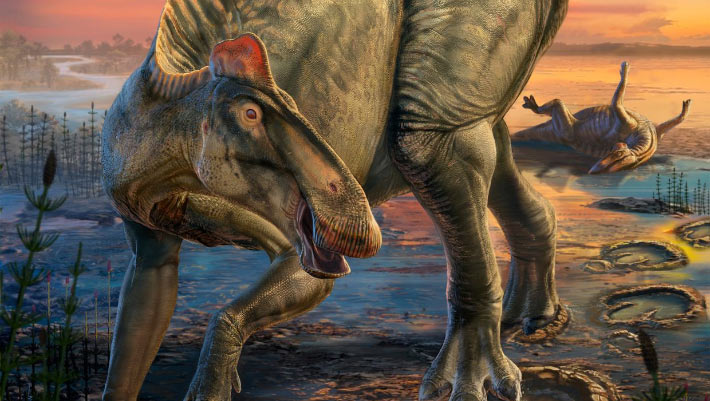
Tyrannosaurus rex Scavenged Duck-Billed Dinosaurs in Ancient Wyoming, Bite Marks Reveal
bone feeding hunting United States Cretaceous Canardia Dinosauria Edmontosaurus Tyrannosaurus behavior
Thousands of fossilized bones from a Cretaceous-period bonebed in Wyoming, the United States, offer rare physical evidence that Tyrannosaurus rex fed on the carcasses of a duck-billed dinosaur species called Edmontosaurus annectens. The post Tyrannosaurus rex Scavenged Duck-Billed Dinosaurs in Ancient Wyoming, Bite Marks Reveal appeared first on Sci.News: Breaking Science News.
16/07/2026 sci-news
Scientists discover what kept ancient campfires burning for generations
feeding Israel fish Homo sapiens
Nearly 800,000 years ago, early humans living beside a lake in what is now Israel may have chosen the location for one surprisingly practical reason: firewood. Researchers discovered that these ancient people regularly gathered driftwood washed up along the shoreline, giving them an easy, reliable fuel source for cooking fish, processing large animals, making tools, and organizing daily life around hearths.
15/07/2026 sciencedaily-paleo
5,000-year-old wolves found on remote island rewrite what we know about domestication
ecology feeding Homo sapiens mammals
Scientists discovered ancient wolves on a tiny Baltic island where they could only have been brought by humans, suggesting an unexpectedly close relationship between people and wolves thousands of years ago. Evidence indicates the wolves were fed, possibly cared for, and may even have been managed or selectively bred long before modern ideas of domestication.
05/07/2026 sciencedaily
CollectA Deluxe Edmontosaurus Model Feeding on Some Conifers
feeding Cretaceous Late Cretaceous Dinosauria Edmontosaurus Hadrosauria
Thank you Caldey for sending us a photograph of your CollectA Deluxe Edmontosaurus feeding in the garden.  The dinosaur looks very much at home munching on some conifers.  Palaeontologists know from hadrosaur stomach contents that these Late Cretaceous herbivores did feed on conifers.  It is a delightfully composed photograph.  The viewing angle gives the impression
23/06/2026 everythingdinosaur
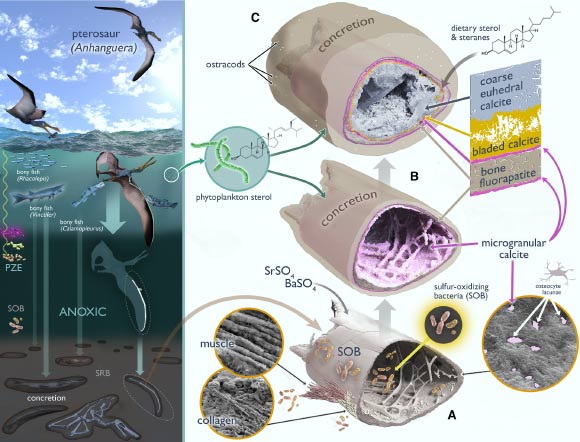
113-Million-Year-Old Pterosaur Fossil Reveals What Flying Reptiles Ate
tissue feeding Brazil fossil Anhangueridae Pterosauria fish
A 113-million-year-old pterosaur fossil from northeastern Brazil has yielded rare evidence of soft tissues, organic molecules and chemical traces of a diet heavy in fish and cephalopods such as squid or nautilus relatives. The post 113-Million-Year-Old Pterosaur Fossil Reveals What Flying Reptiles Ate appeared first on Sci.News: Breaking Science News.
19/06/2026 sci-news
1 2