fossile

Nature du spécimen

371 image(s) · 183 Actualités

Galerie d'images

Permineralized Jurassic fern rhizome from Korsaröd (Sweden) of Osmundastrum pulchellum. It has preserved Nuclei and Chromosomes, a fine subcellular detail has rarely been documented in fossils. It´s Rooted in DNA content was used to extrapolate relative genome, finding relationships with extant Osmundastrum cinnamomeum, and confirmed a monophyletic Osmunda. Osmundastrum pulchellum is one of the earliest fossil Osmundastrum rhizomes known so far, and the first of its kind from the Mesozoic of Europe. Its impressive preservation has lead to know even the biotic interactions with the Plant. It also has recovered the only know case know to preserve the ongoing mitosis processes in plant cells via calcification from volcanic hydrothermal brine.

Permineralized Jurassic fern rhizome from Korsaröd (Sweden) of Osmundastrum pulchellum. It has preserved Nuclei and Chromosomes, a fine subcellular detail has rarely been documented in fossils. It´s Rooted in DNA content was used to extrapolate relative genome, finding relationships with extant Osmundastrum cinnamomeum, and confirmed a monophyletic Osmunda. Osmundastrum pulchellum is one of the earliest fossil Osmundastrum rhizomes known so far, and the first of its kind from the Mesozoic of Europe. Its impressive preservation has lead to know even the biotic interactions with the Plant. It also has recovered the only know case know to preserve the ongoing mitosis processes in plant cells via calcification from volcanic hydrothermal brine.

ADN Suède Jurassique Mésozoïque +1
Reprodução a partir da gravura original do Holótipo, Hybodus acutus Agassiz, 1837, na publicação e prancha: L. Agassiz. 1837. Recherches sur les poissons fossiles Vol.3 (Atlas); Tab 10

Reprodução a partir da gravura original do Holótipo, Hybodus acutus Agassiz, 1837, na publicação e prancha: L. Agassiz. 1837. Recherches sur les poissons fossiles Vol.3 (Atlas); Tab 10

fossile poisson
Graph of relative Dinosaur fossil populations from each period of geologic time in the Mesozoic, ordered by major clade

Graph of relative Dinosaur fossil populations from each period of geologic time in the Mesozoic, ordered by major clade

Mésozoïque fossile Dinosauria
Fossil of the Decapod Cycleryon

Fossil of the Decapod Cycleryon

fossile
Fig 2. Geological section of the “Mittlerer Kimmeridge”.
This figure is based on Fischer and modified from Lallensack et al. Beds yielding terrestrial fossils are listed.

Fig 2. Geological section of the “Mittlerer Kimmeridge”. This figure is based on Fischer and modified from Lallensack et al. Beds yielding terrestrial fossils are listed.

fossile
Fossil shell of Aulacostephanus yo from France, on display at Gallery of Paleontology and Comparative Anatomy, Paris.
Intervalles Kimmeridgian

Fossil shell of Aulacostephanus yo from France, on display at Gallery of Paleontology and Comparative Anatomy, Paris.

France fossile anatomie
The GSSP for the Hirnantian stage in the ICS geological timescale (uppermost Ordovician stage), located in the Wangjiawan profile (an outcrop of black shale, brownishly weathered siliceous shale and chert layers of the Wufeng Formation) along the G241 road, about 40 km north of Yichang, Hubei, China. An exact golden spike is missing in the profile (2025) but a memorial plague marks the place. The GSSP occurs at the first appearance of fossils of the graptolite species Normalograptus extraordinarius. It was ratified in 2006.

The GSSP for the Hirnantian stage in the ICS geological timescale (uppermost Ordovician stage), located in the Wangjiawan profile (an outcrop of black shale, brownishly weathered siliceous shale and chert layers of the Wufeng Formation) along the G241 road, about 40 km north of Yichang, Hubei, China. An exact golden spike is missing in the profile (2025) but a memorial plague marks the place. The GSSP occurs at the first appearance of fossils of the graptolite species Normalograptus extraordinarius. It was ratified in 2006.

Chine Hirnantien Ordovicien fossile +1
Crioceratites fabreae fossils on display at the French National Museum of Natural History in Paris, France.

Crioceratites fabreae fossils on display at the French National Museum of Natural History in Paris, France.

musée France fossile
Crioceratites duvali fossil on display at the French National Museum of Natural History in Paris, France.

Crioceratites duvali fossil on display at the French National Museum of Natural History in Paris, France.

musée France fossile
“Sternberger Kuchen” (“Sternberg cake”), a large late Pleistocene glaciofluvial pebble of a highly fossiliferous, shallow marine sandstone of the North German Paleogene (Sülstorf beds, formerly known as “Sternberg rock”, Chattian, Oligocene, about 25 million years old). The fossil content is mainly made up of mollusks (pelecypods, gastropods, scaphopods). Provenance: Sternberg, Mecklenburg-Vorpommern, Northeast Germany.

“Sternberger Kuchen” (“Sternberg cake”), a large late Pleistocene glaciofluvial pebble of a highly fossiliferous, shallow marine sandstone of the North German Paleogene (Sülstorf beds, formerly known as “Sternberg rock”, Chattian, Oligocene, about 25 million years old). The fossil content is mainly made up of mollusks (pelecypods, gastropods, scaphopods). Provenance: Sternberg, Mecklenburg-Vorpommern, Northeast Germany.

Allemagne Chattien Pléistocène supérieur Oligocène +3
Fossil of Cainotherium, an extinct mammal https://hdl.handle.net/21.12123/66925 in ferruginous rock of Oligocene (Chattian) age from Ingolstadt in Bavaria, Germany - Took the photo at Museon museum, Den Haag
Intervalles Chattian

Fossil of Cainotherium, an extinct mammal https://hdl.handle.net/21.12123/66925 in ferruginous rock of Oligocene (Chattian) age from Ingolstadt in Bavaria, Germany - Took the photo at Museon museum, Den Haag

musée Allemagne Chattien Oligocène +1
A fossil tree from the Coal Creek region, Fruitland Formation, latest Cretaceous (Late Campanian), San Juan Basin, New Mexico

A fossil tree from the Coal Creek region, Fruitland Formation, latest Cretaceous (Late Campanian), San Juan Basin, New Mexico

Mexique Fruitland Campanien Crétacé +2
Glyptostrobus europaeus fossil leaves of Burdigalian stage in the early Miocene epoch, from a brown coal mine in Bilina, Czech Republic.

Glyptostrobus europaeus fossil leaves of Burdigalian stage in the early Miocene epoch, from a brown coal mine in Bilina, Czech Republic.

Tchéquie Burdigalien Miocène fossile
Brachipotherium aurelianense, from Rubí. Fossils. Collection of paleontology of the Geological Museum of the Barcelona Seminari (Museu Geològic del Seminari de Barcelona).

Brachipotherium aurelianense, from Rubí. Fossils. Collection of paleontology of the Geological Museum of the Barcelona Seminari (Museu Geològic del Seminari de Barcelona).

musée fossile
Ficus truncata fossil leaf from the early Miocene epoch 20 Ma, of the Třetihorní flóra from Bílina, Czech Republic.

Ficus truncata fossil leaf from the early Miocene epoch 20 Ma, of the Třetihorní flóra from Bílina, Czech Republic.

Tchéquie Miocène fossile
Comptonia acutiloba fossil leaves from the early Miocene epoch 20 Ma, of the Třetihorní flóra from Bílina, Czech Republic.

Comptonia acutiloba fossil leaves from the early Miocene epoch 20 Ma, of the Třetihorní flóra from Bílina, Czech Republic.

Tchéquie Miocène fossile
1 2 3 4 5 6 7 8 9 10 11 12 13 14 15 16 17 18 19 20 21 22 23 24

Actualités

Sauropodomorphe nouvellement décrit du Trias supérieur du Zimbabwe
Zimbabwe Trias supérieur Norien Trias fossile Dinosauria
Une équipe de chercheurs internationaux a décrit un nouveau dinosaure à partir de fossiles trouvés au Zimbabwe. Ce sauropodomorphe nouvellement décrit nommé Musango matusadonaensis vivait à la fin du Trias (stade faunique norien), il y a environ 210 millions d'années. Musango est le cinquième dinosaure à être nommé d'après des fossiles découverts au Zimbabwe. De plus, ces fossiles soutiennent davantage le
29/07/2026 everythingdinosaur ⚙ Traduction automatique
Un fossile d'ichthyosaure du Queensland fournit la première preuve mondiale de prédation sur un ptérosaure
prédateur proie Australie Toolebuc Crétacé Crétacé inférieur fossile Ichthyosauria Pterosauria formation
Un fossile extraordinaire provenant du Queensland, en Australie, a fourni la preuve d'une chaîne alimentaire préhistorique. Les scientifiques ont identifié la première preuve définitive qu'un ichtyosaure a consommé un ptérosaure. De plus, le reptile marin est devenu plus tard la proie de l’un des plus grands prédateurs de l’ancienne mer d’Eromanga. Le fossile spectaculaire provient de la Formation de Toolebuc du Crétacé inférieur
28/07/2026 everythingdinosaur ⚙ Traduction automatique
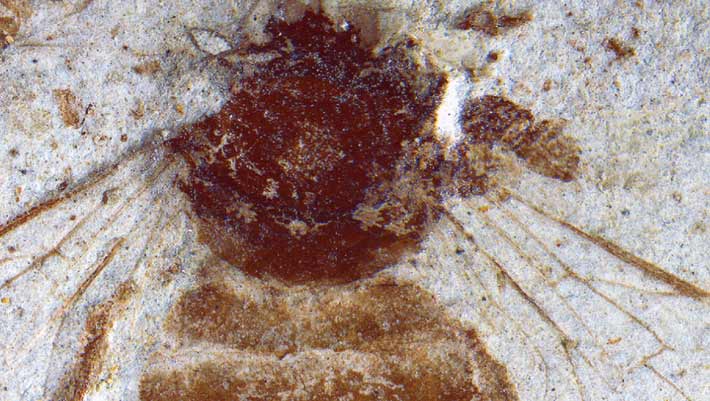
Japanese Fossil Bee Fills Two-Million-Year Gap in Honeybee History
Une abeille fossile japonaise comble une lacune de deux millions d’années dans l’histoire des abeilles domestiques
fossile découverte nouvelle espèce
Les paléontologues ont annoncé la découverte d'une nouvelle espèce fossile d'abeille domestique qui comble une lacune de longue date dans les archives évolutives du genre Apis. L’article L’abeille fossile japonaise comble un écart de deux millions d’années dans l’histoire des abeilles est apparu en premier sur Sci.News : Breaking Science News.
27/07/2026 sci-news ⚙ Traduction automatique
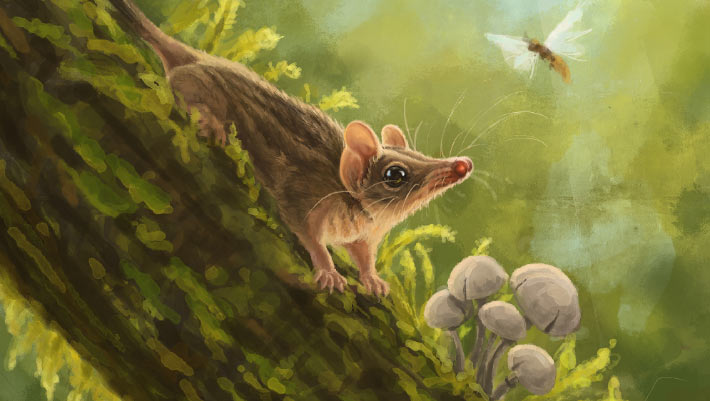
Early Miocene Fossil Rewrites Family Tree of Little Carnivorous Marsupials
Un fossile du début du Miocène réécrit l’arbre généalogique des petits marsupiaux carnivores
Australie Miocène fossile nouvelle espèce
Des paléontologues de l'Université de Nouvelle-Galles du Sud ont décrit un nouveau genre et une nouvelle espèce de marsupial dasyurid du Miocène inférieur d'Australie, offrant ainsi la première preuve solide que la famille des Dasyuridae - qui comprend aujourd'hui les quolls, les diables de Tasmanie et les minuscules antéchines - existait bien avant que les scientifiques n'en aient la preuve dans les archives fossiles. L'article Un fossile du début du Miocène réécrit l'arbre généalogique des petits marsupiaux carnivores apparaît en premier sur Sci.News : Breaking Science News.
24/07/2026 sci-news ⚙ Traduction automatique
Un ancien fossile de singe en Egypte remet en question l'histoire des origines humaines
Égypte fossile origine humaine
Un singe fossile récemment identifié dans le nord de l’Égypte remodèle les idées sur l’endroit où les ancêtres des singes modernes ont émergé pour la première fois. Les analyses le placent plus près des singes vivants que n’importe quelle espèce connue d’Afrique de l’Est du même âge, désignant l’Afrique du Nord et le Moyen-Orient comme lieu de naissance possible et carrefour de la lignée des singes qui a finalement produit des gibbons, des orangs-outans, des gorilles, des chimpanzés et des humains.
24/07/2026 sciencedaily ⚙ Traduction automatique
1 2 3 4 5 6 7 8 9 10 11 12 13 14 15 16 17 18 19 20 21 22 23 24 25 26 27 28 29 30 31 32 33 34 35 36 37