←

Jurassic

Geological interval

117 image(s) · 38 News

View page

Image gallery

Life restoration of Harpactognathus gentryii, a pterosaur from Jurassic USA
Taxa Harpactognathus

Life restoration of Harpactognathus gentryii, a pterosaur from Jurassic USA

United States Jurassic Harpactognathus Pterosauria
A reconstruction of Aorun, a small coelurosaurian theropod from the Middle Jurassic China.
Taxa Aorun

A reconstruction of Aorun, a small coelurosaurian theropod from the Middle Jurassic China.

China Jurassic Middle Jurassic Aorun +1
Figure 1: Reconstruction of the skull of Bellusaurus sui from the Middle-Late Jurassic Shishugou Formation of Xinjiang, China.
This reconstruction is a composite based on isolated holotypic and referred material. (A) Right lateral view. (B) Dorsal view. Holotypic elements are indicated in blue and referred elements are in green.
Taxa Bellusaurus

Figure 1: Reconstruction of the skull of Bellusaurus sui from the Middle-Late Jurassic Shishugou Formation of Xinjiang, China. This reconstruction is a composite based on isolated holotypic and referred material. (A) Right lateral view. (B) Dorsal view. Holotypic elements are indicated in blue and referred elements are in green.

China Jurassic Late Jurassic Bellusaurus +2
Restoration of Analong chuanjieensis, a sauropod dinosaur from the Middle Jurassic of China

Restoration of Analong chuanjieensis, a sauropod dinosaur from the Middle Jurassic of China

China Jurassic Middle Jurassic Analong +1
Bone mapping of the skeleton of Plesiopharos moelensis gen. et sp. nov. (ML2302) from the Sinemurian (Lower Jurassic) of São Pedro de Moel (Leiria, Portugal). A. Bones distribution map of the three original extracted blocks (1, 2 and 3) containing ML2302. Arrows with question marks represent that the joining relationship between the blocks is unknown. B. Photographs of the five sub-blocks (1A, 1B, 2C, 2D, and 3E) after preparation works.
Taxa Plesiopharos

Bone mapping of the skeleton of Plesiopharos moelensis gen. et sp. nov. (ML2302) from the Sinemurian (Lower Jurassic) of São Pedro de Moel (Leiria, Portugal). A. Bones distribution map of the three original extracted blocks (1, 2 and 3) containing ML2302. Arrows with question marks represent that the joining relationship between the blocks is unknown. B. Photographs of the five sub-blocks (1A, 1B, 2C, 2D, and 3E) after preparation works.

bone Portugal Jurassic Sinemurian +2
Ceratopsipes goldenensis Lockley & Hunt, 1995 - ceratopsian dinosaur trackway in the Cretaceous of Colorado, USA.
Ceratopsians are the "horned dinosaurs".  They were large, quadrupedal, herbivorous dinosaurs having a beaked skull and a frill - an extension of bone behind the skull that partially covered the neck.  Ceratopsian dinosaurs are known from the Jurassic and Cretaceous.  The last members of the group died out at the Cretaceous-Tertiary boundary, 65 million years ago.
Seen here is a ceratopsian dinosaur trackway.  Ceratopsian footprints are very rare.  The best examples are in Colorado's Laramie Formation, a nonmarine, coastal plain to deltaic succession of mostly mixed siliciclastic sedimentary rocks - sandstones, siltstones, claystones, and coals.  The footprints here consist of convex bulges on the basal surfaces of structurally-tilted sandstone beds.
The ichnospecies Ceratopsipes goldenensis was named based on footprints at this locality.  The trackmaker was very likely Triceratops, the # 1 most famous ceratopsian dinosaur.


From on-site signage:
Triceratops Tracks
Several tracks of Triceratops, or a closely related horned dinosaur were first discovered in this area and named Ceratopsipes goldenensis (meaning tracks of a horned dinosaur from Golden).  By happy coincidence, the first Triceratops known to science also comes from the greater Denver area near 13th Avenue and Federal Blvd.  Growing to a length of almost 25 feet, Triceratops and other members of the horned dinosaur family were herbivorous animals that roamed in herds.  Their trademark horns and frills that covered their necks probably served for defense.  A replica Triceratops skull is on display in the clubhouse at the Fossil Trace Golf Club.
These tracks (identified by small signs) help us understand that Triceratops walked with a narrow gait and erect front limbs  than with a wide, sprawling gait as previously depicted.  In 1887, the first Triceratops bones known to science were also discovered locally at a site near 13th Avenue and Federal Boulevard in Denver.
Nearby one may see many other traces of life such as burrows, probably made by invertebrates and impressions of plant debris.  Note that you are looking at all tracks and traces from the underside - in negative aspect - what one might call a worm’s eye view.  All of these trace fossils indicate that the Golden area once had a warm, temperate to subtropical climate.


Classification: Animalia, Chordata, Vertebrata, Reptilia, Archosauria, Dinosauria, Ornithischia, Marginocephalia, Ceratopsia, Ceratopsidae
Stratigraphy: Laramie Formation, Maastrichtian Stage, upper Upper Cretaceous
Locality: outcrop along Triceratops Trail, Parfet Prehistoric Preserve, southern side of the town of Golden, Colorado, USA (~vicinity of 39° 44' 35.24" North latitude, 105° 13’ 09.69" West longitude)


Some info. from:

Lockley & Hunt (1995) - Ceratopsid tracks and associated ichnofauna from the Laramie Formation (Upper Cretaceous: Maastrichtian) of Colorado.  Journal of Vertebrate Paleontology 15: 592-614.
Taxa Ceratopsipes

Ceratopsipes goldenensis Lockley & Hunt, 1995 - ceratopsian dinosaur trackway in the Cretaceous of Colorado, USA. Ceratopsians are the "horned dinosaurs". They were large, quadrupedal, herbivorous dinosaurs having a beaked skull and a frill - an extension of bone behind the skull that partially covered the neck. Ceratopsian dinosaurs are known from the Jurassic and Cretaceous. The last members of the group died out at the Cretaceous-Tertiary boundary, 65 million years ago. Seen here is a ceratopsian dinosaur trackway. Ceratopsian footprints are very rare. The best examples are in Colorado's Laramie Formation, a nonmarine, coastal plain to deltaic succession of mostly mixed siliciclastic sedimentary rocks - sandstones, siltstones, claystones, and coals. The footprints here consist of convex bulges on the basal surfaces of structurally-tilted sandstone beds. The ichnospecies Ceratopsipes goldenensis was named based on footprints at this locality. The trackmaker was very likely Triceratops, the # 1 most famous ceratopsian dinosaur. From on-site signage: Triceratops Tracks Several tracks of Triceratops, or a closely related horned dinosaur were first discovered in this area and named Ceratopsipes goldenensis (meaning tracks of a horned dinosaur from Golden). By happy coincidence, the first Triceratops known to science also comes from the greater Denver area near 13th Avenue and Federal Blvd. Growing to a length of almost 25 feet, Triceratops and other members of the horned dinosaur family were herbivorous animals that roamed in herds. Their trademark horns and frills that covered their necks probably served for defense. A replica Triceratops skull is on display in the clubhouse at the Fossil Trace Golf Club. These tracks (identified by small signs) help us understand that Triceratops walked with a narrow gait and erect front limbs than with a wide, sprawling gait as previously depicted. In 1887, the first Triceratops bones known to science were also discovered locally at a site near 13th Avenue and Federal Boulevard in Denver. Nearby one may see many other traces of life such as burrows, probably made by invertebrates and impressions of plant debris. Note that you are looking at all tracks and traces from the underside - in negative aspect - what one might call a worm’s eye view. All of these trace fossils indicate that the Golden area once had a warm, temperate to subtropical climate. Classification: Animalia, Chordata, Vertebrata, Reptilia, Archosauria, Dinosauria, Ornithischia, Marginocephalia, Ceratopsia, Ceratopsidae Stratigraphy: Laramie Formation, Maastrichtian Stage, upper Upper Cretaceous Locality: outcrop along Triceratops Trail, Parfet Prehistoric Preserve, southern side of the town of Golden, Colorado, USA (~vicinity of 39° 44' 35.24" North latitude, 105° 13’ 09.69" West longitude) Some info. from: Lockley & Hunt (1995) - Ceratopsid tracks and associated ichnofauna from the Laramie Formation (Upper Cretaceous: Maastrichtian) of Colorado. Journal of Vertebrate Paleontology 15: 592-614.

bone limb defense United States +16
Dinosaur National Monument is a United States National Monument located on the southeast flank of the Uinta Mountains on the border between Colorado and Utah at the confluence of the Green and Yampa Rivers. Although most of the monument area is in Moffat County, Colorado, the Dinosaur Quarry is located in Utah just to the north of the town of Jensen, Utah.
The nearest communities are Jensen, Utah, and Dinosaur, Colorado. The park contains over 800 paleontological sites and has fossils of dinosaurs including Allosaurus, Deinonychus, Abydosaurus (a nearly complete skull, lower jaws and first four neck vertebrae of the specimen DINO 16488 found here at the base of the Mussentuchit Member of the Cedar Mountain Formation is the holotype for the description) and various long-neck, long-tail sauropods. It was declared a National Monument on October 4, 1915.
The rock layer enclosing the fossils is a sandstone and conglomerate bed of alluvial or river bed origin known as the Morrison Formation from the Jurassic Period some 150 million years old. The dinosaurs and other ancient animals were carried by the river system which eventually entombed their remains in Utah.
The pile of sediments were later buried and lithified into solid rock. The layers of rock were later uplifted and tilted to their present angle by the mountain building forces that formed the Uintas during the Laramide orogeny. The relentless forces of erosion exposed the layers at the surface to be found by paleontologists.
The dinosaur fossil beds (bone beds) were discovered in 1909 by Earl Douglass, a paleontologist working and collecting for the Carnegie Museum of Natural History. He and his crews excavated thousands of fossils and shipped them back to the museum in Pittsburgh, Pennsylvania for study and display. President Woodrow Wilson proclaimed the dinosaur beds as Dinosaur National Monument in 1915. The monument boundaries were expanded in 1938 from the original 80-acre (320,000 m2) tract surrounding the dinosaur quarry in Utah, to its present extent of over 200,000 acres (800 km²) in Utah and Colorado, encompassing the spectacular river canyons of the Green and Yampa.
Though lesser-known than the fossil beds, the petroglyphs in Dinosaur National Monument are another treasure the monument holds. Due to problems with vandals, many of the sites are not listed on area maps.
The "Wall of Bones" located within the Dinosaur Quarry building in the park consists of a steeply tilted (67° from horizontal) rock layer which contains hundreds of dinosaur fossils. The enclosing rock has been chipped away to reveal the fossil bones intact for public viewing. In July 2006, the Quarry Visitor Center was closed due to structural problems that since 1957 had plagued the building because it was built on unstable clay. The decision was made to build a new facility elsewhere in the monument to house the visitor center and administrative functions, making it easier to resolve the structural problems of the quarry building while still retaining a portion of the historic Mission 66 era exhibit hall. It was announced in April 2009 that Dinosaur National Monument would receive $13.1 million to refurbish and reopen the gallery as part of the Obama administration's $750 billion stimulus plan. The Park Service successfully rebuilt the Quarry Exhibit Hall, supporting its weight on 70-foot steel micropile columns that extend to the bedrock below the unstable clay. The Dinosaur Quarry was reopened in Fall 2011.
en.wikipedia.org/wiki/Dinosaur_National_Monument

en.wikipedia.org/wiki/Wikipedia:Text_of_Creative_Commons_...

Dinosaur National Monument is a United States National Monument located on the southeast flank of the Uinta Mountains on the border between Colorado and Utah at the confluence of the Green and Yampa Rivers. Although most of the monument area is in Moffat County, Colorado, the Dinosaur Quarry is located in Utah just to the north of the town of Jensen, Utah. The nearest communities are Jensen, Utah, and Dinosaur, Colorado. The park contains over 800 paleontological sites and has fossils of dinosaurs including Allosaurus, Deinonychus, Abydosaurus (a nearly complete skull, lower jaws and first four neck vertebrae of the specimen DINO 16488 found here at the base of the Mussentuchit Member of the Cedar Mountain Formation is the holotype for the description) and various long-neck, long-tail sauropods. It was declared a National Monument on October 4, 1915. The rock layer enclosing the fossils is a sandstone and conglomerate bed of alluvial or river bed origin known as the Morrison Formation from the Jurassic Period some 150 million years old. The dinosaurs and other ancient animals were carried by the river system which eventually entombed their remains in Utah. The pile of sediments were later buried and lithified into solid rock. The layers of rock were later uplifted and tilted to their present angle by the mountain building forces that formed the Uintas during the Laramide orogeny. The relentless forces of erosion exposed the layers at the surface to be found by paleontologists. The dinosaur fossil beds (bone beds) were discovered in 1909 by Earl Douglass, a paleontologist working and collecting for the Carnegie Museum of Natural History. He and his crews excavated thousands of fossils and shipped them back to the museum in Pittsburgh, Pennsylvania for study and display. President Woodrow Wilson proclaimed the dinosaur beds as Dinosaur National Monument in 1915. The monument boundaries were expanded in 1938 from the original 80-acre (320,000 m2) tract surrounding the dinosaur quarry in Utah, to its present extent of over 200,000 acres (800 km²) in Utah and Colorado, encompassing the spectacular river canyons of the Green and Yampa. Though lesser-known than the fossil beds, the petroglyphs in Dinosaur National Monument are another treasure the monument holds. Due to problems with vandals, many of the sites are not listed on area maps. The "Wall of Bones" located within the Dinosaur Quarry building in the park consists of a steeply tilted (67° from horizontal) rock layer which contains hundreds of dinosaur fossils. The enclosing rock has been chipped away to reveal the fossil bones intact for public viewing. In July 2006, the Quarry Visitor Center was closed due to structural problems that since 1957 had plagued the building because it was built on unstable clay. The decision was made to build a new facility elsewhere in the monument to house the visitor center and administrative functions, making it easier to resolve the structural problems of the quarry building while still retaining a portion of the historic Mission 66 era exhibit hall. It was announced in April 2009 that Dinosaur National Monument would receive $13.1 million to refurbish and reopen the gallery as part of the Obama administration's $750 billion stimulus plan. The Park Service successfully rebuilt the Quarry Exhibit Hall, supporting its weight on 70-foot steel micropile columns that extend to the bedrock below the unstable clay. The Dinosaur Quarry was reopened in Fall 2011. en.wikipedia.org/wiki/Dinosaur_National_Monument en.wikipedia.org/wiki/Wikipedia:Text_of_Creative_Commons_...

bone description museum United States +13
Pantydraco caducus, a sauropodomorph from the Late Triassic or Early Jurassic of England, after Yates, 2003, pencil drawing, digital coloring
Taxa Pantydraco

Pantydraco caducus, a sauropodomorph from the Late Triassic or Early Jurassic of England, after Yates, 2003, pencil drawing, digital coloring

drawing Early Jurassic Jurassic Late Triassic +3
Life restoration of the Triassic ichthyosaur Callawayia neoscapularis. Three specimens of this ichthyosaur are known, the holotype, ROM 41993, and two referred specimens, TMP 94.380.11 and 94.382.2. The skull is primarily based on ROM 41993, cross-checked against TMP 94.380.11 and TMP 94.382.2. The vertebral column is based primarily on TMP 94.382.2 as it is the most complete of these specimens, while the ribs were based on ROM 41993. The forelimbs were mainly based on those of ROM 41993, with TMP 94.380.11 used to determine their breadth. The hindlimbs were based on TMP 94.380.11, especially the more complete right hindlimb.
ROM 41993 was cross-scaled with TMP 94.380.11 by the dimensions of the forelimb epipodials, which produced similar vertebral dimensions. The two TMP specimens were cross-scaled based on femoral length, also producing similar vertebral dimensions. Nicholls & Manabe (2001) stated that no wedge-shaped caudal centra supporting a tailbend were found and that there was no evidence of a bend being present, though considered that they might have existed in the gap in the preserved caudals. Since various other Triassic ichthyosaurs have since been found to have tail bends, one was illustrated here. A modest downturn of roughly 15° was illustrated, comparable to that in Guanlingsaurus, and the location of the bend within the gap in the preserved vertebrae matches well with the location of the bend in Guizhouichthyosaurus.

References
McGowan, C. (1994). "A new species of Shastasaurus (Reptilia: Ichthyosauria) from the Triassic of British Columbia: The most complete exemplar of the genus". Journal of Vertebrate Paleontology 14 (2): 168–179. DOI:10.1080/02724634.1994.10011550.
Nicholls, E. L.; Manabe, M. (2001). "A new genus of ichthyosaur from the Late Triassic Pardonet Formation of British Columbia: Bridging the Triassic-Jurassic gap". Canadian Journal of Earth Sciences 38 (6): 983–1002.
Ji, C.; Jiang, D.Y.; Hao, W.; Sun, Y. (2011). "True tailbend occurred in the Late Triassic: Evidence from ichthyosaur skeletons of South China". Acta Scientiarum Naturalium Universitatis Pekinensis 47 (2): 309–314.
Shang, Q. H.; Li, C. (2009). "On the occurrence of the ichthyosaur Shastasaurus in the Guanling biota (Late Triassic), Guizhou, China". Vertebrata PalAsiatica 47 (3): 178–193.

Life restoration of the Triassic ichthyosaur Callawayia neoscapularis. Three specimens of this ichthyosaur are known, the holotype, ROM 41993, and two referred specimens, TMP 94.380.11 and 94.382.2. The skull is primarily based on ROM 41993, cross-checked against TMP 94.380.11 and TMP 94.382.2. The vertebral column is based primarily on TMP 94.382.2 as it is the most complete of these specimens, while the ribs were based on ROM 41993. The forelimbs were mainly based on those of ROM 41993, with TMP 94.380.11 used to determine their breadth. The hindlimbs were based on TMP 94.380.11, especially the more complete right hindlimb. ROM 41993 was cross-scaled with TMP 94.380.11 by the dimensions of the forelimb epipodials, which produced similar vertebral dimensions. The two TMP specimens were cross-scaled based on femoral length, also producing similar vertebral dimensions. Nicholls & Manabe (2001) stated that no wedge-shaped caudal centra supporting a tailbend were found and that there was no evidence of a bend being present, though considered that they might have existed in the gap in the preserved caudals. Since various other Triassic ichthyosaurs have since been found to have tail bends, one was illustrated here. A modest downturn of roughly 15° was illustrated, comparable to that in Guanlingsaurus, and the location of the bend within the gap in the preserved vertebrae matches well with the location of the bend in Guizhouichthyosaurus. References McGowan, C. (1994). "A new species of Shastasaurus (Reptilia: Ichthyosauria) from the Triassic of British Columbia: The most complete exemplar of the genus". Journal of Vertebrate Paleontology 14 (2): 168–179. DOI:10.1080/02724634.1994.10011550. Nicholls, E. L.; Manabe, M. (2001). "A new genus of ichthyosaur from the Late Triassic Pardonet Formation of British Columbia: Bridging the Triassic-Jurassic gap". Canadian Journal of Earth Sciences 38 (6): 983–1002. Ji, C.; Jiang, D.Y.; Hao, W.; Sun, Y. (2011). "True tailbend occurred in the Late Triassic: Evidence from ichthyosaur skeletons of South China". Acta Scientiarum Naturalium Universitatis Pekinensis 47 (2): 309–314. Shang, Q. H.; Li, C. (2009). "On the occurrence of the ichthyosaur Shastasaurus in the Guanling biota (Late Triassic), Guizhou, China". Vertebrata PalAsiatica 47 (3): 178–193.

China Jurassic Late Triassic Triassic +12
Mary Anning's plesiosaur: Plesiosaurus dolichodeirus Lower Jurassic Lyme Regis, England, UK
Taxa Plesiosaurus

Mary Anning's plesiosaur: Plesiosaurus dolichodeirus Lower Jurassic Lyme Regis, England, UK

United Kingdom Jurassic Plesiosauria
Adeopapposaurus mognai, Early Jurassic of Argentina. Digital.
Taxa Massospondylidae

Adeopapposaurus mognai, Early Jurassic of Argentina. Digital.

Argentina Early Jurassic Jurassic Adeopapposaurus +2
Galeamopus hayi (formerly Diplodocus) type specimen (HMNS 175, formerly CM 662)
Jurassic Period
140,000,000 years old
The animal was 78ft long, 12 ft high at the hips, and probably weighed 10-15 tons.

Wikipedia Loves Art at the Houston Museum of Natural Science
This photo of item # [1] at the Houston Museum of Natural Science was contributed under the team name "The_Wookies" as part of the Wikipedia Loves Art project in February 2009. Houston Museum of Natural Science

The original photograph on Flickr was taken by andytang20—please add a comment to the original Flickr page whenever a use has been made on Wikipedia or another project.
Project galleries on Flickr: this institution,  this team
Taxa Diplodocinae

Galeamopus hayi (formerly Diplodocus) type specimen (HMNS 175, formerly CM 662) Jurassic Period 140,000,000 years old The animal was 78ft long, 12 ft high at the hips, and probably weighed 10-15 tons. Wikipedia Loves Art at the Houston Museum of Natural Science This photo of item # [1] at the Houston Museum of Natural Science was contributed under the team name "The_Wookies" as part of the Wikipedia Loves Art project in February 2009. Houston Museum of Natural Science The original photograph on Flickr was taken by andytang20—please add a comment to the original Flickr page whenever a use has been made on Wikipedia or another project. Project galleries on Flickr: this institution, this team

museum Jurassic specimen Diplodocia +2
Oxfordian (Upper Jurassic) cyclic sediments at Péry-Reuchenette, near Tavannes, kanton Bern, Switzerland. Alternating layers are limestone (light, more competent) and marl/clay; dominant cycle is the 200.000 year-cycle.

Oxfordian (Upper Jurassic) cyclic sediments at Péry-Reuchenette, near Tavannes, kanton Bern, Switzerland. Alternating layers are limestone (light, more competent) and marl/clay; dominant cycle is the 200.000 year-cycle.

Switzerland Reuchenette Jurassic Oxfordian
Oxford Clay (Jurassic) exposed near Weymouth, England.

Oxford Clay (Jurassic) exposed near Weymouth, England.

Oxford Clay Jurassic
Bituminous claystone, Lower Jurassic, Hesselberg, Middle Franconia.
Sedimentary rock of very thin laminated layers (particles less than 0,0002 mm).

Rock formation is known for its rich fossil findings, ex. Ichthyosaur.

Bituminous claystone, Lower Jurassic, Hesselberg, Middle Franconia. Sedimentary rock of very thin laminated layers (particles less than 0,0002 mm). Rock formation is known for its rich fossil findings, ex. Ichthyosaur.

Jurassic fossil Ichthyosauria formation
Partial skull of Manidens condorensis from the Middle Jurassic Cañadón Asfalto Formation of Argentina. Skull reconstructions in lateral view. Dashed lines indicate estimated edges. Abbreviations: a angular antfo antorbital fossa asaf anterior surangular foramen be buccal emargination bo basioccipital bt basal tubera d dentary d1, 2, 11 dentary tooth 1, 2, 11 emfo external mandibular fossa f frontal gl glenoid gr groove j jugal jfl jugal flange jh jugal horn m maxilla m1, 11 maxillary tooth 1, 11 n nasal pd predentary pm premaxilla po postorbital pof postorbital fossa popr paroccipital process q quadrate qj quadratojugal ri ridge sa surangular sq squamosal.
Taxa Manidens

Partial skull of Manidens condorensis from the Middle Jurassic Cañadón Asfalto Formation of Argentina. Skull reconstructions in lateral view. Dashed lines indicate estimated edges. Abbreviations: a angular antfo antorbital fossa asaf anterior surangular foramen be buccal emargination bo basioccipital bt basal tubera d dentary d1, 2, 11 dentary tooth 1, 2, 11 emfo external mandibular fossa f frontal gl glenoid gr groove j jugal jfl jugal flange jh jugal horn m maxilla m1, 11 maxillary tooth 1, 11 n nasal pd predentary pm premaxilla po postorbital pof postorbital fossa popr paroccipital process q quadrate qj quadratojugal ri ridge sa surangular sq squamosal.

tooth Argentina Jurassic Middle Jurassic +4
1 2 3 4 5 6 7 8

News

Oxfordshire Dinosaur Trackway Could Be the Longest Sauropod Trackway Known
United Kingdom Jurassic tracks Cetiosauria Dinosauria discovery
Scientists studying the famous Oxfordshire "dinosaur highway" have announced that one of the giant trackways may represent the longest known sauropod trackway discovered anywhere in the world. The remarkable sequence of footprints, uncovered at Dewars Farm Quarry, could have been made by a single Cetiosaurus as it wandered across a Jurassic mudflat around 166 million
11/06/2026 everythingdinosaur
New Jurassic Pterosaur Unearthed in Germany
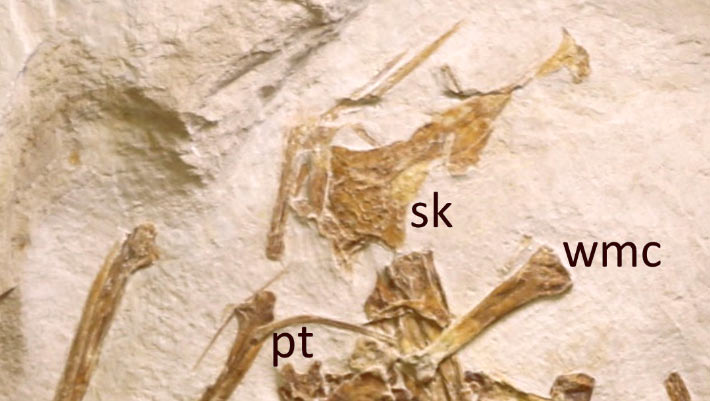
Germany Jurassic fossil Monofenestrata Pterosauria new species skeleton
Paleontologists have described a new genus and species of early monofenestratan pterosaur based on a nearly complete and well-preserved fossil skeleton discovered in Bavaria, Germany. The post New Jurassic Pterosaur Unearthed in Germany appeared first on Sci.News: Breaking Science News.
19/05/2026 sci-news
This strange giant dinosaur may change what we know about Jurassic titans
Argentina Jurassic fossil Bicharracosaurus Brachiosauria Brachiosauridae Dinosauria Diplodocia evolution
A bizarre new giant dinosaur discovered in Argentina is giving paleontologists a fresh look at how Jurassic titans evolved in the Southern Hemisphere. Bicharracosaurus dionidei stretched about 20 meters long and carried a strange mix of features seen in both Diplodocus and Brachiosaurus relatives. Scientists believe it could represent the first known Jurassic brachiosaurid from South America, helping fill a major gap in the dinosaur fossil record.
12/05/2026 sciencedaily
Early Sauropodomorph Dinosaur Unearthed in China
China Early Jurassic Jurassic Dinosauria Massopoda new species partial skeleton
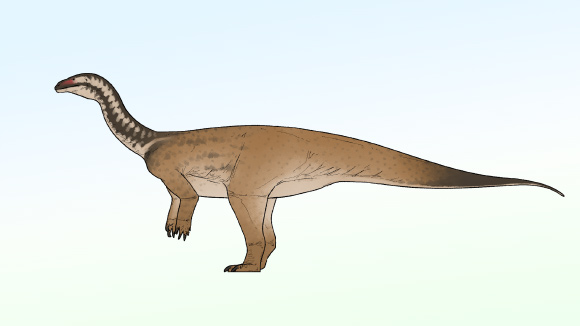
A new genus and species of massopodan sauropodomorph that lived during the Early Jurassic epoch has been identified from a partial skeleton unearthed in southwestern China. The post Early Sauropodomorph Dinosaur Unearthed in China appeared first on Sci.News: Breaking Science News.
04/05/2026 sci-news
Ammonite Model Proves Invaluable When on a Guided Fossil Walk
Jurassic fossil
Lyme Regis is famous for its fossils.  Indeed, thousands of tourists flock to this part of the "Jurassic Coast" on the hunt for fossils. It is sensible to book a fossil walk with an experienced guide. Our chum Brandon Lennon took the guys out from the "All the Gear" YouTube channel for a guided fossil
04/05/2026 everythingdinosaur
1 2 3 4 5 6 7 8