←

Jurassic

Geological interval

117 image(s) · 38 News

View page

Image gallery

A lampshell of the genus Acanthothiris, Class Rhynchonellata, Order Rhynchonellida, Family Acanthothirididae, 20mm along the axis, view of the pedunculate valve, from Woodeaton, Oxfordshire, UK, middle Middle Jurassic (Bathonian)

A lampshell of the genus Acanthothiris, Class Rhynchonellata, Order Rhynchonellida, Family Acanthothirididae, 20mm along the axis, view of the pedunculate valve, from Woodeaton, Oxfordshire, UK, middle Middle Jurassic (Bathonian)

United Kingdom Bathonian Jurassic Middle Jurassic
A lampshell of the genus Acanthothiris, Class Rhynchonellata, Order Rhynchonellida, Family Acanthothirididae, 20mm along the axis, view of the opening, from Woodeaton, Oxfordshire, UK, middle Middle Jurassic (Bathonian)

A lampshell of the genus Acanthothiris, Class Rhynchonellata, Order Rhynchonellida, Family Acanthothirididae, 20mm along the axis, view of the opening, from Woodeaton, Oxfordshire, UK, middle Middle Jurassic (Bathonian)

United Kingdom Bathonian Jurassic Middle Jurassic
A lampshell of the genus Acanthothiris, Class Rhynchonellata, Order Rhynchonellida, Family Acanthothirididae, 20mm along the axis, lateral view, from Woodeaton, Oxfordshire, UK, middle Middle Jurassic (Bathonian)

A lampshell of the genus Acanthothiris, Class Rhynchonellata, Order Rhynchonellida, Family Acanthothirididae, 20mm along the axis, lateral view, from Woodeaton, Oxfordshire, UK, middle Middle Jurassic (Bathonian)

United Kingdom Bathonian Jurassic Middle Jurassic
A lampshell of the genus Acanthothiris, Class Rhynchonellata, Order Rhynchonellida, Family Acanthothirididae, 20mm along the axis, view of the hinge, from Woodeaton, Oxfordshire, UK, middle Middle Jurassic (Bathonian)

A lampshell of the genus Acanthothiris, Class Rhynchonellata, Order Rhynchonellida, Family Acanthothirididae, 20mm along the axis, view of the hinge, from Woodeaton, Oxfordshire, UK, middle Middle Jurassic (Bathonian)

United Kingdom Bathonian Jurassic Middle Jurassic
A lampshell of the genus Acanthothiris, Class Rhynchonellata, Order Rhynchonellida, Family Acanthothirididae, 20mm along the axis, view of the brachial valve, from Woodeaton, Oxfordshire, UK, middle Middle Jurassic (Bathonian)
Intervals Bathonian

A lampshell of the genus Acanthothiris, Class Rhynchonellata, Order Rhynchonellida, Family Acanthothirididae, 20mm along the axis, view of the brachial valve, from Woodeaton, Oxfordshire, UK, middle Middle Jurassic (Bathonian)

United Kingdom Bathonian Jurassic Middle Jurassic
An atypical (without intertidal and supratidal environment) carbonate platform settles down along the margin. Shallow water oolithes and oncoids are deposited in a narrow zone between a basin with Cancellophycus to the north and a marine/swampy plain with abundants mollusc fauna. However the Mytilus formation, rich in bathonian and callovian foraminifera (Septfontaine, 1984 etc.), develop thick limestone beds tenth of meter above, wrongly attributed to the upper Jurassic. See discussion in Septfontaine (1984).

An atypical (without intertidal and supratidal environment) carbonate platform settles down along the margin. Shallow water oolithes and oncoids are deposited in a narrow zone between a basin with Cancellophycus to the north and a marine/swampy plain with abundants mollusc fauna. However the Mytilus formation, rich in bathonian and callovian foraminifera (Septfontaine, 1984 etc.), develop thick limestone beds tenth of meter above, wrongly attributed to the upper Jurassic. See discussion in Septfontaine (1984).

Bathonian Callovian Jurassic formation
A map showing the distribution of paraves in Late Jurassic with the respective paleogeographic setting.

A map showing the distribution of paraves in Late Jurassic with the respective paleogeographic setting.

Jurassic Late Jurassic Paraves
Figure 1. Evolution of macroecological traits in Dinosauria. Large scale event in dinosaur evolution (a); the origin of dinosaurs (star), hyperthermals (volcano), the earliest fossil Avialae (bird), the earliest fossil angiosperm (flower), the Cretaceous/Palaeogene mass extinction (asteroid). Phylogeny of dinosaurs (b) redrawn from Sereno and adapted to the current consensus and upon which an ancestral state reconstruction of temperature niche (mean annual temperature) after Chiarenza et al. is plotted; Mesozoic palaeogeographies (c) for Triassic (T), Jurassic (J) and Cretaceous (K). Silhouette colours symbolize body mass for each of the taxa represented; information on dietary habits are plotted after Barrett and Zanno & Makovicky; numbers represent clades discussed through this study: 1, Ornithischia; 2, Thyreophora; 3, Ornithopoda; 4, Hadrosauroidea; 5, Marginocephalia; 6, Ceratopsia; 7, Saurischia; 8, Sauropodomorpha; 9, Sauropoda; 10, Theropoda; 11, Ceratosauria; 12, Tetanurae; 13, Coelurosauria; 14, Maniraptoriformes; 15, Maniraptora; 16, Deinonychosauria; 17, Avialae; 18, Ornithothoraces. Palaeogeographies modified from original plots via R package ‘mapast’ using plate models by Scotese.

Figure 1. Evolution of macroecological traits in Dinosauria. Large scale event in dinosaur evolution (a); the origin of dinosaurs (star), hyperthermals (volcano), the earliest fossil Avialae (bird), the earliest fossil angiosperm (flower), the Cretaceous/Palaeogene mass extinction (asteroid). Phylogeny of dinosaurs (b) redrawn from Sereno and adapted to the current consensus and upon which an ancestral state reconstruction of temperature niche (mean annual temperature) after Chiarenza et al. is plotted; Mesozoic palaeogeographies (c) for Triassic (T), Jurassic (J) and Cretaceous (K). Silhouette colours symbolize body mass for each of the taxa represented; information on dietary habits are plotted after Barrett and Zanno & Makovicky; numbers represent clades discussed through this study: 1, Ornithischia; 2, Thyreophora; 3, Ornithopoda; 4, Hadrosauroidea; 5, Marginocephalia; 6, Ceratopsia; 7, Saurischia; 8, Sauropodomorpha; 9, Sauropoda; 10, Theropoda; 11, Ceratosauria; 12, Tetanurae; 13, Coelurosauria; 14, Maniraptoriformes; 15, Maniraptora; 16, Deinonychosauria; 17, Avialae; 18, Ornithothoraces. Palaeogeographies modified from original plots via R package ‘mapast’ using plate models by Scotese.

scale Cretaceous Jurassic Mesozoic +23
Diagram illustrating the "Temporal paradox" in paleontology. First given it's nickname by Alan Feduccia, the paradox is made up by the fact that almost all feathered dinosaurs are dated to have lived millions of years after Archaeopteryx, the oldest bird (late Jurassic, believed to have existed about 150 million years ago). Only a few of the feathered dinosaurs/birdlike dinosaurs are given an older date than Archaeopteryx.

Diagram illustrating the "Temporal paradox" in paleontology. First given it's nickname by Alan Feduccia, the paradox is made up by the fact that almost all feathered dinosaurs are dated to have lived millions of years after Archaeopteryx, the oldest bird (late Jurassic, believed to have existed about 150 million years ago). Only a few of the feathered dinosaurs/birdlike dinosaurs are given an older date than Archaeopteryx.

Jurassic Late Jurassic Archaeopteryx Coelurosauria +2
Restoration of Early Jurassic environment preserved at the SGDS, with the theropod Dilophosaurus wetherilli in bird-like resting pose, demonstrating the manufacture of SGDS.18.T1 resting trace.

Restoration of Early Jurassic environment preserved at the SGDS, with the theropod Dilophosaurus wetherilli in bird-like resting pose, demonstrating the manufacture of SGDS.18.T1 resting trace.

Early Jurassic Jurassic Dilophosaurus Neotheropoda +1
Geographic and geologic map showing the location and involved strata of the studied fossil sites in the Xinhe Formation. (A, B) location of the fossiliferous localities in the Gansu Province. (C) Geological map of the involved strata of the studied fossil site (from State Bureau of Surveying and Mapping, GS (2016)2884). White star=Jinchuanloong niedu. Black star=plesiosaur fossils. (D) Stratigraphic chart of the Jurassic at the localities.

Geographic and geologic map showing the location and involved strata of the studied fossil sites in the Xinhe Formation. (A, B) location of the fossiliferous localities in the Gansu Province. (C) Geological map of the involved strata of the studied fossil site (from State Bureau of Surveying and Mapping, GS (2016)2884). White star=Jinchuanloong niedu. Black star=plesiosaur fossils. (D) Stratigraphic chart of the Jurassic at the localities.

Jurassic fossil Jinchuanloong Plesiosauria +1
Life restoration of Tanycolagreus topwilsoni.
Based on Figure 2.16 of "New small theropod from the Upper Jurassic Morrison Formation of Wyoming" by Kenneth Carpenter, Clifford Miles, and Karen Cloward (The Carnivorous Dinosaurs pp. 23-48, Indiana University Press).

Life restoration of Tanycolagreus topwilsoni. Based on Figure 2.16 of "New small theropod from the Upper Jurassic Morrison Formation of Wyoming" by Kenneth Carpenter, Clifford Miles, and Karen Cloward (The Carnivorous Dinosaurs pp. 23-48, Indiana University Press).

Morrison Jurassic Coeluridae Dinosauria +2
Pencil drawing of Coelurus, a coelurosaurian dinosaur that lived from the Late Jurassic period (North America).

Pencil drawing of Coelurus, a coelurosaurian dinosaur that lived from the Late Jurassic period (North America).

drawing Jurassic Late Jurassic Coeluria +3
Coelurus fragilis, a coelurosaur from the Late Jurassic of North America, pencil drawing, digital coloring

Coelurus fragilis, a coelurosaur from the Late Jurassic of North America, pencil drawing, digital coloring

drawing Jurassic Late Jurassic Coeluria +3
Original figure caption: .mw-parser-output .smallcaps{font-variant:small-caps}The Middletown Slab covered with the Footprints of Carnivorous Dinosaurs. The tracks are in high relief. Additional notes: Most if not all of these tridactylous (i.e. three-toed) footprints/tracks (but not the actual trackmaker!) are referred to as Grallator or as Grallator-type trace fossils. “High relief” means that these are actually casts of footprints forming a positive relief on the lower surface of the sandstone slab (so-called positive hyporelief). The material that originally formed the mud over which the dinosaurs walked was too friable to be recovered from the quarry in one piece. The slab consists of so called ‘brownstone’ which is the trading name of the sandstone quarried at Middletown, Connecticut. This sandstone belongs to the Lower Jurassic Portland Formation of the Hartford Basin (“Connecticut Valley”) and thus to the upper part of the Newark Supergroup. The trackmakers probably were relatively small ‘primitive’ theropod dinosaurs (coelophysoids) such as Podokesaurus the remains of which were recovered from Lower Jurassic deposits of the Hartford Basin.
Formations Portland

Original figure caption: .mw-parser-output .smallcaps{font-variant:small-caps}The Middletown Slab covered with the Footprints of Carnivorous Dinosaurs. The tracks are in high relief. Additional notes: Most if not all of these tridactylous (i.e. three-toed) footprints/tracks (but not the actual trackmaker!) are referred to as Grallator or as Grallator-type trace fossils. “High relief” means that these are actually casts of footprints forming a positive relief on the lower surface of the sandstone slab (so-called positive hyporelief). The material that originally formed the mud over which the dinosaurs walked was too friable to be recovered from the quarry in one piece. The slab consists of so called ‘brownstone’ which is the trading name of the sandstone quarried at Middletown, Connecticut. This sandstone belongs to the Lower Jurassic Portland Formation of the Hartford Basin (“Connecticut Valley”) and thus to the upper part of the Newark Supergroup. The trackmakers probably were relatively small ‘primitive’ theropod dinosaurs (coelophysoids) such as Podokesaurus the remains of which were recovered from Lower Jurassic deposits of the Hartford Basin.

Portland Jurassic cast fossil +4
Eubrontes dinosaur track from the Jurassic of Connecticut, USA.
Trace fossils are any indirect evidence of ancient life.  They refer to features in rocks that do not represent parts of the body of a once-living organism.  Traces include footprints, tracks, trails, burrows, borings, and bitemarks.  Body fossils provide information about the morphology of ancient organisms, while trace fossils provide information about the behavior of ancient life forms.  Interpreting trace fossils and determination of the identity of a trace maker can be straightforward (for example, a dinosaur footprint represents walking behavior) or not.  Sediments that have trace fossils are said to be bioturbated.  Burrowed textures in sedimentary rocks are referred to as bioturbation.  Trace fossils have scientific names assigned to them, in the same style & manner as living organisms or body fossils.
This track was made by a theropod, a group of small to large, carnivorous, bipedal dinosaurs.  The specimen comes from a Triassic to Jurassic terrestrial sedimentary succession that filled up a half graben, many of which occur along America's eastern seaboard.  Such half-graben basins formed during the Triassic as the Pangaea supercontinent tried to rift apart, but failed.  Pangaea successfully broke apart during the Jurassic.
Stratigraphy: East Berlin Formation, Newark Supergroup, Lower Jurassic
Locality: unrecorded / undisclosed site at or near the town of Rocky Hill, central Connecticut, USA


Info. at:
mrdata.usgs.gov/geology/state/sgmc-unit.php?unit=CTJeb%3B0
and

en.wikipedia.org/wiki/Eubrontes

Eubrontes dinosaur track from the Jurassic of Connecticut, USA. Trace fossils are any indirect evidence of ancient life. They refer to features in rocks that do not represent parts of the body of a once-living organism. Traces include footprints, tracks, trails, burrows, borings, and bitemarks. Body fossils provide information about the morphology of ancient organisms, while trace fossils provide information about the behavior of ancient life forms. Interpreting trace fossils and determination of the identity of a trace maker can be straightforward (for example, a dinosaur footprint represents walking behavior) or not. Sediments that have trace fossils are said to be bioturbated. Burrowed textures in sedimentary rocks are referred to as bioturbation. Trace fossils have scientific names assigned to them, in the same style & manner as living organisms or body fossils. This track was made by a theropod, a group of small to large, carnivorous, bipedal dinosaurs. The specimen comes from a Triassic to Jurassic terrestrial sedimentary succession that filled up a half graben, many of which occur along America's eastern seaboard. Such half-graben basins formed during the Triassic as the Pangaea supercontinent tried to rift apart, but failed. Pangaea successfully broke apart during the Jurassic. Stratigraphy: East Berlin Formation, Newark Supergroup, Lower Jurassic Locality: unrecorded / undisclosed site at or near the town of Rocky Hill, central Connecticut, USA Info. at: mrdata.usgs.gov/geology/state/sgmc-unit.php?unit=CTJeb%3B0 and en.wikipedia.org/wiki/Eubrontes

United States Jurassic Triassic fossil +5
1 2 3 4 5 6 7 8

News

Oxfordshire Dinosaur Trackway Could Be the Longest Sauropod Trackway Known
United Kingdom Jurassic tracks Cetiosauria Dinosauria discovery
Scientists studying the famous Oxfordshire "dinosaur highway" have announced that one of the giant trackways may represent the longest known sauropod trackway discovered anywhere in the world. The remarkable sequence of footprints, uncovered at Dewars Farm Quarry, could have been made by a single Cetiosaurus as it wandered across a Jurassic mudflat around 166 million
11/06/2026 everythingdinosaur
New Jurassic Pterosaur Unearthed in Germany
Germany Jurassic fossil Monofenestrata Pterosauria new species skeleton
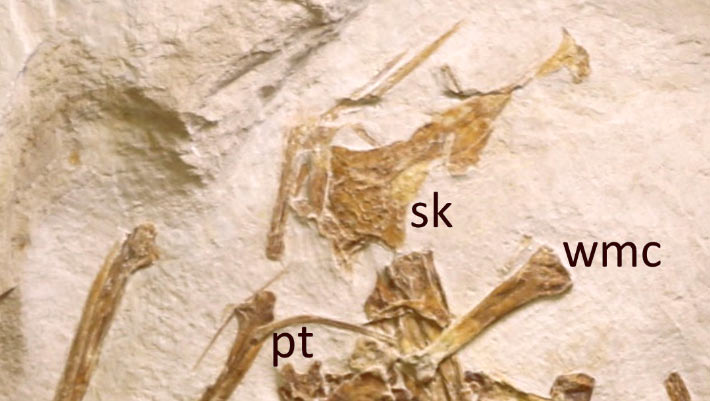
Paleontologists have described a new genus and species of early monofenestratan pterosaur based on a nearly complete and well-preserved fossil skeleton discovered in Bavaria, Germany. The post New Jurassic Pterosaur Unearthed in Germany appeared first on Sci.News: Breaking Science News.
19/05/2026 sci-news
This strange giant dinosaur may change what we know about Jurassic titans
Argentina Jurassic fossil Bicharracosaurus Brachiosauria Brachiosauridae Dinosauria Diplodocia evolution
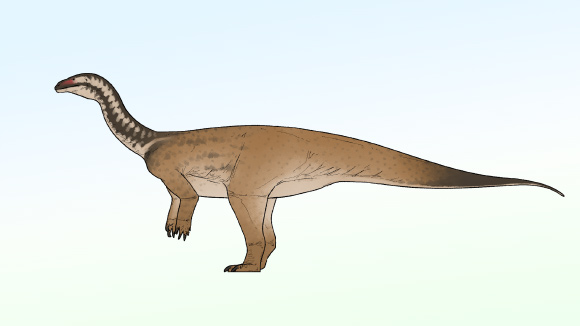
A bizarre new giant dinosaur discovered in Argentina is giving paleontologists a fresh look at how Jurassic titans evolved in the Southern Hemisphere. Bicharracosaurus dionidei stretched about 20 meters long and carried a strange mix of features seen in both Diplodocus and Brachiosaurus relatives. Scientists believe it could represent the first known Jurassic brachiosaurid from South America, helping fill a major gap in the dinosaur fossil record.
12/05/2026 sciencedaily
Early Sauropodomorph Dinosaur Unearthed in China
China Early Jurassic Jurassic Dinosauria Massopoda new species partial skeleton
A new genus and species of massopodan sauropodomorph that lived during the Early Jurassic epoch has been identified from a partial skeleton unearthed in southwestern China. The post Early Sauropodomorph Dinosaur Unearthed in China appeared first on Sci.News: Breaking Science News.
04/05/2026 sci-news
Ammonite Model Proves Invaluable When on a Guided Fossil Walk
Jurassic fossil
Lyme Regis is famous for its fossils.  Indeed, thousands of tourists flock to this part of the "Jurassic Coast" on the hunt for fossils. It is sensible to book a fossil walk with an experienced guide. Our chum Brandon Lennon took the guys out from the "All the Gear" YouTube channel for a guided fossil
04/05/2026 everythingdinosaur
1 2 3 4 5 6 7 8