Chine

Pays

59 image(s) · 10 Actualités

Galerie d'images

Restoration of Dongbeititan dongi from the Early Cretaceous of China
Taxons Dongbeititan

Restoration of Dongbeititan dongi from the Early Cretaceous of China

Chine Crétacé Crétacé inférieur Dongbeititan
Henan Geological Museum, Zhengzhou, China. Complete indexed photo collection at WorldHistoryPics.com.
Taxons Baotianmansaurus

Henan Geological Museum, Zhengzhou, China. Complete indexed photo collection at WorldHistoryPics.com.

musée Chine Baotianmansaurus
Gandititan is a basal titanosaurian sauropod dinosaur from the Late Cretaceous of what is now China. It was a long-necked herbivore, typical of sauropods, with a relatively short tail, a characteristic of titanosaurs compared to other sauropods. Titanosauria have a wide range of body sizes, and Gandititan falls around the middle, slightly on the smaller side. Discovered with a fairly well articluated spine from neck to tail, Gandititan is estimated at about 14 m in total body length.
Taxons Gandititan

Gandititan is a basal titanosaurian sauropod dinosaur from the Late Cretaceous of what is now China. It was a long-necked herbivore, typical of sauropods, with a relatively short tail, a characteristic of titanosaurs compared to other sauropods. Titanosauria have a wide range of body sizes, and Gandititan falls around the middle, slightly on the smaller side. Discovered with a fairly well articluated spine from neck to tail, Gandititan is estimated at about 14 m in total body length.

Chine Crétacé Crétacé supérieur Dinosauria +2
Restoration of Zhuchengtitan zangjiazhuangensis from the Late Cretaceous of China
Taxons Zhuchengtitan

Restoration of Zhuchengtitan zangjiazhuangensis from the Late Cretaceous of China

Chine Crétacé Crétacé supérieur Zhuchengtitan
Restoration of Borealosaurus a potentially titanosaur dinosaur from the Cretaceous of China
Taxons Borealosaurus

Restoration of Borealosaurus a potentially titanosaur dinosaur from the Cretaceous of China

Chine Crétacé Borealosaurus Dinosauria +1
Henan Geological Museum, Zhengzhou, China. Complete indexed photo collection at WorldHistoryPics.com.
Taxons Placoolithus

Henan Geological Museum, Zhengzhou, China. Complete indexed photo collection at WorldHistoryPics.com.

musée Chine Placoolithus
World map showing Late Cretaceous metatherian locales.

Europe

1. Font-de-Benon quarry, Archingeay-Les Nouillers (Cenomanian, Late Cretaceous), Charente-Maritime, southwestern France (Vullo et al. 2009)
2. Valkenburg Member, Maastricht Formation (late Maastrichtian, Late Cretaceous), southern Limburg, The Netherlands (Martin et al. 2005)
Asia

3. Yixian Formation, China (Barremian, Early Cretaceous)
4. Bissekty Formation, Kyzylkum Desert, Uzbekistan (Turonian, Late Cretaceous)
5. Darbasa Formation, southern Kazakhstan (Campanian, Late Cretaceous)
6. Grey Mesa locality (Averianov 1997)
7. Barun Goyot Formation, Umuni Gobi, Mongolia (Campanian, Late Cretaceous)
8. Nemegt Formation, Omnogov, Mongolia (Maastrichtian, Late Cretaceous)
9. Djadokhta Formation, Mongolia (Campanian, Late Cretaceous)

North America
Alaska

9. Prince Creek Formation, Alaska (early Maastrichtian, Late Cretaceous)
Alberta and Saskatchewan, Canada

10. Milk River Formation, southern Alberta, Canada (late Santonian, Late Cretaceous)
11. Oldman Formation, southern Alberta, Canada (Campanian, Late Cretaceous)
12. Dinosaur Park Formation, southern Alberta, Canada (late Campanian, Late Cretaceous)


13. Horseshoe Canyon Formation, southern Alberta, Canada (early Maastrichtian, Late Cretaceous)
14. St. Mary River Formation, Alberta and northwestern Montana (early Maastrichtian, Late Cretaceous)


15. Scollard Formation, Alberta (late Maastrichtian, Late Cretaceous)
16. Frenchman Formation, Saskatchewan (late Maastrichtian, Late Cretaceous)
Montana and North Dakota

17. Judith River Formation (late Campanian, Late Cretaceous)
18. Two Medicine Formation (late Campanian, Late Cretaceous)
19. Hell Creek Formation, Montana and North Dakota (late Maastrichtian, Late Cretaceous)

South Dakota

20. Fox Hills Formation, South Dakota (late Maastrichtian, Late Cretaceous)
21. Hell Creek Formation, South Dakota (late Maastrichtian, Late Cretaceous)
Wyoming

22. “Mesa Verde Formation” (late Campanian, Late Cretaceous)
23. Lance Formation, Wyoming (late Maastrichtian, Late Cretaceous)
24. Ferris Formation, Wyoming (late Maastrichtian, Late Cretaceous)

Utah

25. Cedar Mountain Formation (Albian-Cenomanian)
26. Dakota Formation fauna (late Cenomanian, Late Cretaceous)
27. Smoky Hollow Member, Straight Cliffs Formation (Turonian, Late Cretaceous)
28. John Henry Member, Straight Cliffs Formation (Coniacian-Santonian, Late Cretaceous)
29. Wahweap Formation (early-middle Campanian, Late Cretaceous)
30. Kaiparowits Formation (late Campanian, Late Cretaceous)
31. Iron Springs Formation fauna, southern Utah (Turonian – Santonian, Late Cretaceous)
32. North Horn Formation, Utah (late Maastrichtian, Late Cretaceous)
Colorado

33. Williams Fork Formation, Colorado (late Campanian-early Maastrichtian)


34. Laramie Formation, northeastern Colorado (late Maastrichtian, Late Cretaceous)

Baja California Del Norte, Mexico

35. El Gallo Formation (late Campanian, Late Cretaceous) (Clemens 1980; Lillegraven 1972; Lillegraven 1976)
New Mexico

36. Fruitland and lower Kirtland Formation, San Juan Basin (late Campanian, Late Cretaceous)
37. Naashoibito Member, Kirtland Formation, New Mexico (late Maastrichtian, Late Cretaceous)
Oklahoma

38. Antlers Formation, Texas and Oklahoma (Aptian-Albian, Early Cretaceous)
Texas

39. Aguja Formation, West Texas (late Campanian, Late Cretaceous)
New Jersey

40. Marshalltown Formation, New Jersey (Campanian, Late Cretaceous)
Szalay 1994)
Formations Bissekty

World map showing Late Cretaceous metatherian locales. Europe 1. Font-de-Benon quarry, Archingeay-Les Nouillers (Cenomanian, Late Cretaceous), Charente-Maritime, southwestern France (Vullo et al. 2009) 2. Valkenburg Member, Maastricht Formation (late Maastrichtian, Late Cretaceous), southern Limburg, The Netherlands (Martin et al. 2005) Asia 3. Yixian Formation, China (Barremian, Early Cretaceous) 4. Bissekty Formation, Kyzylkum Desert, Uzbekistan (Turonian, Late Cretaceous) 5. Darbasa Formation, southern Kazakhstan (Campanian, Late Cretaceous) 6. Grey Mesa locality (Averianov 1997) 7. Barun Goyot Formation, Umuni Gobi, Mongolia (Campanian, Late Cretaceous) 8. Nemegt Formation, Omnogov, Mongolia (Maastrichtian, Late Cretaceous) 9. Djadokhta Formation, Mongolia (Campanian, Late Cretaceous) North America Alaska 9. Prince Creek Formation, Alaska (early Maastrichtian, Late Cretaceous) Alberta and Saskatchewan, Canada 10. Milk River Formation, southern Alberta, Canada (late Santonian, Late Cretaceous) 11. Oldman Formation, southern Alberta, Canada (Campanian, Late Cretaceous) 12. Dinosaur Park Formation, southern Alberta, Canada (late Campanian, Late Cretaceous) 13. Horseshoe Canyon Formation, southern Alberta, Canada (early Maastrichtian, Late Cretaceous) 14. St. Mary River Formation, Alberta and northwestern Montana (early Maastrichtian, Late Cretaceous) 15. Scollard Formation, Alberta (late Maastrichtian, Late Cretaceous) 16. Frenchman Formation, Saskatchewan (late Maastrichtian, Late Cretaceous) Montana and North Dakota 17. Judith River Formation (late Campanian, Late Cretaceous) 18. Two Medicine Formation (late Campanian, Late Cretaceous) 19. Hell Creek Formation, Montana and North Dakota (late Maastrichtian, Late Cretaceous) South Dakota 20. Fox Hills Formation, South Dakota (late Maastrichtian, Late Cretaceous) 21. Hell Creek Formation, South Dakota (late Maastrichtian, Late Cretaceous) Wyoming 22. “Mesa Verde Formation” (late Campanian, Late Cretaceous) 23. Lance Formation, Wyoming (late Maastrichtian, Late Cretaceous) 24. Ferris Formation, Wyoming (late Maastrichtian, Late Cretaceous) Utah 25. Cedar Mountain Formation (Albian-Cenomanian) 26. Dakota Formation fauna (late Cenomanian, Late Cretaceous) 27. Smoky Hollow Member, Straight Cliffs Formation (Turonian, Late Cretaceous) 28. John Henry Member, Straight Cliffs Formation (Coniacian-Santonian, Late Cretaceous) 29. Wahweap Formation (early-middle Campanian, Late Cretaceous) 30. Kaiparowits Formation (late Campanian, Late Cretaceous) 31. Iron Springs Formation fauna, southern Utah (Turonian – Santonian, Late Cretaceous) 32. North Horn Formation, Utah (late Maastrichtian, Late Cretaceous) Colorado 33. Williams Fork Formation, Colorado (late Campanian-early Maastrichtian) 34. Laramie Formation, northeastern Colorado (late Maastrichtian, Late Cretaceous) Baja California Del Norte, Mexico 35. El Gallo Formation (late Campanian, Late Cretaceous) (Clemens 1980; Lillegraven 1972; Lillegraven 1976) New Mexico 36. Fruitland and lower Kirtland Formation, San Juan Basin (late Campanian, Late Cretaceous) 37. Naashoibito Member, Kirtland Formation, New Mexico (late Maastrichtian, Late Cretaceous) Oklahoma 38. Antlers Formation, Texas and Oklahoma (Aptian-Albian, Early Cretaceous) Texas 39. Aguja Formation, West Texas (late Campanian, Late Cretaceous) New Jersey 40. Marshalltown Formation, New Jersey (Campanian, Late Cretaceous) Szalay 1994)

Canada Chine France Kazakhstan +18
World map showing Late Cretaceous metatherian locales.

Europe

1. Font-de-Benon quarry, Archingeay-Les Nouillers (Cenomanian, Late Cretaceous), Charente-Maritime, southwestern France (Vullo et al. 2009)
2. Valkenburg Member, Maastricht Formation (late Maastrichtian, Late Cretaceous), southern Limburg, The Netherlands (Martin et al. 2005)
Asia

3. Yixian Formation, China (Barremian, Early Cretaceous)
4. Bissekty Formation, Kyzylkum Desert, Uzbekistan (Turonian, Late Cretaceous)
5. Darbasa Formation, southern Kazakhstan (Campanian, Late Cretaceous)
6. Grey Mesa locality (Averianov 1997)
7. Barun Goyot Formation, Umuni Gobi, Mongolia (Campanian, Late Cretaceous)
8. Nemegt Formation, Omnogov, Mongolia (Maastrichtian, Late Cretaceous)
9. Djadokhta Formation, Mongolia (Campanian, Late Cretaceous)

North America
Alaska

9. Prince Creek Formation, Alaska (early Maastrichtian, Late Cretaceous)
Alberta and Saskatchewan, Canada

10. Milk River Formation, southern Alberta, Canada (late Santonian, Late Cretaceous)
11. Oldman Formation, southern Alberta, Canada (Campanian, Late Cretaceous)
12. Dinosaur Park Formation, southern Alberta, Canada (late Campanian, Late Cretaceous)


13. Horseshoe Canyon Formation, southern Alberta, Canada (early Maastrichtian, Late Cretaceous)
14. St. Mary River Formation, Alberta and northwestern Montana (early Maastrichtian, Late Cretaceous)


15. Scollard Formation, Alberta (late Maastrichtian, Late Cretaceous)
16. Frenchman Formation, Saskatchewan (late Maastrichtian, Late Cretaceous)
Montana and North Dakota

17. Judith River Formation (late Campanian, Late Cretaceous)
18. Two Medicine Formation (late Campanian, Late Cretaceous)
19. Hell Creek Formation, Montana and North Dakota (late Maastrichtian, Late Cretaceous)

South Dakota

20. Fox Hills Formation, South Dakota (late Maastrichtian, Late Cretaceous)
21. Hell Creek Formation, South Dakota (late Maastrichtian, Late Cretaceous)
Wyoming

22. “Mesa Verde Formation” (late Campanian, Late Cretaceous)
23. Lance Formation, Wyoming (late Maastrichtian, Late Cretaceous)
24. Ferris Formation, Wyoming (late Maastrichtian, Late Cretaceous)

Utah

25. Cedar Mountain Formation (Albian-Cenomanian)
26. Dakota Formation fauna (late Cenomanian, Late Cretaceous)
27. Smoky Hollow Member, Straight Cliffs Formation (Turonian, Late Cretaceous)
28. John Henry Member, Straight Cliffs Formation (Coniacian-Santonian, Late Cretaceous)
29. Wahweap Formation (early-middle Campanian, Late Cretaceous)
30. Kaiparowits Formation (late Campanian, Late Cretaceous)
31. Iron Springs Formation fauna, southern Utah (Turonian – Santonian, Late Cretaceous)
32. North Horn Formation, Utah (late Maastrichtian, Late Cretaceous)
Colorado

33. Williams Fork Formation, Colorado (late Campanian-early Maastrichtian)


34. Laramie Formation, northeastern Colorado (late Maastrichtian, Late Cretaceous)

Baja California Del Norte, Mexico

35. El Gallo Formation (late Campanian, Late Cretaceous) (Clemens 1980; Lillegraven 1972; Lillegraven 1976)
New Mexico

36. Fruitland and lower Kirtland Formation, San Juan Basin (late Campanian, Late Cretaceous)
37. Naashoibito Member, Kirtland Formation, New Mexico (late Maastrichtian, Late Cretaceous)
Oklahoma

38. Antlers Formation, Texas and Oklahoma (Aptian-Albian, Early Cretaceous)
Texas

39. Aguja Formation, West Texas (late Campanian, Late Cretaceous)
New Jersey

40. Marshalltown Formation, New Jersey (Campanian, Late Cretaceous)
Szalay 1994)
Formations Frenchman

World map showing Late Cretaceous metatherian locales. Europe 1. Font-de-Benon quarry, Archingeay-Les Nouillers (Cenomanian, Late Cretaceous), Charente-Maritime, southwestern France (Vullo et al. 2009) 2. Valkenburg Member, Maastricht Formation (late Maastrichtian, Late Cretaceous), southern Limburg, The Netherlands (Martin et al. 2005) Asia 3. Yixian Formation, China (Barremian, Early Cretaceous) 4. Bissekty Formation, Kyzylkum Desert, Uzbekistan (Turonian, Late Cretaceous) 5. Darbasa Formation, southern Kazakhstan (Campanian, Late Cretaceous) 6. Grey Mesa locality (Averianov 1997) 7. Barun Goyot Formation, Umuni Gobi, Mongolia (Campanian, Late Cretaceous) 8. Nemegt Formation, Omnogov, Mongolia (Maastrichtian, Late Cretaceous) 9. Djadokhta Formation, Mongolia (Campanian, Late Cretaceous) North America Alaska 9. Prince Creek Formation, Alaska (early Maastrichtian, Late Cretaceous) Alberta and Saskatchewan, Canada 10. Milk River Formation, southern Alberta, Canada (late Santonian, Late Cretaceous) 11. Oldman Formation, southern Alberta, Canada (Campanian, Late Cretaceous) 12. Dinosaur Park Formation, southern Alberta, Canada (late Campanian, Late Cretaceous) 13. Horseshoe Canyon Formation, southern Alberta, Canada (early Maastrichtian, Late Cretaceous) 14. St. Mary River Formation, Alberta and northwestern Montana (early Maastrichtian, Late Cretaceous) 15. Scollard Formation, Alberta (late Maastrichtian, Late Cretaceous) 16. Frenchman Formation, Saskatchewan (late Maastrichtian, Late Cretaceous) Montana and North Dakota 17. Judith River Formation (late Campanian, Late Cretaceous) 18. Two Medicine Formation (late Campanian, Late Cretaceous) 19. Hell Creek Formation, Montana and North Dakota (late Maastrichtian, Late Cretaceous) South Dakota 20. Fox Hills Formation, South Dakota (late Maastrichtian, Late Cretaceous) 21. Hell Creek Formation, South Dakota (late Maastrichtian, Late Cretaceous) Wyoming 22. “Mesa Verde Formation” (late Campanian, Late Cretaceous) 23. Lance Formation, Wyoming (late Maastrichtian, Late Cretaceous) 24. Ferris Formation, Wyoming (late Maastrichtian, Late Cretaceous) Utah 25. Cedar Mountain Formation (Albian-Cenomanian) 26. Dakota Formation fauna (late Cenomanian, Late Cretaceous) 27. Smoky Hollow Member, Straight Cliffs Formation (Turonian, Late Cretaceous) 28. John Henry Member, Straight Cliffs Formation (Coniacian-Santonian, Late Cretaceous) 29. Wahweap Formation (early-middle Campanian, Late Cretaceous) 30. Kaiparowits Formation (late Campanian, Late Cretaceous) 31. Iron Springs Formation fauna, southern Utah (Turonian – Santonian, Late Cretaceous) 32. North Horn Formation, Utah (late Maastrichtian, Late Cretaceous) Colorado 33. Williams Fork Formation, Colorado (late Campanian-early Maastrichtian) 34. Laramie Formation, northeastern Colorado (late Maastrichtian, Late Cretaceous) Baja California Del Norte, Mexico 35. El Gallo Formation (late Campanian, Late Cretaceous) (Clemens 1980; Lillegraven 1972; Lillegraven 1976) New Mexico 36. Fruitland and lower Kirtland Formation, San Juan Basin (late Campanian, Late Cretaceous) 37. Naashoibito Member, Kirtland Formation, New Mexico (late Maastrichtian, Late Cretaceous) Oklahoma 38. Antlers Formation, Texas and Oklahoma (Aptian-Albian, Early Cretaceous) Texas 39. Aguja Formation, West Texas (late Campanian, Late Cretaceous) New Jersey 40. Marshalltown Formation, New Jersey (Campanian, Late Cretaceous) Szalay 1994)

Canada Chine France Kazakhstan +18
Paleogeography and paleoclimate of the Late Jurassic - 150 Ma with dinosaur fossil localities:
A = Tendaguru Formation, Tanzania
C1 =  Shishugou & Kalazha Formations, China
C2 =  Shangshaximiao (Upper Shaximiao) Formation, China
E1 =  Sables de Glos, Argiles d’Octeville, Marnes de Bléville, Kimmeridge Clay, Calcareous Grit, Corallian Oolite, Oxford Clay, Portland Stone, England & France
E2 = Villar del Arzobispo, Alcobaça, Guimarota, Sobral, Amoreira-Porto Novo, Bombarral, Freixial, Lourinhã Formations, Spain & Portugal
M1-6 = Morrison Formation, United States
S1 =  Toquí & Cañadón Calcáreo Formations, Chile & Argentina

Paleogeography and paleoclimate of the Late Jurassic - 150 Ma with dinosaur fossil localities: A = Tendaguru Formation, Tanzania C1 = Shishugou & Kalazha Formations, China C2 = Shangshaximiao (Upper Shaximiao) Formation, China E1 = Sables de Glos, Argiles d’Octeville, Marnes de Bléville, Kimmeridge Clay, Calcareous Grit, Corallian Oolite, Oxford Clay, Portland Stone, England & France E2 = Villar del Arzobispo, Alcobaça, Guimarota, Sobral, Amoreira-Porto Novo, Bombarral, Freixial, Lourinhã Formations, Spain & Portugal M1-6 = Morrison Formation, United States S1 = Toquí & Cañadón Calcáreo Formations, Chile & Argentina

Argentine Chili Chine France +19
West of Chilton Chine The coastline west of the chine is accessible at lowish tides.  The various rock strata in the Wealden Beds can be seen, with the chalk of Highdown Cliffs SZ3285 beyond.
Formations Wessex

West of Chilton Chine The coastline west of the chine is accessible at lowish tides. The various rock strata in the Wealden Beds can be seen, with the chalk of Highdown Cliffs SZ3285 beyond.

Chine
Comparison of the digit III/footprint length ratio for Eubrontes of the same size in America, Europe, and China. American specimens: (a) Eubrontes giganteus AC 15/3, type specimens (Lockley 2009); (b) Eubrontes giganteus AC 45/1 (Olsen et al. 1998); (c) Utah Eubrontes 1 (Lockley et al. 1998); (d) Utah Eubrontes 2 (T3) (Lockley et al. 2021); (e) Connecticut Eubrontes (Ishigaki and Fujisaki 1989); (f) Eubrontes (?) glenrosensis (Adams et al. 2010); European specimen: (g) Eubrontes veillonensis (de Lapparent and Montenat 1967); Chinese specimens: (h) Eubrontes pareschequier (Xing et al. 2009a, 2014b); (i) Eubrontes zigongensis (Xing et al. 2014c); (j) Eubrontes platypus (Hitchcock 1858) Xiyang specimen (Yang and Yang 1987); (k) Eubrontes monax (Zhen et al. 1986; Lockley et al. 2013); (l) Eubrontes xiyangensis (Zhen et al. 1986; Lockley et al. 2013); (m) Changpeipus carbonicus (Xing et al. 2014b); (n) Eubrontes nianpanshanensis (Xing et al. 2016b); (o) Lufengopus dongi (Lü et al. 2006; Xing et al. 2014d); (p) Eubrontes (?) glenrosensis Hailiutu specimen (Li et al. 2010; Xing et al. 2021); (q) Lockleypus luanpingeris (Xing et al. 2018e); (r) Chapus lockleyi (Li et al. 2006); (s) Asianopodus pulvinicalyx (Matsukawa et al. 2005); (t) Asianopodus robustus (Li et al. 2011; Lockley et al. 2018); (u) Eubrontes nobitai (This study); (v) Eubrontes HX-T3 (Xing et al. 2015b); (w) Eubrontes BJA-T4 (Xing et al. 2016c)
Taxons Asianopodus

Comparison of the digit III/footprint length ratio for Eubrontes of the same size in America, Europe, and China. American specimens: (a) Eubrontes giganteus AC 15/3, type specimens (Lockley 2009); (b) Eubrontes giganteus AC 45/1 (Olsen et al. 1998); (c) Utah Eubrontes 1 (Lockley et al. 1998); (d) Utah Eubrontes 2 (T3) (Lockley et al. 2021); (e) Connecticut Eubrontes (Ishigaki and Fujisaki 1989); (f) Eubrontes (?) glenrosensis (Adams et al. 2010); European specimen: (g) Eubrontes veillonensis (de Lapparent and Montenat 1967); Chinese specimens: (h) Eubrontes pareschequier (Xing et al. 2009a, 2014b); (i) Eubrontes zigongensis (Xing et al. 2014c); (j) Eubrontes platypus (Hitchcock 1858) Xiyang specimen (Yang and Yang 1987); (k) Eubrontes monax (Zhen et al. 1986; Lockley et al. 2013); (l) Eubrontes xiyangensis (Zhen et al. 1986; Lockley et al. 2013); (m) Changpeipus carbonicus (Xing et al. 2014b); (n) Eubrontes nianpanshanensis (Xing et al. 2016b); (o) Lufengopus dongi (Lü et al. 2006; Xing et al. 2014d); (p) Eubrontes (?) glenrosensis Hailiutu specimen (Li et al. 2010; Xing et al. 2021); (q) Lockleypus luanpingeris (Xing et al. 2018e); (r) Chapus lockleyi (Li et al. 2006); (s) Asianopodus pulvinicalyx (Matsukawa et al. 2005); (t) Asianopodus robustus (Li et al. 2011; Lockley et al. 2018); (u) Eubrontes nobitai (This study); (v) Eubrontes HX-T3 (Xing et al. 2015b); (w) Eubrontes BJA-T4 (Xing et al. 2016c)

Chine spécimen Asianopodus Changpeipus +2
Digital copy of 1978 slide. Natural History Museum, Smithsonian Institution, Washington, D.C. Complete indexed photo collection at WorldHistoryPics.com.

Digital copy of 1978 slide. Natural History Museum, Smithsonian Institution, Washington, D.C. Complete indexed photo collection at WorldHistoryPics.com.

musée Chine Tylosaurus
Holotype specimen (GMV2128) of Dendrorhynchoides curvidentatus on display at the Geological Museum of China.
Taxons Dendrorhynchoides

Holotype specimen (GMV2128) of Dendrorhynchoides curvidentatus on display at the Geological Museum of China.

musée Chine holotype spécimen +1
Holotype of Ikrandraco avatar on display at the Paleozoological Museum of China.
Taxons Ikrandraco

Holotype of Ikrandraco avatar on display at the Paleozoological Museum of China.

musée Chine holotype Ikrandraco +1
Fossil specimen (IVPP V17903) of Corpulentapus lilasia on display at the Paleozoological Museum of China.
Taxons Corpulentapus

Fossil specimen (IVPP V17903) of Corpulentapus lilasia on display at the Paleozoological Museum of China.

musée Chine fossile spécimen +1
Caudipteryx zoui, Skelett - Untere Kreide - Liaoning/China - aufgenommen im Museum am Löwentor, Stuttgart
Taxons Caudipteryx

Caudipteryx zoui, Skelett - Untere Kreide - Liaoning/China - aufgenommen im Museum am Löwentor, Stuttgart

musée Chine Caudipterygidae Caudipteryx
1 2 3 4

Actualités

Early Sauropodomorph Dinosaur Unearthed in China
Un dinosaure sauropodomorphe découvert en Chine
Chine Jurassique inférieur Jurassique Dinosauria Massopoda nouvelle espèce partiel squelette
Un nouveau genre et une nouvelle espèce de sauropodomorphe massopodan qui vivaient au début du Jurassique ont été identifiés à partir d'un squelette partiel découvert dans le sud-ouest de la Chine. L'article Les premiers dinosaures sauropodomorphes découverts en Chine est apparu en premier sur Sci.News : Breaking Science News.
04/05/2026 sci-news ⚙ Traduction automatique
Des fossiles de poissons vieux de 400 millions d'années révèlent comment la vie a commencé à s'installer sur terre
Australie Chine fossile formation crâne
Les scientifiques ont découvert de nouveaux indices sur certains des premiers poissons de la Terre, mettant ainsi en lumière les origines anciennes des vertébrés qui ont fini par s’installer sur terre. En réanalysant de mystérieux fossiles de la célèbre formation australienne Gogo et en étudiant un crâne de poisson-poumon récemment reconstruit, vieux de 410 millions d'années et provenant de Chine, les chercheurs révèlent comment ces créatures primitives ont évolué.
12/03/2026 sciencedaily ⚙ Traduction automatique
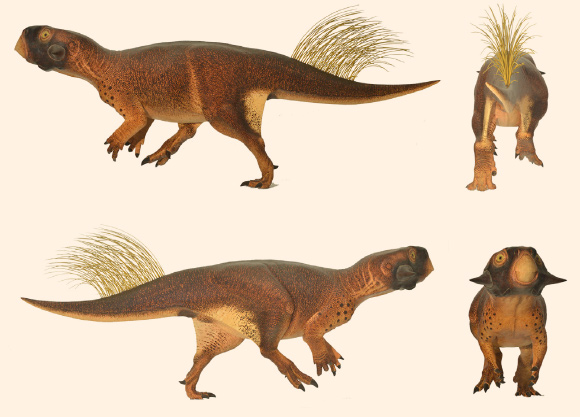
Haolong: Beast of the Week
Haolong : Bête de la semaine
Chine Crétacé Crétacé inférieur juvénile spécimen Dinosauria Haolong
 Cette semaine, nous allons découvrir un dinosaure nouvellement décrit qui est si unique qu'il change complètement ce que nous pensions savoir sur la peau des dinosaures !  Entrez Haolong Dongi ! Haolong était un dinosaure herbivore qui vivait dans ce qui est aujourd'hui le Liaoning, en Chine, au début du Crétacé, il y a environ 112,5 millions d'années.  Le seul spécimen enregistré mesure environ 8 pieds (2,45 m) du bec à la queue, mais il était juvénile lorsqu'il est mort, l'espèce a donc probablement grandi.  Le nom du genre se traduit du chinois par "S
08/03/2026 prehistoricbeastoftheweek ⚙ Traduction automatique
Un dinosaure vieux de 125 millions d'années avec des pointes creuses jamais vues auparavant découvert en Chine
Chine juvénile Dinosauria Iguanodontia
Un dinosaure vieux de 125 millions d’années vient de réécrire ce que nous pensions savoir sur la vie préhistorique. Des scientifiques chinois ont découvert un iguanodontien juvénile exceptionnellement préservé, avec une peau fossilisée si détaillée que les cellules individuelles sont encore visibles. Plus étonnant encore, le dinosaure herbivore était couvert de pointes creuses ressemblant à des porcs-épics, des structures jamais documentées auparavant chez aucun dinosaure.
18/02/2026 sciencedaily ⚙ Traduction automatique
Des outils anciens en Chine obligent les scientifiques à repenser les premiers humains
Chine datation découverte fouille
Les archéologues du centre de la Chine ont découvert des preuves que les premiers humains étaient bien plus inventifs qu’on ne le pensait depuis longtemps. Les fouilles sur le site de Xigou révèlent des outils en pierre avancés, y compris les premiers exemples connus d'outils équipés de manches en Asie de l'Est, remontant à 160 000 ans. Ces découvertes montrent que les anciennes populations de la région ont soigneusement planifié, fabriqué et adapté leurs outils pour s'adapter à des environnements changeants.
31/01/2026 sciencedaily-human-evo ⚙ Traduction automatique
1 2