China

Country

59 image(s) · 10 News

Image gallery

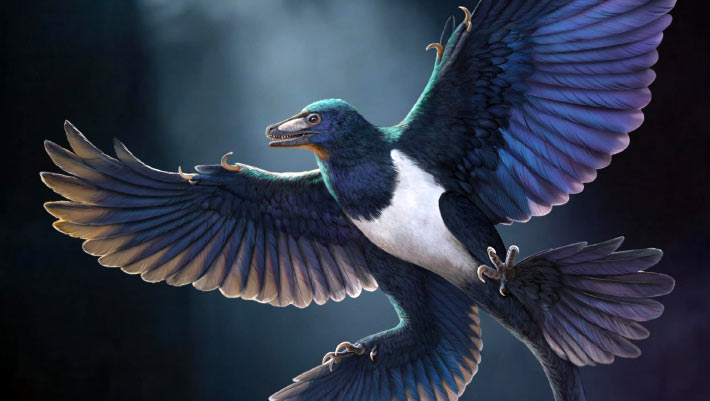
Jian changmaensis (left) attacks the early bird Gansus yumenensis (right) in what is now the Changma Basin of northwestern China approximately 120 million years ago

Jian changmaensis (left) attacks the early bird Gansus yumenensis (right) in what is now the Changma Basin of northwestern China approximately 120 million years ago

pelvis China Jian bird
Jeholornis prima skeleton (IVPP V13350) on display at the Paleozoological Museum of China.
Taxa Jeholornithiformes

Jeholornis prima skeleton (IVPP V13350) on display at the Paleozoological Museum of China.

museum China Jeholornithidae Jeholornithiformes +2
Jeholornis prima skeleton (IVPP V13350) on display at the Paleozoological Museum of China.
Taxa Jeholornithidae

Jeholornis prima skeleton (IVPP V13350) on display at the Paleozoological Museum of China.

museum China Jeholornithidae Jeholornithiformes +2
Elangatoolithidae fossil dinosaur eggs, from China. Exhibit in the Academy of Natural Sciences, 1900 Benjamin Franklin Parkway, Philadelphia, Pennsylvania, USA. Photography was permitted in this area of the museum without restrictions.
Taxa Elongatoolithidae

Elangatoolithidae fossil dinosaur eggs, from China. Exhibit in the Academy of Natural Sciences, 1900 Benjamin Franklin Parkway, Philadelphia, Pennsylvania, USA. Photography was permitted in this area of the museum without restrictions.

museum China United States fossil +2
Sinocyamodus xinpuensis.

www.tynhm.com/china/
Taxa Sinocyamodus

Sinocyamodus xinpuensis. www.tynhm.com/china/

China Sinocyamodus
Jeholopterus ningchengensus Wang, Zhou, Zhang, and Xu, 2002, IVPP V 12705, Lower Yixian Formation (Early Cretaceous), China.
Taxa Jeholopterus

Jeholopterus ningchengensus Wang, Zhou, Zhang, and Xu, 2002, IVPP V 12705, Lower Yixian Formation (Early Cretaceous), China.

China Yixian Cretaceous Early Cretaceous +2
Holotype skeleton of Wukongopterus lii on display at the Paleozoological Museum of China.
Taxa Wukongopterus

Holotype skeleton of Wukongopterus lii on display at the Paleozoological Museum of China.

museum China holotype Wukongopterus +1
New wing skeleton of Forfexopterus (SDUST-V1003) from Jiufotang Formation of Early Cretaceous Jehol Biota in Jianchang, western Liaoning, northeastern China. Abbreviations: ca, carpus; co, coracoid portion; hu, humerus; mc, metacarpals I–IV; mdI–III, manual digits I–III; pt, pteroid; ra, radius; sc, scapular portion; ul, ulna; wp1–4, wing phalanges 1–4.
Taxa Forfexopterus

New wing skeleton of Forfexopterus (SDUST-V1003) from Jiufotang Formation of Early Cretaceous Jehol Biota in Jianchang, western Liaoning, northeastern China. Abbreviations: ca, carpus; co, coracoid portion; hu, humerus; mc, metacarpals I–IV; mdI–III, manual digits I–III; pt, pteroid; ra, radius; sc, scapular portion; ul, ulna; wp1–4, wing phalanges 1–4.

humerus China Jiufotang Cretaceous +4
Holotype of Haopterus gracilis on display at the Paleozoological Museum of China.
Taxa Haopterus

Holotype of Haopterus gracilis on display at the Paleozoological Museum of China.

museum China holotype Haopterus +1
Holotype skull (IVPP V17083) of Guidraco venator on display at the Paleozoological Museum of China.
Taxa Guidraco

Holotype skull (IVPP V17083) of Guidraco venator on display at the Paleozoological Museum of China.

museum China holotype Guidraco +1
Ningchengopterus liuae, early Cretaceous of China. digital.
Taxa Ningchengopterus

Ningchengopterus liuae, early Cretaceous of China. digital.

China Cretaceous Early Cretaceous Ningchengopterus +1
Life restoration of Kryptodrakon progenitor, a pterosaur that lived in western China 160 mya
Taxa Kryptodrakon

Life restoration of Kryptodrakon progenitor, a pterosaur that lived in western China 160 mya

China Kryptodrakon Pterosauria
Reconstructed skull of the holotype and only specimen of Leshansaurus qianweiensis based on the possibly related megalosaurid Dubreuillosaurus valesdunensis. Scale bar is 10cm, image is 10px/cm. Cranial anatomy from figures in Fei et al. (2009) "A new carnosaur from the Late Jurassic of Qianwei, Sichuan, China". White bones are figured, light grey bones are unfigured and minimally described.
Taxa Leshansaurus

Reconstructed skull of the holotype and only specimen of Leshansaurus qianweiensis based on the possibly related megalosaurid Dubreuillosaurus valesdunensis. Scale bar is 10cm, image is 10px/cm. Cranial anatomy from figures in Fei et al. (2009) "A new carnosaur from the Late Jurassic of Qianwei, Sichuan, China". White bones are figured, light grey bones are unfigured and minimally described.

bone scale China Jurassic +9
Left maxilla (A) and left dentary (B) of carcharodontosaurid theropod Kelmayisaurus petrolicus Dong, 1973 (IVPP V 4022, China, Lianmugin For−
mation, Lower Cretaceous). Photographs in lateral (A1, B1), medial (A2, B2), ventral (A3), and dorsal (B3) views. Scale bars 5 cm. Designation “d” refers to

dentary tooth, designation “m” refers to maxillary tooth position. Dorsal view of dentary shows tooth row only.
Taxa Kelmayisaurus

Left maxilla (A) and left dentary (B) of carcharodontosaurid theropod Kelmayisaurus petrolicus Dong, 1973 (IVPP V 4022, China, Lianmugin For− mation, Lower Cretaceous). Photographs in lateral (A1, B1), medial (A2, B2), ventral (A3), and dorsal (B3) views. Scale bars 5 cm. Designation “d” refers to dentary tooth, designation “m” refers to maxillary tooth position. Dorsal view of dentary shows tooth row only.

scale tooth China Cretaceous +2
Aurornis xui, a basal member of Avialae from northern China, which lived 160 mya
Taxa Aurornis

Aurornis xui, a basal member of Avialae from northern China, which lived 160 mya

China Aurornis Avialae
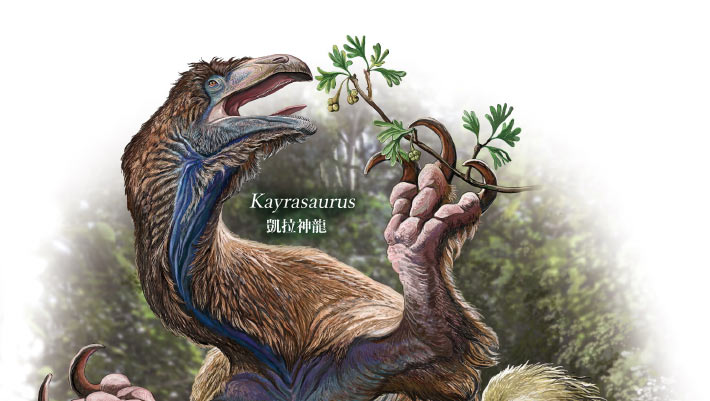
en.wikipedia.org/wiki/Tianyuraptor

www.tynhm.com/china/
Taxa Tianyuraptor

en.wikipedia.org/wiki/Tianyuraptor www.tynhm.com/china/

China Tianyuraptor
1 2 3 4

News

New Microraptorine Dinosaur Discovered in China
China Cretaceous Early Cretaceous specimen Dinosauria Jian Microraptorinae bird
Jian changmaensis is the first non-avian dinosaur found at a paleontological site that has yielded more than 100 specimens of Early Cretaceous birds. The post New Microraptorine Dinosaur Discovered in China appeared first on Sci.News: Breaking Science News.
04/06/2026 sci-news
Une découverte en Chine bouscule l’histoire d’étranges animaux vieux de 520 millions d’années
A discovery in China shakes up the story of strange animals dating back 520 million years
China Cambrian fossil dating discovery
Discreet but omnipresent in today's oceans, bryozoans hide a much older history than previously thought. Exceptional fossils discovered in China show that 520 million years ago, these colonial animals were already complex structures, fully...
03/06/2026 futura-terre ⚙ Auto-translated
Cretaceous Bird from China Had Pair of Tail Feathers Twice as Long as Its Body
feather China Cretaceous bird
Named Plumadraco bankoorum, the newly-described species of enantiornithine bird lived in what is now northeastern China during the Cretaceous period, roughly 121 million years ago. The post Cretaceous Bird from China Had Pair of Tail Feathers Twice as Long as Its Body appeared first on Sci.News: Breaking Science News.
28/05/2026 sci-news
Gongshuilong: Beast of the Week
bone China Cretaceous Late Cretaceous Gongshuilong Hadrosauria
 Today we're checking out a recently described hadrosaur with a unique look, Gongshuilong fanwei!Gongshuilong lived in what is now eastern China, during the late Cretaceous period, between 68 and 66 million years ago.  From beak to tail it measured about 23 feet (7m) long and would have been a plant-eater when alive.  The genus name translates from Mandarin to "Gong River Dragon" in reference to the Gong River near where its bones were discovered.Gongshuilong life reconstruction in watercolors b
10/05/2026 prehistoricbeastoftheweek
Ice age humans in China crafted surprisingly advanced stone tools 146,000 years ago
bone China discovery
Scientists in China discovered that ancient humans were making surprisingly advanced stone tools during a harsh ice age 146,000 years ago. The tools, created by Homo juluensis, show careful planning and complex thinking rather than simple stone-chipping. Researchers dated the site using tiny calcite crystals inside animal bones, revealing the tools are much older than expected. The discovery challenges the idea that human creativity only thrives in easy, prosperous times.
09/05/2026 sciencedaily-paleo
1 2