←

China

Country

82 image(s) · 38 News

Image gallery

Changmiania liaoningensis, an ornithopod dinosaur from the Lower Cretaceous of Lujiatun (Liaoning Province, China).
(A) Holotype PMOL AD00114 in dorsal view; (B) anterior part of the holotype PMOL AD00114 in caudolateral view; (C) referred specimen PMOL LFV022 in dorsal view. Red arrows indicate the emplacement of the gastrolith clusters.
Taxa Changmiania

Changmiania liaoningensis, an ornithopod dinosaur from the Lower Cretaceous of Lujiatun (Liaoning Province, China). (A) Holotype PMOL AD00114 in dorsal view; (B) anterior part of the holotype PMOL AD00114 in caudolateral view; (C) referred specimen PMOL LFV022 in dorsal view. Red arrows indicate the emplacement of the gastrolith clusters.

China Cretaceous holotype specimen +2
Life restoration of the Triassic ichthyosaur Callawayia neoscapularis. Three specimens of this ichthyosaur are known, the holotype, ROM 41993, and two referred specimens, TMP 94.380.11 and 94.382.2. The skull is primarily based on ROM 41993, cross-checked against TMP 94.380.11 and TMP 94.382.2. The vertebral column is based primarily on TMP 94.382.2 as it is the most complete of these specimens, while the ribs were based on ROM 41993. The forelimbs were mainly based on those of ROM 41993, with TMP 94.380.11 used to determine their breadth. The hindlimbs were based on TMP 94.380.11, especially the more complete right hindlimb.
ROM 41993 was cross-scaled with TMP 94.380.11 by the dimensions of the forelimb epipodials, which produced similar vertebral dimensions. The two TMP specimens were cross-scaled based on femoral length, also producing similar vertebral dimensions. Nicholls & Manabe (2001) stated that no wedge-shaped caudal centra supporting a tailbend were found and that there was no evidence of a bend being present, though considered that they might have existed in the gap in the preserved caudals. Since various other Triassic ichthyosaurs have since been found to have tail bends, one was illustrated here. A modest downturn of roughly 15° was illustrated, comparable to that in Guanlingsaurus, and the location of the bend within the gap in the preserved vertebrae matches well with the location of the bend in Guizhouichthyosaurus.

References
McGowan, C. (1994). "A new species of Shastasaurus (Reptilia: Ichthyosauria) from the Triassic of British Columbia: The most complete exemplar of the genus". Journal of Vertebrate Paleontology 14 (2): 168–179. DOI:10.1080/02724634.1994.10011550.
Nicholls, E. L.; Manabe, M. (2001). "A new genus of ichthyosaur from the Late Triassic Pardonet Formation of British Columbia: Bridging the Triassic-Jurassic gap". Canadian Journal of Earth Sciences 38 (6): 983–1002.
Ji, C.; Jiang, D.Y.; Hao, W.; Sun, Y. (2011). "True tailbend occurred in the Late Triassic: Evidence from ichthyosaur skeletons of South China". Acta Scientiarum Naturalium Universitatis Pekinensis 47 (2): 309–314.
Shang, Q. H.; Li, C. (2009). "On the occurrence of the ichthyosaur Shastasaurus in the Guanling biota (Late Triassic), Guizhou, China". Vertebrata PalAsiatica 47 (3): 178–193.
Taxa Guanlingsaurus

Life restoration of the Triassic ichthyosaur Callawayia neoscapularis. Three specimens of this ichthyosaur are known, the holotype, ROM 41993, and two referred specimens, TMP 94.380.11 and 94.382.2. The skull is primarily based on ROM 41993, cross-checked against TMP 94.380.11 and TMP 94.382.2. The vertebral column is based primarily on TMP 94.382.2 as it is the most complete of these specimens, while the ribs were based on ROM 41993. The forelimbs were mainly based on those of ROM 41993, with TMP 94.380.11 used to determine their breadth. The hindlimbs were based on TMP 94.380.11, especially the more complete right hindlimb. ROM 41993 was cross-scaled with TMP 94.380.11 by the dimensions of the forelimb epipodials, which produced similar vertebral dimensions. The two TMP specimens were cross-scaled based on femoral length, also producing similar vertebral dimensions. Nicholls & Manabe (2001) stated that no wedge-shaped caudal centra supporting a tailbend were found and that there was no evidence of a bend being present, though considered that they might have existed in the gap in the preserved caudals. Since various other Triassic ichthyosaurs have since been found to have tail bends, one was illustrated here. A modest downturn of roughly 15° was illustrated, comparable to that in Guanlingsaurus, and the location of the bend within the gap in the preserved vertebrae matches well with the location of the bend in Guizhouichthyosaurus. References McGowan, C. (1994). "A new species of Shastasaurus (Reptilia: Ichthyosauria) from the Triassic of British Columbia: The most complete exemplar of the genus". Journal of Vertebrate Paleontology 14 (2): 168–179. DOI:10.1080/02724634.1994.10011550. Nicholls, E. L.; Manabe, M. (2001). "A new genus of ichthyosaur from the Late Triassic Pardonet Formation of British Columbia: Bridging the Triassic-Jurassic gap". Canadian Journal of Earth Sciences 38 (6): 983–1002. Ji, C.; Jiang, D.Y.; Hao, W.; Sun, Y. (2011). "True tailbend occurred in the Late Triassic: Evidence from ichthyosaur skeletons of South China". Acta Scientiarum Naturalium Universitatis Pekinensis 47 (2): 309–314. Shang, Q. H.; Li, C. (2009). "On the occurrence of the ichthyosaur Shastasaurus in the Guanling biota (Late Triassic), Guizhou, China". Vertebrata PalAsiatica 47 (3): 178–193.

China Jurassic Late Triassic Triassic +12
Prismatoolithus tiantaiensis eggs (IVPP V16515) on display at the Paleozoological Museum of China.
Taxa Prismatoolithidae

Prismatoolithus tiantaiensis eggs (IVPP V16515) on display at the Paleozoological Museum of China.

museum China Prismatoolithidae Prismatoolithus
Prismatoolithus tiantaiensis eggs (IVPP V16515) on display at the Paleozoological Museum of China.
Taxa Prismatoolithus

Prismatoolithus tiantaiensis eggs (IVPP V16515) on display at the Paleozoological Museum of China.

museum China Prismatoolithidae Prismatoolithus
Prismatoolithus tiantaiensis eggs (IVPP V16515) on display at the Paleozoological Museum of China.
Taxa Prismatoolithus

Prismatoolithus tiantaiensis eggs (IVPP V16515) on display at the Paleozoological Museum of China.

museum China Prismatoolithidae Prismatoolithus
Elangatoolithidae fossil dinosaur eggs, from China. Exhibit in the Academy of Natural Sciences, 1900 Benjamin Franklin Parkway, Philadelphia, Pennsylvania, USA. Photography was permitted in this area of the museum without restrictions.
Taxa Elongatoolithidae

Elangatoolithidae fossil dinosaur eggs, from China. Exhibit in the Academy of Natural Sciences, 1900 Benjamin Franklin Parkway, Philadelphia, Pennsylvania, USA. Photography was permitted in this area of the museum without restrictions.

museum China United States fossil +2
Earth during the Middle Ordivician Period @ 460 Ma. Gondwana is seen above the equator (Australia & South China) and bellow the equator (North China, Kazakh terranes, Tarim, Antartica, India, Madagascar, Africa and South America). Laurentia, Baltica & Sibera are seperate continents, with Avalonia on its way to collide Baltica to form the Calledonian Orogeny, and Acadia on its way to collide Laurentia to form the Acadian Orogeny.
Legend:

Dark blue = ocean
Light blue = shallow seas
Tan = landmass
Black outlines = modern day coastlines showing their respective positions
Intervals Darriwilian

Earth during the Middle Ordivician Period @ 460 Ma. Gondwana is seen above the equator (Australia & South China) and bellow the equator (North China, Kazakh terranes, Tarim, Antartica, India, Madagascar, Africa and South America). Laurentia, Baltica & Sibera are seperate continents, with Avalonia on its way to collide Baltica to form the Calledonian Orogeny, and Acadia on its way to collide Laurentia to form the Acadian Orogeny. Legend: Dark blue = ocean Light blue = shallow seas Tan = landmass Black outlines = modern day coastlines showing their respective positions

Australia China India Madagascar +1
West of Chilton Chine The coastline west of the chine is accessible at lowish tides.  The various rock strata in the Wealden Beds can be seen, with the chalk of Highdown Cliffs SZ3285 beyond.
Formations Wessex

West of Chilton Chine The coastline west of the chine is accessible at lowish tides. The various rock strata in the Wealden Beds can be seen, with the chalk of Highdown Cliffs SZ3285 beyond.

China
Fossil of Mei long (holotype), on temporary display at the Shanghai Natural History Museum as part of the exhibition "China's Dinosaur World". Shot on July 22, 2025.
Taxa Mei

Fossil of Mei long (holotype), on temporary display at the Shanghai Natural History Museum as part of the exhibition "China's Dinosaur World". Shot on July 22, 2025.

museum China fossil holotype +1
Fossil specimen (IVPP V17903) of Corpulentapus lilasia on display at the Paleozoological Museum of China.
Taxa Corpulentapus

Fossil specimen (IVPP V17903) of Corpulentapus lilasia on display at the Paleozoological Museum of China.

museum China fossil specimen +1
Holotype of Ikrandraco avatar on display at the Paleozoological Museum of China.
Taxa Ikrandraco

Holotype of Ikrandraco avatar on display at the Paleozoological Museum of China.

museum China holotype Ikrandraco +1
Holotype specimen (GMV2128) of Dendrorhynchoides curvidentatus on display at the Geological Museum of China.
Taxa Dendrorhynchoides

Holotype specimen (GMV2128) of Dendrorhynchoides curvidentatus on display at the Geological Museum of China.

museum China holotype specimen +1
Holotype skeleton of Jianchangnathus robustus on display at the Paleozoological Museum of China.
Taxa Jianchangnathus

Holotype skeleton of Jianchangnathus robustus on display at the Paleozoological Museum of China.

museum China holotype Jianchangnathus +1
Holotype skeleton (AGB 6257) of Cartorhynchus lenticarpus on display at the Geological Museum of China.

Holotype skeleton (AGB 6257) of Cartorhynchus lenticarpus on display at the Geological Museum of China.

museum China holotype skeleton
Reconstruction of skeleton; Lower Cretaceous (120 mio. Years); Jungar Basin, China.
Taxa Dsungaripteridae

Reconstruction of skeleton; Lower Cretaceous (120 mio. Years); Jungar Basin, China.

China Cretaceous Dsungaripteridae Dsungaripterus +1
Reconstruction of skeleton; Lower Cretaceous (120 mio. Years); Jungar Basin, China.
Taxa Dsungaripterus

Reconstruction of skeleton; Lower Cretaceous (120 mio. Years); Jungar Basin, China.

China Cretaceous Dsungaripteridae Dsungaripterus +1
1 2 3 4 5 6

News

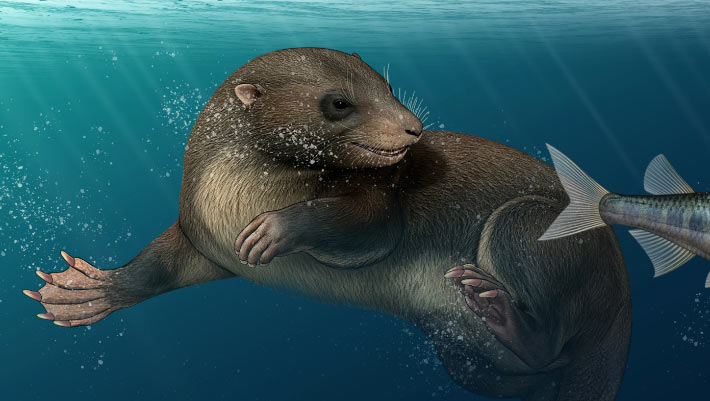
Dinosaur-Era Mammal Swam Like Platypus and Replaced Its Teeth Multiple Times
China Dinosauria mammals
Dongoconodon platycauda, a small eutriconodontan mammal that lived alongside dinosaurs in what is now northeastern China paddled through the water with webbed, platypus-like hands and feet, and replaced its teeth multiple times. The post Dinosaur-Era Mammal Swam Like Platypus and Replaced Its Teeth Multiple Times appeared first on Sci.News: Breaking Science News.
01/10/2026 sci-news
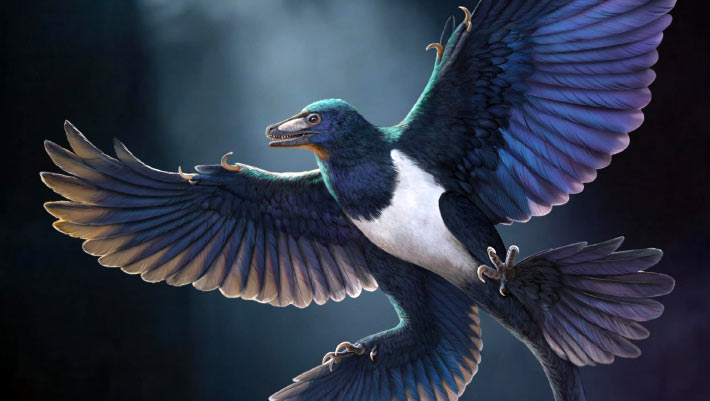
New Feathered Dinosaur Suggests Flight Evolved More Than Once among Birds’ Closest Relatives
flight China Dinosauria Norellraptor bird new species
Norellraptor barsboldi, a new species of small microraptorine dinosaur from the 120-million-year-old rock beds of China’s Liaoning province, challenges the idea that the earliest fliers shared a common blueprint for taking to the air. The post New Feathered Dinosaur Suggests Flight Evolved More Than Once among Birds’ Closest Relatives appeared first on Sci.News: Breaking Science News.
01/10/2026 sci-news
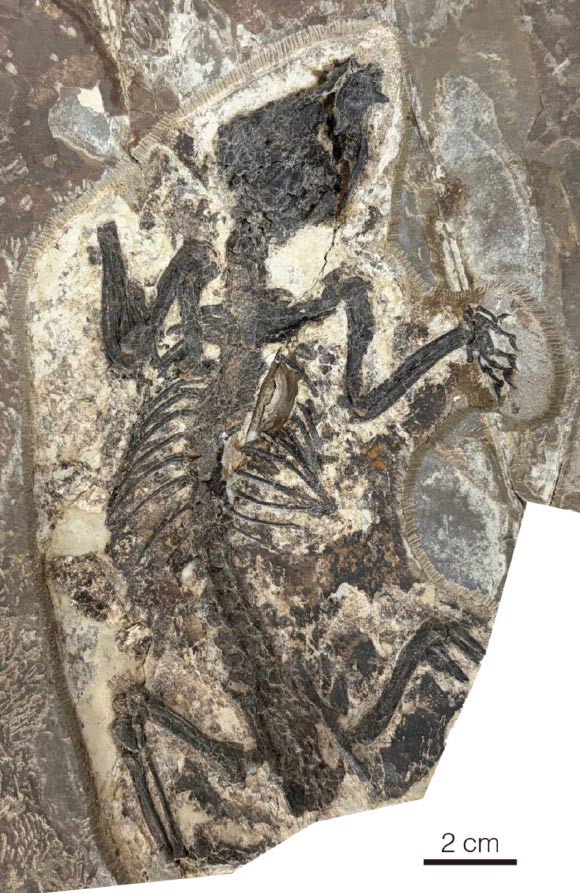
120-Million-Year-Old Fossil Pushes Back Origin of Marsupial Lineage
China fossil mammals new species
A new species of deltatheroidan mammal from China may be the oldest confirmed ancestor of marsupials yet found, offering fresh evidence that Asia played a central role in the deep evolutionary split between marsupials and placental mammals. The post 120-Million-Year-Old Fossil Pushes Back Origin of Marsupial Lineage appeared first on Sci.News: Breaking Science News.
28/09/2026 sci-news
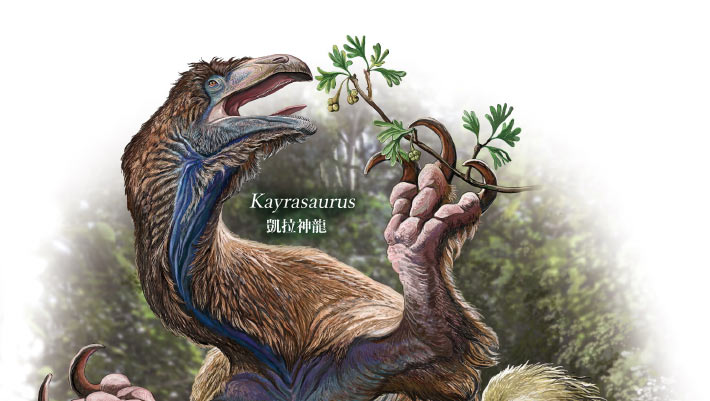
New Therizinosaurian Dinosaur Unearthed in China
China Dinosauria Kayrasaurus Therizinosauria new species skeleton
Paleontologists have described a new genus and species of therizinosaur based on a nearly complete skeleton found in northeastern China. The post New Therizinosaurian Dinosaur Unearthed in China appeared first on Sci.News: Breaking Science News.
21/09/2026 sci-news
Remarkable Miocene Flowers Preserved in Amber Reveal an Ancient Rainforest
China Miocene fossil study
Miocene flowers preserved in amber are providing scientists with a remarkable glimpse into a tropical rainforest that flourished around 15 million years ago. The tiny flowers come from the famous Zhangpu flora of Fujian Province in south-east China. Researchers from China and Europe examined two exceptionally well-preserved fossil flowers. Their study demonstrates that climbing plants,
11/09/2026 everythingdinosaur
1 2 3 4 5 6 7 8