←

Chine

Pays

95 image(s) · 48 Actualités

Galerie d'images

Prismatoolithus tiantaiensis eggs (IVPP V16515) on display at the Paleozoological Museum of China.
Taxons Prismatoolithus

Prismatoolithus tiantaiensis eggs (IVPP V16515) on display at the Paleozoological Museum of China.

musée Chine Prismatoolithidae Prismatoolithus
Prismatoolithus tiantaiensis eggs (IVPP V16515) on display at the Paleozoological Museum of China.
Taxons Prismatoolithus

Prismatoolithus tiantaiensis eggs (IVPP V16515) on display at the Paleozoological Museum of China.

musée Chine Prismatoolithidae Prismatoolithus
Elangatoolithidae fossil dinosaur eggs, from China. Exhibit in the Academy of Natural Sciences, 1900 Benjamin Franklin Parkway, Philadelphia, Pennsylvania, USA. Photography was permitted in this area of the museum without restrictions.
Taxons Elongatoolithidae

Elangatoolithidae fossil dinosaur eggs, from China. Exhibit in the Academy of Natural Sciences, 1900 Benjamin Franklin Parkway, Philadelphia, Pennsylvania, USA. Photography was permitted in this area of the museum without restrictions.

musée Chine États-Unis fossile +2
Earth during the Middle Ordivician Period @ 460 Ma. Gondwana is seen above the equator (Australia & South China) and bellow the equator (North China, Kazakh terranes, Tarim, Antartica, India, Madagascar, Africa and South America). Laurentia, Baltica & Sibera are seperate continents, with Avalonia on its way to collide Baltica to form the Calledonian Orogeny, and Acadia on its way to collide Laurentia to form the Acadian Orogeny.
Legend:

Dark blue = ocean
Light blue = shallow seas
Tan = landmass
Black outlines = modern day coastlines showing their respective positions
Intervalles Darriwilian

Earth during the Middle Ordivician Period @ 460 Ma. Gondwana is seen above the equator (Australia & South China) and bellow the equator (North China, Kazakh terranes, Tarim, Antartica, India, Madagascar, Africa and South America). Laurentia, Baltica & Sibera are seperate continents, with Avalonia on its way to collide Baltica to form the Calledonian Orogeny, and Acadia on its way to collide Laurentia to form the Acadian Orogeny. Legend: Dark blue = ocean Light blue = shallow seas Tan = landmass Black outlines = modern day coastlines showing their respective positions

Australie Chine Inde Madagascar +1
West of Chilton Chine The coastline west of the chine is accessible at lowish tides.  The various rock strata in the Wealden Beds can be seen, with the chalk of Highdown Cliffs SZ3285 beyond.

West of Chilton Chine The coastline west of the chine is accessible at lowish tides. The various rock strata in the Wealden Beds can be seen, with the chalk of Highdown Cliffs SZ3285 beyond.

Chine
Fossil of Mei long (holotype), on temporary display at the Shanghai Natural History Museum as part of the exhibition "China's Dinosaur World". Shot on July 22, 2025.
Taxons Mei

Fossil of Mei long (holotype), on temporary display at the Shanghai Natural History Museum as part of the exhibition "China's Dinosaur World". Shot on July 22, 2025.

musée Chine fossile holotype +1
Fossil specimen (IVPP V17903) of Corpulentapus lilasia on display at the Paleozoological Museum of China.
Taxons Corpulentapus

Fossil specimen (IVPP V17903) of Corpulentapus lilasia on display at the Paleozoological Museum of China.

musée Chine fossile spécimen +1
Holotype of Ikrandraco avatar on display at the Paleozoological Museum of China.
Taxons Ikrandraco

Holotype of Ikrandraco avatar on display at the Paleozoological Museum of China.

musée Chine holotype Ikrandraco +1
Holotype specimen (GMV2128) of Dendrorhynchoides curvidentatus on display at the Geological Museum of China.
Taxons Dendrorhynchoides

Holotype specimen (GMV2128) of Dendrorhynchoides curvidentatus on display at the Geological Museum of China.

musée Chine holotype spécimen +1
Holotype skeleton of Jianchangnathus robustus on display at the Paleozoological Museum of China.
Taxons Jianchangnathus

Holotype skeleton of Jianchangnathus robustus on display at the Paleozoological Museum of China.

musée Chine holotype Jianchangnathus +1
Holotype skeleton (AGB 6257) of Cartorhynchus lenticarpus on display at the Geological Museum of China.

Holotype skeleton (AGB 6257) of Cartorhynchus lenticarpus on display at the Geological Museum of China.

musée Chine holotype squelette
Reconstruction of skeleton; Lower Cretaceous (120 mio. Years); Jungar Basin, China.
Taxons Dsungaripteridae

Reconstruction of skeleton; Lower Cretaceous (120 mio. Years); Jungar Basin, China.

Chine Crétacé Dsungaripteridae Dsungaripterus +1
Reconstruction of skeleton; Lower Cretaceous (120 mio. Years); Jungar Basin, China.
Taxons Dsungaripterus

Reconstruction of skeleton; Lower Cretaceous (120 mio. Years); Jungar Basin, China.

Chine Crétacé Dsungaripteridae Dsungaripterus +1
Jian is a microraptorine dromaeosaur, and the only non-avian dinosaur so far discovered from the Xiagou Formation of what is now China. Typical of microraptorinae, Jian had long pennaceous feathers growing from its arms as well as its legs, and was small in size, growing to approximately 1 m in total body length.

Jian is a microraptorine dromaeosaur, and the only non-avian dinosaur so far discovered from the Xiagou Formation of what is now China. Typical of microraptorinae, Jian had long pennaceous feathers growing from its arms as well as its legs, and was small in size, growing to approximately 1 m in total body length.

plume Chine Dinosauria Dromaeosauria +3
Paleoarte de pterossauro encontrado na China em 2006, pertecente ao grupos do Istiodactylus em estágio de pouso. Corpo com picnofibras é evidenciado no fóssil holótipo.
Taxons Longchengpterus

Paleoarte de pterossauro encontrado na China em 2006, pertecente ao grupos do Istiodactylus em estágio de pouso. Corpo com picnofibras é evidenciado no fóssil holótipo.

Chine Istiodactylus Longchengpterus
Life restoration of the large, Middle Triassic Nevadan ichthyosaur Cymbopsondylus petrinus. This illustration is primarily based on specimen UCMP 9950, with much of the tail restored following UCMP 9947. The size of the eye was reconstructed based on UCMP 9954 and UCMP 9913. The unknown distal portions of the flippers, as well as some of the tail, was reconstructed after the related genus Xinminosaurus.
References
Merriam, J. C. (1908)       Triassic Ichthyosauria: With special reference to the American forms, Berkley, California:  Berkley: The University Press  
Klein, N.; Schmitz, L.; Wintrich, T.; Sander, P. M. (2020). "A new cymbospondylid ichthyosaur (Ichthyosauria) from the Middle Triassic (Anisian) of the Augusta Mountains, Nevada, USA". Journal of Systematic Palaeontology 18 (14): 1167-1191. DOI:10.1080/14772019.2020.1748132.
Jiang, D.; Motani, R.; Hao, W.; Schmitz, L.; Rieppel, O.; Sun, Y.; Sun, Z. (2008). "New primitive ichthyosaurian (Reptilia, Diapsida) from the Middle Triassic of Panxian, Guizhou, southwestern China and its position in the Triassic biotic recovery". Progress in Natural Science 18 (10): 1315. DOI:10.1016/j.pnsc.2008.01.039.

Life restoration of the large, Middle Triassic Nevadan ichthyosaur Cymbopsondylus petrinus. This illustration is primarily based on specimen UCMP 9950, with much of the tail restored following UCMP 9947. The size of the eye was reconstructed based on UCMP 9954 and UCMP 9913. The unknown distal portions of the flippers, as well as some of the tail, was reconstructed after the related genus Xinminosaurus. References Merriam, J. C. (1908) Triassic Ichthyosauria: With special reference to the American forms, Berkley, California: Berkley: The University Press Klein, N.; Schmitz, L.; Wintrich, T.; Sander, P. M. (2020). "A new cymbospondylid ichthyosaur (Ichthyosauria) from the Middle Triassic (Anisian) of the Augusta Mountains, Nevada, USA". Journal of Systematic Palaeontology 18 (14): 1167-1191. DOI:10.1080/14772019.2020.1748132. Jiang, D.; Motani, R.; Hao, W.; Schmitz, L.; Rieppel, O.; Sun, Y.; Sun, Z. (2008). "New primitive ichthyosaurian (Reptilia, Diapsida) from the Middle Triassic of Panxian, Guizhou, southwestern China and its position in the Triassic biotic recovery". Progress in Natural Science 18 (10): 1315. DOI:10.1016/j.pnsc.2008.01.039.

Chine États-Unis Anisien Trias moyen +5
1 2 3 4 5 6

Actualités

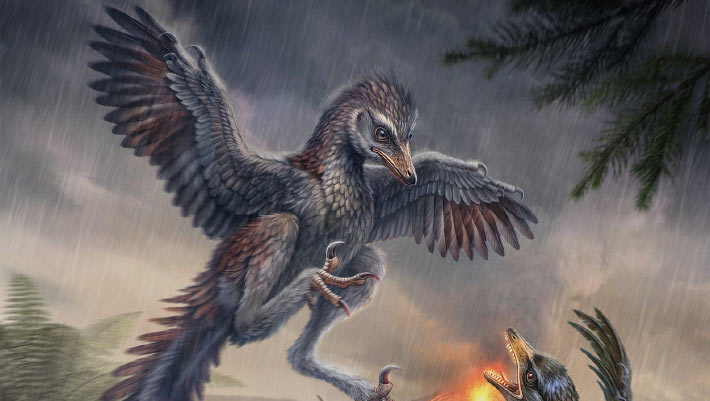
Jurassic Fossil Hints that Some Early Birds Were Flightless
Un fossile du Jurassique laisse entendre que certains des premiers oiseaux étaient incapables de voler
Chine Jurassique Jurassique supérieur fossile oiseau
Des paléontologues ont décrit un nouveau genre et une nouvelle espèce d’oiseau primitif, issus de la faune de Zhenghe (datant du Jurassique supérieur), dans le sud-est de la Chine. Ce fossile du Jurassique suggère que certains oiseaux primitifs étaient incapables de voler. Article initialement publié sur Sci.News : Actualités scientifiques.
15/10/2026 sci-news ⚙ Traduction automatique
Une incroyable découverte de dinosaures à plumes révèle de nouveaux secrets sur l'évolution du vol
vol Chine Dinosauria Norellraptor découverte évolution nouvelle espèce
Une nouvelle espèce remarquable de dinosaure à plumes a été décrite dans le nord-est de la Chine. Nommé Norellraptor barsboldi, ce petit théropode aide les scientifiques à comprendre comment le vol a évolué chez les dinosaures. La recherche suggère que différents groupes de dinosaures à plumes ont développé indépendamment des adaptations liées au vol, plutôt que de suivre le même chemin évolutif. L'équipe de recherche internationale, qui comprenait
15/10/2026 everythingdinosaur ⚙ Traduction automatique
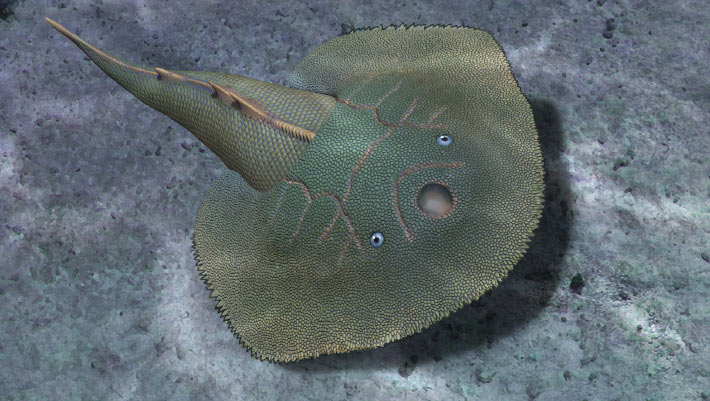
Fossil Armored Fish from China Bridges Primitive and Advanced Jawless Lineages
Des poissons blindés fossiles de Chine relient les lignées primitives et avancées sans mâchoire
Chine Dévonien Dévonien inférieur fossile poisson
Les paléontologues ont décrit un nouveau genre et une nouvelle espèce de poisson galeaspid polybranchiaspiforme du Dévonien inférieur du Yunnan, en Chine. L'article Les poissons blindés fossiles de Chine relient les lignées primitives et avancées sans mâchoire est apparu en premier sur Sci.News : Breaking Science News.
13/10/2026 sci-news ⚙ Traduction automatique
Un magnifique fossile de mammifère du Jurassique révèle une percée évolutive
alimentation Chine Jurassique fossile évolution mammifères squelette
Les scientifiques ont décrit un remarquable fossile de mammifère du Jurassique provenant de Chine qui fournit de nouvelles informations sur l'évolution des mammifères. L'animal vieux de 165 millions d'années, nommé Megacauda sungei, a été adapté à la vie aquatique. De plus, son squelette exceptionnellement préservé révèle des preuves importantes concernant l’évolution de l’alimentation et de la déglutition des mammifères. L'équipe de recherche internationale, dirigée par des scientifiques
09/10/2026 everythingdinosaur ⚙ Traduction automatique
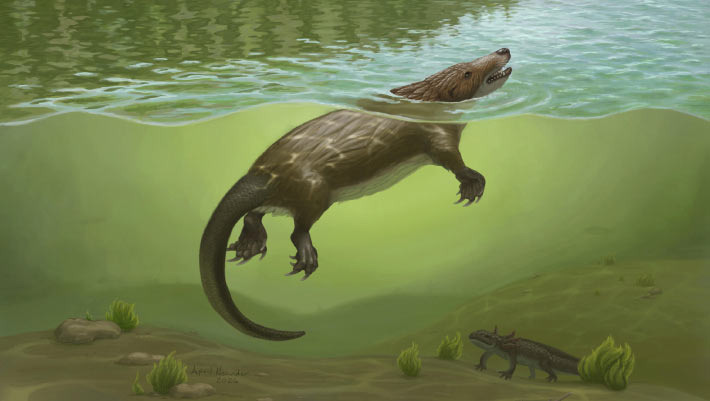
Jurassic Fossil Shows Mammal-Like Throat Evolved Far Earlier Than Thought
Un fossile jurassique montre qu'une gorge semblable à un mammifère a évolué bien plus tôt qu'on ne le pensait
Chine Mongolie Jurassique fossile
Megacauda sungei, un mammifère à fourrure de la taille d'une loutre qui vivait dans ce qui est aujourd'hui la Mongolie intérieure, en Chine, il y a environ 165 millions d'années, était semi-aquatique, nageant et se nourrissant dans l'eau, avec un mode de vie analogue à celui de l'ornithorynque vivant. L'article Un fossile du Jurassique montre qu'une gorge semblable à celle d'un mammifère a évolué bien plus tôt que prévu apparaît en premier sur Sci.News : Breaking Science News.
08/10/2026 sci-news ⚙ Traduction automatique
1 2 3 4 5 6 7 8 9 10