←

Chine

Pays

95 image(s) · 48 Actualités

Galerie d'images

Prismatoolithus tiantaiensis eggs (IVPP V16515) on display at the Paleozoological Museum of China.
Taxons Prismatoolithus

Prismatoolithus tiantaiensis eggs (IVPP V16515) on display at the Paleozoological Museum of China.

musée Chine Prismatoolithidae Prismatoolithus
Prismatoolithus tiantaiensis eggs (IVPP V16515) on display at the Paleozoological Museum of China.
Taxons Prismatoolithus

Prismatoolithus tiantaiensis eggs (IVPP V16515) on display at the Paleozoological Museum of China.

musée Chine Prismatoolithidae Prismatoolithus
Elangatoolithidae fossil dinosaur eggs, from China. Exhibit in the Academy of Natural Sciences, 1900 Benjamin Franklin Parkway, Philadelphia, Pennsylvania, USA. Photography was permitted in this area of the museum without restrictions.
Taxons Elongatoolithidae

Elangatoolithidae fossil dinosaur eggs, from China. Exhibit in the Academy of Natural Sciences, 1900 Benjamin Franklin Parkway, Philadelphia, Pennsylvania, USA. Photography was permitted in this area of the museum without restrictions.

musée Chine États-Unis fossile +2
Earth during the Middle Ordivician Period @ 460 Ma. Gondwana is seen above the equator (Australia & South China) and bellow the equator (North China, Kazakh terranes, Tarim, Antartica, India, Madagascar, Africa and South America). Laurentia, Baltica & Sibera are seperate continents, with Avalonia on its way to collide Baltica to form the Calledonian Orogeny, and Acadia on its way to collide Laurentia to form the Acadian Orogeny.
Legend:

Dark blue = ocean
Light blue = shallow seas
Tan = landmass
Black outlines = modern day coastlines showing their respective positions
Intervalles Darriwilian

Earth during the Middle Ordivician Period @ 460 Ma. Gondwana is seen above the equator (Australia & South China) and bellow the equator (North China, Kazakh terranes, Tarim, Antartica, India, Madagascar, Africa and South America). Laurentia, Baltica & Sibera are seperate continents, with Avalonia on its way to collide Baltica to form the Calledonian Orogeny, and Acadia on its way to collide Laurentia to form the Acadian Orogeny. Legend: Dark blue = ocean Light blue = shallow seas Tan = landmass Black outlines = modern day coastlines showing their respective positions

Australie Chine Inde Madagascar +1
West of Chilton Chine The coastline west of the chine is accessible at lowish tides.  The various rock strata in the Wealden Beds can be seen, with the chalk of Highdown Cliffs SZ3285 beyond.

West of Chilton Chine The coastline west of the chine is accessible at lowish tides. The various rock strata in the Wealden Beds can be seen, with the chalk of Highdown Cliffs SZ3285 beyond.

Chine
Fossil of Mei long (holotype), on temporary display at the Shanghai Natural History Museum as part of the exhibition "China's Dinosaur World". Shot on July 22, 2025.
Taxons Mei

Fossil of Mei long (holotype), on temporary display at the Shanghai Natural History Museum as part of the exhibition "China's Dinosaur World". Shot on July 22, 2025.

musée Chine fossile holotype +1
Fossil specimen (IVPP V17903) of Corpulentapus lilasia on display at the Paleozoological Museum of China.
Taxons Corpulentapus

Fossil specimen (IVPP V17903) of Corpulentapus lilasia on display at the Paleozoological Museum of China.

musée Chine fossile spécimen +1
Holotype of Ikrandraco avatar on display at the Paleozoological Museum of China.
Taxons Ikrandraco

Holotype of Ikrandraco avatar on display at the Paleozoological Museum of China.

musée Chine holotype Ikrandraco +1
Holotype specimen (GMV2128) of Dendrorhynchoides curvidentatus on display at the Geological Museum of China.
Taxons Dendrorhynchoides

Holotype specimen (GMV2128) of Dendrorhynchoides curvidentatus on display at the Geological Museum of China.

musée Chine holotype spécimen +1
Holotype skeleton of Jianchangnathus robustus on display at the Paleozoological Museum of China.
Taxons Jianchangnathus

Holotype skeleton of Jianchangnathus robustus on display at the Paleozoological Museum of China.

musée Chine holotype Jianchangnathus +1
Holotype skeleton (AGB 6257) of Cartorhynchus lenticarpus on display at the Geological Museum of China.

Holotype skeleton (AGB 6257) of Cartorhynchus lenticarpus on display at the Geological Museum of China.

musée Chine holotype squelette
Reconstruction of skeleton; Lower Cretaceous (120 mio. Years); Jungar Basin, China.
Taxons Dsungaripteridae

Reconstruction of skeleton; Lower Cretaceous (120 mio. Years); Jungar Basin, China.

Chine Crétacé Dsungaripteridae Dsungaripterus +1
Reconstruction of skeleton; Lower Cretaceous (120 mio. Years); Jungar Basin, China.
Taxons Dsungaripterus

Reconstruction of skeleton; Lower Cretaceous (120 mio. Years); Jungar Basin, China.

Chine Crétacé Dsungaripteridae Dsungaripterus +1
Jian is a microraptorine dromaeosaur, and the only non-avian dinosaur so far discovered from the Xiagou Formation of what is now China. Typical of microraptorinae, Jian had long pennaceous feathers growing from its arms as well as its legs, and was small in size, growing to approximately 1 m in total body length.

Jian is a microraptorine dromaeosaur, and the only non-avian dinosaur so far discovered from the Xiagou Formation of what is now China. Typical of microraptorinae, Jian had long pennaceous feathers growing from its arms as well as its legs, and was small in size, growing to approximately 1 m in total body length.

plume Chine Dinosauria Dromaeosauria +3
Paleoarte de pterossauro encontrado na China em 2006, pertecente ao grupos do Istiodactylus em estágio de pouso. Corpo com picnofibras é evidenciado no fóssil holótipo.
Taxons Longchengpterus

Paleoarte de pterossauro encontrado na China em 2006, pertecente ao grupos do Istiodactylus em estágio de pouso. Corpo com picnofibras é evidenciado no fóssil holótipo.

Chine Istiodactylus Longchengpterus
Life restoration of the large, Middle Triassic Nevadan ichthyosaur Cymbopsondylus petrinus. This illustration is primarily based on specimen UCMP 9950, with much of the tail restored following UCMP 9947. The size of the eye was reconstructed based on UCMP 9954 and UCMP 9913. The unknown distal portions of the flippers, as well as some of the tail, was reconstructed after the related genus Xinminosaurus.
References
Merriam, J. C. (1908)       Triassic Ichthyosauria: With special reference to the American forms, Berkley, California:  Berkley: The University Press  
Klein, N.; Schmitz, L.; Wintrich, T.; Sander, P. M. (2020). "A new cymbospondylid ichthyosaur (Ichthyosauria) from the Middle Triassic (Anisian) of the Augusta Mountains, Nevada, USA". Journal of Systematic Palaeontology 18 (14): 1167-1191. DOI:10.1080/14772019.2020.1748132.
Jiang, D.; Motani, R.; Hao, W.; Schmitz, L.; Rieppel, O.; Sun, Y.; Sun, Z. (2008). "New primitive ichthyosaurian (Reptilia, Diapsida) from the Middle Triassic of Panxian, Guizhou, southwestern China and its position in the Triassic biotic recovery". Progress in Natural Science 18 (10): 1315. DOI:10.1016/j.pnsc.2008.01.039.

Life restoration of the large, Middle Triassic Nevadan ichthyosaur Cymbopsondylus petrinus. This illustration is primarily based on specimen UCMP 9950, with much of the tail restored following UCMP 9947. The size of the eye was reconstructed based on UCMP 9954 and UCMP 9913. The unknown distal portions of the flippers, as well as some of the tail, was reconstructed after the related genus Xinminosaurus. References Merriam, J. C. (1908) Triassic Ichthyosauria: With special reference to the American forms, Berkley, California: Berkley: The University Press Klein, N.; Schmitz, L.; Wintrich, T.; Sander, P. M. (2020). "A new cymbospondylid ichthyosaur (Ichthyosauria) from the Middle Triassic (Anisian) of the Augusta Mountains, Nevada, USA". Journal of Systematic Palaeontology 18 (14): 1167-1191. DOI:10.1080/14772019.2020.1748132. Jiang, D.; Motani, R.; Hao, W.; Schmitz, L.; Rieppel, O.; Sun, Y.; Sun, Z. (2008). "New primitive ichthyosaurian (Reptilia, Diapsida) from the Middle Triassic of Panxian, Guizhou, southwestern China and its position in the Triassic biotic recovery". Progress in Natural Science 18 (10): 1315. DOI:10.1016/j.pnsc.2008.01.039.

Chine États-Unis Anisien Trias moyen +5
1 2 3 4 5 6

Actualités

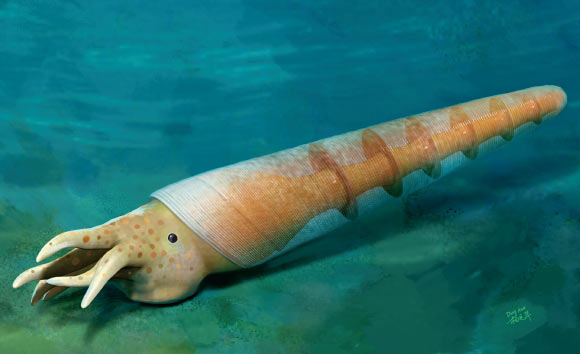
520-Million-Year-Old Fossil from China Fills Gap in Evolutionary History of Cephalopods
Un fossile chinois vieux de 520 millions d’années comble une lacune dans l’histoire évolutive des céphalopodes
Chine Cambrien fossile évolution
Les paléontologues ont identifié le plus ancien céphalopode connu équipé d'un siphoncle - une extension tubulaire du manteau trouvée chez les céphalopodes à coquille - remontant les archives fossiles de cette caractéristique clé de l'évolution au Cambrien inférieur, il y a environ 520 millions d'années. L'article Un fossile chinois vieux de 520 millions d'années comble une lacune dans l'histoire évolutive des céphalopodes est apparu en premier sur Sci.News : Breaking Science News.
30/07/2026 sci-news ⚙ Traduction automatique
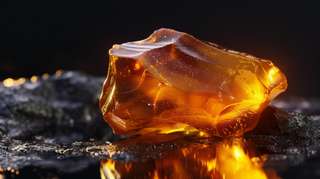
C’est une découverte exceptionnelle : cet ambre est si vieux qu'il a été fabriqué avant que le moindre animal ne marche sur la Terre ferme !
Chine découverte
Ils cherchaient du charbon et ont découvert un trésor bien plus ancien : de minuscules fragments d’ambre vieux de 385 millions d’années. Cette trouvaille inattendue en Chine repousse de plusieurs dizaines de millions d’années l’apparition connue de la résine fossilisée et révèle que les plantes...
21/07/2026 futura-terre
L’ADN ancien révèle un secret effrayant dans la ville chinoise de Shimao, vieille de 4 000 ans
ADN Chine génétique
L’ADN ancien de la vaste colonie chinoise de Shimao, vieille de 4 000 ans, révèle comment a été organisée l’une des premières sociétés complexes d’Asie de l’Est. Les chercheurs ont découvert que ses habitants descendaient en grande partie des communautés agricoles locales du fleuve Jaune, mais qu'ils avaient également des liens génétiques avec des populations éloignées du sud et des steppes, ce qui indique des contacts préhistoriques étendus.
21/07/2026 sciencedaily-paleo ⚙ Traduction automatique
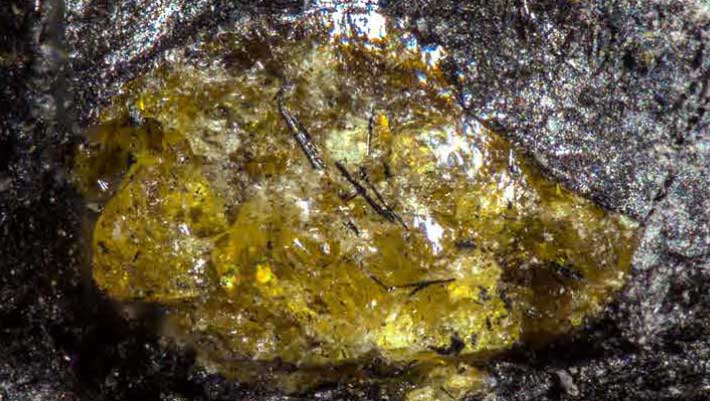
385-Million-Year-Old Amber Found in China
De l'ambre vieux de 385 millions d'années découvert en Chine
Chine Dévonien Dévonien Dévonien moyen géologie
Des paléontologues chinois ont découvert ce qu'ils disent être les premiers morceaux d'ambre confirmés jamais découverts, une résine fossilisée vieille d'environ 385 millions d'années (époque du Dévonien moyen) qui est antérieure d'environ 65 millions d'années au précédent détenteur du record. L'article Ambre vieux de 385 millions d'années découvert en Chine est apparu en premier sur Sci.News : Breaking Science News.
17/07/2026 sci-news ⚙ Traduction automatique
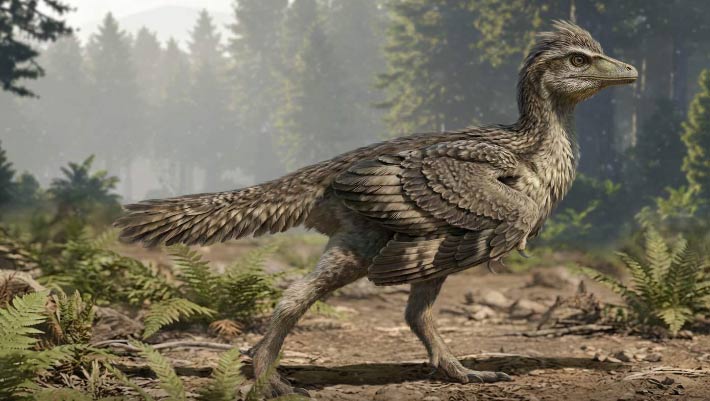
New Jurassic Fossil Reveals How Birds Lost Their Dinosaur Tails
Un nouveau fossile jurassique révèle comment les oiseaux ont perdu leur queue de dinosaure
Chine Jurassique fossile Dinosauria Zhengheornis oiseau
Des paléontologues chinois ont décrit un petit oiseau jurassique jusqu'alors inconnu dont la queue courte offre de nouvelles preuves de la façon dont les premiers oiseaux ont troqué leur longue queue semblable à celle d'un dinosaure contre le coccyx compact qui aide les oiseaux vivants à voler. L'article Un nouveau fossile du Jurassique révèle comment les oiseaux ont perdu leurs queues de dinosaures est apparu en premier sur Sci.News : Breaking Science News.
07/07/2026 sci-news ⚙ Traduction automatique
1 2 3 4 5 6 7 8 9 10