États-Unis

Pays

77 image(s) · 19 Actualités

Galerie d'images

Restored skeleton of Anzu wyliei (previously labelled as a specimen of Chirostenotes)

Restored skeleton of Anzu wyliei (previously labelled as a specimen of Chirostenotes)

États-Unis spécimen Anzu Chirostenotes +1
Plotosaurus skeletal mount in Natural History Museum of Los Angeles County, California, United States.

Plotosaurus skeletal mount in Natural History Museum of Los Angeles County, California, United States.

musée États-Unis Plotosaurus
Mounted skeleton of Plotosaurus from the Los Angeles County Natural History Museum; see the original image

Mounted skeleton of Plotosaurus from the Los Angeles County Natural History Museum; see the original image

musée États-Unis Plotosaurus squelette
Images documenting the 1947 Bikini Resurvey Project.

Caption in scrapbook: Arlis McCartner from Canfield, Ohio, is shown with a seven foot shark, caught off the fantail of the CHILTON.
ABCR 5032-1


Bikini Atoll Radiological Survey Scrapbook, p. 38.
Subjects (LCTGM): Sharks--Marshall Islands
Subjects (LCSH): McCartner, Arlis

Images documenting the 1947 Bikini Resurvey Project. Caption in scrapbook: Arlis McCartner from Canfield, Ohio, is shown with a seven foot shark, caught off the fantail of the CHILTON. ABCR 5032-1 Bikini Atoll Radiological Survey Scrapbook, p. 38. Subjects (LCTGM): Sharks--Marshall Islands Subjects (LCSH): McCartner, Arlis

Îles Marshall États-Unis
Anhanguera skeleton, North American Museum of Ancient Life.

Anhanguera skeleton, North American Museum of Ancient Life.

musée États-Unis Anhanguera squelette
Drawings of Dryolestida left upper−molar, modified from the original descriptions. A–C, Kimmeridgian; D–F, Tithonian–Berriasian; G–H, early Barremian; I, late Barremian. A. Left M4 or M5 of Comotherium richi Prothero, 1981, from the Upper Jurassic Morrison Formation, Como Bluff locality, Wyoming, USA. B. Right M5, reversed, of Dryolestes leiriensis Martin, 1999, from Guimarota, Portugal.C. Left M6 of Krebsotherium lusitanicum Martin, 1999, from Guimarota, Portugal. D. Right M4 or M 6 (reversed) of Portopinheirodon asymmetricus Martin, 1999, Porto Pinheiro, Lourinha, Portugal. E. Right M5 (reversed) of Laolestes andresi Martin, 1999, from Porto Pinheiro, Lourinha, Portugal. F. Right upper molar of Donodon perscriptoris Sigogneau−Russell, 1991, Anoual, Morocco.G. Left M4 orM5 of Crusafontia amoae sp. nov., holotype, Cuesta Corrales 2, El Castellar Formation, Galve, Teruel, Spain. H. Right M6 orM7 (reversed) of Crusafontia amoae sp. nov., first described as upper molar of Crusafontia cuencana by Krebs (1993), P−2 H4 Pelejón 2, Galve, Teruel, Spain. I. Left M2 or M3, of Crusafontia cuencana Henkel and Krebs, 1969, Uña, La Huérguina Formation, Cuenca, Spain, (from Krebs 1993). Scale bars 1 mm.

Drawings of Dryolestida left upper−molar, modified from the original descriptions. A–C, Kimmeridgian; D–F, Tithonian–Berriasian; G–H, early Barremian; I, late Barremian. A. Left M4 or M5 of Comotherium richi Prothero, 1981, from the Upper Jurassic Morrison Formation, Como Bluff locality, Wyoming, USA. B. Right M5, reversed, of Dryolestes leiriensis Martin, 1999, from Guimarota, Portugal.C. Left M6 of Krebsotherium lusitanicum Martin, 1999, from Guimarota, Portugal. D. Right M4 or M 6 (reversed) of Portopinheirodon asymmetricus Martin, 1999, Porto Pinheiro, Lourinha, Portugal. E. Right M5 (reversed) of Laolestes andresi Martin, 1999, from Porto Pinheiro, Lourinha, Portugal. F. Right upper molar of Donodon perscriptoris Sigogneau−Russell, 1991, Anoual, Morocco.G. Left M4 orM5 of Crusafontia amoae sp. nov., holotype, Cuesta Corrales 2, El Castellar Formation, Galve, Teruel, Spain. H. Right M6 orM7 (reversed) of Crusafontia amoae sp. nov., first described as upper molar of Crusafontia cuencana by Krebs (1993), P−2 H4 Pelejón 2, Galve, Teruel, Spain. I. Left M2 or M3, of Crusafontia cuencana Henkel and Krebs, 1969, Uña, La Huérguina Formation, Cuenca, Spain, (from Krebs 1993). Scale bars 1 mm.

description dessin Maroc Portugal +11
Two Thescelosaurus skeletons, North American Museum of Ancient Life.

Two Thescelosaurus skeletons, North American Museum of Ancient Life.

musée États-Unis Thescelosaurus squelette
A Thescelosaurus at the Burpee Museum of Natural History in Rockford, Illinois, USA.
Size:12 feet in length, 3 ft tall at the hip

Weight: 670 lbs when alive.

A Thescelosaurus at the Burpee Museum of Natural History in Rockford, Illinois, USA. Size:12 feet in length, 3 ft tall at the hip Weight: 670 lbs when alive.

musée États-Unis Thescelosaurus
Anhanguerid pterosaur Uktenadactylus wadleighi (Lee, 1994), SMU 73058, Tarrant County, Texas, USA, Albian. In anterior (A1), leftlateral (A2), palatal (A3) and right lateral (A4), and dorsal (A5) views. Photographs by BH

Anhanguerid pterosaur Uktenadactylus wadleighi (Lee, 1994), SMU 73058, Tarrant County, Texas, USA, Albian. In anterior (A1), leftlateral (A2), palatal (A3) and right lateral (A4), and dorsal (A5) views. Photographs by BH

États-Unis Albien Anhangueridae Pterosauria +1
Khaan fossil holotype IGM 100/1127.

Khaan fossil holotype IGM 100/1127.

États-Unis fossile holotype Khaan
Falcarius skeleton reconstruction, Utah Museum of Natural History.

Falcarius skeleton reconstruction, Utah Museum of Natural History.

musée États-Unis Falcarius squelette
Achelousaurus horneri skull, collected in Glacier County, Montana, at the Museum of the Rockies in Bozeman, Montana.
The Ceratopsidae are those dinosaurs with head frills.  There are three large subgroups of Ceratopsidae: Centrosaurinae, Ceratopsinae, and Chasmosaurinae. The Triceratopsini are a "tribe" of the Chasmosaurinae -- a genus so vast that it gets the special name "tribe".  The Pachyrhinosaurini are a "tribe" within the Centrosaurinae.

Achelousaurus is a genus within the Pachyrhinosaurini.  So far, only three skulls and some limited skeletal remains have been collected anywhere in the world -- and all of them in Montana.  Their bony frills are quite similar to the Styracosaurus albertensis, although their other skull features (such as big bony bosses on the nose and behind the eyes) are not.

Achelousaurus horneri skull, collected in Glacier County, Montana, at the Museum of the Rockies in Bozeman, Montana. The Ceratopsidae are those dinosaurs with head frills. There are three large subgroups of Ceratopsidae: Centrosaurinae, Ceratopsinae, and Chasmosaurinae. The Triceratopsini are a "tribe" of the Chasmosaurinae -- a genus so vast that it gets the special name "tribe". The Pachyrhinosaurini are a "tribe" within the Centrosaurinae. Achelousaurus is a genus within the Pachyrhinosaurini. So far, only three skulls and some limited skeletal remains have been collected anywhere in the world -- and all of them in Montana. Their bony frills are quite similar to the Styracosaurus albertensis, although their other skull features (such as big bony bosses on the nose and behind the eyes) are not.

musée États-Unis Achelousaurus Centrosaurinae +8
Cast of a Scaphognathus crassirostris, a kind of pterosaur. On display as part of the exhibit "Pterosaurs: Flight in the Age of Dinosaurs" at the Cleveland Natural History Museum in Cleveland, Ohio, in the United States.
This animal lived about 150 million years ago. This fossil was found in the Solnhofen formation in Germany. This is a cast; the fossil itself is held by the Institute of Geology and Paleontology at the University of Bonn.

Cast of a Scaphognathus crassirostris, a kind of pterosaur. On display as part of the exhibit "Pterosaurs: Flight in the Age of Dinosaurs" at the Cleveland Natural History Museum in Cleveland, Ohio, in the United States. This animal lived about 150 million years ago. This fossil was found in the Solnhofen formation in Germany. This is a cast; the fossil itself is held by the Institute of Geology and Paleontology at the University of Bonn.

vol musée Allemagne États-Unis +7
Montanoceratops cerorhynchus (Brown & Schlaikjer, 1942) - fossil ceratopsian dinosaur skeleton from the Cretaceous of Montana, USA. (MOR 542, Museum of the Rockies, Bozeman, Montana, USA)
The species name is sometimes incorrectly spelled "cerorhynchos".  The original publication spells it "cerorhynchus".  The genus name is sometimes incorrectly spelled "Montanaceratops".
Ceratopsians are the "horned dinosaurs".  They were large, quadrupedal, herbivorous dinosaurs having a beaked skull and a frill - an extension of bone behind the skull that partially covered the neck.  Ceratopsian dinosaurs are known from the Jurassic and Cretaceous.  The last members of the group died out at the Cretaceous-Tertiary boundary, 65 million years ago.
This is a partial skeleton of a juvenile Montanoceratops, a ceratopsian from the near-latest Cretaceous of western North America.  This type of ceratopsian lacked facial horns.


From exhibit signage:
Sixty-eight million years ago, when the horned dinosaurs Triceratops and Torosaurus inhabited the coastal plain near the inland ocean, primitive "horned" dinosaurs named Montanoceratops lived in uplands near the young Rocky Mountains.  These little protoceratopsians fed on plants with slicing teeth and narrow beaks similar to their giant three-horned relatives.


Classification: Animalia, Chordata, Vertebrata, Reptilia, Archosauria, Dinosauria, Ornithischia, Marginocephalia, Ceratopsia, Leptoceratopsidae
Stratigraphy: St. Mary River Formation, Maastrichtian Stage, Upper Cretaceous
Locality: Little Rocky Coulee, north of the town of Cut Bank, eastern Glacier County, northwestern Montana, USA


Info. at:

en.wikipedia.org/wiki/Montanoceratops
Taxons Montanoceratops

Montanoceratops cerorhynchus (Brown & Schlaikjer, 1942) - fossil ceratopsian dinosaur skeleton from the Cretaceous of Montana, USA. (MOR 542, Museum of the Rockies, Bozeman, Montana, USA) The species name is sometimes incorrectly spelled "cerorhynchos". The original publication spells it "cerorhynchus". The genus name is sometimes incorrectly spelled "Montanaceratops". Ceratopsians are the "horned dinosaurs". They were large, quadrupedal, herbivorous dinosaurs having a beaked skull and a frill - an extension of bone behind the skull that partially covered the neck. Ceratopsian dinosaurs are known from the Jurassic and Cretaceous. The last members of the group died out at the Cretaceous-Tertiary boundary, 65 million years ago. This is a partial skeleton of a juvenile Montanoceratops, a ceratopsian from the near-latest Cretaceous of western North America. This type of ceratopsian lacked facial horns. From exhibit signage: Sixty-eight million years ago, when the horned dinosaurs Triceratops and Torosaurus inhabited the coastal plain near the inland ocean, primitive "horned" dinosaurs named Montanoceratops lived in uplands near the young Rocky Mountains. These little protoceratopsians fed on plants with slicing teeth and narrow beaks similar to their giant three-horned relatives. Classification: Animalia, Chordata, Vertebrata, Reptilia, Archosauria, Dinosauria, Ornithischia, Marginocephalia, Ceratopsia, Leptoceratopsidae Stratigraphy: St. Mary River Formation, Maastrichtian Stage, Upper Cretaceous Locality: Little Rocky Coulee, north of the town of Cut Bank, eastern Glacier County, northwestern Montana, USA Info. at: en.wikipedia.org/wiki/Montanoceratops

os musée États-Unis Crétacé +10
全身骨格.
Taxons Compsognathus

全身骨格.

États-Unis Compsognathia Compsognathinae
全身骨格.
Taxons Compsognathinae

全身骨格.

États-Unis Compsognathia Compsognathinae
1 2 3 4 5

Actualités

Tyrannosaurus rex Scavenged Duck-Billed Dinosaurs in Ancient Wyoming, Bite Marks Reveal
Des dinosaures à bec de canard récupérés par Tyrannosaurus rex dans l'ancien Wyoming et des marques de morsure révélées
os alimentation chasse États-Unis Crétacé Canardia Dinosauria Edmontosaurus Tyrannosaurus comportement
Des milliers d'os fossilisés provenant d'un gisement d'ossements du Crétacé dans le Wyoming, aux États-Unis, offrent des preuves physiques rares que le Tyrannosaurus rex s'est nourri des carcasses d'une espèce de dinosaure à bec de canard appelée Edmontosaurus annectens. L'article Tyrannosaurus rex a récupéré des dinosaures à bec de canard dans l'ancien Wyoming, les marques de morsure révèlent est apparu en premier sur Sci.News : Breaking Science News.
16/07/2026 sci-news ⚙ Traduction automatique
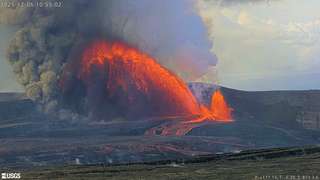
Des fontaines de lave géantes filmées en direct : ce volcan hawaïen en est déjà à 50 épisodes éruptifs en 18 mois !
États-Unis géologie volcanisme
Depuis le début de cette éruption, le 23 décembre 2024, l’activité est épisodique : des pauses de une à trois semaines séparent des phases d’activité soutenue de quelques heures à l’intérieur de la caldeira sommitale du volcan. Cinquante épisodes se sont ainsi succédé en une année et demie,...
30/06/2026 futura-terre
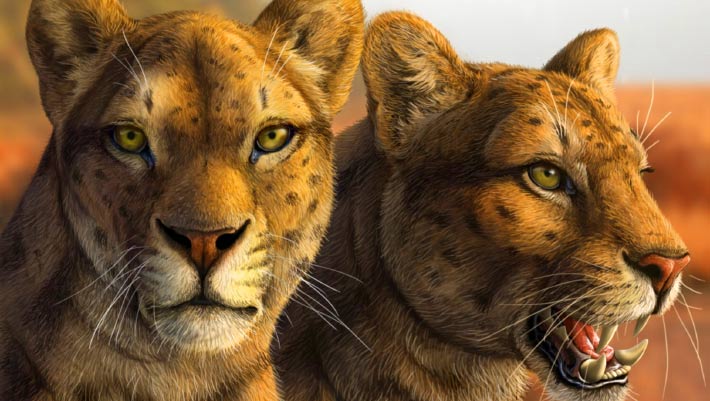
Early Saber-Toothed Cat Gets New Face after Decades of Mystery
Le premier chat à dents de sabre obtient un nouveau visage après des décennies de mystère
dent paléoart reconstitution États-Unis Pliocène mammifères crâne
Un crâne presque complet découvert il y a plusieurs décennies en Arizona a donné aux paléontologues leur aperçu le plus clair à ce jour d'Adelphailurus kansensis, une espèce énigmatique de félidés qui habitait l'Amérique du Nord il y a plus de 5 millions d'années et occupait une des premières branches de l'arbre généalogique des chats à dents de sabre. L'article Le premier chat à dents de sabre obtient un nouveau visage après des décennies de mystère est apparu en premier sur Sci.News : Breaking Science News.
29/06/2026 sci-news ⚙ Traduction automatique
Sauroposeidon: Beast of the Week
Sauroposeidon : Bête de la semaine
États-Unis Crétacé Crétacé inférieur Dinosauria Sauroposeidon
 Cette semaine, nous allons découvrir un énorme dinosaure au nom tout aussi impressionnant.  Entrez Sauroposeidon proteles !Sauroposeidon était un dinosaure sauropode (à long cou) qui vivait dans ce qui est aujourd'hui l'Oklahoma, le Texas et le Wyoming, aux États-Unis, au début du Crétacé, il y a environ 113 millions d'années.  Son nom de genre se traduit par « Dieu des tremblements de terre lézard » en hommage au dieu grec Poséidon, qui, en plus de son association la plus célèbre avec l'océan, était également le dieu des tremblements de terre dans la mythologie grecque. Puisque non
14/06/2026 prehistoricbeastoftheweek ⚙ Traduction automatique
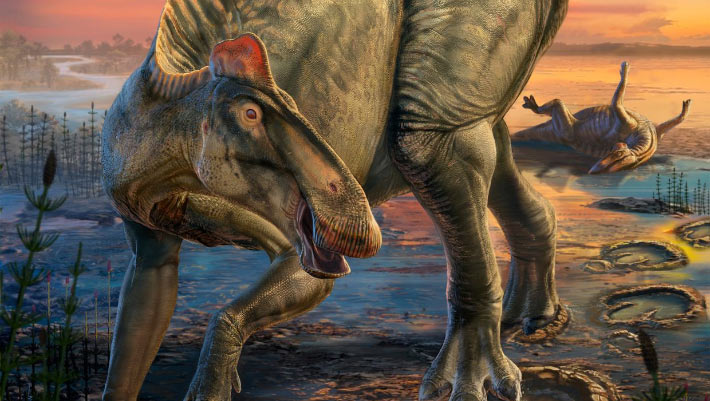
Le mystère vieux de 1 100 ans du site de chasse au bison perdu du Montana enfin résolu
chasse États-Unis Homo sapiens mammifères
Pendant près de 700 ans, les chasseurs autochtones ont utilisé à plusieurs reprises un site d'abattage de bisons dans le centre du Montana, puis ont soudainement arrêté, même si les bisons étaient encore abondants. Les chercheurs ont découvert des preuves selon lesquelles des sécheresses récurrentes qui durent depuis des décennies ont probablement rendu le site moins pratique en réduisant l'accès à l'eau nécessaire pour traiter un grand nombre d'animaux. Dans le même temps, les groupes de chasseurs se tournaient vers des opérations plus vastes et mieux coordonnées qui nécessitaient des ressources fiables et des emplacements spécialisés.
11/06/2026 sciencedaily-fossils ⚙ Traduction automatique
1 2 3 4