←

Dinosauria

Taxon

279 image(s) · 276 Actualités

Voir la fiche

Galerie d'images

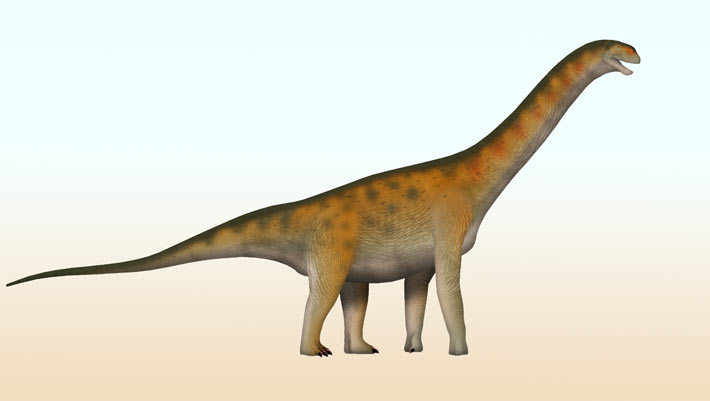
Diagram depicting the currently named Dinosauria from the Early Cretaceous Cedar Mountain Formation of Utah. Dinosaur taxa:
Cedarosaurus weiskopfae → Grand County locality.[1] Length = 15 meters.[2]
Cedrorestes crichtoni → Dave's Camp Site locality.[3] Length = 6 meters.[4]
Falcarius utahensis → Crystal Geyser Quarry & Suarez Site/Quarry localities.[5] Length = 5 meters.[5]
Gastonia burgei → Gaston Quarry, Dalton Wells, Doelling's Bowl localities.[6] Length = 5 meters.[2]
Geminiraptor suarezarum → Suarez Site/Quarry locality.[7] Length = 1.5 meters.[4]
Hippodraco scutodens → Andrew's Site locality.[8] Length = 4.5 meters.[8]
Iguanacolossus fortis → Don's Ridge & Doelling's Bowl localities.[8][6] Length = 9 meters.[8]
Martharaptor greenriverensis → Hayden-Corbett Site.[9] Length = Extrapolated after relatives.
Mierasaurus bobyoungi → Doelling’s Bowl locality.[10] Length = ∼9 meters.[10][11]
Moabosaurus utahensis → Dalton Wells locality.[12] Length = 9.75 meters.[12]
Nedcolbertia justinhofmanni → Dalton Wells & Gaston Quarry localities.[13] Length = ∼3 meters.[13]
Utahraptor ostrommaysi → Dalton Wells, Gaston Quarry, Stikes Quarry, Utahraptor Ridge localities.[14][6] Length = 5.5 meters.[2]
Yurgovuchia doellingi → Don’s Place - Doelling’s Bowl locality.[15] Length = 2.5 meters.[15]
References

↑ (1999). "New sauropod from the Lower Cretaceous of Utah, USA". Oryctos 2: 21–37.

↑ a b c (2016)  The Princeton Field Guide to Dinosaurs (2nd ed.), Princeton:  Princeton University Press  ISBN:  9780691167664. 

↑ "A possible new basal hadrosaur from the Lower Cretaceous Cedar Mountain Formation of Eastern Utah" in   (2007)  Horns and Beaks: Ceratopsian and Ornithopod Dinosaurs, Bloomington and Indianapolis:  Indiana University Press, pp. 79–89  DOI:  10.2307/j.ctt1zxz1md.10. ISBN:  0-253-34817-X. 

↑ a b (2007)  Dinosaurs: The Most Complete, Up-to-Date Encyclopedia for Dinosaur Lovers of All Ages, Random House  ISBN:  9780375824197.  Genus List for Holtz 2012  Weight Information

↑ a b (2010). "Osteology of Falcarius utahensis (Dinosauria: Theropoda): characterizing the anatomy of basal therizinosaurs". Zoological Journal of the Linnean Society 158 (1): 196–230. DOI:10.1111/j.1096-3642.2009.00464.x.

↑ a b c (2016). "The Lower Cretaceous in East-Central Utah—The Cedar Mountain Formation and its Bounding Strata". Geology of the Intermoutain West 3: 1-130.

↑  (2010). "A New Troodontid Theropod Dinosaur from the Lower Cretaceous of Utah". PLOS ONE 5 (12): e14329. DOI:10.1371/journal.pone.0014329. PMID 21179513. PMC: 3002269.

↑ a b c d (2010). "New Basal Iguanodonts from the Cedar Mountain Formation of Utah and the Evolution of Thumb-Spiked Dinosaurs". PLOS ONE 5 (11): e14075. DOI:10.1371/journal.pone.0014075. PMID 21124919. PMC: 2989904.

↑ (2012). "Martharaptor greenriverensis, a New Theropod Dinosaur from the Lower Cretaceous of Utah". PLOS ONE 7 (8): e43911. DOI:10.1371/journal.pone.0043911. PMID 22952806. PMC: 3430620.

↑ a b (2017). "Descendants of the Jurassic turiasaurs from Iberia found refuge in the Early Cretaceous of western USA". Scientific Reports 7 (1): 14311. DOI:10.1038/s41598-017-14677-2. PMID 29085006. PMC: 5662694.

↑ (2020)  Dinosaur Facts and Figures: The Sauropods and Other Sauropodomorphs, Princeton:  Princeton University Press  ISBN:  9780691202976. 

↑ a b (2017). "Moabosaurus Utahensis, N. Gen., N. SP., A New Sauropod From The Early Cretaceous (Aptian) of North America". Contributions from the Museum of Paleontology, University of Michigan 32 (11): 189–243.

↑ a b (1998). "A small coelurosaurian theropod from the Yellow Cat Member of the Cedar Mountain Formation (Lower Cretaceous, Barremian) of eastern Utah". New Mexico Museum of Natural History and Science Bulletin 14: 239–248.

↑ (1993). "A large dromaeosaurid (Theropoda) from the Lower Cretaceous of Eastern Utah". Hunteria 2 (10): 1–16.

↑ a b (2012). "New Dromaeosaurids (Dinosauria: Theropoda) from the Lower Cretaceous of Utah, and the Evolution of the Dromaeosaurid Tail". PLOS ONE 7 (5): e36790. DOI:10.1371/journal.pone.0036790. PMID 22615813. PMC: 3352940.
Formations Cedar Mountain

Diagram depicting the currently named Dinosauria from the Early Cretaceous Cedar Mountain Formation of Utah. Dinosaur taxa: Cedarosaurus weiskopfae → Grand County locality.[1] Length = 15 meters.[2] Cedrorestes crichtoni → Dave's Camp Site locality.[3] Length = 6 meters.[4] Falcarius utahensis → Crystal Geyser Quarry & Suarez Site/Quarry localities.[5] Length = 5 meters.[5] Gastonia burgei → Gaston Quarry, Dalton Wells, Doelling's Bowl localities.[6] Length = 5 meters.[2] Geminiraptor suarezarum → Suarez Site/Quarry locality.[7] Length = 1.5 meters.[4] Hippodraco scutodens → Andrew's Site locality.[8] Length = 4.5 meters.[8] Iguanacolossus fortis → Don's Ridge & Doelling's Bowl localities.[8][6] Length = 9 meters.[8] Martharaptor greenriverensis → Hayden-Corbett Site.[9] Length = Extrapolated after relatives. Mierasaurus bobyoungi → Doelling’s Bowl locality.[10] Length = ∼9 meters.[10][11] Moabosaurus utahensis → Dalton Wells locality.[12] Length = 9.75 meters.[12] Nedcolbertia justinhofmanni → Dalton Wells & Gaston Quarry localities.[13] Length = ∼3 meters.[13] Utahraptor ostrommaysi → Dalton Wells, Gaston Quarry, Stikes Quarry, Utahraptor Ridge localities.[14][6] Length = 5.5 meters.[2] Yurgovuchia doellingi → Don’s Place - Doelling’s Bowl locality.[15] Length = 2.5 meters.[15] References ↑ (1999). "New sauropod from the Lower Cretaceous of Utah, USA". Oryctos 2: 21–37. ↑ a b c (2016) The Princeton Field Guide to Dinosaurs (2nd ed.), Princeton: Princeton University Press ISBN: 9780691167664. ↑ "A possible new basal hadrosaur from the Lower Cretaceous Cedar Mountain Formation of Eastern Utah" in (2007) Horns and Beaks: Ceratopsian and Ornithopod Dinosaurs, Bloomington and Indianapolis: Indiana University Press, pp. 79–89 DOI: 10.2307/j.ctt1zxz1md.10. ISBN: 0-253-34817-X. ↑ a b (2007) Dinosaurs: The Most Complete, Up-to-Date Encyclopedia for Dinosaur Lovers of All Ages, Random House ISBN: 9780375824197. Genus List for Holtz 2012 Weight Information ↑ a b (2010). "Osteology of Falcarius utahensis (Dinosauria: Theropoda): characterizing the anatomy of basal therizinosaurs". Zoological Journal of the Linnean Society 158 (1): 196–230. DOI:10.1111/j.1096-3642.2009.00464.x. ↑ a b c (2016). "The Lower Cretaceous in East-Central Utah—The Cedar Mountain Formation and its Bounding Strata". Geology of the Intermoutain West 3: 1-130. ↑ (2010). "A New Troodontid Theropod Dinosaur from the Lower Cretaceous of Utah". PLOS ONE 5 (12): e14329. DOI:10.1371/journal.pone.0014329. PMID 21179513. PMC: 3002269. ↑ a b c d (2010). "New Basal Iguanodonts from the Cedar Mountain Formation of Utah and the Evolution of Thumb-Spiked Dinosaurs". PLOS ONE 5 (11): e14075. DOI:10.1371/journal.pone.0014075. PMID 21124919. PMC: 2989904. ↑ (2012). "Martharaptor greenriverensis, a New Theropod Dinosaur from the Lower Cretaceous of Utah". PLOS ONE 7 (8): e43911. DOI:10.1371/journal.pone.0043911. PMID 22952806. PMC: 3430620. ↑ a b (2017). "Descendants of the Jurassic turiasaurs from Iberia found refuge in the Early Cretaceous of western USA". Scientific Reports 7 (1): 14311. DOI:10.1038/s41598-017-14677-2. PMID 29085006. PMC: 5662694. ↑ (2020) Dinosaur Facts and Figures: The Sauropods and Other Sauropodomorphs, Princeton: Princeton University Press ISBN: 9780691202976. ↑ a b (2017). "Moabosaurus Utahensis, N. Gen., N. SP., A New Sauropod From The Early Cretaceous (Aptian) of North America". Contributions from the Museum of Paleontology, University of Michigan 32 (11): 189–243. ↑ a b (1998). "A small coelurosaurian theropod from the Yellow Cat Member of the Cedar Mountain Formation (Lower Cretaceous, Barremian) of eastern Utah". New Mexico Museum of Natural History and Science Bulletin 14: 239–248. ↑ (1993). "A large dromaeosaurid (Theropoda) from the Lower Cretaceous of Eastern Utah". Hunteria 2 (10): 1–16. ↑ a b (2012). "New Dromaeosaurids (Dinosauria: Theropoda) from the Lower Cretaceous of Utah, and the Evolution of the Dromaeosaurid Tail". PLOS ONE 7 (5): e36790. DOI:10.1371/journal.pone.0036790. PMID 22615813. PMC: 3352940.

Cedar Mountain Crétacé Crétacé inférieur Cedarosaurus +12
Paleogeography and paleoclimate of the Late Jurassic - 150 Ma with dinosaur fossil localities:
A = Tendaguru Formation, Tanzania
C1 =  Shishugou & Kalazha Formations, China
C2 =  Shangshaximiao (Upper Shaximiao) Formation, China
E1 =  Sables de Glos, Argiles d’Octeville, Marnes de Bléville, Kimmeridge Clay, Calcareous Grit, Corallian Oolite, Oxford Clay, Portland Stone, England & France
E2 = Villar del Arzobispo, Alcobaça, Guimarota, Sobral, Amoreira-Porto Novo, Bombarral, Freixial, Lourinhã Formations, Spain & Portugal
M1-6 = Morrison Formation, United States
S1 =  Toquí & Cañadón Calcáreo Formations, Chile & Argentina

Paleogeography and paleoclimate of the Late Jurassic - 150 Ma with dinosaur fossil localities: A = Tendaguru Formation, Tanzania C1 = Shishugou & Kalazha Formations, China C2 = Shangshaximiao (Upper Shaximiao) Formation, China E1 = Sables de Glos, Argiles d’Octeville, Marnes de Bléville, Kimmeridge Clay, Calcareous Grit, Corallian Oolite, Oxford Clay, Portland Stone, England & France E2 = Villar del Arzobispo, Alcobaça, Guimarota, Sobral, Amoreira-Porto Novo, Bombarral, Freixial, Lourinhã Formations, Spain & Portugal M1-6 = Morrison Formation, United States S1 = Toquí & Cañadón Calcáreo Formations, Chile & Argentina

Argentine Chili Chine France +19
Fossil hunting at Dinosaur Park
Formations Arundel Clay

Fossil hunting at Dinosaur Park

chasse Dinosaur Park fossile Dinosauria
Anzu is a fairly large caenagnathid oviraptorosaurian dinosaur that grew to nearly 4 m in length, and weighed 200-300 kg. It was a bipedal dinosaur and was covered in feathers, with a large sloping crest atop its head. Typical of oviraptorosaurs, Anzu had a short toothless beak, an adaptation that suggests it was most likely herbivorous or possibly omnivorous.

Anzu is a fairly large caenagnathid oviraptorosaurian dinosaur that grew to nearly 4 m in length, and weighed 200-300 kg. It was a bipedal dinosaur and was covered in feathers, with a large sloping crest atop its head. Typical of oviraptorosaurs, Anzu had a short toothless beak, an adaptation that suggests it was most likely herbivorous or possibly omnivorous.

crête plume Anzu Caenagnathidae +2
Dinosaur Bones

Dinosaur Bones

os Sri Lanka Anzu Dinosauria
Skeletal reconstructions of Dinosaur Park Formation caenagnathids. Skeletal reconstructions of Citipes elegans (left), Chirostenotes pergracilis (middle), and Caenagnathus collinsi (right), showing variation in skeletal representation and body size. Previously referred material is indicated in white and newly referred material is indicated in red for each taxon. Blue asterisks indicate elements that have been histologically sampled for each taxon. Citipes elegans: dentaries, metatarsal IV; Chirostenotes pergracilis: dentaries, tibia; Caenagnathus collinsi: pubis.

Skeletal reconstructions of Dinosaur Park Formation caenagnathids. Skeletal reconstructions of Citipes elegans (left), Chirostenotes pergracilis (middle), and Caenagnathus collinsi (right), showing variation in skeletal representation and body size. Previously referred material is indicated in white and newly referred material is indicated in red for each taxon. Blue asterisks indicate elements that have been histologically sampled for each taxon. Citipes elegans: dentaries, metatarsal IV; Chirostenotes pergracilis: dentaries, tibia; Caenagnathus collinsi: pubis.

Dinosaur Park Caenagnathidae Caenagnathus Chirostenotes +4
Tarsometatarsi of caenagnathids from the Upper Campanian Dinosaur Park Formation, Dinosaur Provincial Park, Alberta, Canada. A. TMP 1993.036.0181 (Chirostenotes pergracilis). B. TMP 1982.016.0006 (Citipes elegans). C. ROM 781 (Citipes elegans holotype). D. TMP 1996.012.0141 (Citipes elegans). Tarsometatarsi in proximal (A1–D1), anterior (A2–D2), and posterior (A3–D3) views.

Tarsometatarsi of caenagnathids from the Upper Campanian Dinosaur Park Formation, Dinosaur Provincial Park, Alberta, Canada. A. TMP 1993.036.0181 (Chirostenotes pergracilis). B. TMP 1982.016.0006 (Citipes elegans). C. ROM 781 (Citipes elegans holotype). D. TMP 1996.012.0141 (Citipes elegans). Tarsometatarsi in proximal (A1–D1), anterior (A2–D2), and posterior (A3–D3) views.

Canada Dinosaur Park Campanien holotype +6
The Naturmuseum Senckenberg in Frankfurt is the second largest museum of natural history in Germany. It is particularly popular with children, who enjoy the extensive collection of dinosaur skeletons: Senckenberg boasts the largest exhibition of large dinosaurs in Europe. One particular treasure is a dinosaur fossil with unique, preserved scaled skin. The museum contains the world's largest and most diverse collection of stuffed birds with about 2000 specimens.

The Naturmuseum Senckenberg in Frankfurt is the second largest museum of natural history in Germany. It is particularly popular with children, who enjoy the extensive collection of dinosaur skeletons: Senckenberg boasts the largest exhibition of large dinosaurs in Europe. One particular treasure is a dinosaur fossil with unique, preserved scaled skin. The museum contains the world's largest and most diverse collection of stuffed birds with about 2000 specimens.

musée Allemagne fossile spécimen +4
Large Predatory Pliosaur Size in comparison to a Human, Great White Shark, and Blue Whale. I have included Walking with Dinosaurs Liopleurodon to show its vastly inaccurate size.

Large Predatory Pliosaur Size in comparison to a Human, Great White Shark, and Blue Whale. I have included Walking with Dinosaurs Liopleurodon to show its vastly inaccurate size.

Dinosauria Liopleurodon
Cast of the holotype trackway of Eosauropus, a probable sauropodomorph dinosaur ichnogenus, on display at the Museum of Western Colorado’s Dinosaur Journey Museum in Fruita, Colorado
Taxons Eosauropus

Cast of the holotype trackway of Eosauropus, a probable sauropodomorph dinosaur ichnogenus, on display at the Museum of Western Colorado’s Dinosaur Journey Museum in Fruita, Colorado

musée moulage holotype Dinosauria +1
The theropod dinosaur Coelophysis bauri by John Conway [1]

The theropod dinosaur Coelophysis bauri by John Conway [1]

Conway Coelophysis Dinosauria Syntarsus
Badlands Dinosaur Museum, North Dakota 5-9-2022 (157)

Badlands Dinosaur Museum, North Dakota 5-9-2022 (157)

musée Dinosauria Thescelosaurus
Pectoral girdles and forelimbs of dinosaurs in left lateral view, depicting resting scapular and forelimb orientations in different dinosaurian groups as recommended according to the results of this study.

In each case, solid horizontal line is parallel to long axis of sacrum. A. theropods without semilunate carpals (Dilophosaurus wetherilli, UCMP 37302). B. theropods with semilunate carpals other than Caudipteryx (Velociraptor mongoliensis, after reference [60]). C. Caudipteryx (C. sp., after reference [8]). D. ceratopsids (Styracosaurus albertensis, NMC 344). E. basal sauropodomorphs (Plateosaurus engelhardti, AMNH 6810). F. non-hadrosaurian ornithopods (Thescelosaurus neglectus, reference [62]). G. hadrosaurids (Parasaurolophus walkeri, after reference [48]). Angle labels: B = scapular orientation relative to long axis of sacrum. E = elbow angle. S = shoulder angle. W = wrist angle. See Materials and Methods section for descriptions of angles.

Pectoral girdles and forelimbs of dinosaurs in left lateral view, depicting resting scapular and forelimb orientations in different dinosaurian groups as recommended according to the results of this study. In each case, solid horizontal line is parallel to long axis of sacrum. A. theropods without semilunate carpals (Dilophosaurus wetherilli, UCMP 37302). B. theropods with semilunate carpals other than Caudipteryx (Velociraptor mongoliensis, after reference [60]). C. Caudipteryx (C. sp., after reference [8]). D. ceratopsids (Styracosaurus albertensis, NMC 344). E. basal sauropodomorphs (Plateosaurus engelhardti, AMNH 6810). F. non-hadrosaurian ornithopods (Thescelosaurus neglectus, reference [62]). G. hadrosaurids (Parasaurolophus walkeri, after reference [48]). Angle labels: B = scapular orientation relative to long axis of sacrum. E = elbow angle. S = shoulder angle. W = wrist angle. See Materials and Methods section for descriptions of angles.

description Caudipteryx Ceratopsidae Dilophosaurus +9
Crâne de mosasaure d'espèce Platecarpus tympaniticus (squamates, mosasaures).
Provenance : Smoky Hill Chalk, Kansas (aux Etats-Unis).
Date : Crétacé supérieur, période du Campanien, 88 millions d'années avant notre ère.
Collections du Muséum national d'histoire naturelle de Paris (France).
Exposé à l'occasion de l'exposition "Un T-Rex à Paris" au Muséum national d'histoire naturelle de Paris (France) du 6 juin au 2 septembre 2018.

Légende du fossile dans cette exposition : "Les mosasaures ne sont pas des dinosaures mais des reptiles marins, très répandus à la fin du Crétacé. Certains genres comme Globidens et Halisaurus sont connus aussi bien aux Etats-Unis qu'au Maroc. Ces animaux étaient d'excellents nageurs, capables de traverser l'Atlantique."

Crâne de mosasaure d'espèce Platecarpus tympaniticus (squamates, mosasaures). Provenance : Smoky Hill Chalk, Kansas (aux Etats-Unis). Date : Crétacé supérieur, période du Campanien, 88 millions d'années avant notre ère. Collections du Muséum national d'histoire naturelle de Paris (France). Exposé à l'occasion de l'exposition "Un T-Rex à Paris" au Muséum national d'histoire naturelle de Paris (France) du 6 juin au 2 septembre 2018. Légende du fossile dans cette exposition : "Les mosasaures ne sont pas des dinosaures mais des reptiles marins, très répandus à la fin du Crétacé. Certains genres comme Globidens et Halisaurus sont connus aussi bien aux Etats-Unis qu'au Maroc. Ces animaux étaient d'excellents nageurs, capables de traverser l'Atlantique."

France Maroc Campanien Crétacé +8
Fig 2. Chrono-, bio- and lithostratigraphic context of the Reuchenette Formation in the Ajoie district, Canton Jura, NW Switzerland (modified from [20,23,28,31]. Four track-bearing intervals, named lower, intermediate, and upper (dinosaur track) levels, and track levels 600 have been identified within the Courtedoux Member (Nerinean Limestones, sensu [32]). All studied material comes from the intermediate (levels 1000–1100) and upper (levels 1500–1650) dinosaur track levels, details shown on inset on the upper right.

Fig 2. Chrono-, bio- and lithostratigraphic context of the Reuchenette Formation in the Ajoie district, Canton Jura, NW Switzerland (modified from [20,23,28,31]. Four track-bearing intervals, named lower, intermediate, and upper (dinosaur track) levels, and track levels 600 have been identified within the Courtedoux Member (Nerinean Limestones, sensu [32]). All studied material comes from the intermediate (levels 1000–1100) and upper (levels 1500–1650) dinosaur track levels, details shown on inset on the upper right.

Suisse Reuchenette Dinosauria Megalosauripus +1
Remake of the original picture of the Drzewica Formation. Terrestrial environment of the Pliensbachian-Toarcian boundary of Fennoscandinavia  Inland environment of the  Bornholm Coast, nearby the German realm of the Ciechocinek Formation. Includes
Ciechocinek Formation (Lower Toarcian, Bones) and Drzwica Formation (Latest Pliensbachian, Footprints) Fauna
Sorthat Formation environment, fluvial influenced mainland with Cheirolepidaceae and Bennetitales as dominant flora
Dinosaurs are based on material found on various locations of Northern Germany, and Footprints of the underliying Drzewica Formation at the Holy Cross Mountains, connected with Bornholm at the time.
Dinosaur Species appeared: 

Megalosauripus isp. Large Footprints (+65 cm) found on the Drzewica Formation. There is a dorsal vertebrae on the German Margin of the Ciechocinek Formation assigend to Megalosauria (Huene, 1966).
Gravisauria spp. representing the Grimmen Sauropod reported on 2014, as a taxon related with Tazoudasaurus. Barapasaurus-like footprints are know from the Drzewica Formation.
Coelophysoidea spp. based on coeval Anchisauripus tracks from the Holy Cross Mountains.
Basal Ornithischan, related to Eocursor, based on a crouching trace (Gerard Dariusz Gierlinski, Martin G. Lockley, Grzegorz Niedźwiedzki:2009).
Massospondylidae spp. based on Otozum-like tracks.

Remake of the original picture of the Drzewica Formation. Terrestrial environment of the Pliensbachian-Toarcian boundary of Fennoscandinavia Inland environment of the Bornholm Coast, nearby the German realm of the Ciechocinek Formation. Includes Ciechocinek Formation (Lower Toarcian, Bones) and Drzwica Formation (Latest Pliensbachian, Footprints) Fauna Sorthat Formation environment, fluvial influenced mainland with Cheirolepidaceae and Bennetitales as dominant flora Dinosaurs are based on material found on various locations of Northern Germany, and Footprints of the underliying Drzewica Formation at the Holy Cross Mountains, connected with Bornholm at the time. Dinosaur Species appeared: Megalosauripus isp. Large Footprints (+65 cm) found on the Drzewica Formation. There is a dorsal vertebrae on the German Margin of the Ciechocinek Formation assigend to Megalosauria (Huene, 1966). Gravisauria spp. representing the Grimmen Sauropod reported on 2014, as a taxon related with Tazoudasaurus. Barapasaurus-like footprints are know from the Drzewica Formation. Coelophysoidea spp. based on coeval Anchisauripus tracks from the Holy Cross Mountains. Basal Ornithischan, related to Eocursor, based on a crouching trace (Gerard Dariusz Gierlinski, Martin G. Lockley, Grzegorz Niedźwiedzki:2009). Massospondylidae spp. based on Otozum-like tracks.

os Allemagne Pliensbachien Toarcien +7
1 2 3 4 5 6 7 8 9 10 11 12 13 14 15 16 17 18

Actualités

Ce « crocodile terroriste » de la taille d’un autobus scolaire a mangé des dinosaures. Maintenant c'est de retour
musée fossile Dinosauria Géorgie squelette
Un crocodile massif capable d'attaquer les dinosaures a été ramené à la vie en tant que premier squelette monté scientifiquement précis de Deinosuchus schwimmeri. La réplique de 31 pieds du Tellus Science Museum de Géorgie a été construite à partir d’analyses détaillées de fossiles et de plus de 40 ans de recherches menées par le paléontologue Dr David Schwimmer, en l’honneur duquel l’espèce doit son nom.
05/08/2026 sciencedaily ⚙ Traduction automatique
Une belle illustration de spinosaure par un jeune paléoartiste
dessin Dinosauria Spinosauria
Nos remerciements à Caldey pour avoir envoyé à Everything Dinosaur son magnifique dessin d'un dinosaure théropode.  Il s'agit du Spinosaurus mirabilis récemment décrit et ce dinosaure coloré traverse prudemment un lac gelé.  Il s’agit d’une illustration vibrante de Spinosaurus mirabilis.  Le dinosaure regarde attentivement la surface gelée, peut-être a-t-il
05/08/2026 everythingdinosaur ⚙ Traduction automatique
Le T. rex a-t-il laissé ces marques de morsure vieilles de 66 millions d'années ?
os dent alimentation Dinosauria Tyrannosaurus comportement datation
Les os fossilisés de dinosaures du Wyoming offrent un rare aperçu du comportement alimentaire du Tyrannosaurus rex. Les chercheurs ont examiné plus de 3 000 os datant de 72 à 66 millions d’années et n’en ont trouvé que 12 avec d’éventuelles traces de dents, dont quatre avec des motifs qui correspondaient étroitement à la forme et à l’espacement des dents du T. rex.
05/08/2026 sciencedaily ⚙ Traduction automatique
Fossil Find in China Reveals Dinosaur Family Never Before Seen in East Asia
Une découverte de fossiles en Chine révèle une famille de dinosaures jamais vue auparavant en Asie de l'Est
Chine fossile Dinosauria découverte nouvelle espèce
Des paléontologues travaillant dans le sud de la Chine ont identifié une nouvelle espèce de dinosaure sauropode qui semble appartenir à un groupe jamais documenté auparavant en Asie de l'Est. L'article Une découverte de fossiles en Chine révèle une famille de dinosaures jamais vue auparavant en Asie de l'Est est apparu en premier sur Sci.News : Breaking Science News.
04/08/2026 sci-news ⚙ Traduction automatique
Nouveau modèle de Mosasaurus du monde préhistorique Wild Safari, en Stock
dent Dinosauria Mosasaurus
Le nouveau modèle Mosasaurus Wild Safari Prehistoric World 2026 est arrivé.  Cette figurine de reptile marin est maintenant en stock chez Everything Dinosaur. Il est loué pour ses détails anatomiques tels qu'une queue hypocercale et des dents ptérygoïdes. De plus, le modèle dispose d'une langue fourchue. Le modèle a une langue fourchue et un ptérygoïde
04/08/2026 everythingdinosaur ⚙ Traduction automatique
1 2 3 4 5 6 7 8 9 10 11 12 13 14 15 16 17 18 19 20 21 22 23 24 25 26 27 28 29 30 31 32 33 34 35 36 37 38 39 40 41 42 43 44 45 46 47 48 49 50 51 52 53 54 55 56