mammifères

Thématique

1 image(s) · 41 Actualités

Galerie d'images

Identifier: waterreptilesofp1914will
Title: Water reptiles of the past and present
Year: 1914 (1910s)
Authors:  Williston, Samuel Wendell, 1851-1918
Subjects:  Aquatic reptiles
Publisher:  Chicago, Ill., The University of Chicago Press
Contributing Library:  Boston Public Library
Digitizing Sponsor:  Boston Public Library

View Book Page: Book Viewer
About This Book: Catalog Entry
View All Images: All Images From Book
Click here to view book online to see this illustration in context in a browseable online version of this book.

Text Appearing Before Image:
served and very complete skeletons ofdifferent species of ichthyosaurs from the Jurassic deposits ofWiirtemberg, in which remains of these animals occur in great 112 WATER REPTILES OF THE PAST AND PRESENT profusion. His researches, and those of several authors since then,supplementing and confirming or disproving those of the manyobservers made during the preceding seventy years, have finallydetermined almost perfectly the complete structure of the moretypical ichthyosaurs, enabling us to infer not a little as to theirhabits and distribution in the old Jurassic oceans. Within thepast few years the discoveries of Professor J. C. Merriam of Cali-fornia have likewise added greatly to our knowledge of the earlierichthyosaurs. It may now truthfully be said that of no group ofextinct reptiles do we have a more complete and satisfactory knowl-edge than of the ichthyosaurs. Nevertheless we have yet very much more to learn about theorder Ichthyosauria as a whole—whence they came and how they
Text Appearing After Image:
Fig. 52.—Ichthyosaurus quadricissus.museum, from Dr. Dreverman. Photograph of specimen in Senckenberg originated; what their nearest kin were among other reptiles; andespecially, more about the connecting links between them andterrestrial reptiles. They have, as an order, so isolated a position,are so widely separated from all other reptiles in structure, that theyhave long been a puzzle to paleontologists. Like the whales andother cetaceans among mammals, we know the ichthyosaurs wellin the plenitude of their power and the fulness of their development,but have yet only an imperfect knowledge of their earlier history,and none whatever of their earliest. However, as will be seenfarther on, the recent discoveries by Merriam have shed much lighton some of the stages of their evolution. So nearly perfectly wereall the later ichthyosaurs adapted to their life in the water that itwas believed by nearly all paleontologists until about a score of years ICHTHYOSAURIA 3 ago that they had desc

Note About Images

Please note that these images are extracted from scanned page images that may have been digitally enhanced for readability - coloration and appearance of these illustrations may not perfectly resemble the original work.
Taxons Stenopterygiidae

Identifier: waterreptilesofp1914will Title: Water reptiles of the past and present Year: 1914 (1910s) Authors: Williston, Samuel Wendell, 1851-1918 Subjects: Aquatic reptiles Publisher: Chicago, Ill., The University of Chicago Press Contributing Library: Boston Public Library Digitizing Sponsor: Boston Public Library View Book Page: Book Viewer About This Book: Catalog Entry View All Images: All Images From Book Click here to view book online to see this illustration in context in a browseable online version of this book. Text Appearing Before Image: served and very complete skeletons ofdifferent species of ichthyosaurs from the Jurassic deposits ofWiirtemberg, in which remains of these animals occur in great 112 WATER REPTILES OF THE PAST AND PRESENT profusion. His researches, and those of several authors since then,supplementing and confirming or disproving those of the manyobservers made during the preceding seventy years, have finallydetermined almost perfectly the complete structure of the moretypical ichthyosaurs, enabling us to infer not a little as to theirhabits and distribution in the old Jurassic oceans. Within thepast few years the discoveries of Professor J. C. Merriam of Cali-fornia have likewise added greatly to our knowledge of the earlierichthyosaurs. It may now truthfully be said that of no group ofextinct reptiles do we have a more complete and satisfactory knowl-edge than of the ichthyosaurs. Nevertheless we have yet very much more to learn about theorder Ichthyosauria as a whole—whence they came and how they Text Appearing After Image: Fig. 52.—Ichthyosaurus quadricissus.museum, from Dr. Dreverman. Photograph of specimen in Senckenberg originated; what their nearest kin were among other reptiles; andespecially, more about the connecting links between them andterrestrial reptiles. They have, as an order, so isolated a position,are so widely separated from all other reptiles in structure, that theyhave long been a puzzle to paleontologists. Like the whales andother cetaceans among mammals, we know the ichthyosaurs wellin the plenitude of their power and the fulness of their development,but have yet only an imperfect knowledge of their earlier history,and none whatever of their earliest. However, as will be seenfarther on, the recent discoveries by Merriam have shed much lighton some of the stages of their evolution. So nearly perfectly wereall the later ichthyosaurs adapted to their life in the water that itwas believed by nearly all paleontologists until about a score of years ICHTHYOSAURIA 3 ago that they had desc Note About Images Please note that these images are extracted from scanned page images that may have been digitally enhanced for readability - coloration and appearance of these illustrations may not perfectly resemble the original work.

livre musée Jurassique spécimen +7

Actualités

Le mystère vieux de 1 100 ans du site de chasse au bison perdu du Montana enfin résolu
chasse États-Unis Homo sapiens mammifères
Pendant près de 700 ans, les chasseurs autochtones ont utilisé à plusieurs reprises un site d'abattage de bisons dans le centre du Montana, puis ont soudainement arrêté, même si les bisons étaient encore abondants. Les chercheurs ont découvert des preuves selon lesquelles des sécheresses récurrentes qui durent depuis des décennies ont probablement rendu le site moins pratique en réduisant l'accès à l'eau nécessaire pour traiter un grand nombre d'animaux. Dans le même temps, les groupes de chasseurs se tournaient vers des opérations plus vastes et mieux coordonnées qui nécessitaient des ressources fiables et des emplacements spécialisés.
11/06/2026 sciencedaily-fossils ⚙ Traduction automatique
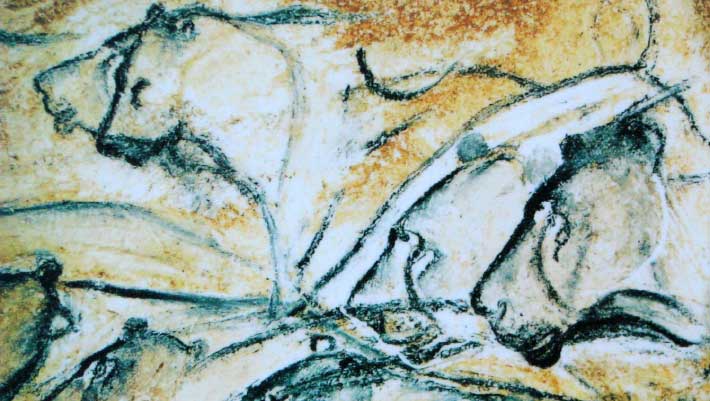
Study: Cave Lions were Distinct Species that Occasionally Bred with Ancestors of Today’s Lions
Étude : Les lions des cavernes étaient des espèces distinctes qui se reproduisaient occasionnellement avec les ancêtres des lions d'aujourd'hui
mammifères étude
Le lion des cavernes d'Eurasie (Panthera spelaea), aujourd'hui disparu, et les lions d'Afrique et d'Asie d'aujourd'hui (Panthera leo) appartiennent à des lignées évolutives distinctes qui ont divergé il y a environ 1,7 million d'années, bien plus tôt qu'on ne le pensait, selon une analyse de 12 génomes de lions des cavernes s'étendant sur plus de 100 000 ans. L’article Étude : Les lions des cavernes étaient des espèces distinctes qui se reproduisaient occasionnellement avec les ancêtres des lions d’aujourd’hui est apparu en premier sur Sci.News : Breaking Science News.
10/06/2026 sci-news ⚙ Traduction automatique
De l'ADN de mammouth laineux retrouvé dans des excréments d'écureuil
ADN mammifères étude
Des scientifiques ont découvert un immense trésor d'ADN ancien provenant d'animaux, dont celui de mammouths laineux aujourd'hui disparus, dans des excréments d'écureuils conservés dans le pergélisol canadien, selon une étude publiée le 9 juin 2026.
10/06/2026 sciencesetavenir
Un nouveau modèle de paraceratherium Haolonggood arrive en stock
jouet Oligocène Dinosauria mammifères
Everything Dinosaur proposera le nouveau modèle Haolonggood Paraceratherium pour 2026.  Il s’agit de la deuxième figure de mammifère préhistorique introduite par cette société. Récemment, une figurine de rhinocéros laineux (Coelodonta) a été annoncée.  Curieusement, le géant Paraceratherium est lointainement apparenté à Coelodonta.  Les deux animaux sont des ongulés aux doigts impairs (Perissodactyla). Patrouiller le paysage oligocène. Le nouveau
09/06/2026 everythingdinosaur ⚙ Traduction automatique
Half-Ton Cattle Relatives Roamed Europe 4 Million Years Ago
Des parents de bétail d'une demi-tonne parcouraient l'Europe il y a 4 millions d'années
Espagne Pliocène mammifères squelette
Des squelettes de bovins presque complets découverts sur le site du Pliocène inférieur de Camp dels Ninots, dans le nord-est de l'Espagne, révèlent que les ancêtres des buffles et des bovins d'aujourd'hui atteignaient déjà des tailles impressionnantes bien avant l'arrivée des humains sur le continent. L'article Des parents de bétail d'une demi-tonne parcouraient l'Europe il y a 4 millions d'années sont apparus en premier sur Sci.News : Breaking Science News.
05/06/2026 sci-news ⚙ Traduction automatique
1 2 3 4 5 6 7 8 9