partial

View type

39 image(s) · 3 News

Image gallery

A photograph of partial specimen American Museum of Natural History (AMNH) 22555, skull without mandible, of Anhanguera sp. (formerly often assigned to Anhanguera santanae),[1] from the Early Cretaceous Romualdo Formation (former Romualdo Member of the Santana Formation) of NE Brazil in right lateral view.

A photograph of partial specimen American Museum of Natural History (AMNH) 22555, skull without mandible, of Anhanguera sp. (formerly often assigned to Anhanguera santanae),[1] from the Early Cretaceous Romualdo Formation (former Romualdo Member of the Santana Formation) of NE Brazil in right lateral view.

museum Brazil Conway Romualdo +7
A photograph of partial specimen American Museum of Natural History (AMNH) 22555, anterior dorsal vertebrae, dorsal ribs and partial shoulder girdle (at least right scapula) of Anhanguera sp. (formerly often assigned to Anhanguera santanae),[1] from the Early Cretaceous Romualdo Formation (former Romualdo Member of the Santana Formation) of NE Brazil in dorsal view.

A photograph of partial specimen American Museum of Natural History (AMNH) 22555, anterior dorsal vertebrae, dorsal ribs and partial shoulder girdle (at least right scapula) of Anhanguera sp. (formerly often assigned to Anhanguera santanae),[1] from the Early Cretaceous Romualdo Formation (former Romualdo Member of the Santana Formation) of NE Brazil in dorsal view.

museum Brazil Conway Romualdo +6
A photograph of partial specimen American Museum of Natural History (AMNH) 22555, posterior dorsal vertebrae, and the sacrum and pelvis (both iliae, and right ischium and pubis) of Anhanguera sp. (formerly often assigned to Anhanguera santanae),[1] from the Early Cretaceous Romualdo Formation (former Romualdo Member of the Santana Formation) of NE Brazil in dorsal view.
Taxa Anhanguera

A photograph of partial specimen American Museum of Natural History (AMNH) 22555, posterior dorsal vertebrae, and the sacrum and pelvis (both iliae, and right ischium and pubis) of Anhanguera sp. (formerly often assigned to Anhanguera santanae),[1] from the Early Cretaceous Romualdo Formation (former Romualdo Member of the Santana Formation) of NE Brazil in dorsal view.

pelvis museum Brazil Conway +7
Holotype of Alcione elainus.
Fig. 6 of:
Longrich, N. R., Martill, D. M., & Andres, B. (2018). Late Maastrichtian pterosaurs from North Africa and mass extinction of Pterosauria at the Cretaceous-Paleogene boundary. PLoS biology, 16(3), e2001663.
---
Original figure legend:
A. elainus FSAC-OB 2, holotype partial skeleton and FSAC-OB 217, metacarpal IV.

(A) Holotype right humerus in anterior view, (B) holotype right ulna and radius in anterior view, respectively, (C) holotype sternum in left lateral view, (D) referred metacarpal IV, (E) holotype, distal end of left metacarpal IV and left scapulocoracoid, and (F) holotype right femur in posterior view. Abbreviations: co, coracoid; cr, cristospine; dc, distal condyle; dpc, deltopectoral crest; ect, ectepicondyle; fh, femoral head; gl, glenoid; gt, greater trochanter; hh, humeral head; hum, humerus; mcIV, metacarpal IV, pc, proximal cotyle; pf, pneumatic foramen; rad, radius; scpr, supracondylar process; ste, sternum; uln, ulna.

Holotype of Alcione elainus. Fig. 6 of: Longrich, N. R., Martill, D. M., & Andres, B. (2018). Late Maastrichtian pterosaurs from North Africa and mass extinction of Pterosauria at the Cretaceous-Paleogene boundary. PLoS biology, 16(3), e2001663. --- Original figure legend: A. elainus FSAC-OB 2, holotype partial skeleton and FSAC-OB 217, metacarpal IV. (A) Holotype right humerus in anterior view, (B) holotype right ulna and radius in anterior view, respectively, (C) holotype sternum in left lateral view, (D) referred metacarpal IV, (E) holotype, distal end of left metacarpal IV and left scapulocoracoid, and (F) holotype right femur in posterior view. Abbreviations: co, coracoid; cr, cristospine; dc, distal condyle; dpc, deltopectoral crest; ect, ectepicondyle; fh, femoral head; gl, glenoid; gt, greater trochanter; hh, humeral head; hum, humerus; mcIV, metacarpal IV, pc, proximal cotyle; pf, pneumatic foramen; rad, radius; scpr, supracondylar process; ste, sternum; uln, ulna.

crest humerus Cretaceous Maastrichtian +7
Holotype of Alcione elainus.
Fig. 6 of:
Longrich, N. R., Martill, D. M., & Andres, B. (2018). Late Maastrichtian pterosaurs from North Africa and mass extinction of Pterosauria at the Cretaceous-Paleogene boundary. PLoS biology, 16(3), e2001663.
---
Original figure legend:
A. elainus FSAC-OB 2, holotype partial skeleton and FSAC-OB 217, metacarpal IV.

(A) Holotype right humerus in anterior view, (B) holotype right ulna and radius in anterior view, respectively, (C) holotype sternum in left lateral view, (D) referred metacarpal IV, (E) holotype, distal end of left metacarpal IV and left scapulocoracoid, and (F) holotype right femur in posterior view. Abbreviations: co, coracoid; cr, cristospine; dc, distal condyle; dpc, deltopectoral crest; ect, ectepicondyle; fh, femoral head; gl, glenoid; gt, greater trochanter; hh, humeral head; hum, humerus; mcIV, metacarpal IV, pc, proximal cotyle; pf, pneumatic foramen; rad, radius; scpr, supracondylar process; ste, sternum; uln, ulna.
Taxa Alcione

Holotype of Alcione elainus. Fig. 6 of: Longrich, N. R., Martill, D. M., & Andres, B. (2018). Late Maastrichtian pterosaurs from North Africa and mass extinction of Pterosauria at the Cretaceous-Paleogene boundary. PLoS biology, 16(3), e2001663. --- Original figure legend: A. elainus FSAC-OB 2, holotype partial skeleton and FSAC-OB 217, metacarpal IV. (A) Holotype right humerus in anterior view, (B) holotype right ulna and radius in anterior view, respectively, (C) holotype sternum in left lateral view, (D) referred metacarpal IV, (E) holotype, distal end of left metacarpal IV and left scapulocoracoid, and (F) holotype right femur in posterior view. Abbreviations: co, coracoid; cr, cristospine; dc, distal condyle; dpc, deltopectoral crest; ect, ectepicondyle; fh, femoral head; gl, glenoid; gt, greater trochanter; hh, humeral head; hum, humerus; mcIV, metacarpal IV, pc, proximal cotyle; pf, pneumatic foramen; rad, radius; scpr, supracondylar process; ste, sternum; uln, ulna.

crest humerus Cretaceous Maastrichtian +7
Forelimb and partial hindlimb of the holotype of the Triassic ichthyosaur Toretocnemus (originally Leptocheirus, also Merriamia) zitteli. This image is derived from plate 22 in Merriam (1903), done by an uncredited artist.
Original description: Leptocheirus zitteli n. gen. and sp.
Figures reproduced natural size from the type specimen.

Fig. 1. — Superior side of left anterior limb. r, radius.
Fig. 2. — Posterior limb. t, tibia.

Forelimb and partial hindlimb of the holotype of the Triassic ichthyosaur Toretocnemus (originally Leptocheirus, also Merriamia) zitteli. This image is derived from plate 22 in Merriam (1903), done by an uncredited artist. Original description: Leptocheirus zitteli n. gen. and sp. Figures reproduced natural size from the type specimen. Fig. 1. — Superior side of left anterior limb. r, radius. Fig. 2. — Posterior limb. t, tibia.

limb description Triassic holotype +7
Partial skull and anterior cervical vertebrae of unidentified pliosaurid plesiosaurian (MPPL 18797) from the uppermost Callovian–middle Oxfordian of Kaberlaba (Asiago, Italy), in left lateral view. Photograph (A) and explanatory drawing (B). White, preserved bone surfaces; dark grey, preserved margins of skull fenestrae; light grey, eroded bone surface; cross hatching, broken bone.
Taxa Anguanax

Partial skull and anterior cervical vertebrae of unidentified pliosaurid plesiosaurian (MPPL 18797) from the uppermost Callovian–middle Oxfordian of Kaberlaba (Asiago, Italy), in left lateral view. Photograph (A) and explanatory drawing (B). White, preserved bone surfaces; dark grey, preserved margins of skull fenestrae; light grey, eroded bone surface; cross hatching, broken bone.

bone drawing Italy Callovian +6
(A) View of the original downside in the field and the best preserved side as it experienced the least disruption by scavenging sharks. (B) Detail of midbody region showing the large gastroliths that settled downwards onto the inside of the right, dorsal ribs. This region was hit by the excavator bucket with the partial loss of ribs and an unknown number of gastroliths. Fortuitously, the broken blocks hosting gastroliths can be removed and their contents inspected from several sides. Scalebar is 10 cm. Source credit: Sue Sabrowski, Royal Tyrrell Museum of Palaeontology.
Taxa Albertonectes

(A) View of the original downside in the field and the best preserved side as it experienced the least disruption by scavenging sharks. (B) Detail of midbody region showing the large gastroliths that settled downwards onto the inside of the right, dorsal ribs. This region was hit by the excavator bucket with the partial loss of ribs and an unknown number of gastroliths. Fortuitously, the broken blocks hosting gastroliths can be removed and their contents inspected from several sides. Scalebar is 10 cm. Source credit: Sue Sabrowski, Royal Tyrrell Museum of Palaeontology.

museum Albertonectes partial
Preserved elements of Eurazhdarcho langendorfensis re-assembled as found in partial articulation.

EME VP 312. (a) Slab and counter-slab with cervical vertebrae in dorsal view. (b) Specimen in original position with cervicals in ventral view.
Taxa Eurazhdarcho

Preserved elements of Eurazhdarcho langendorfensis re-assembled as found in partial articulation. EME VP 312. (a) Slab and counter-slab with cervical vertebrae in dorsal view. (b) Specimen in original position with cervicals in ventral view.

specimen Eurazhdarcho partial
Partial wing of a czech pterosaur Cretornis hlavaci, discovered in 1880 near Choceň. National Museum in Prague.
Taxa Cretornis

Partial wing of a czech pterosaur Cretornis hlavaci, discovered in 1880 near Choceň. National Museum in Prague.

museum Cretornis Pterosauria partial
Partial rostrum of Iberodactylus andreui gen. et sp. nov. (MPZ-2014/1). Photographic images (A–F)
and 3D renderings obtained from μCT data (G–L) in right lateral (A,G), left lateral (B,H), dorsal (C,I), palatal
(D,J), caudal (E,K), and cranial (F,L) views. Scale bar in cm. Abbreviations. pm: premaxilla; pmcr: premaxillary

crest; prid: palatal ridge; te: teeth; trb: trabeculae.
Taxa Iberodactylus

Partial rostrum of Iberodactylus andreui gen. et sp. nov. (MPZ-2014/1). Photographic images (A–F) and 3D renderings obtained from μCT data (G–L) in right lateral (A,G), left lateral (B,H), dorsal (C,I), palatal (D,J), caudal (E,K), and cranial (F,L) views. Scale bar in cm. Abbreviations. pm: premaxilla; pmcr: premaxillary crest; prid: palatal ridge; te: teeth; trb: trabeculae.

crest scale Iberodactylus partial
Australian Mesozoic pterosaurs. A, Aussiedraco molnari (QM F10613; holotype) mandible in dorsal view. Scale = 1 cm. B, Mythunga camara (QM F18896; holotype) partial skull and mandible in left lateral view. Scale = 5 cm. C, Thapunngaka shawi (KK F494; holotype) mandible in left lateral view. Scale = 5 cm. D, Ferrodraco lentoni (AODF 0876; holotype [part]) partial skull and mandible in left lateral view. Scale = 5 cm.
Taxa Aussiedraco

Australian Mesozoic pterosaurs. A, Aussiedraco molnari (QM F10613; holotype) mandible in dorsal view. Scale = 1 cm. B, Mythunga camara (QM F18896; holotype) partial skull and mandible in left lateral view. Scale = 5 cm. C, Thapunngaka shawi (KK F494; holotype) mandible in left lateral view. Scale = 5 cm. D, Ferrodraco lentoni (AODF 0876; holotype [part]) partial skull and mandible in left lateral view. Scale = 5 cm.

scale Mesozoic holotype Aussiedraco +6
Reconstructed skull of the dromaeosaurid Adasaurus mongoliensis. The holotype IGM 100/20 preserves a partial right side of the skull and other postcrania including the hindlimbs, it has an estimated length of 2 m (6.6 ft) with a weight of 15 kg (33 lb).[1] Skull mainly based on Turner et al. 2012 and Mickey Mortimer.[2][3]
Color Key
  Known
  Unknown
Taxa Adasaurus

Reconstructed skull of the dromaeosaurid Adasaurus mongoliensis. The holotype IGM 100/20 preserves a partial right side of the skull and other postcrania including the hindlimbs, it has an estimated length of 2 m (6.6 ft) with a weight of 15 kg (33 lb).[1] Skull mainly based on Turner et al. 2012 and Mickey Mortimer.[2][3] Color Key   Known   Unknown

holotype Adasaurus Dromaeosauridae Turneria +2
Vertebrae, scapula, forelimb bones, and pelvic bones of Martharaptor greenriverensis (UMNH VP 21400). (A)–Partial cervical neural arch, dorsal view. (B–E)–Cranial dorsal centrum in cranial (B), caudal (C), right lateral (D), and left lateral (E) views. (F–G)–Distal caudal centrum in lateral (F) and ventral (G) views. (H)–Possible ulna. (I)–Possible radius. (J–K)–Left scapula in lateral (J) and medial (K) views. (L)–Proximal end of ischium. (M)–Possible distal end of pubis Scale bar = 50 mm. acr  =  acromium process, ar  =  acetabular rim, gl  =  glenoid, hyp  =  hypapophysis, poz  =  postzygapophysis, pnp  =  pneumatopore, prz  =  prezygapophysis.
Taxa Martharaptor

Vertebrae, scapula, forelimb bones, and pelvic bones of Martharaptor greenriverensis (UMNH VP 21400). (A)–Partial cervical neural arch, dorsal view. (B–E)–Cranial dorsal centrum in cranial (B), caudal (C), right lateral (D), and left lateral (E) views. (F–G)–Distal caudal centrum in lateral (F) and ventral (G) views. (H)–Possible ulna. (I)–Possible radius. (J–K)–Left scapula in lateral (J) and medial (K) views. (L)–Proximal end of ischium. (M)–Possible distal end of pubis Scale bar = 50 mm. acr  =  acromium process, ar  =  acetabular rim, gl  =  glenoid, hyp  =  hypapophysis, poz  =  postzygapophysis, pnp  =  pneumatopore, prz  =  prezygapophysis.

bone scale Martharaptor partial
Skeletal diagram of Zuolong salleei, based on related basal coelurosaurs. Scale bar = 1 meter. Light colours indicate known material (white is known external bones, light grey is either palate, braincase, or sacrum). Dark colours indicate unknown material (partial bones or unknown braincase)
Taxa Zuolong

Skeletal diagram of Zuolong salleei, based on related basal coelurosaurs. Scale bar = 1 meter. Light colours indicate known material (white is known external bones, light grey is either palate, braincase, or sacrum). Dark colours indicate unknown material (partial bones or unknown braincase)

bone scale Coelurosauria Zuolong +1
Squelette partiel de Wulatesaurus.
Taxa Bannykus

Squelette partiel de Wulatesaurus.

Japan Bannykus partial skeleton
1 2 3

News

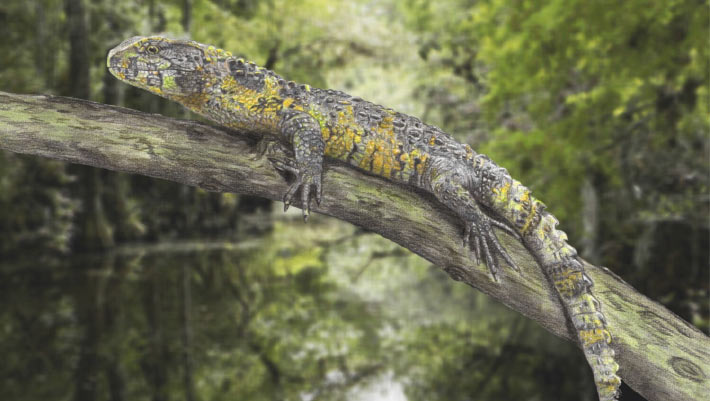
83-Million-Year-Old Crocodile Lizard Fossil Unearthed in France
jaw France fossil discovery new species partial
Paleontologists have identified a new genus and species of pan-shinisaur lizard from a partial upper jaw discovered in southern France, pushing the presence of its lineage in Europe back by at least 30 million years. The post 83-Million-Year-Old Crocodile Lizard Fossil Unearthed in France appeared first on Sci.News: Breaking Science News.
22/05/2026 sci-news
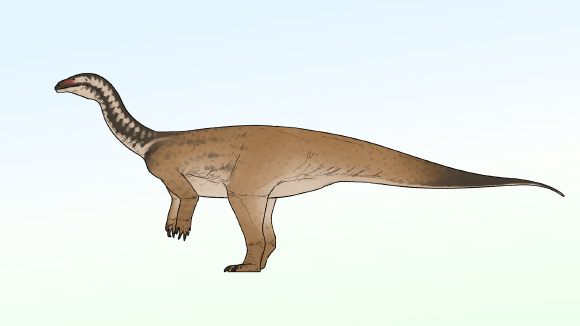
Early Sauropodomorph Dinosaur Unearthed in China
China Early Jurassic Jurassic Dinosauria Massopoda new species partial skeleton
A new genus and species of massopodan sauropodomorph that lived during the Early Jurassic epoch has been identified from a partial skeleton unearthed in southwestern China. The post Early Sauropodomorph Dinosaur Unearthed in China appeared first on Sci.News: Breaking Science News.
04/05/2026 sci-news
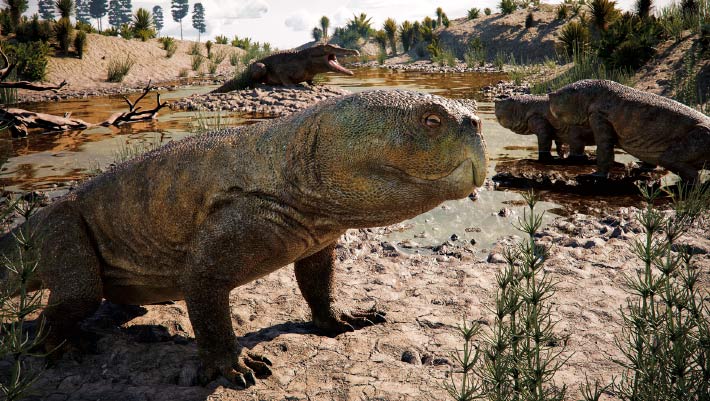
New Fossil from Brazil Reveals Unexpected Diversity among Pre-Dinosaur Herbivores
jaw Brazil Triassic fossil Dinosauria new species partial skull
Paleontologists in Brazil have identified a new genus and species of hyperodapedontine rhynchosaur -- an extinct lineage of beaked, herbivorous reptiles -- based on a partial skull and lower jaws recovered from Triassic rocks. The post New Fossil from Brazil Reveals Unexpected Diversity among Pre-Dinosaur Herbivores appeared first on Sci.News: Breaking Science News.
23/04/2026 sci-news