étude

Thématique

4 image(s) · 32 Actualités

Galerie d'images

Figure 1. Evolution of macroecological traits in Dinosauria. Large scale event in dinosaur evolution (a); the origin of dinosaurs (star), hyperthermals (volcano), the earliest fossil Avialae (bird), the earliest fossil angiosperm (flower), the Cretaceous/Palaeogene mass extinction (asteroid). Phylogeny of dinosaurs (b) redrawn from Sereno and adapted to the current consensus and upon which an ancestral state reconstruction of temperature niche (mean annual temperature) after Chiarenza et al. is plotted; Mesozoic palaeogeographies (c) for Triassic (T), Jurassic (J) and Cretaceous (K). Silhouette colours symbolize body mass for each of the taxa represented; information on dietary habits are plotted after Barrett and Zanno & Makovicky; numbers represent clades discussed through this study: 1, Ornithischia; 2, Thyreophora; 3, Ornithopoda; 4, Hadrosauroidea; 5, Marginocephalia; 6, Ceratopsia; 7, Saurischia; 8, Sauropodomorpha; 9, Sauropoda; 10, Theropoda; 11, Ceratosauria; 12, Tetanurae; 13, Coelurosauria; 14, Maniraptoriformes; 15, Maniraptora; 16, Deinonychosauria; 17, Avialae; 18, Ornithothoraces. Palaeogeographies modified from original plots via R package ‘mapast’ using plate models by Scotese.

Figure 1. Evolution of macroecological traits in Dinosauria. Large scale event in dinosaur evolution (a); the origin of dinosaurs (star), hyperthermals (volcano), the earliest fossil Avialae (bird), the earliest fossil angiosperm (flower), the Cretaceous/Palaeogene mass extinction (asteroid). Phylogeny of dinosaurs (b) redrawn from Sereno and adapted to the current consensus and upon which an ancestral state reconstruction of temperature niche (mean annual temperature) after Chiarenza et al. is plotted; Mesozoic palaeogeographies (c) for Triassic (T), Jurassic (J) and Cretaceous (K). Silhouette colours symbolize body mass for each of the taxa represented; information on dietary habits are plotted after Barrett and Zanno & Makovicky; numbers represent clades discussed through this study: 1, Ornithischia; 2, Thyreophora; 3, Ornithopoda; 4, Hadrosauroidea; 5, Marginocephalia; 6, Ceratopsia; 7, Saurischia; 8, Sauropodomorpha; 9, Sauropoda; 10, Theropoda; 11, Ceratosauria; 12, Tetanurae; 13, Coelurosauria; 14, Maniraptoriformes; 15, Maniraptora; 16, Deinonychosauria; 17, Avialae; 18, Ornithothoraces. Palaeogeographies modified from original plots via R package ‘mapast’ using plate models by Scotese.

écaille Crétacé Jurassique Mésozoïque +23
Restoration of Lucianovenator bonoi based on images of known remains and related genera. Proto-feathers for insulation in coelophysids and other early theropods have been supported by this study:[1]
Taxons Lucianovenator

Restoration of Lucianovenator bonoi based on images of known remains and related genera. Proto-feathers for insulation in coelophysids and other early theropods have been supported by this study:[1]

plume Coelophysidae Lucianovenator étude
(A) Present day map of Australia with the town of Lightning Ridge indicated by the star. (B) Regional map of the Lightning Ridge region showing localities (where known) for specimens described in this text. Sealed (solid black lines) and unsealed roads (dashed lines) are indicated. The ephemeral Coocoran Lake is marked with a dotted blue line. (C) Correlative stratigraphy of the major Cretaceous depositional basins and geological units discussed in this study. The ornithopod icon and arrow indicate the approximate level of the Griman Creek Formation from which the current material pertains. Informal units are in quotation marks. Maps in (A) and (B) redrawn and modified from Bell et al. (2016) and Opal Fields—Lightning Ridge Region map produced by the NSW Department of Mineral Resources, respectively. Stratigraphy based on Toslini, McLoughlin & Drinnan (1999) and Cook, Bryan & Draper (2013). Ornithopod silhouette created by Caleb M. Brown and used under the Creative Commons Attribution-ShareAlike 3.0 Unported license.

(A) Present day map of Australia with the town of Lightning Ridge indicated by the star. (B) Regional map of the Lightning Ridge region showing localities (where known) for specimens described in this text. Sealed (solid black lines) and unsealed roads (dashed lines) are indicated. The ephemeral Coocoran Lake is marked with a dotted blue line. (C) Correlative stratigraphy of the major Cretaceous depositional basins and geological units discussed in this study. The ornithopod icon and arrow indicate the approximate level of the Griman Creek Formation from which the current material pertains. Informal units are in quotation marks. Maps in (A) and (B) redrawn and modified from Bell et al. (2016) and Opal Fields—Lightning Ridge Region map produced by the NSW Department of Mineral Resources, respectively. Stratigraphy based on Toslini, McLoughlin & Drinnan (1999) and Cook, Bryan & Draper (2013). Ornithopod silhouette created by Caleb M. Brown and used under the Creative Commons Attribution-ShareAlike 3.0 Unported license.

Australie Griman Creek Crétacé spécimen +3
Pectoral girdles and forelimbs of dinosaurs in left lateral view, depicting resting scapular and forelimb orientations in different dinosaurian groups as recommended according to the results of this study.

In each case, solid horizontal line is parallel to long axis of sacrum. A. theropods without semilunate carpals (Dilophosaurus wetherilli, UCMP 37302). B. theropods with semilunate carpals other than Caudipteryx (Velociraptor mongoliensis, after reference [60]). C. Caudipteryx (C. sp., after reference [8]). D. ceratopsids (Styracosaurus albertensis, NMC 344). E. basal sauropodomorphs (Plateosaurus engelhardti, AMNH 6810). F. non-hadrosaurian ornithopods (Thescelosaurus neglectus, reference [62]). G. hadrosaurids (Parasaurolophus walkeri, after reference [48]). Angle labels: B = scapular orientation relative to long axis of sacrum. E = elbow angle. S = shoulder angle. W = wrist angle. See Materials and Methods section for descriptions of angles.

Pectoral girdles and forelimbs of dinosaurs in left lateral view, depicting resting scapular and forelimb orientations in different dinosaurian groups as recommended according to the results of this study. In each case, solid horizontal line is parallel to long axis of sacrum. A. theropods without semilunate carpals (Dilophosaurus wetherilli, UCMP 37302). B. theropods with semilunate carpals other than Caudipteryx (Velociraptor mongoliensis, after reference [60]). C. Caudipteryx (C. sp., after reference [8]). D. ceratopsids (Styracosaurus albertensis, NMC 344). E. basal sauropodomorphs (Plateosaurus engelhardti, AMNH 6810). F. non-hadrosaurian ornithopods (Thescelosaurus neglectus, reference [62]). G. hadrosaurids (Parasaurolophus walkeri, after reference [48]). Angle labels: B = scapular orientation relative to long axis of sacrum. E = elbow angle. S = shoulder angle. W = wrist angle. See Materials and Methods section for descriptions of angles.

description Caudipteryx Ceratopsidae Dilophosaurus +9

Actualités

Des dés en os anciens révèlent 12 000 ans d'histoire du jeu en Amérique
os jeu culture étude
Il y a plus de 12 000 ans, les chasseurs-cueilleurs amérindiens fabriquaient et utilisaient déjà des dés, des milliers d’années avant que des outils similaires n’apparaissent ailleurs. Ces « lots binaires » d’os agissaient comme des pièces de monnaie primitives, produisant des résultats aléatoires pour les jeux de hasard. Une nouvelle étude montre qu’il ne s’agissait pas d’objets accidentels mais d’outils soigneusement conçus et utilisés dans de nombreuses régions et cultures.
02/04/2026 sciencedaily-fossils ⚙ Traduction automatique
L’ADN ancien révèle un changement agricole qui a poussé une société au bord du gouffre
ADN Argentine étude
Une nouvelle étude révèle que l’agriculture dans la vallée d’Uspallata en Argentine a été adoptée par les chasseurs-cueilleurs locaux plutôt que introduite par des populations extérieures. Des siècles plus tard, un groupe d’agriculteurs stressés, gros producteurs de maïs, ont migré vers la région, confrontés à l’instabilité climatique, aux maladies et au déclin des populations. Malgré ces pressions, il n’y a aucun signe de violence ; au contraire, les familles sont restées connectées au fil des générations, utilisant les réseaux de parenté pour survivre. La recherche montre comment la coopération, et non le conflit, a aidé la communauté
22/03/2026 sciencedaily-paleo ⚙ Traduction automatique
Il a fallu 40 ans au T. rex pour atteindre sa taille réelle, selon une étude
os croissance prédateur spécimen Tyrannosaurus étude
Le Tyrannosaurus rex a peut-être mis beaucoup plus de temps à grandir que les scientifiques ne le pensaient autrefois. En analysant les anneaux de croissance des os fossilisés des pattes de 17 spécimens de tyrannosaures et en utilisant de nouvelles méthodes statistiques, les chercheurs ont découvert que le célèbre prédateur avait probablement mis environ 40 ans pour atteindre sa taille maximale, soit environ huit tonnes, au lieu des 25 ans précédemment estimés.
05/03/2026 sciencedaily ⚙ Traduction automatique
Une étude du MIT révèle que les premiers animaux de la Terre étaient probablement d’anciennes éponges de mer
empreintes découverte géologie étude
Les scientifiques du MIT ont trouvé des preuves chimiques convaincantes selon lesquelles les premiers animaux de la Terre étaient probablement d’anciennes éponges marines. Cachées à l’intérieur de roches vieilles de plus de 541 millions d’années se trouvent de rares « empreintes digitales » moléculaires qui correspondent aux composés fabriqués par les démosponges modernes. Après avoir testé des roches, des éponges vivantes et des molécules fabriquées en laboratoire, les chercheurs ont confirmé que les signaux provenaient de la vie et non de la géologie. Cette découverte suggère que les éponges prospéraient dans les océans bien avant l’apparition de la plupart des autres groupes d’animaux.
27/02/2026 sciencedaily-paleo ⚙ Traduction automatique
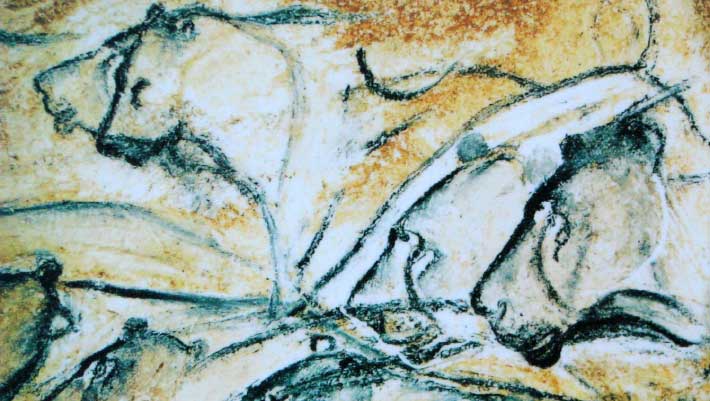
Des signes vieux de 40 000 ans montrent que les humains enregistraient des informations bien avant de les écrire
étude
Il y a plus de 40 000 ans, les humains de la période glaciaire sculptaient des motifs répétés de points, de lignes et de croix sur des outils et de petites figurines en ivoire. Une nouvelle étude informatique de plus de 3 000 de ces signes paléolithiques révèle qu’il ne s’agissait pas de décorations aléatoires mais de séquences structurées d’une complexité mesurable. Étonnamment, leur densité d’information rivalise avec celle du proto-cunéiforme, le premier système d’écriture connu apparu vers 3 000 avant notre ère.
25/02/2026 sciencedaily-paleo ⚙ Traduction automatique
1 2 3 4 5 6 7