study

Theme

4 image(s) · 32 News

Image gallery

Figure 1. Evolution of macroecological traits in Dinosauria. Large scale event in dinosaur evolution (a); the origin of dinosaurs (star), hyperthermals (volcano), the earliest fossil Avialae (bird), the earliest fossil angiosperm (flower), the Cretaceous/Palaeogene mass extinction (asteroid). Phylogeny of dinosaurs (b) redrawn from Sereno and adapted to the current consensus and upon which an ancestral state reconstruction of temperature niche (mean annual temperature) after Chiarenza et al. is plotted; Mesozoic palaeogeographies (c) for Triassic (T), Jurassic (J) and Cretaceous (K). Silhouette colours symbolize body mass for each of the taxa represented; information on dietary habits are plotted after Barrett and Zanno & Makovicky; numbers represent clades discussed through this study: 1, Ornithischia; 2, Thyreophora; 3, Ornithopoda; 4, Hadrosauroidea; 5, Marginocephalia; 6, Ceratopsia; 7, Saurischia; 8, Sauropodomorpha; 9, Sauropoda; 10, Theropoda; 11, Ceratosauria; 12, Tetanurae; 13, Coelurosauria; 14, Maniraptoriformes; 15, Maniraptora; 16, Deinonychosauria; 17, Avialae; 18, Ornithothoraces. Palaeogeographies modified from original plots via R package ‘mapast’ using plate models by Scotese.

Figure 1. Evolution of macroecological traits in Dinosauria. Large scale event in dinosaur evolution (a); the origin of dinosaurs (star), hyperthermals (volcano), the earliest fossil Avialae (bird), the earliest fossil angiosperm (flower), the Cretaceous/Palaeogene mass extinction (asteroid). Phylogeny of dinosaurs (b) redrawn from Sereno and adapted to the current consensus and upon which an ancestral state reconstruction of temperature niche (mean annual temperature) after Chiarenza et al. is plotted; Mesozoic palaeogeographies (c) for Triassic (T), Jurassic (J) and Cretaceous (K). Silhouette colours symbolize body mass for each of the taxa represented; information on dietary habits are plotted after Barrett and Zanno & Makovicky; numbers represent clades discussed through this study: 1, Ornithischia; 2, Thyreophora; 3, Ornithopoda; 4, Hadrosauroidea; 5, Marginocephalia; 6, Ceratopsia; 7, Saurischia; 8, Sauropodomorpha; 9, Sauropoda; 10, Theropoda; 11, Ceratosauria; 12, Tetanurae; 13, Coelurosauria; 14, Maniraptoriformes; 15, Maniraptora; 16, Deinonychosauria; 17, Avialae; 18, Ornithothoraces. Palaeogeographies modified from original plots via R package ‘mapast’ using plate models by Scotese.

scale Cretaceous Jurassic Mesozoic +23
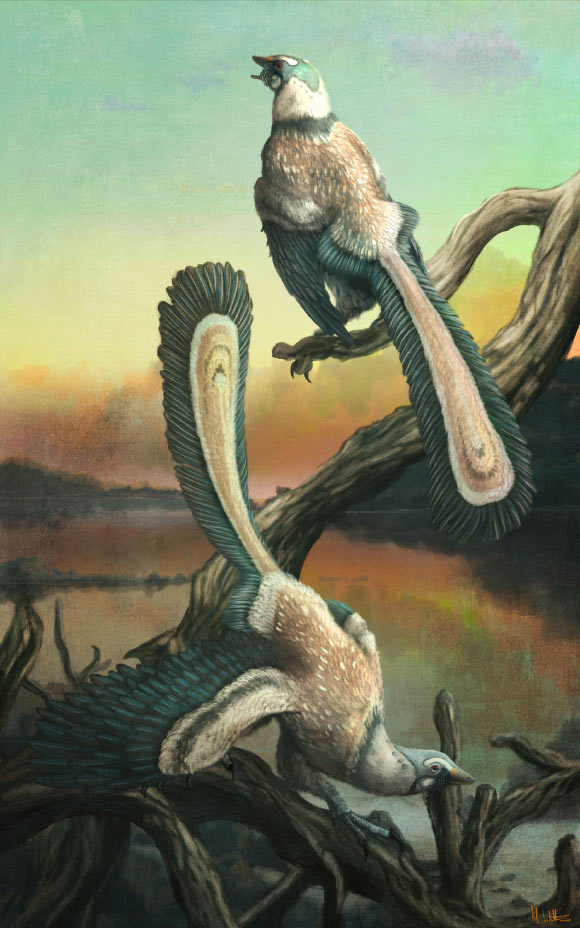
Restoration of Lucianovenator bonoi based on images of known remains and related genera. Proto-feathers for insulation in coelophysids and other early theropods have been supported by this study:[1]
Taxa Lucianovenator

Restoration of Lucianovenator bonoi based on images of known remains and related genera. Proto-feathers for insulation in coelophysids and other early theropods have been supported by this study:[1]

feather Coelophysidae Lucianovenator study
(A) Present day map of Australia with the town of Lightning Ridge indicated by the star. (B) Regional map of the Lightning Ridge region showing localities (where known) for specimens described in this text. Sealed (solid black lines) and unsealed roads (dashed lines) are indicated. The ephemeral Coocoran Lake is marked with a dotted blue line. (C) Correlative stratigraphy of the major Cretaceous depositional basins and geological units discussed in this study. The ornithopod icon and arrow indicate the approximate level of the Griman Creek Formation from which the current material pertains. Informal units are in quotation marks. Maps in (A) and (B) redrawn and modified from Bell et al. (2016) and Opal Fields—Lightning Ridge Region map produced by the NSW Department of Mineral Resources, respectively. Stratigraphy based on Toslini, McLoughlin & Drinnan (1999) and Cook, Bryan & Draper (2013). Ornithopod silhouette created by Caleb M. Brown and used under the Creative Commons Attribution-ShareAlike 3.0 Unported license.

(A) Present day map of Australia with the town of Lightning Ridge indicated by the star. (B) Regional map of the Lightning Ridge region showing localities (where known) for specimens described in this text. Sealed (solid black lines) and unsealed roads (dashed lines) are indicated. The ephemeral Coocoran Lake is marked with a dotted blue line. (C) Correlative stratigraphy of the major Cretaceous depositional basins and geological units discussed in this study. The ornithopod icon and arrow indicate the approximate level of the Griman Creek Formation from which the current material pertains. Informal units are in quotation marks. Maps in (A) and (B) redrawn and modified from Bell et al. (2016) and Opal Fields—Lightning Ridge Region map produced by the NSW Department of Mineral Resources, respectively. Stratigraphy based on Toslini, McLoughlin & Drinnan (1999) and Cook, Bryan & Draper (2013). Ornithopod silhouette created by Caleb M. Brown and used under the Creative Commons Attribution-ShareAlike 3.0 Unported license.

Australia Griman Creek Cretaceous specimen +3
Pectoral girdles and forelimbs of dinosaurs in left lateral view, depicting resting scapular and forelimb orientations in different dinosaurian groups as recommended according to the results of this study.

In each case, solid horizontal line is parallel to long axis of sacrum. A. theropods without semilunate carpals (Dilophosaurus wetherilli, UCMP 37302). B. theropods with semilunate carpals other than Caudipteryx (Velociraptor mongoliensis, after reference [60]). C. Caudipteryx (C. sp., after reference [8]). D. ceratopsids (Styracosaurus albertensis, NMC 344). E. basal sauropodomorphs (Plateosaurus engelhardti, AMNH 6810). F. non-hadrosaurian ornithopods (Thescelosaurus neglectus, reference [62]). G. hadrosaurids (Parasaurolophus walkeri, after reference [48]). Angle labels: B = scapular orientation relative to long axis of sacrum. E = elbow angle. S = shoulder angle. W = wrist angle. See Materials and Methods section for descriptions of angles.

Pectoral girdles and forelimbs of dinosaurs in left lateral view, depicting resting scapular and forelimb orientations in different dinosaurian groups as recommended according to the results of this study. In each case, solid horizontal line is parallel to long axis of sacrum. A. theropods without semilunate carpals (Dilophosaurus wetherilli, UCMP 37302). B. theropods with semilunate carpals other than Caudipteryx (Velociraptor mongoliensis, after reference [60]). C. Caudipteryx (C. sp., after reference [8]). D. ceratopsids (Styracosaurus albertensis, NMC 344). E. basal sauropodomorphs (Plateosaurus engelhardti, AMNH 6810). F. non-hadrosaurian ornithopods (Thescelosaurus neglectus, reference [62]). G. hadrosaurids (Parasaurolophus walkeri, after reference [48]). Angle labels: B = scapular orientation relative to long axis of sacrum. E = elbow angle. S = shoulder angle. W = wrist angle. See Materials and Methods section for descriptions of angles.

description Caudipteryx Ceratopsidae Dilophosaurus +9

News

En Nouvelle-Zélande, une des pires éruptions connues dévoile enfin son engrenage caché
In New Zealand, one of the worst known eruptions finally reveals its hidden mechanism
New Zealand study
Around 350,000 years ago, New Zealand was the scene of one of the most powerful volcanic eruptions known. A new study reveals that this cataclysmic event, at the origin of the Whakamaru caldera, would have simultaneously mobilized several magmatic reservoirs,...
01/06/2026 futura-terre ⚙ Auto-translated
Study: Early Complex Life Forms Were Bottom-Dwellers
study
Analyzing 1.75-billion-year-old microfossils from ancient Australian seabeds, paleontologists say ancient eukaryotes -- the ancestors of every plant, animal and fungus -- huddled in oxygenated seafloor patches for over a billion years before breaking free into open water. The post Study: Early Complex Life Forms Were Bottom-Dwellers appeared first on Sci.News: Breaking Science News.
27/05/2026 sci-news
Encore plus redoutable que le T. rex : ce mosasaure géant, de la taille d'un bus, est le plus féroce jamais découvert
Even more fearsome than the T. rex: this giant mosasaur, the size of a bus, is the most ferocious ever discovered
predator fossil Mosasaurus study
It ruled the seas 80 million years ago, measured more than 13 meters long and seemed much more violent than other marine predators of its time. A new study has just revealed the existence of a gigantic mosasaur, previously poorly identified, whose fossils tell...
26/05/2026 futura-terre ⚙ Auto-translated
Scientists solve 320-million-year mystery of reptile bone armor
armor bone study
Reptiles have been growing armor in their skin on and off for hundreds of millions of years, but scientists never fully understood how it evolved. A massive new evolutionary study shows these skin bones appeared independently in multiple lizard groups rather than coming from a single armored ancestor. Even more astonishing, Australian goannas lost this armor long ago — then evolved it back again millions of years later.
21/05/2026 sciencedaily
On sait enfin pourquoi le T. rex avait de si petits bras, et la réponse est brutale
We finally know why the T. rex had such small arms, and the answer is brutal
limb predator Tyrannosaurus study
For decades, the tiny arms of Tyrannosaurus rex have intrigued paleontologists. How could such a gigantic predator have evolved with such small forelimbs? A new study today provides the beginnings of an answer and it could well concern several...
20/05/2026 futura-terre ⚙ Auto-translated
1 2 3 4 5 6 7