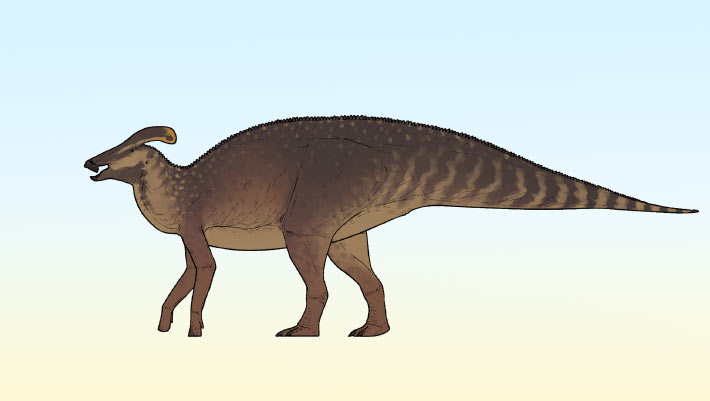
crest

Anatomical part

31 image(s) · 4 News

Image gallery

Holotype of Alcione elainus.
Fig. 6 of:
Longrich, N. R., Martill, D. M., & Andres, B. (2018). Late Maastrichtian pterosaurs from North Africa and mass extinction of Pterosauria at the Cretaceous-Paleogene boundary. PLoS biology, 16(3), e2001663.
---
Original figure legend:
A. elainus FSAC-OB 2, holotype partial skeleton and FSAC-OB 217, metacarpal IV.

(A) Holotype right humerus in anterior view, (B) holotype right ulna and radius in anterior view, respectively, (C) holotype sternum in left lateral view, (D) referred metacarpal IV, (E) holotype, distal end of left metacarpal IV and left scapulocoracoid, and (F) holotype right femur in posterior view. Abbreviations: co, coracoid; cr, cristospine; dc, distal condyle; dpc, deltopectoral crest; ect, ectepicondyle; fh, femoral head; gl, glenoid; gt, greater trochanter; hh, humeral head; hum, humerus; mcIV, metacarpal IV, pc, proximal cotyle; pf, pneumatic foramen; rad, radius; scpr, supracondylar process; ste, sternum; uln, ulna.

Holotype of Alcione elainus. Fig. 6 of: Longrich, N. R., Martill, D. M., & Andres, B. (2018). Late Maastrichtian pterosaurs from North Africa and mass extinction of Pterosauria at the Cretaceous-Paleogene boundary. PLoS biology, 16(3), e2001663. --- Original figure legend: A. elainus FSAC-OB 2, holotype partial skeleton and FSAC-OB 217, metacarpal IV. (A) Holotype right humerus in anterior view, (B) holotype right ulna and radius in anterior view, respectively, (C) holotype sternum in left lateral view, (D) referred metacarpal IV, (E) holotype, distal end of left metacarpal IV and left scapulocoracoid, and (F) holotype right femur in posterior view. Abbreviations: co, coracoid; cr, cristospine; dc, distal condyle; dpc, deltopectoral crest; ect, ectepicondyle; fh, femoral head; gl, glenoid; gt, greater trochanter; hh, humeral head; hum, humerus; mcIV, metacarpal IV, pc, proximal cotyle; pf, pneumatic foramen; rad, radius; scpr, supracondylar process; ste, sternum; uln, ulna.

crest humerus Cretaceous Maastrichtian +7
Holotype of Alcione elainus.
Fig. 6 of:
Longrich, N. R., Martill, D. M., & Andres, B. (2018). Late Maastrichtian pterosaurs from North Africa and mass extinction of Pterosauria at the Cretaceous-Paleogene boundary. PLoS biology, 16(3), e2001663.
---
Original figure legend:
A. elainus FSAC-OB 2, holotype partial skeleton and FSAC-OB 217, metacarpal IV.

(A) Holotype right humerus in anterior view, (B) holotype right ulna and radius in anterior view, respectively, (C) holotype sternum in left lateral view, (D) referred metacarpal IV, (E) holotype, distal end of left metacarpal IV and left scapulocoracoid, and (F) holotype right femur in posterior view. Abbreviations: co, coracoid; cr, cristospine; dc, distal condyle; dpc, deltopectoral crest; ect, ectepicondyle; fh, femoral head; gl, glenoid; gt, greater trochanter; hh, humeral head; hum, humerus; mcIV, metacarpal IV, pc, proximal cotyle; pf, pneumatic foramen; rad, radius; scpr, supracondylar process; ste, sternum; uln, ulna.
Taxa Alcione

Holotype of Alcione elainus. Fig. 6 of: Longrich, N. R., Martill, D. M., & Andres, B. (2018). Late Maastrichtian pterosaurs from North Africa and mass extinction of Pterosauria at the Cretaceous-Paleogene boundary. PLoS biology, 16(3), e2001663. --- Original figure legend: A. elainus FSAC-OB 2, holotype partial skeleton and FSAC-OB 217, metacarpal IV. (A) Holotype right humerus in anterior view, (B) holotype right ulna and radius in anterior view, respectively, (C) holotype sternum in left lateral view, (D) referred metacarpal IV, (E) holotype, distal end of left metacarpal IV and left scapulocoracoid, and (F) holotype right femur in posterior view. Abbreviations: co, coracoid; cr, cristospine; dc, distal condyle; dpc, deltopectoral crest; ect, ectepicondyle; fh, femoral head; gl, glenoid; gt, greater trochanter; hh, humeral head; hum, humerus; mcIV, metacarpal IV, pc, proximal cotyle; pf, pneumatic foramen; rad, radius; scpr, supracondylar process; ste, sternum; uln, ulna.

crest humerus Cretaceous Maastrichtian +7
Figure 4
The reconstruction of the skull and lower jaw of the holotype of Darwinopterus camposi sp. nov. (IVPP V 17957). Scale bar: 50 mm. Abbreviations: d, dentary; f, frontal; j, jugal; ltf, lower temporal fenestra; m, maxilla; man.sys, mandibular symphysis; naof, nasoantorbital fenestra; o, orbit; p, parietal; pm, premaxilla; pmcr, premaxillary crest; po, postorbital; prn, nasal process; q, quadrate; sq, squamosal; utf, upper temporal fenestra.
Taxa Monofenestrata

Figure 4 The reconstruction of the skull and lower jaw of the holotype of Darwinopterus camposi sp. nov. (IVPP V 17957). Scale bar: 50 mm. Abbreviations: d, dentary; f, frontal; j, jugal; ltf, lower temporal fenestra; m, maxilla; man.sys, mandibular symphysis; naof, nasoantorbital fenestra; o, orbit; p, parietal; pm, premaxilla; pmcr, premaxillary crest; po, postorbital; prn, nasal process; q, quadrate; sq, squamosal; utf, upper temporal fenestra.

crest scale holotype Darwinoptera +3
Figure 4
The reconstruction of the skull and lower jaw of the holotype of Darwinopterus camposi sp. nov. (IVPP V 17957). Scale bar: 50 mm. Abbreviations: d, dentary; f, frontal; j, jugal; ltf, lower temporal fenestra; m, maxilla; man.sys, mandibular symphysis; naof, nasoantorbital fenestra; o, orbit; p, parietal; pm, premaxilla; pmcr, premaxillary crest; po, postorbital; prn, nasal process; q, quadrate; sq, squamosal; utf, upper temporal fenestra.
Taxa Darwinoptera

Figure 4 The reconstruction of the skull and lower jaw of the holotype of Darwinopterus camposi sp. nov. (IVPP V 17957). Scale bar: 50 mm. Abbreviations: d, dentary; f, frontal; j, jugal; ltf, lower temporal fenestra; m, maxilla; man.sys, mandibular symphysis; naof, nasoantorbital fenestra; o, orbit; p, parietal; pm, premaxilla; pmcr, premaxillary crest; po, postorbital; prn, nasal process; q, quadrate; sq, squamosal; utf, upper temporal fenestra.

crest scale holotype Darwinoptera +3
Cuspicephalus scarfi MJMG K1918. A, Original skull on slab of mudstone, Lacking the mandible and dentition; B, outline diagram of preserved bone. Light grey is bone, dark grey is fibrous bone of sagittal crest, black is dental alveoli where unambiguous; C restoration of skull outline, with hypothetical lower jaw. Scale bar = 50 mm. Abbreviation: j, jugal; naof, nasoantorbital fenestra; m, maxilla; o, orbit; pm, premaxilla; q, quadrate; sc,

sagittal crest; sq, squamosal; tr np, trace of nasal process.
Taxa Cuspicephalus

Cuspicephalus scarfi MJMG K1918. A, Original skull on slab of mudstone, Lacking the mandible and dentition; B, outline diagram of preserved bone. Light grey is bone, dark grey is fibrous bone of sagittal crest, black is dental alveoli where unambiguous; C restoration of skull outline, with hypothetical lower jaw. Scale bar = 50 mm. Abbreviation: j, jugal; naof, nasoantorbital fenestra; m, maxilla; o, orbit; pm, premaxilla; q, quadrate; sc, sagittal crest; sq, squamosal; tr np, trace of nasal process.

bone crest scale Cuspicephalus +1
Photograph (A) and line drawings (B) of Gladocephaloideus jingangshanensis (JPM 2014–004). Abbreviations: ca, carpals; cr, coracoids; cv, cervical vertebrae; d, dentray; dg, deep groove along the mid-line of the mandibular symphysis; dv, dorsal vertebrae; dr, dorsal ribs; etp, extensor tendon process; f, frontal; fc, fifth carpal; fe, femur; fi, fibula; fin, fingers; h, humerus; il, ilium; m, maxilla; mmttsI-IV, metatrals I-IV; mttv, metatarsal V; nao, nasoantorbital opening; or, orbital; pcr, parietal crest; pm, premaxilla; pt, pteroid; ra, radius; rdl, radiale; sc, scapula; st, sternum; sl, sclerotic rings; t, teeth; tc, tooth sockets; ti, tibia; ul, ulna; wm, wing metacarpal; wph1-4, wing phalanges 1–4. Scale bar = 5 cm.
Taxa Gladocephaloideus

Photograph (A) and line drawings (B) of Gladocephaloideus jingangshanensis (JPM 2014–004). Abbreviations: ca, carpals; cr, coracoids; cv, cervical vertebrae; d, dentray; dg, deep groove along the mid-line of the mandibular symphysis; dv, dorsal vertebrae; dr, dorsal ribs; etp, extensor tendon process; f, frontal; fc, fifth carpal; fe, femur; fi, fibula; fin, fingers; h, humerus; il, ilium; m, maxilla; mmttsI-IV, metatrals I-IV; mttv, metatarsal V; nao, nasoantorbital opening; or, orbital; pcr, parietal crest; pm, premaxilla; pt, pteroid; ra, radius; rdl, radiale; sc, scapula; st, sternum; sl, sclerotic rings; t, teeth; tc, tooth sockets; ti, tibia; ul, ulna; wm, wing metacarpal; wph1-4, wing phalanges 1–4. Scale bar = 5 cm.

crest humerus scale tooth +2
FSAC-OB 7, holotype right humerus, Simurghia robustus.
In (A), dorsal view, (B) ventral view, and (C) posterior view. Abbreviations: dpc, deltopectoral crest; msc, muscle scar; scpr, supracondylar process of the ectepicondyle; vp, ventral pillar; vt, ventral tubercle of the deltopectoral crest.
Taxa Simurghia

FSAC-OB 7, holotype right humerus, Simurghia robustus. In (A), dorsal view, (B) ventral view, and (C) posterior view. Abbreviations: dpc, deltopectoral crest; msc, muscle scar; scpr, supracondylar process of the ectepicondyle; vp, ventral pillar; vt, ventral tubercle of the deltopectoral crest.

crest humerus holotype Simurghia
FSAC-OB 232, holotype skeleton of Barbaridactylus grandis.
(A) Left humerus in anterior view, (B) right femur in anterior view, (C) right radius and ulna in posterior view, (D) cervical vertebra in ventral view, (E) left scapulocoracoid in medial view, and (F) posterior ramus of the right mandible in medial view.

Abbreviations: co, coracoid; cot, cotyle of mandible; cvr, cervical ribs; dm, dorsal margin of mandible; dpc, deltopectoral crest; gl, glenoid; fh, femoral head; gt, greater trochanter; hh, humeral head; hyp, hypapophysis; olp, olecranon process; pex, postexapophysis; pn, pneumatopore; rad, radius; sca, scapula; scp, supracondylar process of the ectepicondyle; uc, ulnar crest; uln, ulna; vm, ventral margin of mandible.
Taxa Barbaridactylus

FSAC-OB 232, holotype skeleton of Barbaridactylus grandis. (A) Left humerus in anterior view, (B) right femur in anterior view, (C) right radius and ulna in posterior view, (D) cervical vertebra in ventral view, (E) left scapulocoracoid in medial view, and (F) posterior ramus of the right mandible in medial view. Abbreviations: co, coracoid; cot, cotyle of mandible; cvr, cervical ribs; dm, dorsal margin of mandible; dpc, deltopectoral crest; gl, glenoid; fh, femoral head; gt, greater trochanter; hh, humeral head; hyp, hypapophysis; olp, olecranon process; pex, postexapophysis; pn, pneumatopore; rad, radius; sca, scapula; scp, supracondylar process of the ectepicondyle; uc, ulnar crest; uln, ulna; vm, ventral margin of mandible.

crest humerus vertebra holotype +2
Mimodactylus libanensis gen. et sp. nov. (a) Photo and drawing of the complete specimen. (b) Close up of scapula and coracoid. (c) Detail of the wrist, showing the relation of the pteroid and the carpus. (d) Detail of the humerus. Scale-bars, a: 50 mm; b-d: 10 mm. Abbreviations. car: carpus; cdv: caudal vertebrae; cor: coracoid; cra: cranium; cs: cristospine; cv: cervical vertebrae; d: dentary; dcar: distal carpals; dpc: deltopectoral crest; dri: dorsal ribs; dv: dorsal vertebrae; fe: femur; hu: humerus; man: mandible; mcI-III: first to third metacarpals; mcIV: wing metacarpal; mtar: metatarsals; pcar: proximal carpals; ph1d4: first wing phalanx; ph2d4: second wing phalanx; ph3d4: third wing phalanx; ph4d4: fourth wing phalanx; ppu: prepubis; ptd: pteroid; ra: radius; sca: scapula; sri: sacral ribs; stp: sternal plate; sym: mandibular symphysis; tar: tarsus; te: teeth; ti: tibia; ul: ulna; the abbreviations ‘l’ and ‘r’ represents respectively left and right.
Taxa Mimodactylus

Mimodactylus libanensis gen. et sp. nov. (a) Photo and drawing of the complete specimen. (b) Close up of scapula and coracoid. (c) Detail of the wrist, showing the relation of the pteroid and the carpus. (d) Detail of the humerus. Scale-bars, a: 50 mm; b-d: 10 mm. Abbreviations. car: carpus; cdv: caudal vertebrae; cor: coracoid; cra: cranium; cs: cristospine; cv: cervical vertebrae; d: dentary; dcar: distal carpals; dpc: deltopectoral crest; dri: dorsal ribs; dv: dorsal vertebrae; fe: femur; hu: humerus; man: mandible; mcI-III: first to third metacarpals; mcIV: wing metacarpal; mtar: metatarsals; pcar: proximal carpals; ph1d4: first wing phalanx; ph2d4: second wing phalanx; ph3d4: third wing phalanx; ph4d4: fourth wing phalanx; ppu: prepubis; ptd: pteroid; ra: radius; sca: scapula; sri: sacral ribs; stp: sternal plate; sym: mandibular symphysis; tar: tarsus; te: teeth; ti: tibia; ul: ulna; the abbreviations ‘l’ and ‘r’ represents respectively left and right.

crest humerus scale drawing +3
Mimodactylus libanensis gen. et sp. nov. (a) Photo and drawing of the complete specimen. (b) Close up of scapula and coracoid. (c) Detail of the wrist, showing the relation of the pteroid and the carpus. (d) Detail of the humerus. Scale-bars, a: 50 mm; b-d: 10 mm. Abbreviations. car: carpus; cdv: caudal vertebrae; cor: coracoid; cra: cranium; cs: cristospine; cv: cervical vertebrae; d: dentary; dcar: distal carpals; dpc: deltopectoral crest; dri: dorsal ribs; dv: dorsal vertebrae; fe: femur; hu: humerus; man: mandible; mcI-III: first to third metacarpals; mcIV: wing metacarpal; mtar: metatarsals; pcar: proximal carpals; ph1d4: first wing phalanx; ph2d4: second wing phalanx; ph3d4: third wing phalanx; ph4d4: fourth wing phalanx; ppu: prepubis; ptd: pteroid; ra: radius; sca: scapula; sri: sacral ribs; stp: sternal plate; sym: mandibular symphysis; tar: tarsus; te: teeth; ti: tibia; ul: ulna; the abbreviations ‘l’ and ‘r’ represents respectively left and right.
Taxa Mimodactylidae

Mimodactylus libanensis gen. et sp. nov. (a) Photo and drawing of the complete specimen. (b) Close up of scapula and coracoid. (c) Detail of the wrist, showing the relation of the pteroid and the carpus. (d) Detail of the humerus. Scale-bars, a: 50 mm; b-d: 10 mm. Abbreviations. car: carpus; cdv: caudal vertebrae; cor: coracoid; cra: cranium; cs: cristospine; cv: cervical vertebrae; d: dentary; dcar: distal carpals; dpc: deltopectoral crest; dri: dorsal ribs; dv: dorsal vertebrae; fe: femur; hu: humerus; man: mandible; mcI-III: first to third metacarpals; mcIV: wing metacarpal; mtar: metatarsals; pcar: proximal carpals; ph1d4: first wing phalanx; ph2d4: second wing phalanx; ph3d4: third wing phalanx; ph4d4: fourth wing phalanx; ppu: prepubis; ptd: pteroid; ra: radius; sca: scapula; sri: sacral ribs; stp: sternal plate; sym: mandibular symphysis; tar: tarsus; te: teeth; ti: tibia; ul: ulna; the abbreviations ‘l’ and ‘r’ represents respectively left and right.

crest humerus scale drawing +3
Photograph of UALVP 24238. Cranial crest and wing phalanges 2-4 of the left wing have been reconstructed with plaster and paint (on the right side of the photograph), as well as metatarsals of the left foot.
Taxa Dawndraco

Photograph of UALVP 24238. Cranial crest and wing phalanges 2-4 of the left wing have been reconstructed with plaster and paint (on the right side of the photograph), as well as metatarsals of the left foot.

crest Dawndraco
Aralazhdarcho bostobensis, ZIN PH 57/43, a proximal fragment of a left humerus in proximal (a), ventral (b), anterior (c), dorsal (d), and posterior (e) views. This specimen is from the Shakh Shakh II locality in the northeasten Aral Sea region of Kazakhstan; Bostobe Formation, Upper Cretaceous (Santonian – lower Campanian). Abbreviations: h, humeral head; pf, pneumatic foramen; uc, ulnar crest. Scale bar is 10 mm.
Taxa Aralazhdarcho

Aralazhdarcho bostobensis, ZIN PH 57/43, a proximal fragment of a left humerus in proximal (a), ventral (b), anterior (c), dorsal (d), and posterior (e) views. This specimen is from the Shakh Shakh II locality in the northeasten Aral Sea region of Kazakhstan; Bostobe Formation, Upper Cretaceous (Santonian – lower Campanian). Abbreviations: h, humeral head; pf, pneumatic foramen; uc, ulnar crest. Scale bar is 10 mm.

crest humerus scale Kazakhstan +7
Skull of Caiuajara dobruskii gen. et sp. nov. (holotype, CP.V 1449) with the shape of an adult individual.

Scale bar equals 50: d, dentary; dcr, dentary crest; dep, depression; exp, ventral expansion of the premaxilla; f, frontal; fcr, frontal crest; fo, foraminae; m, maxilla; oc, occipital condyle; op, opisthotic; p, parietal; pm, premaxilla; pmcr, premaxillary crest; q, quadrate; soc, supraoccipital. The quadrate is inverted.
Taxa Caiuajara

Skull of Caiuajara dobruskii gen. et sp. nov. (holotype, CP.V 1449) with the shape of an adult individual. Scale bar equals 50: d, dentary; dcr, dentary crest; dep, depression; exp, ventral expansion of the premaxilla; f, frontal; fcr, frontal crest; fo, foraminae; m, maxilla; oc, occipital condyle; op, opisthotic; p, parietal; pm, premaxilla; pmcr, premaxillary crest; q, quadrate; soc, supraoccipital. The quadrate is inverted.

crest scale holotype Caiuajara +1
Partial rostrum of Iberodactylus andreui gen. et sp. nov. (MPZ-2014/1). Photographic images (A–F)
and 3D renderings obtained from μCT data (G–L) in right lateral (A,G), left lateral (B,H), dorsal (C,I), palatal
(D,J), caudal (E,K), and cranial (F,L) views. Scale bar in cm. Abbreviations. pm: premaxilla; pmcr: premaxillary

crest; prid: palatal ridge; te: teeth; trb: trabeculae.
Taxa Iberodactylus

Partial rostrum of Iberodactylus andreui gen. et sp. nov. (MPZ-2014/1). Photographic images (A–F) and 3D renderings obtained from μCT data (G–L) in right lateral (A,G), left lateral (B,H), dorsal (C,I), palatal (D,J), caudal (E,K), and cranial (F,L) views. Scale bar in cm. Abbreviations. pm: premaxilla; pmcr: premaxillary crest; prid: palatal ridge; te: teeth; trb: trabeculae.

crest scale Iberodactylus partial
Holotype right pes of Vespersaurus paranaensis gen. et sp. nov. (MPCO.V 0065d1). (a) Distal end
of metatarsal II-IV in dorsal view. (b) Distal part of digit II in lateral view. (c) Distal part of digit IV in lateral
view. (d) Entire foot as preserved in lateral view. Anatomical abbreviations: ed, extensor depression; fd, flexor
depression; lcp, lateral collateral pit; mc, lateral crest; plg, proximolateral groove; vg, vertical groove; vlg, ventral

lateral groove; vm, ventral margin.
Taxa Vespersaurus

Holotype right pes of Vespersaurus paranaensis gen. et sp. nov. (MPCO.V 0065d1). (a) Distal end of metatarsal II-IV in dorsal view. (b) Distal part of digit II in lateral view. (c) Distal part of digit IV in lateral view. (d) Entire foot as preserved in lateral view. Anatomical abbreviations: ed, extensor depression; fd, flexor depression; lcp, lateral collateral pit; mc, lateral crest; plg, proximolateral groove; vg, vertical groove; vlg, ventral lateral groove; vm, ventral margin.

crest holotype Vespersaurus
Fig. 2. Right tibia of Quilmesaurus curriei compared to other tibiae of Abelisauridae. A-B: Quilmesaurus curriei in lateral and anterior view; C: Aucasaurus garridoi, D: Genusaurus sisterornis, E and H: Ekrixinatosaurus novasi, F: Indosuchus raptorius (Courtesy of Dr. F. E. Novas), G: Rajasaurus narmadensis; I: Pycnonemosaurus nevesi Abbreviations: faap: facet for the ascending process of the astragalus; cc: cnemial crest; lm: lateral malleolus; lma: lateral margin of the malleolus; lpcc: lateral process of the cnemial crest; mm: medial malleolus; mma: medial margin of the malleolus; vmcc: ventral margin of the cnemial crest; vpcc: ventral process of the cnemial crest.
Taxa Quilmesaurus

Fig. 2. Right tibia of Quilmesaurus curriei compared to other tibiae of Abelisauridae. A-B: Quilmesaurus curriei in lateral and anterior view; C: Aucasaurus garridoi, D: Genusaurus sisterornis, E and H: Ekrixinatosaurus novasi, F: Indosuchus raptorius (Courtesy of Dr. F. E. Novas), G: Rajasaurus narmadensis; I: Pycnonemosaurus nevesi Abbreviations: faap: facet for the ascending process of the astragalus; cc: cnemial crest; lm: lateral malleolus; lma: lateral margin of the malleolus; lpcc: lateral process of the cnemial crest; mm: medial malleolus; mma: medial margin of the malleolus; vmcc: ventral margin of the cnemial crest; vpcc: ventral process of the cnemial crest.

crest Abelisauridae Aucasaurus Ekrixinatosaurus +5
1 2

News

A giant blade-crested spinosaurus, the “hell heron,” discovered in the Sahara
crest predator Niger fossil Dinosauria Spinosauria
Deep in the heart of the Sahara, scientists have uncovered Spinosaurus mirabilis — a spectacular new predator crowned with a massive, scimitar-shaped crest that may once have blazed with color under the desert sun. Discovered in remote inland river deposits in Niger, the fossil rewrites what we thought we knew about spinosaur dinosaurs, suggesting they weren’t fully aquatic hunters but powerful waders stalking fish in forested waterways hundreds of miles from the sea.
23/02/2026 sciencedaily
Corythosaurus: Beast of the Week
crest Canada Canardia Corythosaurus Dinosauria Hadrosauria Hadrosauridae Hypacrosaurus Lambeosauria Parasaurolophus Velafrons
This week we will take a look at a well known duckbill dinosaur.  Enter Corythosaurus!  Corythosaurus was a plant eater that belonged to the lambiosaurine group within the family, Hadrosauridae. (duckbills)  Lambiosaurine hadrosaurs typically had hollow crests on their heads and narrower beaks compared to other kinds hadrosaurs.  It was closely related to other lambiosaurine hadrosaurs such as Parasaurolophus, Hypacrosaurus, Lambeosaurus, and Velafrons.  It lived in what is now Alberta, Canada,
15/02/2026 prehistoricbeastoftheweek
Parasaurolophus: Beast of the Week
crest Cretaceous Late Cretaceous specimen Canardia Dinosauria Parasaurolophus
This week we will be taking a look at a very popular duck-billed dinosaur.  Say hello to Parasaurolophus!  Parasaurolophus was a plant eater that lived in what is now North America during the Late Cretaceous, about 77 to 73 million years ago.  Parasaurolophus measured about 30 feet (9.1 meters) long from beak to tail, but certain incomplete specimens show evidence of having been a bit larger.  Parasaurolophus is most well-known for its long, curved crest that grew from the back of its head, givi
21/12/2025 prehistoricbeastoftheweek
Dinosaur mummy found with hooves and a hidden crest
crest scale movie Dinosauria Edmontosaurus
Scientists have reconstructed the most complete and lifelike profile of Edmontosaurus annectens thanks to an extraordinary preservation process called clay templating, in which a thin clay film captured the dinosaur’s skin, scales, spikes, and even hooves in three dimensions. By combining newly excavated “mummies,” advanced imaging, and artistic reconstruction, researchers revealed a tall crest, a single row of tail spikes, delicate pebble-like scales, and—most remarkably—the earliest known hoov
30/11/2025 sciencedaily