←

fossile

Nature du spécimen

242 image(s) · 242 Actualités

Galerie d'images

Sinornithosaurus millenii fossil displayed in Hong Kong Science Museum
Taxons Sinornithosaurus

Sinornithosaurus millenii fossil displayed in Hong Kong Science Museum

musée fossile Sinornithosaurus
Jinfengopteryx elegans fossil displayed in Hong Kong Science Museum
Taxons Jinfengopteryginae

Jinfengopteryx elegans fossil displayed in Hong Kong Science Museum

musée fossile Jinfengopteryginae Jinfengopteryx
Jinfengopteryx elegans fossil displayed in Hong Kong Science Museum
Taxons Jinfengopteryx

Jinfengopteryx elegans fossil displayed in Hong Kong Science Museum

musée fossile Jinfengopteryginae Jinfengopteryx
Fossil skeleton of Guaibasaurus, a basal Saurischian dinosaur genus
Taxons Guaibasauridae

Fossil skeleton of Guaibasaurus, a basal Saurischian dinosaur genus

fossile Dinosauria Guaibasauridae Guaibasaurus +2
Fossil of Romeosaurus, an extinct reptile - Took the picture at Museo Paleontologico di Sant'Anna d'Alfaedo
Taxons Yaguarasaurinae

Fossil of Romeosaurus, an extinct reptile - Took the picture at Museo Paleontologico di Sant'Anna d'Alfaedo

fossile Romeosaurus Yaguarasaurinae
Fossil of Romeosaurus, an extinct reptile - Took the picture at Museo Paleontologico di Sant'Anna d'Alfaedo
Taxons Romeosaurus

Fossil of Romeosaurus, an extinct reptile - Took the picture at Museo Paleontologico di Sant'Anna d'Alfaedo

fossile Romeosaurus Yaguarasaurinae
Fossil of Quetzalcoatlus, an extinct pterosaur- Took the photo at Senckenberg Museum of Frankfurt
Taxons Quetzalcoatlus

Fossil of Quetzalcoatlus, an extinct pterosaur- Took the photo at Senckenberg Museum of Frankfurt

musée fossile Pterosauria Quetzalcoatlus
A restoration of Rinconsaurus compared to a human ,

•  Based proportionally on fossil elements and skeletal reconstruction featured in the Rinconsaurus description,[1] with missing parts based on other titanosaur reconstructions. The remains of Rinconsaurus represent two adults and a juvenile all of which are incomplete; some of the proportions shown here, such as the neck, limb lengths, and skull shape are not certain.
•  Osteroderms are not yet known in Rinconsaurus.  The osteoderms shown here are based loosely on Mendozasaurus.[2] Osteoderms are known from at least 10 titanosaur genera spread across the family tree but it's not clear if all titanosaurs had them.[3] Titanosaur osteoderms are rare and their layout and position on the body are not certain. [4]
•  The colours and patterns, as with the majority of reconstructions of prehistoric creatures, are speculative.
•  Human silhouette approximately 180 cm tall.

NOTE: I often update my images. If you want to have any of my images on a website, please (if possible) don’t host/save it to the website server. I’d prefer it if the image's Wikimedia URL is used. This means that if I update an image, it will be updated on the site as well.  Thanks.   


References


↑ Coria, Jorge; B.J.G. Riga (2003). "Rinconsaurus caudamirus gen. et sp nov., a new titanosaurid (Dinosauria, Sauropoda) from the Late Cretaceous of Patagonia, Argentina". Revista Geologica de Chile 30 (2): 333–353. ISSN 0716-0208. Retrieved on 2007-05-21.

↑   González Riga B (2003) A new titanosaur (Dinosauria, Sauropoda) from the Upper Cretaceous of Mendoza, Argentina. Ameghiniana 40 (2) 

↑  Carrano, M.T. and D’Emic, M.D.  2015 'Osteoderms of the titanosaur sauropod dinosaur Alamosaurus sanjuanensis Gilmore, 1922'. Journal of Vertebrate Paleontology.

↑    Vidal D, Ortega F, Sanz JL (2014) Titanosaur Osteoderms from the Upper Cretaceous of Lo Hueco (Spain) and Their Implications on the Armor of Laurasian Titanosaurs. PLoS ONE 9(8): e102488. doi:10.1371/journal.pone.0102488
Taxons Rinconsauria

A restoration of Rinconsaurus compared to a human , • Based proportionally on fossil elements and skeletal reconstruction featured in the Rinconsaurus description,[1] with missing parts based on other titanosaur reconstructions. The remains of Rinconsaurus represent two adults and a juvenile all of which are incomplete; some of the proportions shown here, such as the neck, limb lengths, and skull shape are not certain. • Osteroderms are not yet known in Rinconsaurus. The osteoderms shown here are based loosely on Mendozasaurus.[2] Osteoderms are known from at least 10 titanosaur genera spread across the family tree but it's not clear if all titanosaurs had them.[3] Titanosaur osteoderms are rare and their layout and position on the body are not certain. [4] • The colours and patterns, as with the majority of reconstructions of prehistoric creatures, are speculative. • Human silhouette approximately 180 cm tall. NOTE: I often update my images. If you want to have any of my images on a website, please (if possible) don’t host/save it to the website server. I’d prefer it if the image's Wikimedia URL is used. This means that if I update an image, it will be updated on the site as well. Thanks. References ↑ Coria, Jorge; B.J.G. Riga (2003). "Rinconsaurus caudamirus gen. et sp nov., a new titanosaurid (Dinosauria, Sauropoda) from the Late Cretaceous of Patagonia, Argentina". Revista Geologica de Chile 30 (2): 333–353. ISSN 0716-0208. Retrieved on 2007-05-21. ↑ González Riga B (2003) A new titanosaur (Dinosauria, Sauropoda) from the Upper Cretaceous of Mendoza, Argentina. Ameghiniana 40 (2) ↑ Carrano, M.T. and D’Emic, M.D. 2015 'Osteoderms of the titanosaur sauropod dinosaur Alamosaurus sanjuanensis Gilmore, 1922'. Journal of Vertebrate Paleontology. ↑ Vidal D, Ortega F, Sanz JL (2014) Titanosaur Osteoderms from the Upper Cretaceous of Lo Hueco (Spain) and Their Implications on the Armor of Laurasian Titanosaurs. PLoS ONE 9(8): e102488. doi:10.1371/journal.pone.0102488

armure membre description Argentine +14
A restoration of Rinconsaurus compared to a human ,

•  Based proportionally on fossil elements and skeletal reconstruction featured in the Rinconsaurus description,[1] with missing parts based on other titanosaur reconstructions. The remains of Rinconsaurus represent two adults and a juvenile all of which are incomplete; some of the proportions shown here, such as the neck, limb lengths, and skull shape are not certain.
•  Osteroderms are not yet known in Rinconsaurus.  The osteoderms shown here are based loosely on Mendozasaurus.[2] Osteoderms are known from at least 10 titanosaur genera spread across the family tree but it's not clear if all titanosaurs had them.[3] Titanosaur osteoderms are rare and their layout and position on the body are not certain. [4]
•  The colours and patterns, as with the majority of reconstructions of prehistoric creatures, are speculative.
•  Human silhouette approximately 180 cm tall.

NOTE: I often update my images. If you want to have any of my images on a website, please (if possible) don’t host/save it to the website server. I’d prefer it if the image's Wikimedia URL is used. This means that if I update an image, it will be updated on the site as well.  Thanks.   


References


↑ Coria, Jorge; B.J.G. Riga (2003). "Rinconsaurus caudamirus gen. et sp nov., a new titanosaurid (Dinosauria, Sauropoda) from the Late Cretaceous of Patagonia, Argentina". Revista Geologica de Chile 30 (2): 333–353. ISSN 0716-0208. Retrieved on 2007-05-21.

↑   González Riga B (2003) A new titanosaur (Dinosauria, Sauropoda) from the Upper Cretaceous of Mendoza, Argentina. Ameghiniana 40 (2) 

↑  Carrano, M.T. and D’Emic, M.D.  2015 'Osteoderms of the titanosaur sauropod dinosaur Alamosaurus sanjuanensis Gilmore, 1922'. Journal of Vertebrate Paleontology.

↑    Vidal D, Ortega F, Sanz JL (2014) Titanosaur Osteoderms from the Upper Cretaceous of Lo Hueco (Spain) and Their Implications on the Armor of Laurasian Titanosaurs. PLoS ONE 9(8): e102488. doi:10.1371/journal.pone.0102488
Taxons Rinconsaurus

A restoration of Rinconsaurus compared to a human , • Based proportionally on fossil elements and skeletal reconstruction featured in the Rinconsaurus description,[1] with missing parts based on other titanosaur reconstructions. The remains of Rinconsaurus represent two adults and a juvenile all of which are incomplete; some of the proportions shown here, such as the neck, limb lengths, and skull shape are not certain. • Osteroderms are not yet known in Rinconsaurus. The osteoderms shown here are based loosely on Mendozasaurus.[2] Osteoderms are known from at least 10 titanosaur genera spread across the family tree but it's not clear if all titanosaurs had them.[3] Titanosaur osteoderms are rare and their layout and position on the body are not certain. [4] • The colours and patterns, as with the majority of reconstructions of prehistoric creatures, are speculative. • Human silhouette approximately 180 cm tall. NOTE: I often update my images. If you want to have any of my images on a website, please (if possible) don’t host/save it to the website server. I’d prefer it if the image's Wikimedia URL is used. This means that if I update an image, it will be updated on the site as well. Thanks. References ↑ Coria, Jorge; B.J.G. Riga (2003). "Rinconsaurus caudamirus gen. et sp nov., a new titanosaurid (Dinosauria, Sauropoda) from the Late Cretaceous of Patagonia, Argentina". Revista Geologica de Chile 30 (2): 333–353. ISSN 0716-0208. Retrieved on 2007-05-21. ↑ González Riga B (2003) A new titanosaur (Dinosauria, Sauropoda) from the Upper Cretaceous of Mendoza, Argentina. Ameghiniana 40 (2) ↑ Carrano, M.T. and D’Emic, M.D. 2015 'Osteoderms of the titanosaur sauropod dinosaur Alamosaurus sanjuanensis Gilmore, 1922'. Journal of Vertebrate Paleontology. ↑ Vidal D, Ortega F, Sanz JL (2014) Titanosaur Osteoderms from the Upper Cretaceous of Lo Hueco (Spain) and Their Implications on the Armor of Laurasian Titanosaurs. PLoS ONE 9(8): e102488. doi:10.1371/journal.pone.0102488

armure membre description Argentine +14
fossil placodont
Taxons Cyamodontidae

fossil placodont

fossile Cyamodontidae Cyamodus Placodontia
fossil placodont
Taxons Cyamodus

fossil placodont

fossile Cyamodontidae Cyamodus Placodontia
fossil of henodus
Taxons Cyamodontoidea

fossil of henodus

fossile Cyamodontoidea Henodontidae Henodus
fossil of henodus
Taxons Henodontidae

fossil of henodus

fossile Cyamodontoidea Henodontidae Henodus
Fossils of Magnapualia
Taxons Magnapaulia

Fossils of Magnapualia

fossile Magnapaulia
Neotype fossil of Ardeadactylus longicollum, specimen number SMNS 56603 (Number 58 in Wellnhofer 1970).
Taxons Ardeadactylus

Neotype fossil of Ardeadactylus longicollum, specimen number SMNS 56603 (Number 58 in Wellnhofer 1970).

fossile spécimen Ardeadactylus Wellnhoferia
A cast of BYU 9025, the holotype fossil of the sauropod dinosaur Supersaurus, a giant scapulocoracoid measuring 2.4m long.
• The source photo was taken at the Dinosaur Journey Musuem.
• Notes regarding the file; This image was edited and extracted from the original seen here. [1] The Photoshop CC lens correction profile and a 'perspective warp' correction were applied.
Taxons Supersaurus

A cast of BYU 9025, the holotype fossil of the sauropod dinosaur Supersaurus, a giant scapulocoracoid measuring 2.4m long. • The source photo was taken at the Dinosaur Journey Musuem. • Notes regarding the file; This image was edited and extracted from the original seen here. [1] The Photoshop CC lens correction profile and a 'perspective warp' correction were applied.

moulage fossile holotype Dinosauria +1
1 2 3 4 5 6 7 8 9 10 11 12 13 14 15 16

Actualités

Une étonnante découverte de dinosaures sur l'île de Wight révèle un nouveau prédateur redoutable
prédateur Crétacé Crétacé inférieur fossile Dinosauria Invictibellatrix découverte étude
Une nouvelle espèce remarquable de dinosaure a été identifiée à partir d'un fossile découvert sur l'île de Wight. Le dinosaure, nommé Invictibellatrix amberina, était un redoutable prédateur qui vivait il y a environ 120 millions d'années (Crétacé inférieur). Des chercheurs de l'University College London (UCL) ont dirigé l'étude, qui a été publiée dans la revue scientifique « Royal Society Open
20/10/2026 everythingdinosaur ⚙ Traduction automatique
Les scientifiques découvrent un étrange « calmar » jurassique comme on n'en a jamais vu
prédateur Jurassique fossile
Des scientifiques ont identifié la bélemnite la plus « corpulente » jamais découverte : un animal étrange, apparenté aux calmars et doté d’un corps en forme de tonneau, qui peuplait les mers anciennes du Wyoming il y a 160 millions d’années. Ces fossiles, d’une rareté exceptionnelle, révèlent une créature sans équivalent connu, qui était probablement un prédateur d’animaux plus petits ressemblant à des calmars, et qui constitue un survivant inattendu au sein d’une famille que l’on croyait disparue.
20/10/2026 sciencedaily ⚙ Traduction automatique
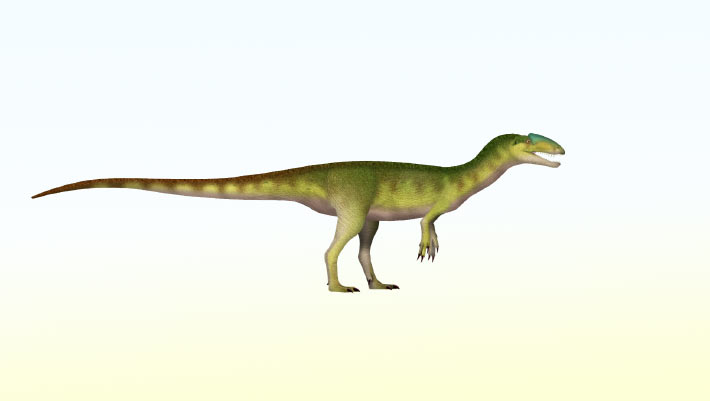
Single Vertebra Hints at Oldest Known Iberian Dinosaur
Une vertèbre isolée révèle l’existence du plus ancien dinosaure ibérique connu
vertèbre Portugal fossile Dinosauria
Une vertèbre fossile de théropode, d’une longueur approximative de celle d’un pouce et découverte dans la région de l’Algarve, dans le sud du Portugal, pourrait constituer les plus anciens restes de dinosaure jamais mis au jour dans la péninsule Ibérique. L’article « Une vertèbre unique suggère l’existence du plus ancien dinosaure ibérique connu » est paru initialement sur Sci.News : Actualités scientifiques.
20/10/2026 sci-news ⚙ Traduction automatique
Néandertalien probablement tué par une lance en bois il y a 75 000 ans
fossile découverte
Une découverte de fossiles étonnante au Kurdistan irakien a révélé des preuves possibles de violences mortelles chez les Néandertaliens il y a environ 75 000 ans. Des chercheurs de l’Université de Cambridge ont identifié une plaie perforante caractéristique sur l’omoplate d’un Néandertalien. Ils pensent que la blessure, très probablement fatale, a été causée par une lance en bois aiguisée.
17/10/2026 everythingdinosaur ⚙ Traduction automatique
Des empreintes fossiles remarquables révèlent comment marchaient les ancêtres des dinosaures
locomotion fossile Dinosauria évolution
Les scientifiques étudiant les empreintes fossiles anciennes ont découvert des preuves importantes sur l’évolution de la locomotion des dinosaures. La recherche suggère que les ancêtres des dinosaures ont progressivement modifié leur façon de marcher. Au fil des millions d’années, ces animaux ont évolué de reptiles tentaculaires à des créatures à la posture plus droite. La recherche récemment publiée étudiant les empreintes des ancêtres des dinosaures fournit une
16/10/2026 everythingdinosaur ⚙ Traduction automatique
1 2 3 4 5 6 7 8 9 10 11 12 13 14 15 16 17 18 19 20 21 22 23 24 25 26 27 28 29 30 31 32 33 34 35 36 37 38 39 40 41 42 43 44 45 46 47 48 49