←

Trias

Intervalle géologique

52 image(s) · 28 Actualités

Voir la fiche

Galerie d'images

Californosaurus perrini, an ichthyosaur from the Late Triassic of North America, pencil drawing
Taxons Toretocnemidae

Californosaurus perrini, an ichthyosaur from the Late Triassic of North America, pencil drawing

dessin Trias supérieur Trias Barracudasaurus +4
Lower Triassic fossil footprint (ichnite) of the ichnogenus Chirotherium, probably caused by an early archosaur, and first discovered 1833 in Hildburghausen (Thuringia, Germany). This specimen, however, ist from the Helsby Sandstone of the Storeton Quarry near Liverpool. Its species name is Chirotherium storetonense.[1]
Taxons Abelichnus

Lower Triassic fossil footprint (ichnite) of the ichnogenus Chirotherium, probably caused by an early archosaur, and first discovered 1833 in Hildburghausen (Thuringia, Germany). This specimen, however, ist from the Helsby Sandstone of the Storeton Quarry near Liverpool. Its species name is Chirotherium storetonense.[1]

Allemagne Trias fossile spécimen +9
Lower Triassic fossil footprint (ichnite) of the ichnogenus Chirotherium, probably caused by an early archosaur, and first discovered 1833 in Hildburghausen (Thuringia, Germany). This specimen, however, ist from the Helsby Sandstone of the Storeton Quarry near Liverpool. Its species name is Chirotherium storetonense.[1]
Taxons Anticheiropus

Lower Triassic fossil footprint (ichnite) of the ichnogenus Chirotherium, probably caused by an early archosaur, and first discovered 1833 in Hildburghausen (Thuringia, Germany). This specimen, however, ist from the Helsby Sandstone of the Storeton Quarry near Liverpool. Its species name is Chirotherium storetonense.[1]

Allemagne Trias fossile spécimen +9
Lower Triassic fossil footprint (ichnite) of the ichnogenus Chirotherium, probably caused by an early archosaur, and first discovered 1833 in Hildburghausen (Thuringia, Germany). This specimen, however, ist from the Helsby Sandstone of the Storeton Quarry near Liverpool. Its species name is Chirotherium storetonense.[1]
Taxons Argoides

Lower Triassic fossil footprint (ichnite) of the ichnogenus Chirotherium, probably caused by an early archosaur, and first discovered 1833 in Hildburghausen (Thuringia, Germany). This specimen, however, ist from the Helsby Sandstone of the Storeton Quarry near Liverpool. Its species name is Chirotherium storetonense.[1]

Allemagne Trias fossile spécimen +9
Lower Triassic fossil footprint (ichnite) of the ichnogenus Chirotherium, probably caused by an early archosaur, and first discovered 1833 in Hildburghausen (Thuringia, Germany). This specimen, however, ist from the Helsby Sandstone of the Storeton Quarry near Liverpool. Its species name is Chirotherium storetonense.[1]
Taxons Delatorrichnus

Lower Triassic fossil footprint (ichnite) of the ichnogenus Chirotherium, probably caused by an early archosaur, and first discovered 1833 in Hildburghausen (Thuringia, Germany). This specimen, however, ist from the Helsby Sandstone of the Storeton Quarry near Liverpool. Its species name is Chirotherium storetonense.[1]

Allemagne Trias fossile spécimen +9
Lower Triassic fossil footprint (ichnite) of the ichnogenus Chirotherium, probably caused by an early archosaur, and first discovered 1833 in Hildburghausen (Thuringia, Germany). This specimen, however, ist from the Helsby Sandstone of the Storeton Quarry near Liverpool. Its species name is Chirotherium storetonense.[1]
Taxons Dinehichnus

Lower Triassic fossil footprint (ichnite) of the ichnogenus Chirotherium, probably caused by an early archosaur, and first discovered 1833 in Hildburghausen (Thuringia, Germany). This specimen, however, ist from the Helsby Sandstone of the Storeton Quarry near Liverpool. Its species name is Chirotherium storetonense.[1]

Allemagne Trias fossile spécimen +9
Lower Triassic fossil footprint (ichnite) of the ichnogenus Chirotherium, probably caused by an early archosaur, and first discovered 1833 in Hildburghausen (Thuringia, Germany). This specimen, however, ist from the Helsby Sandstone of the Storeton Quarry near Liverpool. Its species name is Chirotherium storetonense.[1]
Taxons Dromaeosauripus

Lower Triassic fossil footprint (ichnite) of the ichnogenus Chirotherium, probably caused by an early archosaur, and first discovered 1833 in Hildburghausen (Thuringia, Germany). This specimen, however, ist from the Helsby Sandstone of the Storeton Quarry near Liverpool. Its species name is Chirotherium storetonense.[1]

Allemagne Trias fossile spécimen +9
Lower Triassic fossil footprint (ichnite) of the ichnogenus Chirotherium, probably caused by an early archosaur, and first discovered 1833 in Hildburghausen (Thuringia, Germany). This specimen, however, ist from the Helsby Sandstone of the Storeton Quarry near Liverpool. Its species name is Chirotherium storetonense.[1]
Taxons Eutynichnium

Lower Triassic fossil footprint (ichnite) of the ichnogenus Chirotherium, probably caused by an early archosaur, and first discovered 1833 in Hildburghausen (Thuringia, Germany). This specimen, however, ist from the Helsby Sandstone of the Storeton Quarry near Liverpool. Its species name is Chirotherium storetonense.[1]

Allemagne Trias fossile spécimen +9
Schädel, vorderer Abschnitt der Wirbelsäule und Elemente des Schultergürtels von Paraplacodus broili (Exemplar-Nr. BSP 1953 XV 5) aus der Grenzbitumenzone (Mittel-Trias) des Monte San Giorgio (Tessin) in linksseitiger Ansicht, ausgestellt im Paläontologischen Museum München. Die Länge des Schädels beträgt ca. 12 cm.[1]
Taxons Paraplacodus

Schädel, vorderer Abschnitt der Wirbelsäule und Elemente des Schultergürtels von Paraplacodus broili (Exemplar-Nr. BSP 1953 XV 5) aus der Grenzbitumenzone (Mittel-Trias) des Monte San Giorgio (Tessin) in linksseitiger Ansicht, ausgestellt im Paläontologischen Museum München. Die Länge des Schädels beträgt ca. 12 cm.[1]

musée Trias Paraplacodontidae Paraplacodus
Schädel, vorderer Abschnitt der Wirbelsäule und Elemente des Schultergürtels von Paraplacodus broili (Exemplar-Nr. BSP 1953 XV 5) aus der Grenzbitumenzone (Mittel-Trias) des Monte San Giorgio (Tessin) in linksseitiger Ansicht, ausgestellt im Paläontologischen Museum München. Die Länge des Schädels beträgt ca. 12 cm.[1]
Taxons Paraplacodontidae

Schädel, vorderer Abschnitt der Wirbelsäule und Elemente des Schultergürtels von Paraplacodus broili (Exemplar-Nr. BSP 1953 XV 5) aus der Grenzbitumenzone (Mittel-Trias) des Monte San Giorgio (Tessin) in linksseitiger Ansicht, ausgestellt im Paläontologischen Museum München. Die Länge des Schädels beträgt ca. 12 cm.[1]

musée Trias Paraplacodontidae Paraplacodus
Rendition of possible appearance of the dinosaur genus Nyasasaurus from the Middle Triassic, possibly the earliest known dinosaur.  Black portions represent the partial skeletal fragments (a humerus and six vertebrae) from one specimen blue portions represent fragments from a second specimen (three cervical vertebrae) on which the current likely form of the animal is based.

Rendition of possible appearance of the dinosaur genus Nyasasaurus from the Middle Triassic, possibly the earliest known dinosaur. Black portions represent the partial skeletal fragments (a humerus and six vertebrae) from one specimen blue portions represent fragments from a second specimen (three cervical vertebrae) on which the current likely form of the animal is based.

humérus Trias moyen Trias spécimen +3
Early Triassic marine vertebrate apex predators during the Griesbachian to Smithian interval (left) and the Spathian to Anisian interval (right). Predators not exactly to scale; see text and Tables S1–S2 for details on body size and stratigraphic occurrence. Marine vertebrate apex predators: 1, Wantzosaurus (trematosaurid ‘amphibian’); 2, Fadenia (eugeneodontiform chondrichthyan); 3, Saurichthys (actinopterygian ambush predator); 4, Rebellatrix (fork-tailed actinistian); 5, Hovasaurus (‘younginiform’ diapsid reptile); 6, Birgeria (fast-swimming predatory actinopterygian); 7, Aphaneramma (trematosaurid ‘amphibian’); 8, Bobasatrania (durophagous actinopterygian); 9, hybodontoid chondrichthyan with durophagous (e.g. Acrodus, Palaeobates) or tearing-type dentition (e.g. Hybodus); 10, e.g., Mylacanthus (durophagous actinistian); 11, Tanystropheus (protorosaurian reptile); 12, Corosaurus (sauropterygian reptile); 13, e.g., Ticinepomis (actinistian); 14, Mixosaurus (small ichthyosaur); 15, large cymbospondylid/shastasaurid ichthyosaur; 16, neoselachian chondrichthyan; 17, Omphalosaurus skeleton (possible durophagous ichthyosaur); 18, Placodus (durophagous sauropterygian reptile).
Taxons Corosaurus

Early Triassic marine vertebrate apex predators during the Griesbachian to Smithian interval (left) and the Spathian to Anisian interval (right). Predators not exactly to scale; see text and Tables S1–S2 for details on body size and stratigraphic occurrence. Marine vertebrate apex predators: 1, Wantzosaurus (trematosaurid ‘amphibian’); 2, Fadenia (eugeneodontiform chondrichthyan); 3, Saurichthys (actinopterygian ambush predator); 4, Rebellatrix (fork-tailed actinistian); 5, Hovasaurus (‘younginiform’ diapsid reptile); 6, Birgeria (fast-swimming predatory actinopterygian); 7, Aphaneramma (trematosaurid ‘amphibian’); 8, Bobasatrania (durophagous actinopterygian); 9, hybodontoid chondrichthyan with durophagous (e.g. Acrodus, Palaeobates) or tearing-type dentition (e.g. Hybodus); 10, e.g., Mylacanthus (durophagous actinistian); 11, Tanystropheus (protorosaurian reptile); 12, Corosaurus (sauropterygian reptile); 13, e.g., Ticinepomis (actinistian); 14, Mixosaurus (small ichthyosaur); 15, large cymbospondylid/shastasaurid ichthyosaur; 16, neoselachian chondrichthyan; 17, Omphalosaurus skeleton (possible durophagous ichthyosaur); 18, Placodus (durophagous sauropterygian reptile).

écaille prédateur Anisien Early Triassic +10
Early Triassic marine vertebrate apex predators during the Griesbachian to Smithian interval (left) and the Spathian to Anisian interval (right). Predators not exactly to scale; see text and Tables S1–S2 for details on body size and stratigraphic occurrence. Marine vertebrate apex predators: 1, Wantzosaurus (trematosaurid ‘amphibian’); 2, Fadenia (eugeneodontiform chondrichthyan); 3, Saurichthys (actinopterygian ambush predator); 4, Rebellatrix (fork-tailed actinistian); 5, Hovasaurus (‘younginiform’ diapsid reptile); 6, Birgeria (fast-swimming predatory actinopterygian); 7, Aphaneramma (trematosaurid ‘amphibian’); 8, Bobasatrania (durophagous actinopterygian); 9, hybodontoid chondrichthyan with durophagous (e.g. Acrodus, Palaeobates) or tearing-type dentition (e.g. Hybodus); 10, e.g., Mylacanthus (durophagous actinistian); 11, Tanystropheus (protorosaurian reptile); 12, Corosaurus (sauropterygian reptile); 13, e.g., Ticinepomis (actinistian); 14, Mixosaurus (small ichthyosaur); 15, large cymbospondylid/shastasaurid ichthyosaur; 16, neoselachian chondrichthyan; 17, Omphalosaurus skeleton (possible durophagous ichthyosaur); 18, Placodus (durophagous sauropterygian reptile).
Taxons Corosauridae

Early Triassic marine vertebrate apex predators during the Griesbachian to Smithian interval (left) and the Spathian to Anisian interval (right). Predators not exactly to scale; see text and Tables S1–S2 for details on body size and stratigraphic occurrence. Marine vertebrate apex predators: 1, Wantzosaurus (trematosaurid ‘amphibian’); 2, Fadenia (eugeneodontiform chondrichthyan); 3, Saurichthys (actinopterygian ambush predator); 4, Rebellatrix (fork-tailed actinistian); 5, Hovasaurus (‘younginiform’ diapsid reptile); 6, Birgeria (fast-swimming predatory actinopterygian); 7, Aphaneramma (trematosaurid ‘amphibian’); 8, Bobasatrania (durophagous actinopterygian); 9, hybodontoid chondrichthyan with durophagous (e.g. Acrodus, Palaeobates) or tearing-type dentition (e.g. Hybodus); 10, e.g., Mylacanthus (durophagous actinistian); 11, Tanystropheus (protorosaurian reptile); 12, Corosaurus (sauropterygian reptile); 13, e.g., Ticinepomis (actinistian); 14, Mixosaurus (small ichthyosaur); 15, large cymbospondylid/shastasaurid ichthyosaur; 16, neoselachian chondrichthyan; 17, Omphalosaurus skeleton (possible durophagous ichthyosaur); 18, Placodus (durophagous sauropterygian reptile).

écaille prédateur Anisien Early Triassic +10
Figure description from the paper: "The segmented model of right lateral side of the skull of mixosaurid ichthyosaur Phalarodon fraasi (Merriam, 1910) PMO 235.393, from the Botneheia Formation, Middle Triassic of the Isfjorden area in Spitsbergen, Svalbard."
References:

Roberts, A.J.; Engelschiøn, V.S.; Hurum, J.H. (2022). "First three-dimensional skull of the Middle Triassic mixosaurid ichthyosaur Phalarodon fraasi from Svalbard, Norway". Acta Palaeontologica Polonica 67 (1): 51–62. DOI:https://doi.org/10.4202/app.00915.2021.
Taxons Phalarodon

Figure description from the paper: "The segmented model of right lateral side of the skull of mixosaurid ichthyosaur Phalarodon fraasi (Merriam, 1910) PMO 235.393, from the Botneheia Formation, Middle Triassic of the Isfjorden area in Spitsbergen, Svalbard." References: Roberts, A.J.; Engelschiøn, V.S.; Hurum, J.H. (2022). "First three-dimensional skull of the Middle Triassic mixosaurid ichthyosaur Phalarodon fraasi from Svalbard, Norway". Acta Palaeontologica Polonica 67 (1): 51–62. DOI:https://doi.org/10.4202/app.00915.2021.

description Norvège Trias moyen Trias +7
Figure description from the paper: "The segmented model of right lateral side of the skull of mixosaurid ichthyosaur Phalarodon fraasi (Merriam, 1910) PMO 235.393, from the Botneheia Formation, Middle Triassic of the Isfjorden area in Spitsbergen, Svalbard."
References:

Roberts, A.J.; Engelschiøn, V.S.; Hurum, J.H. (2022). "First three-dimensional skull of the Middle Triassic mixosaurid ichthyosaur Phalarodon fraasi from Svalbard, Norway". Acta Palaeontologica Polonica 67 (1): 51–62. DOI:https://doi.org/10.4202/app.00915.2021.
Taxons Contectopalatus

Figure description from the paper: "The segmented model of right lateral side of the skull of mixosaurid ichthyosaur Phalarodon fraasi (Merriam, 1910) PMO 235.393, from the Botneheia Formation, Middle Triassic of the Isfjorden area in Spitsbergen, Svalbard." References: Roberts, A.J.; Engelschiøn, V.S.; Hurum, J.H. (2022). "First three-dimensional skull of the Middle Triassic mixosaurid ichthyosaur Phalarodon fraasi from Svalbard, Norway". Acta Palaeontologica Polonica 67 (1): 51–62. DOI:https://doi.org/10.4202/app.00915.2021.

description Norvège Trias moyen Trias +7
PLATE II(IX).
Fig. 1. Anchisaurus colurus MARSH. All extant specimens in approximately 1/5 nat. size. Connecticut red sandstone (Upper Triassic). Manchester, Conn., USA. MARSH's original specimen, preserved at the Yale Museum, New Haven, Conn. Scale bar: 11 cm.

Skull: see Pl. I [VIII], forefoot: see Pl. III [X], scapula, hindleg, and pubis: see figures in the text.
Taxons Anchisaurus

PLATE II(IX). Fig. 1. Anchisaurus colurus MARSH. All extant specimens in approximately 1/5 nat. size. Connecticut red sandstone (Upper Triassic). Manchester, Conn., USA. MARSH's original specimen, preserved at the Yale Museum, New Haven, Conn. Scale bar: 11 cm. Skull: see Pl. I [VIII], forefoot: see Pl. III [X], scapula, hindleg, and pubis: see figures in the text.

écaille musée États-Unis Trias +5
1 2 3 4

Actualités

Voici la « sorcière crocodile », une créature édentée du Trias, vieille de 212 millions d'années, qui marchait sur deux jambes
dent Trias
Il y a plus de 200 millions d’années, bien avant les crocodiles modernes, une étrange créature parcourait déjà la Terre sur deux pattes. Son apparence défie tout ce que l’on imagine de ces redoutables reptiles. Sans dents, munie d’un bec et dotée d’une silhouette rappelant davantage certains...
30/05/2026 futura-terre
Cet étrange parent d'un crocodile du Trias ressemblait à un dinosaure autruche
membre Trias Dinosauria
Les scientifiques ont découvert Labrujasuchus expectatus, un étrange parent du crocodile qui ressemblait plus à un dinosaure ressemblant à une autruche qu'à tout ce qui ressemblait à un crocodile moderne. Il marchait sur deux pattes, avait de petits bras et arborait un bec édenté – une combinaison inattendue pour un membre de la lignée des crocodiles.
29/05/2026 sciencedaily ⚙ Traduction automatique
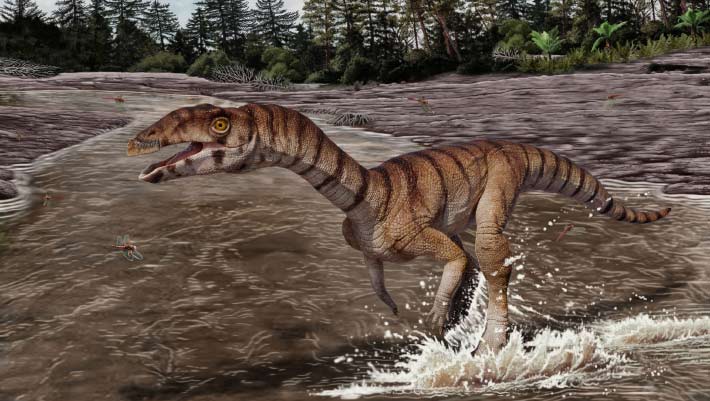
Toothless, Bipedal Crocodile Relative Lived in New Mexico 212 Million Years Ago
Un parent d'un crocodile bipède et édenté vivait au Nouveau-Mexique il y a 212 millions d'années
Mexique Trias nouvelle espèce
Les paléontologues ont décrit une nouvelle espèce d'archosaure shuvosauridé bipède du Nouveau-Mexique, mettant en lumière un groupe de créatures qui parcouraient l'Amérique du Nord pendant la période du Trias, il y a plus de 200 millions d'années. L'article Un parent de crocodile bipède et édenté vivait au Nouveau-Mexique il y a 212 millions d'années est apparu en premier sur Sci.News : Breaking Science News.
27/05/2026 sci-news ⚙ Traduction automatique
Un nouveau dinosaure carnivore du Trias identifié à Ghost Ranch
États-Unis Trias supérieur Trias fossile spécimen Coelophysis Dinosauria Ptychotherates nouvelle espèce crâne
Des chercheurs de Virginia Tech (Virginie, États-Unis) ont identifié une nouvelle espèce de dinosaure du Trias supérieur.  Le dinosaure a été nommé Ptychotherates bucculentus.  Ce nouveau taxon de dinosaure carnivore a été érigé sur la base de l'examen détaillé d'un fossile de crâne incomplet, bien conservé mais mélangé (numéro de spécimen CM 31368).  Le crâne provient de la Coelophysis de renommée mondiale
11/05/2026 everythingdinosaur ⚙ Traduction automatique
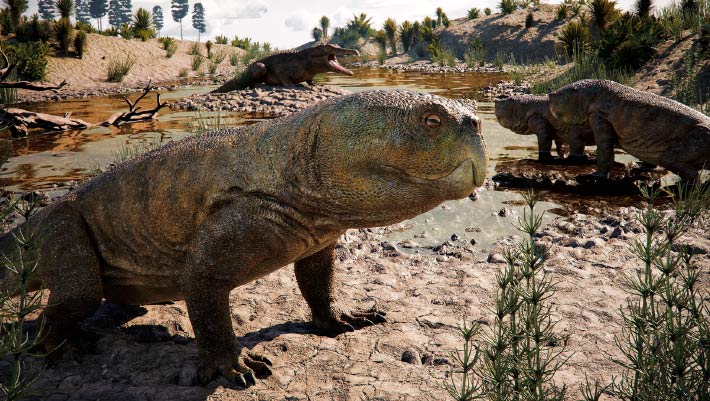
New Fossil from Brazil Reveals Unexpected Diversity among Pre-Dinosaur Herbivores
Un nouveau fossile du Brésil révèle une diversité inattendue parmi les herbivores pré-dinosaures
mâchoire Brésil Trias fossile Dinosauria nouvelle espèce partiel crâne
Des paléontologues du Brésil ont identifié un nouveau genre et une nouvelle espèce de rhynchosaure hyperodapédontique – une lignée éteinte de reptiles herbivores à bec – sur la base d'un crâne partiel et de mâchoires inférieures récupérés dans des roches du Trias. L'article Un nouveau fossile du Brésil révèle une diversité inattendue parmi les herbivores pré-dinosaures est apparu en premier sur Sci.News : Breaking Science News.
23/04/2026 sci-news ⚙ Traduction automatique
1 2 3 4 5 6