Maroc

Pays

15 image(s) · 5 Actualités

Galerie d'images

aff. Quetzalcoatlus, cervical vertebra (FSAC-OB 14). In (A), dorsal view, (B) ventral view; (C), left lateral view, and (D), anterior view. Abbreviations: dlr = dorsolateral ridge; hyp = hypapophysis; nsp = neural spine; pex = postexapophysis; poz = postzygapophysis; prz = prezygapophysis; pzl = prezygapophyseal laminae; vfo = ventral fossa, Maastrichtian, Ouled Abdoun basin, Morocco

aff. Quetzalcoatlus, cervical vertebra (FSAC-OB 14). In (A), dorsal view, (B) ventral view; (C), left lateral view, and (D), anterior view. Abbreviations: dlr = dorsolateral ridge; hyp = hypapophysis; nsp = neural spine; pex = postexapophysis; poz = postzygapophysis; prz = prezygapophysis; pzl = prezygapophyseal laminae; vfo = ventral fossa, Maastrichtian, Ouled Abdoun basin, Morocco

vertèbre Maroc Maastrichtien Quetzalcoatlus
Tropeognathine pterosaur Siroccopteryx moroccensis Mader andKellner, 1999, LINHM FR016, Kem Kem beds, Morocco, ?Albian–lowerCenomanian. A. Photograph in anterior (A1), left lateral (A2), and dorsal(A3) views. B. Interpretation of the palatal view following Mader andKellner (1999). Photographs courtesy of Megan L. Jacobs. Drawing byRVP based on Mader and Kellner (1999).
Taxons Siroccopteryx

Tropeognathine pterosaur Siroccopteryx moroccensis Mader andKellner, 1999, LINHM FR016, Kem Kem beds, Morocco, ?Albian–lowerCenomanian. A. Photograph in anterior (A1), left lateral (A2), and dorsal(A3) views. B. Interpretation of the palatal view following Mader andKellner (1999). Photographs courtesy of Megan L. Jacobs. Drawing byRVP based on Mader and Kellner (1999).

dessin Maroc Albien Pterosauria +1
Rendering of CT scan segmentation of Xenodens calminechari, MHNM.KHG.331 (holotype), left maxilla; Sidi Chennane, Oulad Abdoun Basin, Morocco; Phosphates, Upper Couche III, uppermost Maastrichtian. (A), lateral view; (B), dorsal view; (C), medial view; (D), ventral view; (E), anterior view. Scale = 50 mm.
Taxons Xenodens

Rendering of CT scan segmentation of Xenodens calminechari, MHNM.KHG.331 (holotype), left maxilla; Sidi Chennane, Oulad Abdoun Basin, Morocco; Phosphates, Upper Couche III, uppermost Maastrichtian. (A), lateral view; (B), dorsal view; (C), medial view; (D), ventral view; (E), anterior view. Scale = 50 mm.

écaille Maroc Maastrichtien holotype +2
Stelladens, teeth of S. mysteriosus (MHNM.KHG.1436, holotype), in (a,f) labial view, (b,g) lingual view, (c,h) anterior view, (d,i) posterior view, (e,j) occlusal view. Abbreviations: ac = accessory carinae; ca = anterior carina, pc = posterior carina. Scale = 5 cm. Sidi Chennane, Oulad Abdoun Basin, Morocco, Lower Couche III, Maastrichtian.
Taxons Stelladens

Stelladens, teeth of S. mysteriosus (MHNM.KHG.1436, holotype), in (a,f) labial view, (b,g) lingual view, (c,h) anterior view, (d,i) posterior view, (e,j) occlusal view. Abbreviations: ac = accessory carinae; ca = anterior carina, pc = posterior carina. Scale = 5 cm. Sidi Chennane, Oulad Abdoun Basin, Morocco, Lower Couche III, Maastrichtian.

écaille Maroc Maastrichtien holotype +1
Holotype maxilla of the lambeosaurine hadrosaurid Ajnabia odysseus from the Late Cretaceous (late Maastrichtian) of Sidi Chennane, Morocco
Taxons Ajnabia

Holotype maxilla of the lambeosaurine hadrosaurid Ajnabia odysseus from the Late Cretaceous (late Maastrichtian) of Sidi Chennane, Morocco

Maroc Crétacé Crétacé supérieur Maastrichtien +3
Phosphatotitan khouribgaensis, holotype, MHNM.KHG.888; Sidi Chennane, Oulad Abdoun Basin, Khouribga Province, Morocco; Phosphates, lower Couche III, late Maastrichtian. Dorsal vertebra in (A) anterior view; and (B) lateral view. Abbreviations: acpl, anterior centroparapophyseal lamina; cen, centrum; con, condyle; lpl, lamina dividing pleurocoels; nec, neural canal; nsp, neural spine; pcdl, posterior centrodiapophyseal lamina; pcpl, posterior centroparapophyseal lamina; pl1, primary pleurocoel; pl2, secondary pleurocoel; prcdf, prezygocentrodiapophyseal fossa; pre, prezygapophyses; tp, transverse process.
Taxons Phosphatotitan

Phosphatotitan khouribgaensis, holotype, MHNM.KHG.888; Sidi Chennane, Oulad Abdoun Basin, Khouribga Province, Morocco; Phosphates, lower Couche III, late Maastrichtian. Dorsal vertebra in (A) anterior view; and (B) lateral view. Abbreviations: acpl, anterior centroparapophyseal lamina; cen, centrum; con, condyle; lpl, lamina dividing pleurocoels; nec, neural canal; nsp, neural spine; pcdl, posterior centrodiapophyseal lamina; pcpl, posterior centroparapophyseal lamina; pl1, primary pleurocoel; pl2, secondary pleurocoel; prcdf, prezygocentrodiapophyseal fossa; pre, prezygapophyses; tp, transverse process.

vertèbre Maroc Maastrichtien holotype +1
Globidens aegyptiacus Zdansky, 1934 - Ouled Abdoun, Khouribgha Province, Chaouia-Ouardigha Region, Morocco - Maastrichtian, Cretaceous (≈ -70,6 MA ± ≈ 0,6 MA)

Globidens aegyptiacus Zdansky, 1934 - Ouled Abdoun, Khouribgha Province, Chaouia-Ouardigha Region, Morocco - Maastrichtian, Cretaceous (≈ -70,6 MA ± ≈ 0,6 MA)

Maroc Crétacé Maastrichtien Globidens +1
Globidens aegyptiacus Zdansky, 1934 - Ouled Abdoun, Khouribgha Province, Chaouia-Ouardigha Region, Morocco - Maastrichtian, Cretaceous (≈ -70,6 MA ± ≈ 0,6 MA)

Globidens aegyptiacus Zdansky, 1934 - Ouled Abdoun, Khouribgha Province, Chaouia-Ouardigha Region, Morocco - Maastrichtian, Cretaceous (≈ -70,6 MA ± ≈ 0,6 MA)

Maroc Crétacé Maastrichtien Globidens +1
Palaeogeographic distribution of late Early and early Late Cretaceous pterosaur assemblages. Taxonomic composition of assemblages shown on Fig. 1. Palaeogeography based on Smith et al. 1994. Abbreviations: 1. Cambridge Greensand, England: 2. Lower Chalk, England: 3. Züümbayan Svita, Khuren-Dukh, Mongolia: 4. Lysaya Gora, Saratov, Russia: 5. Kem Kem red beds, Morocco: 6. Paw Paw Formation, Texas, USA: 7. Lagarcito Formation, San Luis, Argentina: 8. Santana and Crato Formations, Ceara, Brazil: 9. Toolebuc Formation, Queensland, Australia.

Palaeogeographic distribution of late Early and early Late Cretaceous pterosaur assemblages. Taxonomic composition of assemblages shown on Fig. 1. Palaeogeography based on Smith et al. 1994. Abbreviations: 1. Cambridge Greensand, England: 2. Lower Chalk, England: 3. Züümbayan Svita, Khuren-Dukh, Mongolia: 4. Lysaya Gora, Saratov, Russia: 5. Kem Kem red beds, Morocco: 6. Paw Paw Formation, Texas, USA: 7. Lagarcito Formation, San Luis, Argentina: 8. Santana and Crato Formations, Ceara, Brazil: 9. Toolebuc Formation, Queensland, Australia.

Argentine Australie Brésil Mongolie +8
A 1.7cm tall tooth from Liodon anceps.  Cretaceous, Phosphate beds, Kouribga, Morocco.

A 1.7cm tall tooth from Liodon anceps. Cretaceous, Phosphate beds, Kouribga, Morocco.

dent Maroc Crétacé Leiodon +1
Drawings of Dryolestida left upper−molar, modified from the original descriptions. A–C, Kimmeridgian; D–F, Tithonian–Berriasian; G–H, early Barremian; I, late Barremian. A. Left M4 or M5 of Comotherium richi Prothero, 1981, from the Upper Jurassic Morrison Formation, Como Bluff locality, Wyoming, USA. B. Right M5, reversed, of Dryolestes leiriensis Martin, 1999, from Guimarota, Portugal.C. Left M6 of Krebsotherium lusitanicum Martin, 1999, from Guimarota, Portugal. D. Right M4 or M 6 (reversed) of Portopinheirodon asymmetricus Martin, 1999, Porto Pinheiro, Lourinha, Portugal. E. Right M5 (reversed) of Laolestes andresi Martin, 1999, from Porto Pinheiro, Lourinha, Portugal. F. Right upper molar of Donodon perscriptoris Sigogneau−Russell, 1991, Anoual, Morocco.G. Left M4 orM5 of Crusafontia amoae sp. nov., holotype, Cuesta Corrales 2, El Castellar Formation, Galve, Teruel, Spain. H. Right M6 orM7 (reversed) of Crusafontia amoae sp. nov., first described as upper molar of Crusafontia cuencana by Krebs (1993), P−2 H4 Pelejón 2, Galve, Teruel, Spain. I. Left M2 or M3, of Crusafontia cuencana Henkel and Krebs, 1969, Uña, La Huérguina Formation, Cuenca, Spain, (from Krebs 1993). Scale bars 1 mm.

Drawings of Dryolestida left upper−molar, modified from the original descriptions. A–C, Kimmeridgian; D–F, Tithonian–Berriasian; G–H, early Barremian; I, late Barremian. A. Left M4 or M5 of Comotherium richi Prothero, 1981, from the Upper Jurassic Morrison Formation, Como Bluff locality, Wyoming, USA. B. Right M5, reversed, of Dryolestes leiriensis Martin, 1999, from Guimarota, Portugal.C. Left M6 of Krebsotherium lusitanicum Martin, 1999, from Guimarota, Portugal. D. Right M4 or M 6 (reversed) of Portopinheirodon asymmetricus Martin, 1999, Porto Pinheiro, Lourinha, Portugal. E. Right M5 (reversed) of Laolestes andresi Martin, 1999, from Porto Pinheiro, Lourinha, Portugal. F. Right upper molar of Donodon perscriptoris Sigogneau−Russell, 1991, Anoual, Morocco.G. Left M4 orM5 of Crusafontia amoae sp. nov., holotype, Cuesta Corrales 2, El Castellar Formation, Galve, Teruel, Spain. H. Right M6 orM7 (reversed) of Crusafontia amoae sp. nov., first described as upper molar of Crusafontia cuencana by Krebs (1993), P−2 H4 Pelejón 2, Galve, Teruel, Spain. I. Left M2 or M3, of Crusafontia cuencana Henkel and Krebs, 1969, Uña, La Huérguina Formation, Cuenca, Spain, (from Krebs 1993). Scale bars 1 mm.

description dessin Maroc Portugal +11
Crâne de mosasaure d'espèce Platecarpus tympaniticus (squamates, mosasaures).
Provenance : Smoky Hill Chalk, Kansas (aux Etats-Unis).
Date : Crétacé supérieur, période du Campanien, 88 millions d'années avant notre ère.
Collections du Muséum national d'histoire naturelle de Paris (France).
Exposé à l'occasion de l'exposition "Un T-Rex à Paris" au Muséum national d'histoire naturelle de Paris (France) du 6 juin au 2 septembre 2018.

Légende du fossile dans cette exposition : "Les mosasaures ne sont pas des dinosaures mais des reptiles marins, très répandus à la fin du Crétacé. Certains genres comme Globidens et Halisaurus sont connus aussi bien aux Etats-Unis qu'au Maroc. Ces animaux étaient d'excellents nageurs, capables de traverser l'Atlantique."

Crâne de mosasaure d'espèce Platecarpus tympaniticus (squamates, mosasaures). Provenance : Smoky Hill Chalk, Kansas (aux Etats-Unis). Date : Crétacé supérieur, période du Campanien, 88 millions d'années avant notre ère. Collections du Muséum national d'histoire naturelle de Paris (France). Exposé à l'occasion de l'exposition "Un T-Rex à Paris" au Muséum national d'histoire naturelle de Paris (France) du 6 juin au 2 septembre 2018. Légende du fossile dans cette exposition : "Les mosasaures ne sont pas des dinosaures mais des reptiles marins, très répandus à la fin du Crétacé. Certains genres comme Globidens et Halisaurus sont connus aussi bien aux Etats-Unis qu'au Maroc. Ces animaux étaient d'excellents nageurs, capables de traverser l'Atlantique."

France Maroc Campanien Crétacé +8
Life restoration of the mosasaurine mosasaurid Eremiasaurus, with unknown portions and soft tissues based primarily on Prognathodon and supplemented with Mosasaurus where needed.
References
Leblanc, A.R.H.; Caldwell, M.W.; Bardet, N. (2012). "A new mosasaurine from the Maastrichtian (Upper Cretaceous) phosphates of Morocco and its implications for mosasaurine systematics". Journal of Vertebrate Paleontology 32 (1): 82–104.
Lindgren, J.; Kaddumi, H.; Polcyn, M. (2013). "Soft tissue preservation in a fossil marine lizard with a bilobed tail fin". Nature Communications 4: 2423. DOI:10.1038/ncomms3423.
Konishi, T.; Brinkman, D.; Massare, J.A.; Caldwell, M.W. (2011). "New exceptional specimens of Prognathodon overtoni (Squamata, Mosasauridae) from the upper Campanian of Alberta, Canada, and the systematics and ecology of the genus". Journal of Vertebrate Paleontology 31 (5): 1026–1046.
Russell, D.A. (1967). "Systematics and morphology of American mosasaurs". Bulletin of the Peabody Museum of Natural History 23: 1–241.
Taxons Eremiasaurus

Life restoration of the mosasaurine mosasaurid Eremiasaurus, with unknown portions and soft tissues based primarily on Prognathodon and supplemented with Mosasaurus where needed. References Leblanc, A.R.H.; Caldwell, M.W.; Bardet, N. (2012). "A new mosasaurine from the Maastrichtian (Upper Cretaceous) phosphates of Morocco and its implications for mosasaurine systematics". Journal of Vertebrate Paleontology 32 (1): 82–104. Lindgren, J.; Kaddumi, H.; Polcyn, M. (2013). "Soft tissue preservation in a fossil marine lizard with a bilobed tail fin". Nature Communications 4: 2423. DOI:10.1038/ncomms3423. Konishi, T.; Brinkman, D.; Massare, J.A.; Caldwell, M.W. (2011). "New exceptional specimens of Prognathodon overtoni (Squamata, Mosasauridae) from the upper Campanian of Alberta, Canada, and the systematics and ecology of the genus". Journal of Vertebrate Paleontology 31 (5): 1026–1046. Russell, D.A. (1967). "Systematics and morphology of American mosasaurs". Bulletin of the Peabody Museum of Natural History 23: 1–241.

tissus écologie musée Canada +11
Skull of the mosasaurid squamate Thalassotitan atrox from the late Maastrichtian of Sidi Daoui, Ouled Abdoun Basin, Khouribga Province, Morocco, North Africa.
Taxons Thalassotitan

Skull of the mosasaurid squamate Thalassotitan atrox from the late Maastrichtian of Sidi Daoui, Ouled Abdoun Basin, Khouribga Province, Morocco, North Africa.

Maroc Maastrichtien Mosasauridae Thalassotitan +1
Sarcosaurus diagram of known material: reconstruction based on basal Ceratosaurs (such as Berberosaurus and Saltriovenator). The Skull was made to look more generic and less like more derived Ceratosaurs such as Ceratosaurus. "Liassaurus", referred to "cf. Sarcosaurus woodi" and is smaller than the holotype: material in light grey is preserved, but to what extent is uncertain as it is not figured.
References:
Carrano and Sampson (2004). "A review of coelophysoids (Dinosauria: Theropoda) from the Early Jurassic of Europe, with comments on the late history of the Coelophysoidea." N. Jb. Geol. Palaont. Mh., 2004(9): 537-558. (for figures of the material)
theropoddatabase.com/Coelophysoidea.htm#Sarcosauruswoodi (for measurements of "Liassaurus")

Allain, Ronan & Tykoski, Ronald & Aquesbi, Najat & Jalil, Nour-Eddine & Monbaron, Michel & Russell, Dale & Taquet, Philippe. (2007). An abelisauroid (Dinosauria: Theropoda) from the Early Jurassic of the High Atlas Mountains, Morocco, and the radiation of Ceratosaurs. Journal of Vertebrate Paleontology. 27. 10.1671/0272-4634(2007)27[610:AADTFT]2.0.CO;2. (for measurements for Berberosaurus)
Taxons Sarcosaurus

Sarcosaurus diagram of known material: reconstruction based on basal Ceratosaurs (such as Berberosaurus and Saltriovenator). The Skull was made to look more generic and less like more derived Ceratosaurs such as Ceratosaurus. "Liassaurus", referred to "cf. Sarcosaurus woodi" and is smaller than the holotype: material in light grey is preserved, but to what extent is uncertain as it is not figured. References: Carrano and Sampson (2004). "A review of coelophysoids (Dinosauria: Theropoda) from the Early Jurassic of Europe, with comments on the late history of the Coelophysoidea." N. Jb. Geol. Palaont. Mh., 2004(9): 537-558. (for figures of the material) theropoddatabase.com/Coelophysoidea.htm#Sarcosauruswoodi (for measurements of "Liassaurus") Allain, Ronan & Tykoski, Ronald & Aquesbi, Najat & Jalil, Nour-Eddine & Monbaron, Michel & Russell, Dale & Taquet, Philippe. (2007). An abelisauroid (Dinosauria: Theropoda) from the Early Jurassic of the High Atlas Mountains, Morocco, and the radiation of Ceratosaurs. Journal of Vertebrate Paleontology. 27. 10.1671/0272-4634(2007)27[610:AADTFT]2.0.CO;2. (for measurements for Berberosaurus)

Maroc Jurassique inférieur Jurassique holotype +8

Actualités

Incroyable découverte : des formes de vie ont survécu dans l’obscurité totale il y a 180 millions d’années
Maroc datation découverte
Des chercheurs ont mis au jour, dans les montagnes du Maroc, des traces biologiques vieilles de 180 millions d'années enfouies dans des sédiments marins abyssaux. Ces structures, normalement absentes de tels environnements, remettent en question ce que l'on croyait savoir sur les écosystèmes...
08/05/2026 futura-terre
Small Titanosaur Species from Morocco Reveals Surprising South American Ties
Une petite espèce de titanosaure du Maroc révèle des liens surprenants avec l'Amérique du Sud
Maroc Dinosauria Titanosauria nouvelle espèce
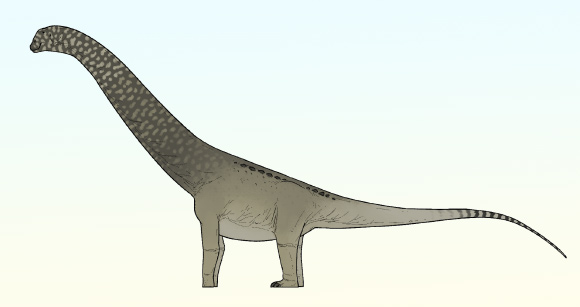
Un nouveau genre et une nouvelle espèce de dinosaure sauropode titanosaure apparentés aux formes sud-américaines ont été décrits par une équipe de paléontologues dirigée par le Dr Nick Longrich de l’Université de Bath. L'article Une petite espèce de titanosaure du Maroc révèle des liens surprenants avec l'Amérique du Sud apparaît en premier sur Sci.News : Breaking Science News.
28/04/2026 sci-news ⚙ Traduction automatique
D’étranges roches en « peau d’éléphant » révèlent une vie ancienne dans l’océan sombre
Maroc fossile découverte formation
Une étrange formation rocheuse ridée au Maroc a amené les scientifiques à repenser l'endroit où pourraient vivre d'anciens microbes. Au lieu d’eaux peu profondes et ensoleillées, ces microbes pourraient avoir prospéré dans les profondeurs de l’océan, alimentés par les produits chimiques libérés par les glissements de terrain sous-marins. La découverte suggère que les environnements sombres et riches en nutriments ont abrité des écosystèmes prospères beaucoup plus tôt que prévu. Cela soulève également la possibilité que de nombreux fossiles similaires aient été négligés ou mal interprétés.
03/04/2026 sciencedaily-paleo ⚙ Traduction automatique

Des scientifiques stupéfaits de découvrir des signes de vie ancienne dans un endroit auquel personne ne s'attendait
Maroc
En explorant d’anciens fonds marins au Maroc, les scientifiques ont découvert d’étranges textures ridées dans les sédiments des eaux profondes qui n’auraient pas dû être là. Ces structures sont généralement constituées de tapis microbiens aimant la lumière solaire dans les eaux peu profondes. Mais les roches se sont formées bien en dessous de la portée de la lumière, suggérant une explication différente. Les preuves indiquent que des microbes chimiosynthétiques – des organismes alimentés par des réactions chimiques – créent des tapis dans les profondeurs sombres d’un ancien océan.
08/03/2026 sciencedaily-paleo ⚙ Traduction automatique
Spinosaurus: Beast of the Week
Spinosaure : la bête de la semaine
Égypte Maroc Niger Crétacé Crétacé supérieur Dinosauria Spinosauria
Faites place (beaucoup d'espace... sauvegardez davantage... continuez... continuez... backbackbackback) pour le puissant Spinosaurus Aegyptiacus ! Le Spinosaurus était un dinosaure carnivore qui vivait dans ce qui est aujourd'hui l'Afrique, notamment en Égypte, au Maroc et au Niger, à la fin du Crétacé, il y a environ 97 à 95 millions d'années.  C'était un animal massif, le plus gros individu connu mesurant peut-être 49 pieds (environ 15 m) de long du museau à la queue à l'âge adulte, ce qui en fait le plus long dinosaure carnivore connu de la science.  La génération
22/02/2026 prehistoricbeastoftheweek ⚙ Traduction automatique