Dinosauria

Taxon

412 image(s) · 210 Actualités

Voir la fiche

Galerie d'images

Restoration of the spinosaurid dinosaur Siamosaurus in the Sao Khua Formation palaeoenvironment, with Sunosuchus in the middle left and a herd of Phuwiangosaurus in the background.
References:
Siamosaurus based on tooth specimens [1] and the neural spine of a possibly referable skeleton[2], with other missing elements filled in with relatives (Suchomimus[3], Baryonyx[4], IchthyovenatorFile:Ichthyovenator_laosensis_skeletal_reconstruction_by_PaleoGeek.png).
Phuwiangosaurus based on skeletal by Suteethorn et al. (2009)[5] and missing elements of skull of EuhelopusFile:Euhelopus.png.

Sunosuchus based on Suteethorn and Ingavat (1983)[6] and missing elements based on Goniopholis[7].

Restoration of the spinosaurid dinosaur Siamosaurus in the Sao Khua Formation palaeoenvironment, with Sunosuchus in the middle left and a herd of Phuwiangosaurus in the background. References: Siamosaurus based on tooth specimens [1] and the neural spine of a possibly referable skeleton[2], with other missing elements filled in with relatives (Suchomimus[3], Baryonyx[4], IchthyovenatorFile:Ichthyovenator_laosensis_skeletal_reconstruction_by_PaleoGeek.png). Phuwiangosaurus based on skeletal by Suteethorn et al. (2009)[5] and missing elements of skull of EuhelopusFile:Euhelopus.png. Sunosuchus based on Suteethorn and Ingavat (1983)[6] and missing elements based on Goniopholis[7].

dent dessin Sao Khua spécimen +11
Anzu is a fairly large caenagnathid oviraptorosaurian dinosaur that grew to nearly 4 m in length, and weighed 200-300 kg. It was a bipedal dinosaur and was covered in feathers, with a large sloping crest atop its head. Typical of oviraptorosaurs, Anzu had a short toothless beak, an adaptation that suggests it was most likely herbivorous or possibly omnivorous.

Anzu is a fairly large caenagnathid oviraptorosaurian dinosaur that grew to nearly 4 m in length, and weighed 200-300 kg. It was a bipedal dinosaur and was covered in feathers, with a large sloping crest atop its head. Typical of oviraptorosaurs, Anzu had a short toothless beak, an adaptation that suggests it was most likely herbivorous or possibly omnivorous.

crête plume Anzu Caenagnathidae +2
Dinosaur Bones

Dinosaur Bones

os Sri Lanka Anzu Dinosauria
Skeletal reconstructions of Dinosaur Park Formation caenagnathids. Skeletal reconstructions of Citipes elegans (left), Chirostenotes pergracilis (middle), and Caenagnathus collinsi (right), showing variation in skeletal representation and body size. Previously referred material is indicated in white and newly referred material is indicated in red for each taxon. Blue asterisks indicate elements that have been histologically sampled for each taxon. Citipes elegans: dentaries, metatarsal IV; Chirostenotes pergracilis: dentaries, tibia; Caenagnathus collinsi: pubis.

Skeletal reconstructions of Dinosaur Park Formation caenagnathids. Skeletal reconstructions of Citipes elegans (left), Chirostenotes pergracilis (middle), and Caenagnathus collinsi (right), showing variation in skeletal representation and body size. Previously referred material is indicated in white and newly referred material is indicated in red for each taxon. Blue asterisks indicate elements that have been histologically sampled for each taxon. Citipes elegans: dentaries, metatarsal IV; Chirostenotes pergracilis: dentaries, tibia; Caenagnathus collinsi: pubis.

Dinosaur Park Caenagnathidae Caenagnathus Chirostenotes +4
Tarsometatarsi of caenagnathids from the Upper Campanian Dinosaur Park Formation, Dinosaur Provincial Park, Alberta, Canada. A. TMP 1993.036.0181 (Chirostenotes pergracilis). B. TMP 1982.016.0006 (Citipes elegans). C. ROM 781 (Citipes elegans holotype). D. TMP 1996.012.0141 (Citipes elegans). Tarsometatarsi in proximal (A1–D1), anterior (A2–D2), and posterior (A3–D3) views.

Tarsometatarsi of caenagnathids from the Upper Campanian Dinosaur Park Formation, Dinosaur Provincial Park, Alberta, Canada. A. TMP 1993.036.0181 (Chirostenotes pergracilis). B. TMP 1982.016.0006 (Citipes elegans). C. ROM 781 (Citipes elegans holotype). D. TMP 1996.012.0141 (Citipes elegans). Tarsometatarsi in proximal (A1–D1), anterior (A2–D2), and posterior (A3–D3) views.

Canada Dinosaur Park Campanien holotype +6
The Naturmuseum Senckenberg in Frankfurt is the second largest museum of natural history in Germany. It is particularly popular with children, who enjoy the extensive collection of dinosaur skeletons: Senckenberg boasts the largest exhibition of large dinosaurs in Europe. One particular treasure is a dinosaur fossil with unique, preserved scaled skin. The museum contains the world's largest and most diverse collection of stuffed birds with about 2000 specimens.

The Naturmuseum Senckenberg in Frankfurt is the second largest museum of natural history in Germany. It is particularly popular with children, who enjoy the extensive collection of dinosaur skeletons: Senckenberg boasts the largest exhibition of large dinosaurs in Europe. One particular treasure is a dinosaur fossil with unique, preserved scaled skin. The museum contains the world's largest and most diverse collection of stuffed birds with about 2000 specimens.

musée Allemagne fossile spécimen +4
Large Predatory Pliosaur Size in comparison to a Human, Great White Shark, and Blue Whale. I have included Walking with Dinosaurs Liopleurodon to show its vastly inaccurate size.

Large Predatory Pliosaur Size in comparison to a Human, Great White Shark, and Blue Whale. I have included Walking with Dinosaurs Liopleurodon to show its vastly inaccurate size.

Dinosauria Liopleurodon
Cast of the holotype trackway of Eosauropus, a probable sauropodomorph dinosaur ichnogenus, on display at the Museum of Western Colorado’s Dinosaur Journey Museum in Fruita, Colorado
Taxons Eosauropus

Cast of the holotype trackway of Eosauropus, a probable sauropodomorph dinosaur ichnogenus, on display at the Museum of Western Colorado’s Dinosaur Journey Museum in Fruita, Colorado

musée moulage holotype Dinosauria +1
The theropod dinosaur Coelophysis bauri by John Conway [1]

The theropod dinosaur Coelophysis bauri by John Conway [1]

Conway Coelophysis Dinosauria Syntarsus
Badlands Dinosaur Museum, North Dakota 5-9-2022 (157)

Badlands Dinosaur Museum, North Dakota 5-9-2022 (157)

musée Dinosauria Thescelosaurus
Pectoral girdles and forelimbs of dinosaurs in left lateral view, depicting resting scapular and forelimb orientations in different dinosaurian groups as recommended according to the results of this study.

In each case, solid horizontal line is parallel to long axis of sacrum. A. theropods without semilunate carpals (Dilophosaurus wetherilli, UCMP 37302). B. theropods with semilunate carpals other than Caudipteryx (Velociraptor mongoliensis, after reference [60]). C. Caudipteryx (C. sp., after reference [8]). D. ceratopsids (Styracosaurus albertensis, NMC 344). E. basal sauropodomorphs (Plateosaurus engelhardti, AMNH 6810). F. non-hadrosaurian ornithopods (Thescelosaurus neglectus, reference [62]). G. hadrosaurids (Parasaurolophus walkeri, after reference [48]). Angle labels: B = scapular orientation relative to long axis of sacrum. E = elbow angle. S = shoulder angle. W = wrist angle. See Materials and Methods section for descriptions of angles.

Pectoral girdles and forelimbs of dinosaurs in left lateral view, depicting resting scapular and forelimb orientations in different dinosaurian groups as recommended according to the results of this study. In each case, solid horizontal line is parallel to long axis of sacrum. A. theropods without semilunate carpals (Dilophosaurus wetherilli, UCMP 37302). B. theropods with semilunate carpals other than Caudipteryx (Velociraptor mongoliensis, after reference [60]). C. Caudipteryx (C. sp., after reference [8]). D. ceratopsids (Styracosaurus albertensis, NMC 344). E. basal sauropodomorphs (Plateosaurus engelhardti, AMNH 6810). F. non-hadrosaurian ornithopods (Thescelosaurus neglectus, reference [62]). G. hadrosaurids (Parasaurolophus walkeri, after reference [48]). Angle labels: B = scapular orientation relative to long axis of sacrum. E = elbow angle. S = shoulder angle. W = wrist angle. See Materials and Methods section for descriptions of angles.

description Caudipteryx Ceratopsidae Dilophosaurus +9
Crâne de mosasaure d'espèce Platecarpus tympaniticus (squamates, mosasaures).
Provenance : Smoky Hill Chalk, Kansas (aux Etats-Unis).
Date : Crétacé supérieur, période du Campanien, 88 millions d'années avant notre ère.
Collections du Muséum national d'histoire naturelle de Paris (France).
Exposé à l'occasion de l'exposition "Un T-Rex à Paris" au Muséum national d'histoire naturelle de Paris (France) du 6 juin au 2 septembre 2018.

Légende du fossile dans cette exposition : "Les mosasaures ne sont pas des dinosaures mais des reptiles marins, très répandus à la fin du Crétacé. Certains genres comme Globidens et Halisaurus sont connus aussi bien aux Etats-Unis qu'au Maroc. Ces animaux étaient d'excellents nageurs, capables de traverser l'Atlantique."

Crâne de mosasaure d'espèce Platecarpus tympaniticus (squamates, mosasaures). Provenance : Smoky Hill Chalk, Kansas (aux Etats-Unis). Date : Crétacé supérieur, période du Campanien, 88 millions d'années avant notre ère. Collections du Muséum national d'histoire naturelle de Paris (France). Exposé à l'occasion de l'exposition "Un T-Rex à Paris" au Muséum national d'histoire naturelle de Paris (France) du 6 juin au 2 septembre 2018. Légende du fossile dans cette exposition : "Les mosasaures ne sont pas des dinosaures mais des reptiles marins, très répandus à la fin du Crétacé. Certains genres comme Globidens et Halisaurus sont connus aussi bien aux Etats-Unis qu'au Maroc. Ces animaux étaient d'excellents nageurs, capables de traverser l'Atlantique."

France Maroc Campanien Crétacé +8
Fig 2. Chrono-, bio- and lithostratigraphic context of the Reuchenette Formation in the Ajoie district, Canton Jura, NW Switzerland (modified from [20,23,28,31]. Four track-bearing intervals, named lower, intermediate, and upper (dinosaur track) levels, and track levels 600 have been identified within the Courtedoux Member (Nerinean Limestones, sensu [32]). All studied material comes from the intermediate (levels 1000–1100) and upper (levels 1500–1650) dinosaur track levels, details shown on inset on the upper right.

Fig 2. Chrono-, bio- and lithostratigraphic context of the Reuchenette Formation in the Ajoie district, Canton Jura, NW Switzerland (modified from [20,23,28,31]. Four track-bearing intervals, named lower, intermediate, and upper (dinosaur track) levels, and track levels 600 have been identified within the Courtedoux Member (Nerinean Limestones, sensu [32]). All studied material comes from the intermediate (levels 1000–1100) and upper (levels 1500–1650) dinosaur track levels, details shown on inset on the upper right.

Suisse Reuchenette Dinosauria Megalosauripus +1
Remake of the original picture of the Drzewica Formation. Terrestrial environment of the Pliensbachian-Toarcian boundary of Fennoscandinavia  Inland environment of the  Bornholm Coast, nearby the German realm of the Ciechocinek Formation. Includes
Ciechocinek Formation (Lower Toarcian, Bones) and Drzwica Formation (Latest Pliensbachian, Footprints) Fauna
Sorthat Formation environment, fluvial influenced mainland with Cheirolepidaceae and Bennetitales as dominant flora
Dinosaurs are based on material found on various locations of Northern Germany, and Footprints of the underliying Drzewica Formation at the Holy Cross Mountains, connected with Bornholm at the time.
Dinosaur Species appeared: 

Megalosauripus isp. Large Footprints (+65 cm) found on the Drzewica Formation. There is a dorsal vertebrae on the German Margin of the Ciechocinek Formation assigend to Megalosauria (Huene, 1966).
Gravisauria spp. representing the Grimmen Sauropod reported on 2014, as a taxon related with Tazoudasaurus. Barapasaurus-like footprints are know from the Drzewica Formation.
Coelophysoidea spp. based on coeval Anchisauripus tracks from the Holy Cross Mountains.
Basal Ornithischan, related to Eocursor, based on a crouching trace (Gerard Dariusz Gierlinski, Martin G. Lockley, Grzegorz Niedźwiedzki:2009).
Massospondylidae spp. based on Otozum-like tracks.

Remake of the original picture of the Drzewica Formation. Terrestrial environment of the Pliensbachian-Toarcian boundary of Fennoscandinavia Inland environment of the Bornholm Coast, nearby the German realm of the Ciechocinek Formation. Includes Ciechocinek Formation (Lower Toarcian, Bones) and Drzwica Formation (Latest Pliensbachian, Footprints) Fauna Sorthat Formation environment, fluvial influenced mainland with Cheirolepidaceae and Bennetitales as dominant flora Dinosaurs are based on material found on various locations of Northern Germany, and Footprints of the underliying Drzewica Formation at the Holy Cross Mountains, connected with Bornholm at the time. Dinosaur Species appeared: Megalosauripus isp. Large Footprints (+65 cm) found on the Drzewica Formation. There is a dorsal vertebrae on the German Margin of the Ciechocinek Formation assigend to Megalosauria (Huene, 1966). Gravisauria spp. representing the Grimmen Sauropod reported on 2014, as a taxon related with Tazoudasaurus. Barapasaurus-like footprints are know from the Drzewica Formation. Coelophysoidea spp. based on coeval Anchisauripus tracks from the Holy Cross Mountains. Basal Ornithischan, related to Eocursor, based on a crouching trace (Gerard Dariusz Gierlinski, Martin G. Lockley, Grzegorz Niedźwiedzki:2009). Massospondylidae spp. based on Otozum-like tracks.

os Allemagne Pliensbachien Toarcien +7
Heterodontosaurus tucki life restoration. Integument based on the related Tianyulong, proportions based on photos of specimen SAM-PK-K1332 and skeletal reconstruction by Gregory S. Paul (The Princeton Field Guide to Dinosaurs, 2010, p. 240).
Taxons Ferganocephale

Heterodontosaurus tucki life restoration. Integument based on the related Tianyulong, proportions based on photos of specimen SAM-PK-K1332 and skeletal reconstruction by Gregory S. Paul (The Princeton Field Guide to Dinosaurs, 2010, p. 240).

spécimen Dinosauria Ferganocephale Heterodontosauria +1
Depiction of dietary niche partitioning among megaherbivorous dinosaurs from the DPF (MAZ-2). Left to right: Chasmosaurus belli, Lambeosaurus lambei, Styracosaurus albertensis, Scolosaurus cutleri (formerly sunk in Euoplocephalus tutus), Prosaurolophus maximus, Panoplosaurus mirus. A herd of S. albertensis looms in the background.
Taxons Continuoolithus

Depiction of dietary niche partitioning among megaherbivorous dinosaurs from the DPF (MAZ-2). Left to right: Chasmosaurus belli, Lambeosaurus lambei, Styracosaurus albertensis, Scolosaurus cutleri (formerly sunk in Euoplocephalus tutus), Prosaurolophus maximus, Panoplosaurus mirus. A herd of S. albertensis looms in the background.

Chasmosaurus Continuoolithus Dinosauria Euoplocephalus +5
1 2 3 4 5 6 7 8 9 10 11 12 13 14 15 16 17 18 19 20 21 22 23 24 25 26

Actualités

Une entreprise locale utilise Zoom pour atteindre un public international
croissance Dinosauria
Une entreprise basée à Middlewich avec des clients dans le monde entier se prépare pour sa première interview internationale sur Zoom dans le cadre d'une stratégie plus large visant à impliquer le public étranger et à soutenir la croissance des exportations. Everything Dinosaur, le spécialiste primé des modèles animaux préhistoriques dirigé par Mike et Sue, participera à une discussion en ligne en direct avec un diffuseur allemand, un paléoartiste et
07/06/2026 everythingdinosaur ⚙ Traduction automatique
Nouveau modèle de tyrannosaure articulé PNSO Cameron, en Stock
mâchoire Dinosauria Tyrannosaurus
Le nouveau modèle articulé Tyrannosaurus rex de PNSO est désormais en stock.  Il s’agit du premier modèle de dinosaure articulé réalisé par PNSO. Il comporte dix-sept points d'articulation.  Le Cameron T. rex articulé PNSO mesure plus de trente-six centimètres de longueur. Avec une mâchoire articulée, un cou, des bras, des jambes et une queue mobiles, c'est un
06/06/2026 everythingdinosaur ⚙ Traduction automatique
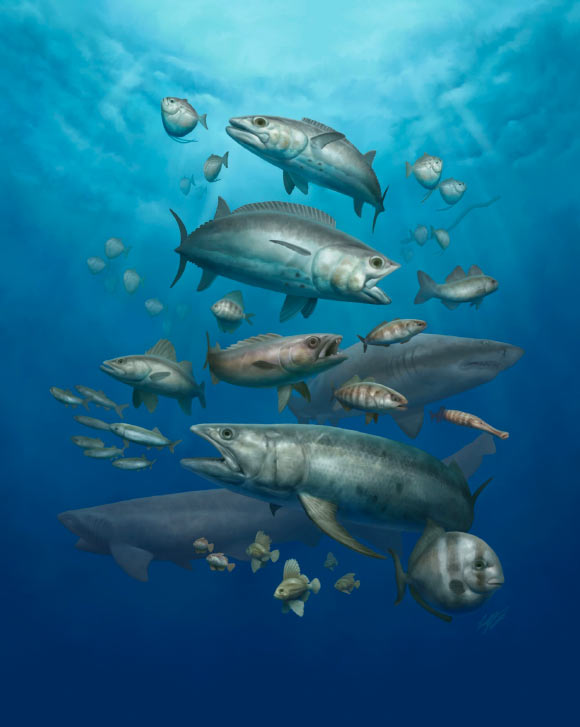
Fish Fossils from Early Paleocene Fill 10-Million-Year Gap after Dinosaur Extinction
Des fossiles de poissons du début du Paléocène comblent un écart de 10 millions d'années après l'extinction des dinosaures
Égypte Paléocène fossile Dinosauria extinction
Les paléontologues ont décrit un assemblage de fossiles de poissons marins provenant du site de Qreiya 3, vieux de 62,2 millions d'années, dans le désert oriental d'Égypte, ouvrant ainsi une fenêtre sur cette transition. L'article Les fossiles de poissons du début du Paléocène comblent un écart de 10 millions d'années après l'extinction des dinosaures est apparu en premier sur Sci.News : Breaking Science News.
05/06/2026 sci-news ⚙ Traduction automatique
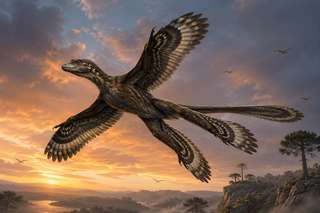
Un vrai cauchemar volant : des chercheurs ont découvert un « dragon » préhistorique avec 4 ailes qui terrorisait les premiers oiseaux !
plume chasse Chine Crétacé fossile Dinosauria oiseau étude
Les raptors, dinosaures à plumes du Crétacé, ne pouvaient pas voler malgré leur lien étroit avec les oiseaux. Une nouvelle étude menée sur un site fossilifère en Chine révèle toutefois que certains d’entre eux auraient été capables de planer et de chasser les premiers oiseaux.
05/06/2026 futura-terre
Journée mondiale de l'environnement – ​​Notre voyage vers des modèles animaux préhistoriques plus durables
jouet Dinosauria évolution
Aujourd'hui, c'est la Journée mondiale de l'environnement et cela nous donne l'occasion de réfléchir aux mesures que nous prenons pour réduire notre impact environnemental.  Nous sommes en voyage ; nous avons un long chemin à parcourir.  Cependant, l'un de nos objectifs avec la marque Everything Dinosaur Evolution est de produire des animaux préhistoriques plus durables.
05/06/2026 everythingdinosaur ⚙ Traduction automatique
1 2 3 4 5 6 7 8 9 10 11 12 13 14 15 16 17 18 19 20 21 22 23 24 25 26 27 28 29 30 31 32 33 34 35 36 37 38 39 40 41 42