Dinosauria

Taxon

412 image(s) · 210 Actualités

Voir la fiche

Galerie d'images

A hypothetical life restoration of Ampelosaurus atacis

• Ampelosaurus is known from hundreds of fossil specimens which show most of the dinosaur's osteological details, however, there are few articulated remains or reconstructions of the material so its overall proportions and life appearance are uncertain.
• Ampelosaurus is known to have supported osteoderms, only four are currently known. The number of these osteoderms that an individual Ampelosaurus would have supported in life and their and position on the body is not currently known. It's thought that due to the rarity of titanosaur osteoderms that they would be quite sparse on the body. The position and layout of the osteoderms has been loosely based on this interpretation, which is based on the work of Vidal et al 2015. [1]
Taxons Dashanpusaurus

A hypothetical life restoration of Ampelosaurus atacis • Ampelosaurus is known from hundreds of fossil specimens which show most of the dinosaur's osteological details, however, there are few articulated remains or reconstructions of the material so its overall proportions and life appearance are uncertain. • Ampelosaurus is known to have supported osteoderms, only four are currently known. The number of these osteoderms that an individual Ampelosaurus would have supported in life and their and position on the body is not currently known. It's thought that due to the rarity of titanosaur osteoderms that they would be quite sparse on the body. The position and layout of the osteoderms has been loosely based on this interpretation, which is based on the work of Vidal et al 2015. [1]

fossile spécimen Ampelosaurus Bagualosauria +6
fossil Europasaurus, Aathal Dinosaur Museum.

fossil Europasaurus, Aathal Dinosaur Museum.

musée fossile Dinosauria Europasaurus
Right hind limb of the sauropodomorph dinosaur Musankwa sanyatiensis gen. et sp. nov. (NHMZ 2521) from the Pebbly Arkose Formation (Norian, Upper Triassic) of Spurwing Island, Zimbabwe. A. Right femur in posterior (A1), lateral (A2), anterior (A3), medial (A4), proximal (A5), and distal (A6) views. B. Right tibia with conjoined astragalus in anterior (B1), lateral (B2), posterior (B3), medial (B4), and proximal (B5) views.

Right hind limb of the sauropodomorph dinosaur Musankwa sanyatiensis gen. et sp. nov. (NHMZ 2521) from the Pebbly Arkose Formation (Norian, Upper Triassic) of Spurwing Island, Zimbabwe. A. Right femur in posterior (A1), lateral (A2), anterior (A3), medial (A4), proximal (A5), and distal (A6) views. B. Right tibia with conjoined astragalus in anterior (B1), lateral (B2), posterior (B3), medial (B4), and proximal (B5) views.

membre Zimbabwe Norien Trias +3
Reconstruction of Tuebingosaurus maierfritzorum gen. et sp. nov. as a quadruped dinosaur, using the outline of Riojasaurus as a base ‒ next to the silhouette of Friedrich von Huene. The drawing of the bones is based on and modified from the original illustrations of specimen “GPIT IV” in von Huene (1932, pl. 38) that have been replicated in the literature. The right fibula is marked in grey as it was found nearby with similar measurements to the left fibula and has been assumed to be part of the same individual.

Reconstruction of Tuebingosaurus maierfritzorum gen. et sp. nov. as a quadruped dinosaur, using the outline of Riojasaurus as a base ‒ next to the silhouette of Friedrich von Huene. The drawing of the bones is based on and modified from the original illustrations of specimen “GPIT IV” in von Huene (1932, pl. 38) that have been replicated in the literature. The right fibula is marked in grey as it was found nearby with similar measurements to the left fibula and has been assumed to be part of the same individual.

os dessin spécimen Dinosauria +2
Selmasaurus johnsoni mounted skull in the Rocky Mountain Dinosaur Resource Center in Woodland Park, Colorado

Selmasaurus johnsoni mounted skull in the Rocky Mountain Dinosaur Resource Center in Woodland Park, Colorado

Dinosauria Selmasaurus crâne
The Natural Science Museum at El Chocón, in the northwestern Argentine Patagonia (the Comahue region). Fossil of dinosaur

The Natural Science Museum at El Chocón, in the northwestern Argentine Patagonia (the Comahue region). Fossil of dinosaur

musée Argentine fossile Dinosauria +1
Picture of Justin Hofmann holding the right hindlimb of his self-named dinosaur, Nedcolbertia justinhofmanni.

Picture of Justin Hofmann holding the right hindlimb of his self-named dinosaur, Nedcolbertia justinhofmanni.

Dinosauria Nedcolbertia
Known fossil pieces after Aviatyrannis jurassica (Dinosauria, Theropoda, Coelurosauria, Tyrannosauroidea).[1]
Sources

↑ Rauhut O.W.M. (2003), "A tyrannosaurid dinosaur from the Upper Jurassic of Portugal", Paleontology 46(5): p. 903-910.

Known fossil pieces after Aviatyrannis jurassica (Dinosauria, Theropoda, Coelurosauria, Tyrannosauroidea).[1] Sources ↑ Rauhut O.W.M. (2003), "A tyrannosaurid dinosaur from the Upper Jurassic of Portugal", Paleontology 46(5): p. 903-910.

Portugal Jurassique fossile Aviatyrannis +5
Achelousaurus horneri skull, collected in Glacier County, Montana, at the Museum of the Rockies in Bozeman, Montana.
The Ceratopsidae are those dinosaurs with head frills.  There are three large subgroups of Ceratopsidae: Centrosaurinae, Ceratopsinae, and Chasmosaurinae. The Triceratopsini are a "tribe" of the Chasmosaurinae -- a genus so vast that it gets the special name "tribe".  The Pachyrhinosaurini are a "tribe" within the Centrosaurinae.

Achelousaurus is a genus within the Pachyrhinosaurini.  So far, only three skulls and some limited skeletal remains have been collected anywhere in the world -- and all of them in Montana.  Their bony frills are quite similar to the Styracosaurus albertensis, although their other skull features (such as big bony bosses on the nose and behind the eyes) are not.

Achelousaurus horneri skull, collected in Glacier County, Montana, at the Museum of the Rockies in Bozeman, Montana. The Ceratopsidae are those dinosaurs with head frills. There are three large subgroups of Ceratopsidae: Centrosaurinae, Ceratopsinae, and Chasmosaurinae. The Triceratopsini are a "tribe" of the Chasmosaurinae -- a genus so vast that it gets the special name "tribe". The Pachyrhinosaurini are a "tribe" within the Centrosaurinae. Achelousaurus is a genus within the Pachyrhinosaurini. So far, only three skulls and some limited skeletal remains have been collected anywhere in the world -- and all of them in Montana. Their bony frills are quite similar to the Styracosaurus albertensis, although their other skull features (such as big bony bosses on the nose and behind the eyes) are not.

musée États-Unis Achelousaurus Centrosaurinae +8
Line diagram of the holotype specimen (ZPAL MgD-I/117) of the protoceratopsid Breviceratops kozlowskii. Based on Maryańska & Osmólska 1975,[1] and Czepiński 2019.[2]
References

↑ (1975). "Protoceratopsidae (Dinosauria) of Asia". Palaeontologia Polonica 33: 134−143. Archived from the original on 2018-09-21. Retrieved on 2021-07-25.

↑ (2019). "Ontogeny and variation of a protoceratopsid dinosaur Bagaceratops rozhdestvenskyi from the Late Cretaceous of the Gobi Desert". Historical Biology: 1−28. DOI:10.1080/08912963.2019.1593404. Archived from the original on 2021-07-08. Retrieved on 2021-07-25.

Line diagram of the holotype specimen (ZPAL MgD-I/117) of the protoceratopsid Breviceratops kozlowskii. Based on Maryańska & Osmólska 1975,[1] and Czepiński 2019.[2] References ↑ (1975). "Protoceratopsidae (Dinosauria) of Asia". Palaeontologia Polonica 33: 134−143. Archived from the original on 2018-09-21. Retrieved on 2021-07-25. ↑ (2019). "Ontogeny and variation of a protoceratopsid dinosaur Bagaceratops rozhdestvenskyi from the Late Cretaceous of the Gobi Desert". Historical Biology: 1−28. DOI:10.1080/08912963.2019.1593404. Archived from the original on 2021-07-08. Retrieved on 2021-07-25.

ontogenèse Crétacé Crétacé supérieur holotype +5
Reconstructed skull of Jaxartosaurus aralensis Riabinin, 1937. Only a posterior portion of the skull, as well as a surangular is known, with the rest of the skull being based mostly upon File:Aralosaurus skull.png. Jaxartosaurus is currently classified as a basal lambeosaurine, more derived than Aralosaurini, but more primitive than Parasaurolophini and Lambeosaurini. It might be more derived than Tsintaosaurini (Godefroit et al., 2004). References: 
Riabinin, A.M. (1937). "A New Finding of Dinosaurs in the Trans-Baikal Region". Ezhegodn. Vserossijskogo Palaeont. Obstcg. 11: 142–144
Godefroit, P.; Bolotsky, Y.L.; Van Itterbeeck, J. (2004). "The lambeosaurine dinosaur Amurosaurus riabinini, from the
Maastrichtian of Far Eastern Russia". Acta Palaeontologica Polonica 49(4): 585–618

Reconstructed skull of Jaxartosaurus aralensis Riabinin, 1937. Only a posterior portion of the skull, as well as a surangular is known, with the rest of the skull being based mostly upon File:Aralosaurus skull.png. Jaxartosaurus is currently classified as a basal lambeosaurine, more derived than Aralosaurini, but more primitive than Parasaurolophini and Lambeosaurini. It might be more derived than Tsintaosaurini (Godefroit et al., 2004). References: Riabinin, A.M. (1937). "A New Finding of Dinosaurs in the Trans-Baikal Region". Ezhegodn. Vserossijskogo Palaeont. Obstcg. 11: 142–144 Godefroit, P.; Bolotsky, Y.L.; Van Itterbeeck, J. (2004). "The lambeosaurine dinosaur Amurosaurus riabinini, from the Maastrichtian of Far Eastern Russia". Acta Palaeontologica Polonica 49(4): 585–618

Russie Maastrichtien Amurosaurus Aralosaurini +7
Yandusaurus hongheensis, a neornithischian dinosaur.

Yandusaurus hongheensis, a neornithischian dinosaur.

Dinosauria Neornithischia Yandusaurus
Rendition of possible appearance of the dinosaur genus Nyasasaurus from the Middle Triassic, possibly the earliest known dinosaur.  Black portions represent the partial skeletal fragments (a humerus and six vertebrae) from one specimen blue portions represent fragments from a second specimen (three cervical vertebrae) on which the current likely form of the animal is based.

Rendition of possible appearance of the dinosaur genus Nyasasaurus from the Middle Triassic, possibly the earliest known dinosaur. Black portions represent the partial skeletal fragments (a humerus and six vertebrae) from one specimen blue portions represent fragments from a second specimen (three cervical vertebrae) on which the current likely form of the animal is based.

humérus Trias moyen Trias spécimen +3
historická budova Národního muzea v Praze - západní dvorana s proskleným stropem a kostrou dinosaura / historic building of the National Museum in Prague - West hall with glass ceiling and dinosaur skeleton
location: Prague, Czech Republic
author: Jan Helebrant
www.juhele.blogspot.com

license CC0 Public Domain Dedication

historická budova Národního muzea v Praze - západní dvorana s proskleným stropem a kostrou dinosaura / historic building of the National Museum in Prague - West hall with glass ceiling and dinosaur skeleton location: Prague, Czech Republic author: Jan Helebrant www.juhele.blogspot.com license CC0 Public Domain Dedication

musée Tchéquie Amargasaurus Dinosauria +1
Dinosaur's Museum in Savannakhet, Laos

Dinosaur's Museum in Savannakhet, Laos

musée Laos Dinosauria Tangvayosaurus
Figure 1: Geographic provenance and speculative reconstruction of the gigantic titanosaurian sauropod dinosaur Notocolossus gonzalezparejasi gen. et sp. nov.
(a) Type locality of Notocolossus (indicated by star) in southern-most Mendoza Province, Argentina. (b) Reconstructed skeleton and body silhouette in right lateral view, with preserved elements of the holotype (UNCUYO-LD 301) in light green and those of the referred specimen (UNCUYO-LD 302) in orange. Scale bar, 1 m. (All images were hand drawn by the senior author [B.J.G.R.] and subsequently edited using Adobe Illustrator software.)

Figure 1: Geographic provenance and speculative reconstruction of the gigantic titanosaurian sauropod dinosaur Notocolossus gonzalezparejasi gen. et sp. nov. (a) Type locality of Notocolossus (indicated by star) in southern-most Mendoza Province, Argentina. (b) Reconstructed skeleton and body silhouette in right lateral view, with preserved elements of the holotype (UNCUYO-LD 301) in light green and those of the referred specimen (UNCUYO-LD 302) in orange. Scale bar, 1 m. (All images were hand drawn by the senior author [B.J.G.R.] and subsequently edited using Adobe Illustrator software.)

écaille Argentine holotype spécimen +4
1 2 3 4 5 6 7 8 9 10 11 12 13 14 15 16 17 18 19 20 21 22 23 24 25 26

Actualités

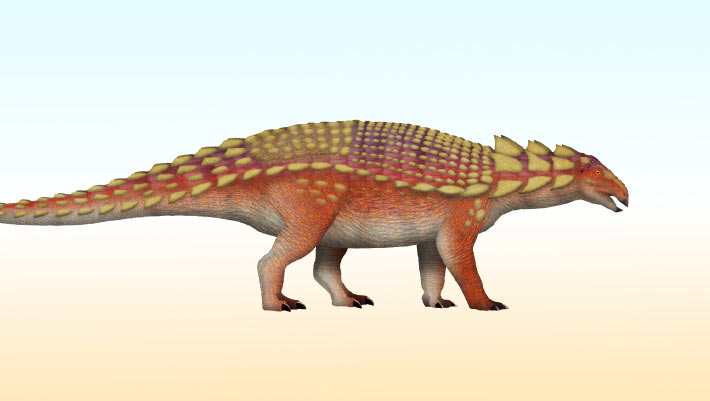
New Species of Armored Dinosaur Identified in Japan
Une nouvelle espèce de dinosaure cuirassé identifiée au Japon
Japon fossile Ankylosauria Dinosauria Nodosauridae nouvelle espèce
Les fossiles crâniens d'un ankylosaure nodosauridé découverts il y a plus de deux décennies sur l'île japonaise d'Hokkaido ont été reconnus comme appartenant à un nouveau genre et à une nouvelle espèce. L'article Nouvelles espèces de dinosaures blindés identifiés au Japon est apparu en premier sur Sci.News : Breaking Science News.
24/08/2026 sci-news ⚙ Traduction automatique
Superbes étoiles modèles de Rhoetosaurus en élevage dans un diorama de dinosaures australien
Dinosauria Rhoetosaurus
Nos remerciements au collectionneur de modèles et fan d'animaux préhistoriques Robert qui a envoyé à Everything Dinosaur une photographie de son modèle de Rhoetosaurus en train d'être élevé. La figurine de sauropode fait partie de la gamme de modèles CollectA Age of Dinosaurs.  Nous pensons que ce modèle a été introduit par CollectA en 2009.  Robert a réalisé un diorama axé sur les dinosaures australiens.
23/08/2026 everythingdinosaur ⚙ Traduction automatique
Les nouveaux modèles Haolonggood Stegotetrabelodon arrivent en stock
membre Dinosauria
Les membres de l’équipe Everything Dinosaur confirment qu’ils stockeront la paire Haolonggood Stegotetrabelodon récemment annoncée. Cette figurine d'éléphant préhistorique est disponible en deux couleurs (gris et marron). Il sera en stock chez Everything Dinosaur au début de l'automne (2026). La paire Haolonggood Stegotetrabelodon. Ce modèle est disponible en deux coloris (gris
21/08/2026 everythingdinosaur ⚙ Traduction automatique
Un fossile de créature marine « une sur un million » préserve les tissus mous pendant 450 millions d'années
tissus fossile Dinosauria
Les scientifiques ont identifié des tissus mous exceptionnellement rares préservés dans un fossile de crinoïde vieux de 450 millions d'années, soit plus de 200 millions d'années plus vieux que les premiers dinosaures. Ses pieds tubulaires délicats offrent une nouvelle fenêtre remarquable sur la façon dont certains des premiers animaux des récifs de la Terre vivaient, se nourrissaient et évoluaient.
21/08/2026 sciencedaily ⚙ Traduction automatique
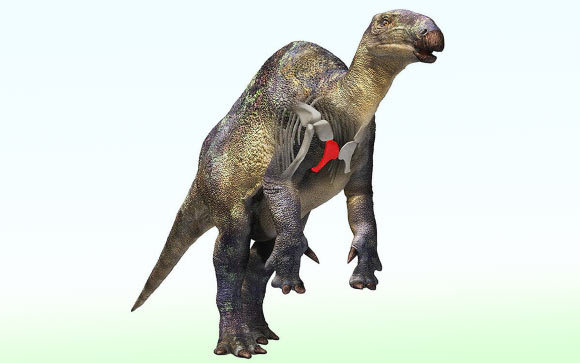
Fossil of Small Duck-Billed Dinosaur Relative Found in Japan
Un fossile d'un petit dinosaure à bec de canard découvert au Japon
os Japon Crétacé fossile Canardia Dinosauria Iguanodontia Styracosterna
Un os fossilisé découvert il y a vingt ans dans le nord-est du Japon appartient à l'un des plus petits dinosaures iguanodontiens jamais découverts dans les roches marines du Crétacé du pays, selon une nouvelle recherche menée par l'Université de Tsukuba. L'article Un fossile d'un petit dinosaure à bec de canard trouvé au Japon est apparu en premier sur Sci.News : Breaking Science News.
20/08/2026 sci-news ⚙ Traduction automatique
1 2 3 4 5 6 7 8 9 10 11 12 13 14 15 16 17 18 19 20 21 22 23 24 25 26 27 28 29 30 31 32 33 34 35 36 37 38 39 40 41 42