spécimen

Nature du spécimen

228 image(s) · 18 Actualités

Galerie d'images

Composite skeletal reconstruction of Lewisuchus admixtus, all specimens overlap

Composite skeletal reconstruction of Lewisuchus admixtus, all specimens overlap

spécimen Lewisuchus
(A) Present day map of Australia with the town of Lightning Ridge indicated by the star. (B) Regional map of the Lightning Ridge region showing localities (where known) for specimens described in this text. Sealed (solid black lines) and unsealed roads (dashed lines) are indicated. The ephemeral Coocoran Lake is marked with a dotted blue line. (C) Correlative stratigraphy of the major Cretaceous depositional basins and geological units discussed in this study. The ornithopod icon and arrow indicate the approximate level of the Griman Creek Formation from which the current material pertains. Informal units are in quotation marks. Maps in (A) and (B) redrawn and modified from Bell et al. (2016) and Opal Fields—Lightning Ridge Region map produced by the NSW Department of Mineral Resources, respectively. Stratigraphy based on Toslini, McLoughlin & Drinnan (1999) and Cook, Bryan & Draper (2013). Ornithopod silhouette created by Caleb M. Brown and used under the Creative Commons Attribution-ShareAlike 3.0 Unported license.

(A) Present day map of Australia with the town of Lightning Ridge indicated by the star. (B) Regional map of the Lightning Ridge region showing localities (where known) for specimens described in this text. Sealed (solid black lines) and unsealed roads (dashed lines) are indicated. The ephemeral Coocoran Lake is marked with a dotted blue line. (C) Correlative stratigraphy of the major Cretaceous depositional basins and geological units discussed in this study. The ornithopod icon and arrow indicate the approximate level of the Griman Creek Formation from which the current material pertains. Informal units are in quotation marks. Maps in (A) and (B) redrawn and modified from Bell et al. (2016) and Opal Fields—Lightning Ridge Region map produced by the NSW Department of Mineral Resources, respectively. Stratigraphy based on Toslini, McLoughlin & Drinnan (1999) and Cook, Bryan & Draper (2013). Ornithopod silhouette created by Caleb M. Brown and used under the Creative Commons Attribution-ShareAlike 3.0 Unported license.

Australie Griman Creek Crétacé spécimen +3
Eubrontes dinosaur track from the Jurassic of Connecticut, USA.
Trace fossils are any indirect evidence of ancient life.  They refer to features in rocks that do not represent parts of the body of a once-living organism.  Traces include footprints, tracks, trails, burrows, borings, and bitemarks.  Body fossils provide information about the morphology of ancient organisms, while trace fossils provide information about the behavior of ancient life forms.  Interpreting trace fossils and determination of the identity of a trace maker can be straightforward (for example, a dinosaur footprint represents walking behavior) or not.  Sediments that have trace fossils are said to be bioturbated.  Burrowed textures in sedimentary rocks are referred to as bioturbation.  Trace fossils have scientific names assigned to them, in the same style & manner as living organisms or body fossils.
This track was made by a theropod, a group of small to large, carnivorous, bipedal dinosaurs.  The specimen comes from a Triassic to Jurassic terrestrial sedimentary succession that filled up a half graben, many of which occur along America's eastern seaboard.  Such half-graben basins formed during the Triassic as the Pangaea supercontinent tried to rift apart, but failed.  Pangaea successfully broke apart during the Jurassic.
Stratigraphy: East Berlin Formation, Newark Supergroup, Lower Jurassic
Locality: unrecorded / undisclosed site at or near the town of Rocky Hill, central Connecticut, USA


Info. at:
mrdata.usgs.gov/geology/state/sgmc-unit.php?unit=CTJeb%3B0
and

en.wikipedia.org/wiki/Eubrontes

Eubrontes dinosaur track from the Jurassic of Connecticut, USA. Trace fossils are any indirect evidence of ancient life. They refer to features in rocks that do not represent parts of the body of a once-living organism. Traces include footprints, tracks, trails, burrows, borings, and bitemarks. Body fossils provide information about the morphology of ancient organisms, while trace fossils provide information about the behavior of ancient life forms. Interpreting trace fossils and determination of the identity of a trace maker can be straightforward (for example, a dinosaur footprint represents walking behavior) or not. Sediments that have trace fossils are said to be bioturbated. Burrowed textures in sedimentary rocks are referred to as bioturbation. Trace fossils have scientific names assigned to them, in the same style & manner as living organisms or body fossils. This track was made by a theropod, a group of small to large, carnivorous, bipedal dinosaurs. The specimen comes from a Triassic to Jurassic terrestrial sedimentary succession that filled up a half graben, many of which occur along America's eastern seaboard. Such half-graben basins formed during the Triassic as the Pangaea supercontinent tried to rift apart, but failed. Pangaea successfully broke apart during the Jurassic. Stratigraphy: East Berlin Formation, Newark Supergroup, Lower Jurassic Locality: unrecorded / undisclosed site at or near the town of Rocky Hill, central Connecticut, USA Info. at: mrdata.usgs.gov/geology/state/sgmc-unit.php?unit=CTJeb%3B0 and en.wikipedia.org/wiki/Eubrontes

États-Unis Jurassique Trias fossile +5
The type specimen of the ichnogenus Cheliceratichnus, from the Early Jurassic East Berlin Formation of Holyoke, Massachusetts.

The type specimen of the ichnogenus Cheliceratichnus, from the Early Jurassic East Berlin Formation of Holyoke, Massachusetts.

East Berlin Jurassique inférieur Jurassique spécimen +1
Bifurculapes laqueatus trackway (positive hyporelief, i.e. casts on the bottom surface of the bed) from the Early Jurassic East Berlin Formation (Hartford Basin) of Holyoke, Massachusetts (not the same specimen as this one). See coin (1 U.S. cent, 19.05 mm in diameter) for scale.

Bifurculapes laqueatus trackway (positive hyporelief, i.e. casts on the bottom surface of the bed) from the Early Jurassic East Berlin Formation (Hartford Basin) of Holyoke, Massachusetts (not the same specimen as this one). See coin (1 U.S. cent, 19.05 mm in diameter) for scale.

écaille East Berlin Jurassique inférieur Jurassique +3
Bifurculapes laqueatus trackway (positive hyporelief, i.e. casts on the bottom surface of the bed) from the Early Jurassic East Berlin Formation (Hartford Basin) of Holyoke, Massachusetts (not the same specimen as this one). See coin (1 U.S. cent, 19.05 mm in diameter) for scale.

Bifurculapes laqueatus trackway (positive hyporelief, i.e. casts on the bottom surface of the bed) from the Early Jurassic East Berlin Formation (Hartford Basin) of Holyoke, Massachusetts (not the same specimen as this one). See coin (1 U.S. cent, 19.05 mm in diameter) for scale.

écaille East Berlin Jurassique inférieur Jurassique +3
A trackway of the trace fossil Bifurculapes laqueatus (positive hyporelief, i.e. casts on the bottom surface of the bed) from the Early Jurassic East Berlin Formation (Hartford Basin) of Holyoke, Massachusetts (not the same specimen as this one). Scale is in cm.
Formations East Berlin

A trackway of the trace fossil Bifurculapes laqueatus (positive hyporelief, i.e. casts on the bottom surface of the bed) from the Early Jurassic East Berlin Formation (Hartford Basin) of Holyoke, Massachusetts (not the same specimen as this one). Scale is in cm.

écaille East Berlin Jurassique inférieur Jurassique +4
Geological context of the Lower Cretaceous deposits of southeast England, focussing on the Purbeck Group and Wealden Supergroup.

(A) Schematic geology of the Lower Cretaceous deposits of the Weald Sub-basin (southeast England), highlighting published spinosaurid finds (Charig & Milner, 1997; Salisbury & Naish, 2011; Turmine-Juhel et al., 2019). Based on Austen & Batten (2018: Fig. 2). Note that various additional spinosaurid teeth are known from the region but remain undescribed in detail (Fowler, 2007). (B) Simplified stratigraphic column of the Weald Group in southeast England, based on Batten & Austen (2011: Fig. 3.2). Note that the Grinstead Clay Formation, which subdivides the Tunbridge Wells Sands Formation in Batten & Austen (2011) and from which the “Suchosaurus cultridens” type specimen was discovered (Salisbury & Naish, 2011), is downgraded to a member of the latter formation in other works (Hopson, Wilkinson & Woods, 2008) and has not been included in this column. Spinosaurid silhouette courtesy of Dan Folkes (CC-BY 4.0).
Formations Durlston

Geological context of the Lower Cretaceous deposits of southeast England, focussing on the Purbeck Group and Wealden Supergroup. (A) Schematic geology of the Lower Cretaceous deposits of the Weald Sub-basin (southeast England), highlighting published spinosaurid finds (Charig & Milner, 1997; Salisbury & Naish, 2011; Turmine-Juhel et al., 2019). Based on Austen & Batten (2018: Fig. 2). Note that various additional spinosaurid teeth are known from the region but remain undescribed in detail (Fowler, 2007). (B) Simplified stratigraphic column of the Weald Group in southeast England, based on Batten & Austen (2011: Fig. 3.2). Note that the Grinstead Clay Formation, which subdivides the Tunbridge Wells Sands Formation in Batten & Austen (2011) and from which the “Suchosaurus cultridens” type specimen was discovered (Salisbury & Naish, 2011), is downgraded to a member of the latter formation in other works (Hopson, Wilkinson & Woods, 2008) and has not been included in this column. Spinosaurid silhouette courtesy of Dan Folkes (CC-BY 4.0).

Crétacé spécimen Spinosauridae Suchosaurus +2
Restoration of the spinosaurid dinosaur Siamosaurus in the Sao Khua Formation palaeoenvironment, with Sunosuchus in the middle left and a herd of Phuwiangosaurus in the background.
References:
Siamosaurus based on tooth specimens [1] and the neural spine of a possibly referable skeleton[2], with other missing elements filled in with relatives (Suchomimus[3], Baryonyx[4], IchthyovenatorFile:Ichthyovenator_laosensis_skeletal_reconstruction_by_PaleoGeek.png).
Phuwiangosaurus based on skeletal by Suteethorn et al. (2009)[5] and missing elements of skull of EuhelopusFile:Euhelopus.png.

Sunosuchus based on Suteethorn and Ingavat (1983)[6] and missing elements based on Goniopholis[7].
Formations Sao Khua

Restoration of the spinosaurid dinosaur Siamosaurus in the Sao Khua Formation palaeoenvironment, with Sunosuchus in the middle left and a herd of Phuwiangosaurus in the background. References: Siamosaurus based on tooth specimens [1] and the neural spine of a possibly referable skeleton[2], with other missing elements filled in with relatives (Suchomimus[3], Baryonyx[4], IchthyovenatorFile:Ichthyovenator_laosensis_skeletal_reconstruction_by_PaleoGeek.png). Phuwiangosaurus based on skeletal by Suteethorn et al. (2009)[5] and missing elements of skull of EuhelopusFile:Euhelopus.png. Sunosuchus based on Suteethorn and Ingavat (1983)[6] and missing elements based on Goniopholis[7].

dent dessin Sao Khua spécimen +11
MRF 319, a partial oviraptorosaurian skeleton referred to Anzu wyliei. 
(A) Skeletal reconstruction in left lateral view, with preserved bones in gray and bones represented in other Anzu specimens in white (hatching indicates heavily reconstructed portions of the ilia of CM 78001). Middle-posterior (ninth?) cervical vertebra in (B) anterior, (C) left lateral, and (D) dorsal views. Posterior (11th?) cervical vertebra in (E) anterior, (F) left lateral, and (G) dorsal views. Posterior (12th?) cervical vertebra in (H) anterior, (I) left lateral, and (J) dorsal views. Anteroposteriorly crushed left radius in lateral (K) and anterior (L) views. Mediolaterally crushed left ulna in lateral (M) and anterior (N) views. (O) Partial left scapulocoracoid in lateral view. Dorsal rib in anterior (P) and posterior (Q) views. Abbreviations: acr, acromial process; cr, cervical rib; dip, distal processes; pat, pathology; pf, pneumatic fossa. Scale bars = 50 cm in A; 1 cm in B–Q.

MRF 319, a partial oviraptorosaurian skeleton referred to Anzu wyliei. (A) Skeletal reconstruction in left lateral view, with preserved bones in gray and bones represented in other Anzu specimens in white (hatching indicates heavily reconstructed portions of the ilia of CM 78001). Middle-posterior (ninth?) cervical vertebra in (B) anterior, (C) left lateral, and (D) dorsal views. Posterior (11th?) cervical vertebra in (E) anterior, (F) left lateral, and (G) dorsal views. Posterior (12th?) cervical vertebra in (H) anterior, (I) left lateral, and (J) dorsal views. Anteroposteriorly crushed left radius in lateral (K) and anterior (L) views. Mediolaterally crushed left ulna in lateral (M) and anterior (N) views. (O) Partial left scapulocoracoid in lateral view. Dorsal rib in anterior (P) and posterior (Q) views. Abbreviations: acr, acromial process; cr, cervical rib; dip, distal processes; pat, pathology; pf, pneumatic fossa. Scale bars = 50 cm in A; 1 cm in B–Q.

os écaille vertèbre pathologie +5
MRF 319, a partial oviraptorosaurian skeleton referred to Anzu wyliei. Skeletal reconstruction in left lateral view, with preserved bones in gray and bones represented in other Anzu specimens in white (hatching indicates heavily reconstructed portions of the ilia. Scale bar = 50 cm (19.7 in)

MRF 319, a partial oviraptorosaurian skeleton referred to Anzu wyliei. Skeletal reconstruction in left lateral view, with preserved bones in gray and bones represented in other Anzu specimens in white (hatching indicates heavily reconstructed portions of the ilia. Scale bar = 50 cm (19.7 in)

os écaille spécimen Anzu +3
Restored skeleton of Anzu wyliei (previously labelled as a specimen of Chirostenotes)

Restored skeleton of Anzu wyliei (previously labelled as a specimen of Chirostenotes)

États-Unis spécimen Anzu Chirostenotes +1
Restored skeleton of Anzu wyliei (previously labelled as a specimen of Chirostenotes)

Restored skeleton of Anzu wyliei (previously labelled as a specimen of Chirostenotes)

États-Unis spécimen Anzu Chirostenotes +1
Photo montage of different specimens of mosasaurs: 
Opetiosaurus
Vallecillosaurus
Halisaurus
Plotosaurus
Platecarpus
Tylosaurus
Taxons Plotosaurus

Photo montage of different specimens of mosasaurs: Opetiosaurus Vallecillosaurus Halisaurus Plotosaurus Platecarpus Tylosaurus

spécimen Halisaurus Platecarpus Plotosaurus +1
Comparison of the digit III/footprint length ratio for Eubrontes of the same size in America, Europe, and China. American specimens: (a) Eubrontes giganteus AC 15/3, type specimens (Lockley 2009); (b) Eubrontes giganteus AC 45/1 (Olsen et al. 1998); (c) Utah Eubrontes 1 (Lockley et al. 1998); (d) Utah Eubrontes 2 (T3) (Lockley et al. 2021); (e) Connecticut Eubrontes (Ishigaki and Fujisaki 1989); (f) Eubrontes (?) glenrosensis (Adams et al. 2010); European specimen: (g) Eubrontes veillonensis (de Lapparent and Montenat 1967); Chinese specimens: (h) Eubrontes pareschequier (Xing et al. 2009a, 2014b); (i) Eubrontes zigongensis (Xing et al. 2014c); (j) Eubrontes platypus (Hitchcock 1858) Xiyang specimen (Yang and Yang 1987); (k) Eubrontes monax (Zhen et al. 1986; Lockley et al. 2013); (l) Eubrontes xiyangensis (Zhen et al. 1986; Lockley et al. 2013); (m) Changpeipus carbonicus (Xing et al. 2014b); (n) Eubrontes nianpanshanensis (Xing et al. 2016b); (o) Lufengopus dongi (Lü et al. 2006; Xing et al. 2014d); (p) Eubrontes (?) glenrosensis Hailiutu specimen (Li et al. 2010; Xing et al. 2021); (q) Lockleypus luanpingeris (Xing et al. 2018e); (r) Chapus lockleyi (Li et al. 2006); (s) Asianopodus pulvinicalyx (Matsukawa et al. 2005); (t) Asianopodus robustus (Li et al. 2011; Lockley et al. 2018); (u) Eubrontes nobitai (This study); (v) Eubrontes HX-T3 (Xing et al. 2015b); (w) Eubrontes BJA-T4 (Xing et al. 2016c)
Taxons Asianopodus

Comparison of the digit III/footprint length ratio for Eubrontes of the same size in America, Europe, and China. American specimens: (a) Eubrontes giganteus AC 15/3, type specimens (Lockley 2009); (b) Eubrontes giganteus AC 45/1 (Olsen et al. 1998); (c) Utah Eubrontes 1 (Lockley et al. 1998); (d) Utah Eubrontes 2 (T3) (Lockley et al. 2021); (e) Connecticut Eubrontes (Ishigaki and Fujisaki 1989); (f) Eubrontes (?) glenrosensis (Adams et al. 2010); European specimen: (g) Eubrontes veillonensis (de Lapparent and Montenat 1967); Chinese specimens: (h) Eubrontes pareschequier (Xing et al. 2009a, 2014b); (i) Eubrontes zigongensis (Xing et al. 2014c); (j) Eubrontes platypus (Hitchcock 1858) Xiyang specimen (Yang and Yang 1987); (k) Eubrontes monax (Zhen et al. 1986; Lockley et al. 2013); (l) Eubrontes xiyangensis (Zhen et al. 1986; Lockley et al. 2013); (m) Changpeipus carbonicus (Xing et al. 2014b); (n) Eubrontes nianpanshanensis (Xing et al. 2016b); (o) Lufengopus dongi (Lü et al. 2006; Xing et al. 2014d); (p) Eubrontes (?) glenrosensis Hailiutu specimen (Li et al. 2010; Xing et al. 2021); (q) Lockleypus luanpingeris (Xing et al. 2018e); (r) Chapus lockleyi (Li et al. 2006); (s) Asianopodus pulvinicalyx (Matsukawa et al. 2005); (t) Asianopodus robustus (Li et al. 2011; Lockley et al. 2018); (u) Eubrontes nobitai (This study); (v) Eubrontes HX-T3 (Xing et al. 2015b); (w) Eubrontes BJA-T4 (Xing et al. 2016c)

Chine spécimen Asianopodus Changpeipus +2
Juvenile Gorgosaurus TMP 2009.12.14 preserving stomach contents. Photographs of specimen in (A) right lateral view and (B) left anterolateral view. (C) Interpretive illustration of specimen in right lateral view. Skeleton consists of a nearly complete skull, the left side of the body and limbs, and a nearly complete pelvis. Red rectangle delineates location of stomach contents. (D) Histological photomicrograph of tibia showing the presence of five lines of arrested growths and two annuli (marked by asterisks), indicating that the individual was between 5 and 7 years old. Scale bars, 50 cm (A) to (C) and 1 mm (D).

Juvenile Gorgosaurus TMP 2009.12.14 preserving stomach contents. Photographs of specimen in (A) right lateral view and (B) left anterolateral view. (C) Interpretive illustration of specimen in right lateral view. Skeleton consists of a nearly complete skull, the left side of the body and limbs, and a nearly complete pelvis. Red rectangle delineates location of stomach contents. (D) Histological photomicrograph of tibia showing the presence of five lines of arrested growths and two annuli (marked by asterisks), indicating that the individual was between 5 and 7 years old. Scale bars, 50 cm (A) to (C) and 1 mm (D).

membre bassin écaille croissance +6
1 2 3 4 5 6 7 8 9 10 11 12 13 14 15

Actualités

244-Million-Year-Old Fossil Preserves Earliest Reptilian Digestive System
Un fossile vieux de 244 millions d’années préserve le premier système digestif reptilien
Chine Trias fossile spécimen
Un spécimen superbement conservé d'Austronaga minuta, un petit reptile marin au long cou du Trias chinois, contient un estomac, un foie et des intestins fossilisés, offrant aux paléontologues leur plus ancien aperçu détaillé de la façon dont les premiers reptiles digéraient la nourriture. L'article Un fossile vieux de 244 millions d'années préserve le premier système digestif reptilien est apparu en premier sur Sci.News : Breaking Science News.
04/08/2026 sci-news ⚙ Traduction automatique
Un nouveau projet de recherche sur les collections coloniales examine des spécimens de musée du Togo et du Ghana
musée Ghana Togo spécimen étude
Un nouveau projet de recherche sur les collections coloniales a été lancé avec la participation de plusieurs grands musées berlinois. Les chercheurs étudieront les origines et l’histoire d’importantes collections d’histoire naturelle et culturelles rassemblées pendant la période coloniale allemande. Pour la première fois, des institutions berlinoises travaillent ensemble pour étudier les collections liées à l'ancienne colonie allemande du Togo. À
04/07/2026 everythingdinosaur ⚙ Traduction automatique
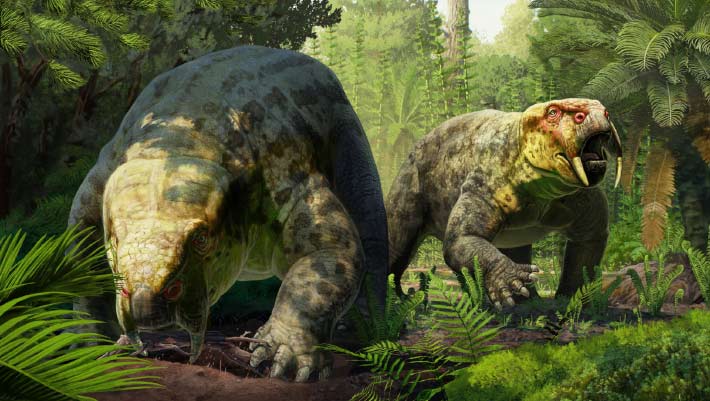
New Species of Ancient Bear-Dog Identified in Spain
Nouvelle espèce d'ancien chien-ours identifiée en Espagne
bassin Espagne fossile spécimen mammifères nouvelle espèce
Les paléontologues ont identifié une espèce jusqu'alors inconnue d'amphicyonidés - la famille éteinte de mammifères carnivores communément connue sous le nom de chiens-ours - à partir de deux spécimens découverts sur un riche site fossile du bassin du Vallès-Penedès, près de Barcelone, en Espagne. L'article Nouvelle espèce d'ancien chien-ours identifié en Espagne est apparu en premier sur Sci.News : Breaking Science News.
11/06/2026 sci-news ⚙ Traduction automatique
New Microraptorine Dinosaur Discovered in China
Un nouveau dinosaure microraptorine découvert en Chine
Chine Crétacé Crétacé inférieur spécimen Dinosauria Jian Microraptorinae oiseau
Jian changmaensis est le premier dinosaure non aviaire découvert sur un site paléontologique ayant livré plus de 100 spécimens d'oiseaux du Crétacé inférieur. L'article Un nouveau dinosaure microraptorine découvert en Chine est apparu en premier sur Sci.News : Breaking Science News.
04/06/2026 sci-news ⚙ Traduction automatique
New Species of Fossil Axolotl Unearthed in Mexico
De nouvelles espèces d’axolotl fossiles découvertes au Mexique
Mexique fossile spécimen découverte nouvelle espèce
Les paléontologues ont identifié une nouvelle espèce du genre axolotl Ambystoma à partir de plusieurs spécimens fossilisés trouvés au fond des affleurements rocheux de l'État mexicain d'Hidalgo. L'article De nouvelles espèces d'axolotl fossiles découvertes au Mexique sont apparus en premier sur Sci.News : Breaking Science News.
02/06/2026 sci-news ⚙ Traduction automatique
1 2 3 4