Pterosauria

Taxon

48 image(s) · 6 Actualités

Voir la fiche

Galerie d'images

The Maastrichtian, Transylvanian giant azhdarchid pterosaur Hatzegopteryx sp. preys on the rhabdodontid iguanodontian Zalmoxes. Because large predatory theropods are unknown on Late Cretaceous Haţeg Island, giant azhdarchids may have played a key role as terrestrial predators in this community.

The Maastrichtian, Transylvanian giant azhdarchid pterosaur Hatzegopteryx sp. preys on the rhabdodontid iguanodontian Zalmoxes. Because large predatory theropods are unknown on Late Cretaceous Haţeg Island, giant azhdarchids may have played a key role as terrestrial predators in this community.

prédateur proie Crétacé Crétacé supérieur +8
Representative taxa from the early Campanian Muthmannsdorf fauna from the Grünbach Formation, eastern Austria. A Doratodon carcharidens (Mesoeucrocodylia) mandible (PIUW 2349/57) in dorsal view (photo by Márton Rabi) B Indeterminate azhdarchid (Pterosauria, Azhdarchidae), left humerus (PIUW 2349/102) in anterior view C ‘Megalosaurus pannoniensis’ basal tetanuran (Theropoda, Tetanurae), tooth (PIUW uncatalogued) in lateral view D Mochlodon suessi (Ornithopoda, Rhabdodontidae), right dentary (holotype, PIUW 2349/2) in medial view. Scale bars equal 2 cm in A, B and D and 1 cm in C.

Representative taxa from the early Campanian Muthmannsdorf fauna from the Grünbach Formation, eastern Austria. A Doratodon carcharidens (Mesoeucrocodylia) mandible (PIUW 2349/57) in dorsal view (photo by Márton Rabi) B Indeterminate azhdarchid (Pterosauria, Azhdarchidae), left humerus (PIUW 2349/102) in anterior view C ‘Megalosaurus pannoniensis’ basal tetanuran (Theropoda, Tetanurae), tooth (PIUW uncatalogued) in lateral view D Mochlodon suessi (Ornithopoda, Rhabdodontidae), right dentary (holotype, PIUW 2349/2) in medial view. Scale bars equal 2 cm in A, B and D and 1 cm in C.

humérus écaille dent Autriche +11
Representative taxa from the Santonian Iharkút fauna from the Csehbánya Formation, Bakony Mountains, western Hungary. A Pannoniasaurus inexpectatus (Squamata, Mosasauroidea), dorsal vertebra (MTM uncatalogued) in dorsal view (photo by Réka Kalmár) B Foxemys trabanti (Pleurodira, Bothremydidae), skull (MTM V 2010.215.1.) in dorsal view (photo by Márton Rabi). C Bicuspidon aff. hatzegiensis (Squamata, Borioteiioidea), left dentary (MTM 2006.112.1.) in medial view (photo by László Makádi) D Basal tetanuran (Theropoda, Tetanurae), tooth (MTM V.01.54) in ?lingual view E Indeterminate abelisaurid (Theropoda, Abelisauridae), pedal ungual phalanx (MTM V 2008.43.1.) in lateral view F Pneumatoraptor fodori (Theropoda, Paraves), left scapulocoracoid (holotype, MTM V 2008.38.1.) in lateral view G Mochlodon vorosi (Ornithopoda, Rhabdodontidae), left dentary (holotype, MTM V 2010.105.1) in lateral view H Bakonydraco galaczi (Pterosauria, Azhdarchidae), mandible (holotype, MTM 2007.110.1) in dorsal view I Iharkutosuchus makadii (Eusuchia, Hylaeochampsidae), skull (holotype, MTM 2006.52.1) in dorsal view J Hungarosaurus tormai (Ankylosauria, Nodosauridae), right dentary (MTM 2007.25.2) in lateral view K Bauxitornis mindszentyae (Aves, Enantiornithes), left tarsometatarsus (holotype, MTM V 2009.38.1) in anterior view L Ajkaceratops kozmai (Ceratopsia), fused rostral and premaxillae (holotype, MTM V 2009.192.1) in lateral view. Scale bars: 2 cm in A, V, G, H, I, J; 1 cm in D, E, F, K, L; 1 mm in C.

Representative taxa from the Santonian Iharkút fauna from the Csehbánya Formation, Bakony Mountains, western Hungary. A Pannoniasaurus inexpectatus (Squamata, Mosasauroidea), dorsal vertebra (MTM uncatalogued) in dorsal view (photo by Réka Kalmár) B Foxemys trabanti (Pleurodira, Bothremydidae), skull (MTM V 2010.215.1.) in dorsal view (photo by Márton Rabi). C Bicuspidon aff. hatzegiensis (Squamata, Borioteiioidea), left dentary (MTM 2006.112.1.) in medial view (photo by László Makádi) D Basal tetanuran (Theropoda, Tetanurae), tooth (MTM V.01.54) in ?lingual view E Indeterminate abelisaurid (Theropoda, Abelisauridae), pedal ungual phalanx (MTM V 2008.43.1.) in lateral view F Pneumatoraptor fodori (Theropoda, Paraves), left scapulocoracoid (holotype, MTM V 2008.38.1.) in lateral view G Mochlodon vorosi (Ornithopoda, Rhabdodontidae), left dentary (holotype, MTM V 2010.105.1) in lateral view H Bakonydraco galaczi (Pterosauria, Azhdarchidae), mandible (holotype, MTM 2007.110.1) in dorsal view I Iharkutosuchus makadii (Eusuchia, Hylaeochampsidae), skull (holotype, MTM 2006.52.1) in dorsal view J Hungarosaurus tormai (Ankylosauria, Nodosauridae), right dentary (MTM 2007.25.2) in lateral view K Bauxitornis mindszentyae (Aves, Enantiornithes), left tarsometatarsus (holotype, MTM V 2009.38.1) in anterior view L Ajkaceratops kozmai (Ceratopsia), fused rostral and premaxillae (holotype, MTM V 2009.192.1) in lateral view. Scale bars: 2 cm in A, V, G, H, I, J; 1 cm in D, E, F, K, L; 1 mm in C.

dent vertèbre Hongrie Santonien +14
Palaeogeographic distribution of late Early and early Late Cretaceous pterosaur assemblages. Taxonomic composition of assemblages shown on Fig. 1. Palaeogeography based on Smith et al. 1994. Abbreviations: 1. Cambridge Greensand, England: 2. Lower Chalk, England: 3. Züümbayan Svita, Khuren-Dukh, Mongolia: 4. Lysaya Gora, Saratov, Russia: 5. Kem Kem red beds, Morocco: 6. Paw Paw Formation, Texas, USA: 7. Lagarcito Formation, San Luis, Argentina: 8. Santana and Crato Formations, Ceara, Brazil: 9. Toolebuc Formation, Queensland, Australia.

Palaeogeographic distribution of late Early and early Late Cretaceous pterosaur assemblages. Taxonomic composition of assemblages shown on Fig. 1. Palaeogeography based on Smith et al. 1994. Abbreviations: 1. Cambridge Greensand, England: 2. Lower Chalk, England: 3. Züümbayan Svita, Khuren-Dukh, Mongolia: 4. Lysaya Gora, Saratov, Russia: 5. Kem Kem red beds, Morocco: 6. Paw Paw Formation, Texas, USA: 7. Lagarcito Formation, San Luis, Argentina: 8. Santana and Crato Formations, Ceara, Brazil: 9. Toolebuc Formation, Queensland, Australia.

Argentine Australie Brésil Mongolie +8
(A) Map of Queensland showing the extent of Cretaceous outcrop. (B) Map of the location of Dig Site Three (type locality of Haliskia), and numerous other sites in the area from which pterosaur fossils have been collected.
Formations Griman Creek

(A) Map of Queensland showing the extent of Cretaceous outcrop. (B) Map of the location of Dig Site Three (type locality of Haliskia), and numerous other sites in the area from which pterosaur fossils have been collected.

Crétacé fossile Haliskia Pterosauria
A cast replica of a skeletal mount of the prehistoric pterosaur Anhanguera blittersdorffi on display at Melbourne Museum in Victoria, Australia.

A cast replica of a skeletal mount of the prehistoric pterosaur Anhanguera blittersdorffi on display at Melbourne Museum in Victoria, Australia.

musée Australie moulage Anhanguera +1
Life restoration of the Brazilian ornithocheiroid pterosaur Anhanguera blittersdorffi. Digital painting; credit Matt Martyniuk.

Life restoration of the Brazilian ornithocheiroid pterosaur Anhanguera blittersdorffi. Digital painting; credit Matt Martyniuk.

Anhanguera Pterosauria
Muzquizopteryx coahuilensis (Familyː Nyctosauridae) is a species of nyctosaurid pterodactyloid pterosaur from the Late Cretaceous period (early Coniacian stage) of what is now Coahuila, Mexico.
Taxons Muzquizopteryx

Muzquizopteryx coahuilensis (Familyː Nyctosauridae) is a species of nyctosaurid pterodactyloid pterosaur from the Late Cretaceous period (early Coniacian stage) of what is now Coahuila, Mexico.

Mexique Coniacien Crétacé Crétacé supérieur +3
Anhanguerid pterosaur Uktenadactylus wadleighi (Lee, 1994), SMU 73058, Tarrant County, Texas, USA, Albian. In anterior (A1), leftlateral (A2), palatal (A3) and right lateral (A4), and dorsal (A5) views. Photographs by BH
Taxons Uktenadactylus

Anhanguerid pterosaur Uktenadactylus wadleighi (Lee, 1994), SMU 73058, Tarrant County, Texas, USA, Albian. In anterior (A1), leftlateral (A2), palatal (A3) and right lateral (A4), and dorsal (A5) views. Photographs by BH

États-Unis Albien Anhangueridae Pterosauria +1
Fossil of Santanadactylus pricei and Anhanguera santanae, an extinct pterosaur- Took the photo at Senckenberg Museum of Frankfurt
Taxons Santanadactylus

Fossil of Santanadactylus pricei and Anhanguera santanae, an extinct pterosaur- Took the photo at Senckenberg Museum of Frankfurt

musée fossile Anhanguera Pterosauria +1
Fossil of Santanadactylus pricei and Anhanguera santanae, an extinct pterosaur- Took the photo at Senckenberg Museum of Frankfurt
Formations Romualdo

Fossil of Santanadactylus pricei and Anhanguera santanae, an extinct pterosaur- Took the photo at Senckenberg Museum of Frankfurt

musée fossile Anhanguera Pterosauria +1
An Reconstruction of Bennettazhia oregonensis showing the preserved parts of this pterosaur.
Taxons Bennettazhia

An Reconstruction of Bennettazhia oregonensis showing the preserved parts of this pterosaur.

Bennettazhia Pterosauria
Significant discoveries of pterosaurs from late Campanian-aged terrestrial depositional environments in western North America (the azhdarchids Cryodrakon, Montanazhdarcho, and Navajodactylus).
Taxons Navajodactylus

Significant discoveries of pterosaurs from late Campanian-aged terrestrial depositional environments in western North America (the azhdarchids Cryodrakon, Montanazhdarcho, and Navajodactylus).

Campanien Azhdarchidae Cryodrakon Montanazhdarcho +2
Fragment of the mandibular symphysis of a tapejarid pterosaur (BSP 1997 I 67) from the Kem Kem Group in (A) ?left lateral, (B) ?right lateral and (C) dorsal (occlusal) view. Scale bar equals 5 cm.
Taxons Afrotapejara

Fragment of the mandibular symphysis of a tapejarid pterosaur (BSP 1997 I 67) from the Kem Kem Group in (A) ?left lateral, (B) ?right lateral and (C) dorsal (occlusal) view. Scale bar equals 5 cm.

écaille Afrotapejara Pterosauria Tapejaridae
Cast of a Scaphognathus crassirostris, a kind of pterosaur. On display as part of the exhibit "Pterosaurs: Flight in the Age of Dinosaurs" at the Cleveland Natural History Museum in Cleveland, Ohio, in the United States.
This animal lived about 150 million years ago. This fossil was found in the Solnhofen formation in Germany. This is a cast; the fossil itself is held by the Institute of Geology and Paleontology at the University of Bonn.
Taxons Scaphognathus

Cast of a Scaphognathus crassirostris, a kind of pterosaur. On display as part of the exhibit "Pterosaurs: Flight in the Age of Dinosaurs" at the Cleveland Natural History Museum in Cleveland, Ohio, in the United States. This animal lived about 150 million years ago. This fossil was found in the Solnhofen formation in Germany. This is a cast; the fossil itself is held by the Institute of Geology and Paleontology at the University of Bonn.

vol musée Allemagne États-Unis +7
Fossil specimen of early Cretaceous pterosaur Sinopterus dongi, which is collected from Chaoyang, Liaoning, China. The specimen (BMNHC Ph773) is a collection of Beijing Museum of Natural History and was on display in the National Museum of Natural Science (Taichung, Taiwan) during a special exhibition.
Taxons Sinopterus

Fossil specimen of early Cretaceous pterosaur Sinopterus dongi, which is collected from Chaoyang, Liaoning, China. The specimen (BMNHC Ph773) is a collection of Beijing Museum of Natural History and was on display in the National Museum of Natural Science (Taichung, Taiwan) during a special exhibition.

musée Chine Taïwan Crétacé +6
1 2 3

Actualités

Geosternbergia: Beast of the Week
Geosternbergia : la bête de la semaine
fossile Geosternbergia Pteranodon Pterosauria taxonomie
 Cette semaine, nous regardons un célèbre ptérosaure.  Découvrez Geosternbergia sterngergi !  Je vais commencer cet article en soulignant que Geosternbergia est considérée comme simplement une espèce distincte au sein du genre Pteranodon, par de nombreux experts, ce qui donnerait son nom Pteranodon sternbergi.  Ceci étant dit, puisque j'ai déjà fait un article sur Pteranodon longiceps, je choisis d'appeler ce ptérosaure Geosternbergia.  (la taxonomie est compliquée et également sujette à changement, notamment avec les fossiles)
31/05/2026 prehistoricbeastoftheweek ⚙ Traduction automatique
Quelle est la différence entre un ptérosaure et un dinosaure ?
Dinosauria Pterosauria
Quelle est la différence entre un ptérosaure et un dinosaure ? Beaucoup de gens pensent que les ptérosaures étaient des dinosaures, mais ce n’est pas exact. Les ptérosaures étaient des reptiles volants qui vivaient en même temps que les dinosaures.  Bien que les ptérosaures et les dinosaures soient tous deux des reptiles et appartiennent à un groupe plus large appelé Archosauria, les ptérosaures ont évolué séparément et
27/05/2026 everythingdinosaur ⚙ Traduction automatique
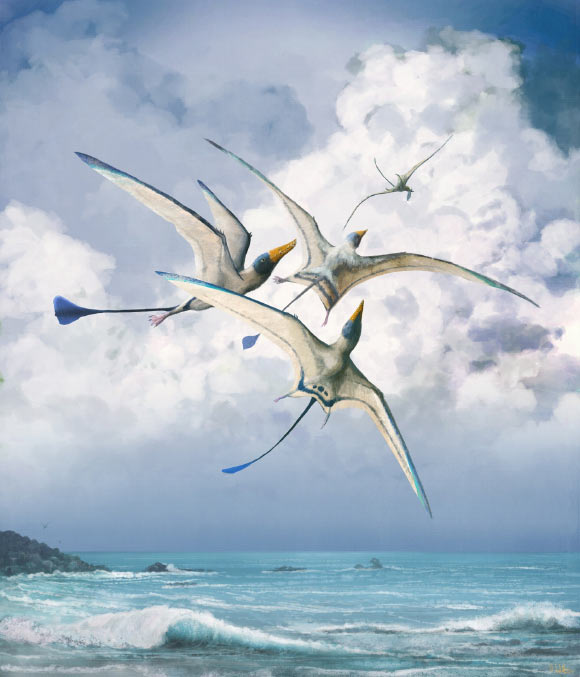
New Jurassic Pterosaur Unearthed in Germany
Un nouveau ptérosaure du Jurassique découvert en Allemagne
Allemagne Jurassique fossile Monofenestrata Pterosauria nouvelle espèce squelette
Les paléontologues ont décrit un nouveau genre et une nouvelle espèce de ptérosaure monofenestratan précoce sur la base d'un squelette fossile presque complet et bien conservé découvert en Bavière, en Allemagne. L'article Un nouveau ptérosaure jurassique découvert en Allemagne est apparu en premier sur Sci.News : Breaking Science News.
19/05/2026 sci-news ⚙ Traduction automatique
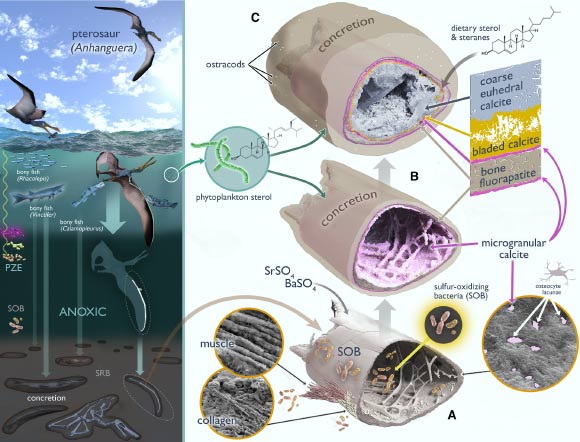
106-Million-Year-Old Pterosaur Footprints Discovered in Korea
Des empreintes de ptérosaures vieilles de 106 millions d'années découvertes en Corée
Corée du Sud empreintes Neoazhdarchia Pterosauria découverte
Un ensemble d'empreintes de ptérosaures néoazdarchiens découvertes en Corée du Sud offre un rare aperçu de la façon dont certains des plus grands reptiles volants auraient pu chasser sur terre. L'article Des empreintes de ptérosaures vieilles de 106 millions d'années découvertes en Corée sont apparues en premier sur Sci.News : Breaking Science News.
01/05/2026 sci-news ⚙ Traduction automatique
Anurognathus: Beast of the Week
Anurognathus : la bête de la semaine
Allemagne Jurassique Jurassique supérieur Anurognathus Pterosauria crâne
Cette semaine, nous allons découvrir un petit ptérosaure unique, Anurognathus ammoni !  Anurognathus vivait dans ce qui est aujourd'hui l'Allemagne à la fin du Jurassique, il y a environ 150 millions d'années.  Il était minuscule, avait une envergure de 35,5 cm (14 pouces) et aurait probablement mangé des insectes.  Son nom de genre se traduit par "Frog Jaw" puisque son crâne ressemblait à celui d'une grenouille, étant extrêmement émoussé avec une bouche large.  Reconstitution à l'aquarelle d'Anurognathus ammoni par Christopher DiPiazza.Sku d'Anurognathus
14/12/2025 prehistoricbeastoftheweek ⚙ Traduction automatique
1 2