Ichthyosauria

Taxon

45 image(s) · 8 News

View page

Image gallery

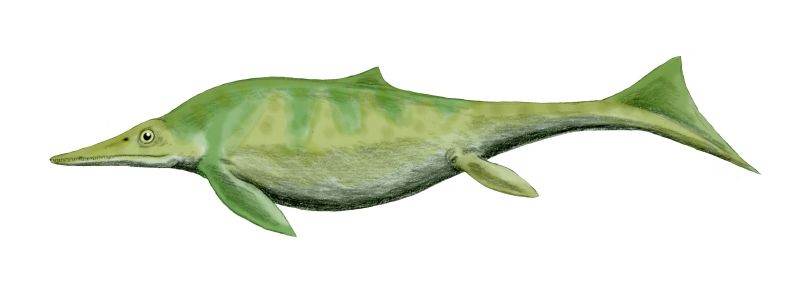
A simple paleoart reconstruction of the basal ichthyosaur parvinatator.
Taxa Parvinatator

A simple paleoart reconstruction of the basal ichthyosaur parvinatator.

paleoart Ichthyosauria Parvinatator
Life restoration of the small German Jurassic ichthyosaur Hauffiopteryx typicus.
References
Maxwell, E. E.; Cortés, D. (2020). "A revision of the Early Jurassic ichthyosaur Hauffiopteryx (Reptilia: Ichthyosauria), and description of a new species from Southwestern Germany". Palaeontologia Electronica 23: 1–43. Archived from the original on 2022-07-06. Retrieved on 2022-03-15.
Note: This image is currently uncolored
Taxa Hauffiopteryx

Life restoration of the small German Jurassic ichthyosaur Hauffiopteryx typicus. References Maxwell, E. E.; Cortés, D. (2020). "A revision of the Early Jurassic ichthyosaur Hauffiopteryx (Reptilia: Ichthyosauria), and description of a new species from Southwestern Germany". Palaeontologia Electronica 23: 1–43. Archived from the original on 2022-07-06. Retrieved on 2022-03-15. Note: This image is currently uncolored

description Germany Early Jurassic Jurassic +3
Identifier: waterreptilesofp1914will
Title: Water reptiles of the past and present
Year: 1914 (1910s)
Authors:  Williston, Samuel Wendell, 1851-1918
Subjects:  Aquatic reptiles
Publisher:  Chicago, Ill., The University of Chicago Press
Contributing Library:  Boston Public Library
Digitizing Sponsor:  Boston Public Library

View Book Page: Book Viewer
About This Book: Catalog Entry
View All Images: All Images From Book
Click here to view book online to see this illustration in context in a browseable online version of this book.

Text Appearing Before Image:
served and very complete skeletons ofdifferent species of ichthyosaurs from the Jurassic deposits ofWiirtemberg, in which remains of these animals occur in great 112 WATER REPTILES OF THE PAST AND PRESENT profusion. His researches, and those of several authors since then,supplementing and confirming or disproving those of the manyobservers made during the preceding seventy years, have finallydetermined almost perfectly the complete structure of the moretypical ichthyosaurs, enabling us to infer not a little as to theirhabits and distribution in the old Jurassic oceans. Within thepast few years the discoveries of Professor J. C. Merriam of Cali-fornia have likewise added greatly to our knowledge of the earlierichthyosaurs. It may now truthfully be said that of no group ofextinct reptiles do we have a more complete and satisfactory knowl-edge than of the ichthyosaurs. Nevertheless we have yet very much more to learn about theorder Ichthyosauria as a whole—whence they came and how they
Text Appearing After Image:
Fig. 52.—Ichthyosaurus quadricissus.museum, from Dr. Dreverman. Photograph of specimen in Senckenberg originated; what their nearest kin were among other reptiles; andespecially, more about the connecting links between them andterrestrial reptiles. They have, as an order, so isolated a position,are so widely separated from all other reptiles in structure, that theyhave long been a puzzle to paleontologists. Like the whales andother cetaceans among mammals, we know the ichthyosaurs wellin the plenitude of their power and the fulness of their development,but have yet only an imperfect knowledge of their earlier history,and none whatever of their earliest. However, as will be seenfarther on, the recent discoveries by Merriam have shed much lighton some of the stages of their evolution. So nearly perfectly wereall the later ichthyosaurs adapted to their life in the water that itwas believed by nearly all paleontologists until about a score of years ICHTHYOSAURIA 3 ago that they had desc

Note About Images

Please note that these images are extracted from scanned page images that may have been digitally enhanced for readability - coloration and appearance of these illustrations may not perfectly resemble the original work.
Taxa Stenopterygiidae

Identifier: waterreptilesofp1914will Title: Water reptiles of the past and present Year: 1914 (1910s) Authors: Williston, Samuel Wendell, 1851-1918 Subjects: Aquatic reptiles Publisher: Chicago, Ill., The University of Chicago Press Contributing Library: Boston Public Library Digitizing Sponsor: Boston Public Library View Book Page: Book Viewer About This Book: Catalog Entry View All Images: All Images From Book Click here to view book online to see this illustration in context in a browseable online version of this book. Text Appearing Before Image: served and very complete skeletons ofdifferent species of ichthyosaurs from the Jurassic deposits ofWiirtemberg, in which remains of these animals occur in great 112 WATER REPTILES OF THE PAST AND PRESENT profusion. His researches, and those of several authors since then,supplementing and confirming or disproving those of the manyobservers made during the preceding seventy years, have finallydetermined almost perfectly the complete structure of the moretypical ichthyosaurs, enabling us to infer not a little as to theirhabits and distribution in the old Jurassic oceans. Within thepast few years the discoveries of Professor J. C. Merriam of Cali-fornia have likewise added greatly to our knowledge of the earlierichthyosaurs. It may now truthfully be said that of no group ofextinct reptiles do we have a more complete and satisfactory knowl-edge than of the ichthyosaurs. Nevertheless we have yet very much more to learn about theorder Ichthyosauria as a whole—whence they came and how they Text Appearing After Image: Fig. 52.—Ichthyosaurus quadricissus.museum, from Dr. Dreverman. Photograph of specimen in Senckenberg originated; what their nearest kin were among other reptiles; andespecially, more about the connecting links between them andterrestrial reptiles. They have, as an order, so isolated a position,are so widely separated from all other reptiles in structure, that theyhave long been a puzzle to paleontologists. Like the whales andother cetaceans among mammals, we know the ichthyosaurs wellin the plenitude of their power and the fulness of their development,but have yet only an imperfect knowledge of their earlier history,and none whatever of their earliest. However, as will be seenfarther on, the recent discoveries by Merriam have shed much lighton some of the stages of their evolution. So nearly perfectly wereall the later ichthyosaurs adapted to their life in the water that itwas believed by nearly all paleontologists until about a score of years ICHTHYOSAURIA 3 ago that they had desc Note About Images Please note that these images are extracted from scanned page images that may have been digitally enhanced for readability - coloration and appearance of these illustrations may not perfectly resemble the original work.

book museum Jurassic specimen +7
Life restoration of the Triassic ichthyosaur Callawayia neoscapularis. Three specimens of this ichthyosaur are known, the holotype, ROM 41993, and two referred specimens, TMP 94.380.11 and 94.382.2. The skull is primarily based on ROM 41993, cross-checked against TMP 94.380.11 and TMP 94.382.2. The vertebral column is based primarily on TMP 94.382.2 as it is the most complete of these specimens, while the ribs were based on ROM 41993. The forelimbs were mainly based on those of ROM 41993, with TMP 94.380.11 used to determine their breadth. The hindlimbs were based on TMP 94.380.11, especially the more complete right hindlimb.
ROM 41993 was cross-scaled with TMP 94.380.11 by the dimensions of the forelimb epipodials, which produced similar vertebral dimensions. The two TMP specimens were cross-scaled based on femoral length, also producing similar vertebral dimensions. Nicholls & Manabe (2001) stated that no wedge-shaped caudal centra supporting a tailbend were found and that there was no evidence of a bend being present, though considered that they might have existed in the gap in the preserved caudals. Since various other Triassic ichthyosaurs have since been found to have tail bends, one was illustrated here. A modest downturn of roughly 15° was illustrated, comparable to that in Guanlingsaurus, and the location of the bend within the gap in the preserved vertebrae matches well with the location of the bend in Guizhouichthyosaurus.

References
McGowan, C. (1994). "A new species of Shastasaurus (Reptilia: Ichthyosauria) from the Triassic of British Columbia: The most complete exemplar of the genus". Journal of Vertebrate Paleontology 14 (2): 168–179. DOI:10.1080/02724634.1994.10011550.
Nicholls, E. L.; Manabe, M. (2001). "A new genus of ichthyosaur from the Late Triassic Pardonet Formation of British Columbia: Bridging the Triassic-Jurassic gap". Canadian Journal of Earth Sciences 38 (6): 983–1002.
Ji, C.; Jiang, D.Y.; Hao, W.; Sun, Y. (2011). "True tailbend occurred in the Late Triassic: Evidence from ichthyosaur skeletons of South China". Acta Scientiarum Naturalium Universitatis Pekinensis 47 (2): 309–314.
Shang, Q. H.; Li, C. (2009). "On the occurrence of the ichthyosaur Shastasaurus in the Guanling biota (Late Triassic), Guizhou, China". Vertebrata PalAsiatica 47 (3): 178–193.
Taxa Guanlingsaurus

Life restoration of the Triassic ichthyosaur Callawayia neoscapularis. Three specimens of this ichthyosaur are known, the holotype, ROM 41993, and two referred specimens, TMP 94.380.11 and 94.382.2. The skull is primarily based on ROM 41993, cross-checked against TMP 94.380.11 and TMP 94.382.2. The vertebral column is based primarily on TMP 94.382.2 as it is the most complete of these specimens, while the ribs were based on ROM 41993. The forelimbs were mainly based on those of ROM 41993, with TMP 94.380.11 used to determine their breadth. The hindlimbs were based on TMP 94.380.11, especially the more complete right hindlimb. ROM 41993 was cross-scaled with TMP 94.380.11 by the dimensions of the forelimb epipodials, which produced similar vertebral dimensions. The two TMP specimens were cross-scaled based on femoral length, also producing similar vertebral dimensions. Nicholls & Manabe (2001) stated that no wedge-shaped caudal centra supporting a tailbend were found and that there was no evidence of a bend being present, though considered that they might have existed in the gap in the preserved caudals. Since various other Triassic ichthyosaurs have since been found to have tail bends, one was illustrated here. A modest downturn of roughly 15° was illustrated, comparable to that in Guanlingsaurus, and the location of the bend within the gap in the preserved vertebrae matches well with the location of the bend in Guizhouichthyosaurus. References McGowan, C. (1994). "A new species of Shastasaurus (Reptilia: Ichthyosauria) from the Triassic of British Columbia: The most complete exemplar of the genus". Journal of Vertebrate Paleontology 14 (2): 168–179. DOI:10.1080/02724634.1994.10011550. Nicholls, E. L.; Manabe, M. (2001). "A new genus of ichthyosaur from the Late Triassic Pardonet Formation of British Columbia: Bridging the Triassic-Jurassic gap". Canadian Journal of Earth Sciences 38 (6): 983–1002. Ji, C.; Jiang, D.Y.; Hao, W.; Sun, Y. (2011). "True tailbend occurred in the Late Triassic: Evidence from ichthyosaur skeletons of South China". Acta Scientiarum Naturalium Universitatis Pekinensis 47 (2): 309–314. Shang, Q. H.; Li, C. (2009). "On the occurrence of the ichthyosaur Shastasaurus in the Guanling biota (Late Triassic), Guizhou, China". Vertebrata PalAsiatica 47 (3): 178–193.

China Jurassic Late Triassic Triassic +12
Ichthyosaurus communis, Early Jurassic of England. Digital.
Taxa Ichthyosaurus

Ichthyosaurus communis, Early Jurassic of England. Digital.

Early Jurassic Jurassic Ichthyosauria Spinops
Skull of the Middle Triassic North-American ichthyosaur Cymbospondylus petrinus, preserved in three dimensions. This specimen is cataloged under the number UCMP 9913. More information is available from the source link.
Taxa Hueneosauria

Skull of the Middle Triassic North-American ichthyosaur Cymbospondylus petrinus, preserved in three dimensions. This specimen is cataloged under the number UCMP 9913. More information is available from the source link.

museum Middle Triassic Triassic specimen +4
Ichthyosauria
Taxa Ichthyosauria
Ichthyosauria
Bituminous claystone, Lower Jurassic, Hesselberg, Middle Franconia.
Sedimentary rock of very thin laminated layers (particles less than 0,0002 mm).

Rock formation is known for its rich fossil findings, ex. Ichthyosaur.
Formations Posidonia Shale

Bituminous claystone, Lower Jurassic, Hesselberg, Middle Franconia. Sedimentary rock of very thin laminated layers (particles less than 0,0002 mm). Rock formation is known for its rich fossil findings, ex. Ichthyosaur.

Jurassic fossil Ichthyosauria formation
A simple paleoart reconstruction of the basal ichthyosaur parvinatator.

A simple paleoart reconstruction of the basal ichthyosaur parvinatator.

paleoart Ichthyosauria Parvinatator
Life restoration of the small German Jurassic ichthyosaur Hauffiopteryx typicus.
References
Maxwell, E. E.; Cortés, D. (2020). "A revision of the Early Jurassic ichthyosaur Hauffiopteryx (Reptilia: Ichthyosauria), and description of a new species from Southwestern Germany". Palaeontologia Electronica 23: 1–43. Archived from the original on 2022-07-06. Retrieved on 2022-03-15.
Note: This image is currently uncolored

Life restoration of the small German Jurassic ichthyosaur Hauffiopteryx typicus. References Maxwell, E. E.; Cortés, D. (2020). "A revision of the Early Jurassic ichthyosaur Hauffiopteryx (Reptilia: Ichthyosauria), and description of a new species from Southwestern Germany". Palaeontologia Electronica 23: 1–43. Archived from the original on 2022-07-06. Retrieved on 2022-03-15. Note: This image is currently uncolored

description Germany Early Jurassic Jurassic +3
Life restoration of the large, Middle Triassic Nevadan ichthyosaur Cymbopsondylus petrinus. This illustration is primarily based on specimen UCMP 9950, with much of the tail restored following UCMP 9947. The size of the eye was reconstructed based on UCMP 9954 and UCMP 9913. The unknown distal portions of the flippers, as well as some of the tail, was reconstructed after the related genus Xinminosaurus.
References
Merriam, J. C. (1908)       Triassic Ichthyosauria: With special reference to the American forms, Berkley, California:  Berkley: The University Press  
Klein, N.; Schmitz, L.; Wintrich, T.; Sander, P. M. (2020). "A new cymbospondylid ichthyosaur (Ichthyosauria) from the Middle Triassic (Anisian) of the Augusta Mountains, Nevada, USA". Journal of Systematic Palaeontology 18 (14): 1167-1191. DOI:10.1080/14772019.2020.1748132.
Jiang, D.; Motani, R.; Hao, W.; Schmitz, L.; Rieppel, O.; Sun, Y.; Sun, Z. (2008). "New primitive ichthyosaurian (Reptilia, Diapsida) from the Middle Triassic of Panxian, Guizhou, southwestern China and its position in the Triassic biotic recovery". Progress in Natural Science 18 (10): 1315. DOI:10.1016/j.pnsc.2008.01.039.

Life restoration of the large, Middle Triassic Nevadan ichthyosaur Cymbopsondylus petrinus. This illustration is primarily based on specimen UCMP 9950, with much of the tail restored following UCMP 9947. The size of the eye was reconstructed based on UCMP 9954 and UCMP 9913. The unknown distal portions of the flippers, as well as some of the tail, was reconstructed after the related genus Xinminosaurus. References Merriam, J. C. (1908) Triassic Ichthyosauria: With special reference to the American forms, Berkley, California: Berkley: The University Press Klein, N.; Schmitz, L.; Wintrich, T.; Sander, P. M. (2020). "A new cymbospondylid ichthyosaur (Ichthyosauria) from the Middle Triassic (Anisian) of the Augusta Mountains, Nevada, USA". Journal of Systematic Palaeontology 18 (14): 1167-1191. DOI:10.1080/14772019.2020.1748132. Jiang, D.; Motani, R.; Hao, W.; Schmitz, L.; Rieppel, O.; Sun, Y.; Sun, Z. (2008). "New primitive ichthyosaurian (Reptilia, Diapsida) from the Middle Triassic of Panxian, Guizhou, southwestern China and its position in the Triassic biotic recovery". Progress in Natural Science 18 (10): 1315. DOI:10.1016/j.pnsc.2008.01.039.

China United States Anisian Middle Triassic +5
Life restoration of the Triassic ichthyosaur Callawayia neoscapularis. Three specimens of this ichthyosaur are known, the holotype, ROM 41993, and two referred specimens, TMP 94.380.11 and 94.382.2. The skull is primarily based on ROM 41993, cross-checked against TMP 94.380.11 and TMP 94.382.2. The vertebral column is based primarily on TMP 94.382.2 as it is the most complete of these specimens, while the ribs were based on ROM 41993. The forelimbs were mainly based on those of ROM 41993, with TMP 94.380.11 used to determine their breadth. The hindlimbs were based on TMP 94.380.11, especially the more complete right hindlimb.
ROM 41993 was cross-scaled with TMP 94.380.11 by the dimensions of the forelimb epipodials, which produced similar vertebral dimensions. The two TMP specimens were cross-scaled based on femoral length, also producing similar vertebral dimensions. Nicholls & Manabe (2001) stated that no wedge-shaped caudal centra supporting a tailbend were found and that there was no evidence of a bend being present, though considered that they might have existed in the gap in the preserved caudals. Since various other Triassic ichthyosaurs have since been found to have tail bends, one was illustrated here. A modest downturn of roughly 15° was illustrated, comparable to that in Guanlingsaurus, and the location of the bend within the gap in the preserved vertebrae matches well with the location of the bend in Guizhouichthyosaurus.

References
McGowan, C. (1994). "A new species of Shastasaurus (Reptilia: Ichthyosauria) from the Triassic of British Columbia: The most complete exemplar of the genus". Journal of Vertebrate Paleontology 14 (2): 168–179. DOI:10.1080/02724634.1994.10011550.
Nicholls, E. L.; Manabe, M. (2001). "A new genus of ichthyosaur from the Late Triassic Pardonet Formation of British Columbia: Bridging the Triassic-Jurassic gap". Canadian Journal of Earth Sciences 38 (6): 983–1002.
Ji, C.; Jiang, D.Y.; Hao, W.; Sun, Y. (2011). "True tailbend occurred in the Late Triassic: Evidence from ichthyosaur skeletons of South China". Acta Scientiarum Naturalium Universitatis Pekinensis 47 (2): 309–314.
Shang, Q. H.; Li, C. (2009). "On the occurrence of the ichthyosaur Shastasaurus in the Guanling biota (Late Triassic), Guizhou, China". Vertebrata PalAsiatica 47 (3): 178–193.

Life restoration of the Triassic ichthyosaur Callawayia neoscapularis. Three specimens of this ichthyosaur are known, the holotype, ROM 41993, and two referred specimens, TMP 94.380.11 and 94.382.2. The skull is primarily based on ROM 41993, cross-checked against TMP 94.380.11 and TMP 94.382.2. The vertebral column is based primarily on TMP 94.382.2 as it is the most complete of these specimens, while the ribs were based on ROM 41993. The forelimbs were mainly based on those of ROM 41993, with TMP 94.380.11 used to determine their breadth. The hindlimbs were based on TMP 94.380.11, especially the more complete right hindlimb. ROM 41993 was cross-scaled with TMP 94.380.11 by the dimensions of the forelimb epipodials, which produced similar vertebral dimensions. The two TMP specimens were cross-scaled based on femoral length, also producing similar vertebral dimensions. Nicholls & Manabe (2001) stated that no wedge-shaped caudal centra supporting a tailbend were found and that there was no evidence of a bend being present, though considered that they might have existed in the gap in the preserved caudals. Since various other Triassic ichthyosaurs have since been found to have tail bends, one was illustrated here. A modest downturn of roughly 15° was illustrated, comparable to that in Guanlingsaurus, and the location of the bend within the gap in the preserved vertebrae matches well with the location of the bend in Guizhouichthyosaurus. References McGowan, C. (1994). "A new species of Shastasaurus (Reptilia: Ichthyosauria) from the Triassic of British Columbia: The most complete exemplar of the genus". Journal of Vertebrate Paleontology 14 (2): 168–179. DOI:10.1080/02724634.1994.10011550. Nicholls, E. L.; Manabe, M. (2001). "A new genus of ichthyosaur from the Late Triassic Pardonet Formation of British Columbia: Bridging the Triassic-Jurassic gap". Canadian Journal of Earth Sciences 38 (6): 983–1002. Ji, C.; Jiang, D.Y.; Hao, W.; Sun, Y. (2011). "True tailbend occurred in the Late Triassic: Evidence from ichthyosaur skeletons of South China". Acta Scientiarum Naturalium Universitatis Pekinensis 47 (2): 309–314. Shang, Q. H.; Li, C. (2009). "On the occurrence of the ichthyosaur Shastasaurus in the Guanling biota (Late Triassic), Guizhou, China". Vertebrata PalAsiatica 47 (3): 178–193.

China Jurassic Late Triassic Triassic +12
Californosaurus perrini, an ichthyosaur from the Late Triassic of North America, pencil drawing

Californosaurus perrini, an ichthyosaur from the Late Triassic of North America, pencil drawing

drawing Late Triassic Triassic Californosaurus +2
Ichthyosaurus communis, Early Jurassic of England. Digital.

Ichthyosaurus communis, Early Jurassic of England. Digital.

Early Jurassic Jurassic Ichthyosauria Spinops
Life restoration of the German Jurassic ichthyosaur Suevoleviathan disinteger. The dorsal and caudal fins are loosely based on those of Stenopterygius.
References
Maisch, M.W. (2020). "The best-preserved skeleton of Suevoleviathan integer (Bronn, 1844)(Reptilia: Ichthyosauria) from the lower Jurassic of south-western Germany, with a discussion of the genus". Neues Jahrbuch für Geologie und Paläontologie, Abhandlungen 297 (2): 153–172.
Maisch, M.W. (1998). "A new ichthyosaur genus from the Posidonia Shale (Lower Toarcian, Jurassic) of Holzmaden, SW-Germany with comments on the phylogeny of post-Triassic ichthyosaurs". Neues Jahrbuch für Geologie und Paläontologie-Abhandlungen 209 (1): 47–78.

Life restoration of the German Jurassic ichthyosaur Suevoleviathan disinteger. The dorsal and caudal fins are loosely based on those of Stenopterygius. References Maisch, M.W. (2020). "The best-preserved skeleton of Suevoleviathan integer (Bronn, 1844)(Reptilia: Ichthyosauria) from the lower Jurassic of south-western Germany, with a discussion of the genus". Neues Jahrbuch für Geologie und Paläontologie, Abhandlungen 297 (2): 153–172. Maisch, M.W. (1998). "A new ichthyosaur genus from the Posidonia Shale (Lower Toarcian, Jurassic) of Holzmaden, SW-Germany with comments on the phylogeny of post-Triassic ichthyosaurs". Neues Jahrbuch für Geologie und Paläontologie-Abhandlungen 209 (1): 47–78.

Germany Posidonia Shale Jurassic Toarcian +6
Ichthyosaur Skeleton, Platypterygius longmani, in The Museum and Art Gallery of the Northern Territory at Darwin.

Ichthyosaur Skeleton, Platypterygius longmani, in The Museum and Art Gallery of the Northern Territory at Darwin.

museum Ichthyosauria Platypterygius skeleton
1 2 3

News

Remarkable Fossil Reveals the Diet of a Late Jurassic Ichthyosaur
Germany Jurassic Late Jurassic fossil specimen Aegirosaurus Ichthyosauria Jabalisaurus skeleton
Scientists studying the newly described ichthyosaur Jabalisaurus tethyensis have gained a remarkable insight into its diet. A beautifully preserved fossil from southern Germany contains evidence of the animal's last meals. In addition, the specimen preserves important details of the skeleton and body outline. The fossil, specimen number JME-SOS-08369, was previously assigned to Aegirosaurus. However, researchers
24/08/2026 everythingdinosaur
A New Late Jurassic Ichthyosaur from the German Plattenkalk Deposits
Germany Jurassic Late Jurassic Tithonian fossil Aegirosaurus Ichthyosauria Jabalisaurus new species
Scientists have described a new species of Jurassic ichthyosaur from southern Germany. The new species named Jabalisaurus tethyensis, lived around 149 million years ago during the Late Jurassic (Tithonian faunal stage). Remarkably, some fossils assigned to Jabalisaurus tethyensis had previously been classified as Aegirosaurus. The research highlights the hidden diversity of ichthyosaurs in the famous
17/08/2026 everythingdinosaur
Germany’s Famous Fossil Beds Yield New Species of Jurassic Ichthyosaur
museum Germany Jurassic fossil Ichthyosauria Ichthyosaurus Jabalisaurus new species
Dr. Erin Maxwell from the Staatliches Museum für Naturkunde Stuttgart and colleagues have identified a second species from the German Plattenkalk limestone deposits: Jabalisaurus tethyensis. The post Germany’s Famous Fossil Beds Yield New Species of Jurassic Ichthyosaur appeared first on Sci.News: Breaking Science News.
11/08/2026 sci-news
Celebrating Peter Trusler Palaeoart – Bringing Ancient Oceans Back to Life
bone fossil Ichthyosauria discovery
One of the highlights of reporting on new scientific discoveries is seeing the remarkable artwork that accompanies many research papers. While fossils provide the evidence, it often takes the skill of a talented palaeoartist to transform bones and impressions into vivid scenes from deep time. For example, we recently wrote about a remarkable ichthyosaur fossil
02/08/2026 everythingdinosaur
Queensland Ichthyosaur Fossil Provides World-first Evidence of Predation on a Pterosaur
predator prey Australia Toolebuc Cretaceous Early Cretaceous fossil Ichthyosauria Pterosauria formation
An extraordinary fossil from Queensland, Australia has provided evidence of a prehistoric food chain. Scientists have identified the first definitive evidence that an ichthyosaur consumed a pterosaur. Furthermore, the marine reptile later became prey for one of the largest predators in the ancient Eromanga Sea. The spectacular fossil comes from the Lower Cretaceous Toolebuc Formation
28/07/2026 everythingdinosaur
1 2