bassin

Partie anatomique

10 image(s) · 2 Actualités

Galerie d'images

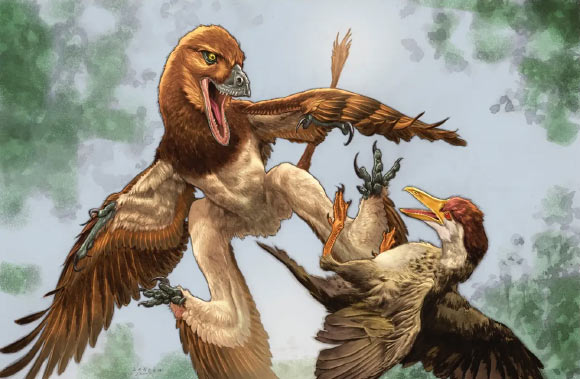
Jian changmaensis (à gauche) attaque l'oiseau primitif Gansus yumenensis (à droite) dans ce qui est aujourd'hui le bassin de Changma, dans le nord-ouest de la Chine, il y a environ 120 millions d'années.

Jian changmaensis (à gauche) attaque l'oiseau primitif Gansus yumenensis (à droite) dans ce qui est aujourd'hui le bassin de Changma, dans le nord-ouest de la Chine, il y a environ 120 millions d'années.

bassin Chine Jian oiseau
A photograph of partial specimen American Museum of Natural History (AMNH) 22555, posterior dorsal vertebrae, and the sacrum and pelvis (both iliae, and right ischium and pubis) of Anhanguera sp. (formerly often assigned to Anhanguera santanae),[1] from the Early Cretaceous Romualdo Formation (former Romualdo Member of the Santana Formation) of NE Brazil in dorsal view.
Taxons Anhanguera

A photograph of partial specimen American Museum of Natural History (AMNH) 22555, posterior dorsal vertebrae, and the sacrum and pelvis (both iliae, and right ischium and pubis) of Anhanguera sp. (formerly often assigned to Anhanguera santanae),[1] from the Early Cretaceous Romualdo Formation (former Romualdo Member of the Santana Formation) of NE Brazil in dorsal view.

bassin musée Brésil Conway +7
Illustration of the pelvis from the theropod dinosaur Siamotyrannus isanensis. Siamotyrannus lived in Thailand, according to scientists about 90 MYA. It has been estimated to a length of 7 meter, and a weight of about 2 tonnes. Scientists has been uncertain if Siamotyrannus is a member of the family Tyrannosauridae or to Sinraptoridae.
Taxons Siamotyrannus

Illustration of the pelvis from the theropod dinosaur Siamotyrannus isanensis. Siamotyrannus lived in Thailand, according to scientists about 90 MYA. It has been estimated to a length of 7 meter, and a weight of about 2 tonnes. Scientists has been uncertain if Siamotyrannus is a member of the family Tyrannosauridae or to Sinraptoridae.

bassin Thaïlande Dinosauria Siamotyrannus +2
Holotype of Jaculinykus yaruui gen. et sp. nov. (MPC-D 100/209). (A) Photograph of the specimen. (B) Explanatory drawing of (A). Highlighted areas refer to the indication of the skeletal elements; skull in green, tail in grey, pectoral girdle and forelimbs in red, pelvis and hind limbs in purple. (C) Reconstruction of Jaculinykus yaruui gen. et sp. nov. Grey areas are missing parts.
Taxons Jaculinykus

Holotype of Jaculinykus yaruui gen. et sp. nov. (MPC-D 100/209). (A) Photograph of the specimen. (B) Explanatory drawing of (A). Highlighted areas refer to the indication of the skeletal elements; skull in green, tail in grey, pectoral girdle and forelimbs in red, pelvis and hind limbs in purple. (C) Reconstruction of Jaculinykus yaruui gen. et sp. nov. Grey areas are missing parts.

membre bassin dessin holotype +3
Figure 1. Holotype NHMUK PV R 37591 pelvis and vertebrae of P. milnerae gen. et sp. nov. in (a) left lateral view and (b) right lateral view. atr, antitrochanter; bf, brevis fossa; bfr, brevis fossa rim; bs, brevis shelf; dv, dorsal vertebra; iss, ischial shaft; nc, neural canal; no, notch; obf, obturator foramen; poap, postacetabular process; prap, preacetabular process; puf, pubic fenestra; pus, pubic shaft; ras, rib attachment scar; ri, rim; sac, supra-acetabular crest; sv, sacral vertebra.
Taxons Pendraig

Figure 1. Holotype NHMUK PV R 37591 pelvis and vertebrae of P. milnerae gen. et sp. nov. in (a) left lateral view and (b) right lateral view. atr, antitrochanter; bf, brevis fossa; bfr, brevis fossa rim; bs, brevis shelf; dv, dorsal vertebra; iss, ischial shaft; nc, neural canal; no, notch; obf, obturator foramen; poap, postacetabular process; prap, preacetabular process; puf, pubic fenestra; pus, pubic shaft; ras, rib attachment scar; ri, rim; sac, supra-acetabular crest; sv, sacral vertebra.

crête bassin vertèbre holotype +1
The holotype skeleton of Kamuysaurus japonicus gen. et sp. nov. (b) Reconstructed skeleton, showing recovered elements. Selected postcranial elements: cervical vertebrae (atlas, axis, and fourth and twelfth cervicals) in left lateral view (c), dorsal vertebrae (first, seventh, and sixteenth dorsals) in left lateral view (d), caudal vertebrae (anterior, middle, and posterior caudals) in left lateral view (e), left scapula (f) and coracoid (g) in lateral view, right sternum in ventral view (h), left humerus in anterior view (i), right ulna and radius in medial view (j), right manus in dorsal view (k), right pelvis in lateral view (l), right femur in anterior view (m), right tibia in anterior view (n), right fibula in lateral view (o), right astragalus and calcaneum, articulated positioned with tibia (p), and right pes in dorsal view (q). All scales are 10 cm except 1 m scale for (b). Abbreviations; ac, acromion process; ast, astragalus; cal, calcaneum; dpc, deltopectoral crest; fi, fibula; icg, intercondylar groove; il, ilium; is, ischium; ltr, lesser trochanter; mc2, metacarpal II; mc5, metacarpal V; mt2, metatarsal II; mt4, metatarsal IV; nc, neurocentrum; od, odontoid; olp, olecranon process; pc, pleurocentrum; pu, pubis; ra, radius; ti, tibia; ul, ulna; vp, ventral process.
Taxons Kamuysaurus

The holotype skeleton of Kamuysaurus japonicus gen. et sp. nov. (b) Reconstructed skeleton, showing recovered elements. Selected postcranial elements: cervical vertebrae (atlas, axis, and fourth and twelfth cervicals) in left lateral view (c), dorsal vertebrae (first, seventh, and sixteenth dorsals) in left lateral view (d), caudal vertebrae (anterior, middle, and posterior caudals) in left lateral view (e), left scapula (f) and coracoid (g) in lateral view, right sternum in ventral view (h), left humerus in anterior view (i), right ulna and radius in medial view (j), right manus in dorsal view (k), right pelvis in lateral view (l), right femur in anterior view (m), right tibia in anterior view (n), right fibula in lateral view (o), right astragalus and calcaneum, articulated positioned with tibia (p), and right pes in dorsal view (q). All scales are 10 cm except 1 m scale for (b). Abbreviations; ac, acromion process; ast, astragalus; cal, calcaneum; dpc, deltopectoral crest; fi, fibula; icg, intercondylar groove; il, ilium; is, ischium; ltr, lesser trochanter; mc2, metacarpal II; mc5, metacarpal V; mt2, metatarsal II; mt4, metatarsal IV; nc, neurocentrum; od, odontoid; olp, olecranon process; pc, pleurocentrum; pu, pubis; ra, radius; ti, tibia; ul, ulna; vp, ventral process.

crête humérus bassin écaille +3
Juvenile Gorgosaurus TMP 2009.12.14 preserving stomach contents. Photographs of specimen in (A) right lateral view and (B) left anterolateral view. (C) Interpretive illustration of specimen in right lateral view. Skeleton consists of a nearly complete skull, the left side of the body and limbs, and a nearly complete pelvis. Red rectangle delineates location of stomach contents. (D) Histological photomicrograph of tibia showing the presence of five lines of arrested growths and two annuli (marked by asterisks), indicating that the individual was between 5 and 7 years old. Scale bars, 50 cm (A) to (C) and 1 mm (D).

Juvenile Gorgosaurus TMP 2009.12.14 preserving stomach contents. Photographs of specimen in (A) right lateral view and (B) left anterolateral view. (C) Interpretive illustration of specimen in right lateral view. Skeleton consists of a nearly complete skull, the left side of the body and limbs, and a nearly complete pelvis. Red rectangle delineates location of stomach contents. (D) Histological photomicrograph of tibia showing the presence of five lines of arrested growths and two annuli (marked by asterisks), indicating that the individual was between 5 and 7 years old. Scale bars, 50 cm (A) to (C) and 1 mm (D).

membre bassin écaille croissance +6
Eopteranodon lii holotype (BPV 078).

(A) Counterpart; (B) main part. (C and D) Respective schematic drawings. Abbreviations: cv, cervical vertebra; co, coracoid; d1–d4, digits 1–4; fe, femur; fi, fibula; h, humerus; j, jugal; mand, mandible; mc, metacarpal; pmc, premaxillary crest; pe, pelvis; ph, phalanx; ti, tibia; ul, ulna; rad, radius. Scale bars: C, 50 mm; D, 10 mm.
Taxons Eopteranodon

Eopteranodon lii holotype (BPV 078). (A) Counterpart; (B) main part. (C and D) Respective schematic drawings. Abbreviations: cv, cervical vertebra; co, coracoid; d1–d4, digits 1–4; fe, femur; fi, fibula; h, humerus; j, jugal; mand, mandible; mc, metacarpal; pmc, premaxillary crest; pe, pelvis; ph, phalanx; ti, tibia; ul, ulna; rad, radius. Scale bars: C, 50 mm; D, 10 mm.

crête humérus bassin écaille +4
Pelvis (fused ilia and pubes) of UALVP 48778, holotype of Hesperonychus elizabethae, from the late Campanian Dinosaur Park Formation of Alberta, Canada. Fossil collected by Dr. Elizabeth Nicholls. Prepared by Clive Coy. Digital photography by Nick Longrich. Additional digital editing by Nick Longrich.
Taxons Hesperonychus

Pelvis (fused ilia and pubes) of UALVP 48778, holotype of Hesperonychus elizabethae, from the late Campanian Dinosaur Park Formation of Alberta, Canada. Fossil collected by Dr. Elizabeth Nicholls. Prepared by Clive Coy. Digital photography by Nick Longrich. Additional digital editing by Nick Longrich.

bassin Canada Dinosaur Park Campanien +6
Pelvis of Barilium dawsoni.
Taxons Barilium

Pelvis of Barilium dawsoni.

bassin Barilium

Actualités

Fungi Bloomed Twice around End-Cretaceous Mass Extinction
Les champignons ont fleuri deux fois autour de l'extinction massive de la fin du Crétacé
bassin Denver Crétacé Dinosauria extinction
En étudiant les microfossiles fongiques dans des échantillons de roches vieilles de 66 millions d'années du bassin de Denver, au Colorado, les microbiologistes de l'Université Johns Hopkins ont confirmé que l'impact de l'astéroïde tueur de dinosaures a déclenché une invasion fongique mondiale et a découvert une deuxième crise écologique, jusqu'alors inconnue, juste avant elle. L'article Les champignons ont fleuri deux fois autour de l'extinction massive de la fin du Crétacé est apparu en premier sur Sci.News : Breaking Science News.
28/05/2026 sci-news ⚙ Traduction automatique
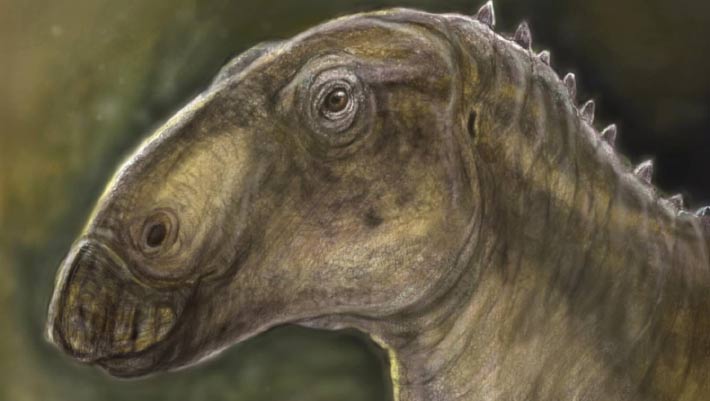
Des os de dinosaures découverts presque les uns sur les autres en Transylvanie
os bassin Roumanie fossile Dinosauria Titanosauria squelette
Des scientifiques explorant le bassin de Hațeg en Roumanie ont découvert l’un des sites de fossiles de dinosaures les plus denses jamais découverts, avec des os presque les uns sur les autres. Le site K2 préserve des milliers de vestiges d’un lac préhistorique alimenté en crue qui agissait comme un piège osseux naturel il y a 72 millions d’années. Aux côtés de dinosaures locaux communs, les chercheurs ont découvert les premiers squelettes de titanosaures bien conservés jamais découverts dans la région. Le site révèle comment les anciens écosystèmes européens de dinosaures se sont formés et ont évolué au cours de cette période.
23/12/2025 sciencedaily ⚙ Traduction automatique