fossile

Nature du spécimen

371 image(s) · 183 Actualités

Galerie d'images

A hypothetical life restoration of Ampelosaurus atacis

• Ampelosaurus is known from hundreds of fossil specimens which show most of the dinosaur's osteological details, however, there are few articulated remains or reconstructions of the material so its overall proportions and life appearance are uncertain.
• Ampelosaurus is known to have supported osteoderms, only four are currently known. The number of these osteoderms that an individual Ampelosaurus would have supported in life and their and position on the body is not currently known. It's thought that due to the rarity of titanosaur osteoderms that they would be quite sparse on the body. The position and layout of the osteoderms has been loosely based on this interpretation, which is based on the work of Vidal et al 2015. [1]
Taxons Dashanpusaurus

A hypothetical life restoration of Ampelosaurus atacis • Ampelosaurus is known from hundreds of fossil specimens which show most of the dinosaur's osteological details, however, there are few articulated remains or reconstructions of the material so its overall proportions and life appearance are uncertain. • Ampelosaurus is known to have supported osteoderms, only four are currently known. The number of these osteoderms that an individual Ampelosaurus would have supported in life and their and position on the body is not currently known. It's thought that due to the rarity of titanosaur osteoderms that they would be quite sparse on the body. The position and layout of the osteoderms has been loosely based on this interpretation, which is based on the work of Vidal et al 2015. [1]

fossile spécimen Ampelosaurus Bagualosauria +6
Lower Triassic fossil footprint (ichnite) of the ichnogenus Chirotherium, probably caused by an early archosaur, and first discovered 1833 in Hildburghausen (Thuringia, Germany). This specimen, however, ist from the Helsby Sandstone of the Storeton Quarry near Liverpool. Its species name is Chirotherium storetonense.[1]
Taxons Abelichnus

Lower Triassic fossil footprint (ichnite) of the ichnogenus Chirotherium, probably caused by an early archosaur, and first discovered 1833 in Hildburghausen (Thuringia, Germany). This specimen, however, ist from the Helsby Sandstone of the Storeton Quarry near Liverpool. Its species name is Chirotherium storetonense.[1]

Allemagne Trias fossile spécimen +9
Lower Triassic fossil footprint (ichnite) of the ichnogenus Chirotherium, probably caused by an early archosaur, and first discovered 1833 in Hildburghausen (Thuringia, Germany). This specimen, however, ist from the Helsby Sandstone of the Storeton Quarry near Liverpool. Its species name is Chirotherium storetonense.[1]
Taxons Anticheiropus

Lower Triassic fossil footprint (ichnite) of the ichnogenus Chirotherium, probably caused by an early archosaur, and first discovered 1833 in Hildburghausen (Thuringia, Germany). This specimen, however, ist from the Helsby Sandstone of the Storeton Quarry near Liverpool. Its species name is Chirotherium storetonense.[1]

Allemagne Trias fossile spécimen +9
Lower Triassic fossil footprint (ichnite) of the ichnogenus Chirotherium, probably caused by an early archosaur, and first discovered 1833 in Hildburghausen (Thuringia, Germany). This specimen, however, ist from the Helsby Sandstone of the Storeton Quarry near Liverpool. Its species name is Chirotherium storetonense.[1]
Taxons Argoides

Lower Triassic fossil footprint (ichnite) of the ichnogenus Chirotherium, probably caused by an early archosaur, and first discovered 1833 in Hildburghausen (Thuringia, Germany). This specimen, however, ist from the Helsby Sandstone of the Storeton Quarry near Liverpool. Its species name is Chirotherium storetonense.[1]

Allemagne Trias fossile spécimen +9
Lower Triassic fossil footprint (ichnite) of the ichnogenus Chirotherium, probably caused by an early archosaur, and first discovered 1833 in Hildburghausen (Thuringia, Germany). This specimen, however, ist from the Helsby Sandstone of the Storeton Quarry near Liverpool. Its species name is Chirotherium storetonense.[1]
Taxons Delatorrichnus

Lower Triassic fossil footprint (ichnite) of the ichnogenus Chirotherium, probably caused by an early archosaur, and first discovered 1833 in Hildburghausen (Thuringia, Germany). This specimen, however, ist from the Helsby Sandstone of the Storeton Quarry near Liverpool. Its species name is Chirotherium storetonense.[1]

Allemagne Trias fossile spécimen +9
Lower Triassic fossil footprint (ichnite) of the ichnogenus Chirotherium, probably caused by an early archosaur, and first discovered 1833 in Hildburghausen (Thuringia, Germany). This specimen, however, ist from the Helsby Sandstone of the Storeton Quarry near Liverpool. Its species name is Chirotherium storetonense.[1]
Taxons Dinehichnus

Lower Triassic fossil footprint (ichnite) of the ichnogenus Chirotherium, probably caused by an early archosaur, and first discovered 1833 in Hildburghausen (Thuringia, Germany). This specimen, however, ist from the Helsby Sandstone of the Storeton Quarry near Liverpool. Its species name is Chirotherium storetonense.[1]

Allemagne Trias fossile spécimen +9
Lower Triassic fossil footprint (ichnite) of the ichnogenus Chirotherium, probably caused by an early archosaur, and first discovered 1833 in Hildburghausen (Thuringia, Germany). This specimen, however, ist from the Helsby Sandstone of the Storeton Quarry near Liverpool. Its species name is Chirotherium storetonense.[1]
Taxons Dromaeosauripus

Lower Triassic fossil footprint (ichnite) of the ichnogenus Chirotherium, probably caused by an early archosaur, and first discovered 1833 in Hildburghausen (Thuringia, Germany). This specimen, however, ist from the Helsby Sandstone of the Storeton Quarry near Liverpool. Its species name is Chirotherium storetonense.[1]

Allemagne Trias fossile spécimen +9
Lower Triassic fossil footprint (ichnite) of the ichnogenus Chirotherium, probably caused by an early archosaur, and first discovered 1833 in Hildburghausen (Thuringia, Germany). This specimen, however, ist from the Helsby Sandstone of the Storeton Quarry near Liverpool. Its species name is Chirotherium storetonense.[1]
Taxons Eutynichnium

Lower Triassic fossil footprint (ichnite) of the ichnogenus Chirotherium, probably caused by an early archosaur, and first discovered 1833 in Hildburghausen (Thuringia, Germany). This specimen, however, ist from the Helsby Sandstone of the Storeton Quarry near Liverpool. Its species name is Chirotherium storetonense.[1]

Allemagne Trias fossile spécimen +9
fossil Europasaurus, Aathal Dinosaur Museum.

fossil Europasaurus, Aathal Dinosaur Museum.

musée fossile Dinosauria Europasaurus
Left humerus of Haestasaurus becklesii (NHMUK R1870). A, anterior view; B, posterior view; Abbreviations: af, anconeal fossa; dp, deltopectoral crest; hh, humeral head; ltf, lateral triceps fossa; mtf, medial triceps fossa.

This fossil was found in strata of the Hastings Beds (late Berriasian—Valanginian in age) on the coast near Hastings, East Sussex, England.

Left humerus of Haestasaurus becklesii (NHMUK R1870). A, anterior view; B, posterior view; Abbreviations: af, anconeal fossa; dp, deltopectoral crest; hh, humeral head; ltf, lateral triceps fossa; mtf, medial triceps fossa. This fossil was found in strata of the Hastings Beds (late Berriasian—Valanginian in age) on the coast near Hastings, East Sussex, England.

crête humérus Berriasien Valanginien +2
Holotype fossils of Glacialisaurus (PR 1823); metatarsals, tibia, fibula, ankle bones

Holotype fossils of Glacialisaurus (PR 1823); metatarsals, tibia, fibula, ankle bones

os fossile holotype Glacialisaurus
Fossil Panphagia

Fossil Panphagia

fossile Panphagia
Fossil of Sthenarosaurus, an extinct reptile - Took the picture at Museum of Paleontology, Tuebingen

Fossil of Sthenarosaurus, an extinct reptile - Took the picture at Museum of Paleontology, Tuebingen

musée fossile Sthenarosaurus
fossil of seeleyosaurus

fossil of seeleyosaurus

fossile Seeleyosaurus
Fossil of Peteinosaurus zambellii (paratype MCSNB 3359), an extinct reptile

Fossil of Peteinosaurus zambellii (paratype MCSNB 3359), an extinct reptile

fossile Peteinosaurus
Fossil at the Museo Argentino de Ciencias Naturales in Caballito, Buenos Aires, Argentina.

Fossil at the Museo Argentino de Ciencias Naturales in Caballito, Buenos Aires, Argentina.

Argentine fossile Pterodaustro
1 2 3 4 5 6 7 8 9 10 11 12 13 14 15 16 17 18 19 20 21 22 23 24

Actualités

Une nouvelle espèce de salamandre géante découverte dans des fossiles vieux de 3,5 millions d'années
Japon fossile découverte nouvelle espèce
Les fossiles découverts au Japon il y a plus de deux décennies ont finalement été identifiés comme un nouveau genre et une nouvelle espèce de salamandre géante. Limnospondylus ajimuensis vivait il y a environ 3,5 millions d'années dans une région de Kyushu plus chaude et plus humide et aurait pu atteindre 1,1 mètre de long. Sa découverte laisse entendre que de nombreuses autres salamandres géantes inconnues pourraient se cacher parmi des fossiles précédemment mal classés.
24/07/2026 sciencedaily-paleo ⚙ Traduction automatique
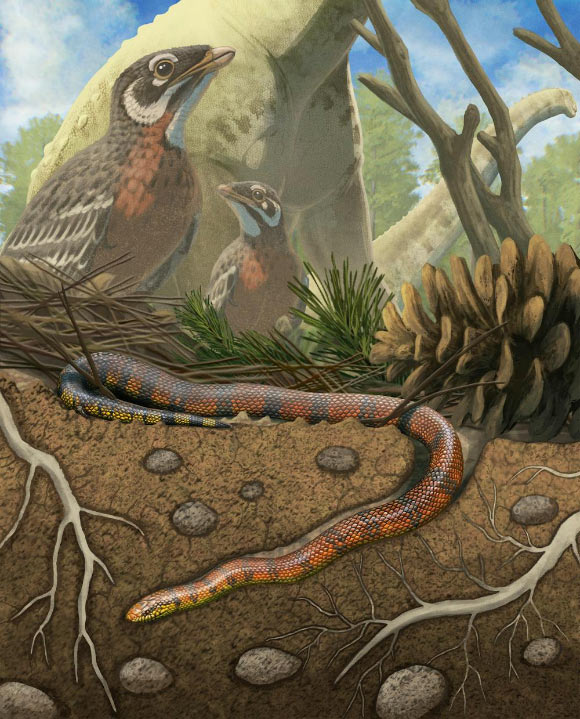
Did Early Snakes Burrow, Swim or Crawl? 80‑Million‑Year‑Old Fossil Suggests: All Three
Les premiers serpents ont-ils creusé, nagé ou rampé ? Des fossiles vieux de 80 millions d’années suggèrent : les trois
Brésil fossile
Les paléontologues ont mis au jour un serpent fossile remarquablement préservé au Brésil qui remodèle les idées sur la façon dont vivaient les premiers serpents et complique le débat de longue date sur la question de savoir si leurs ancêtres ont creusé sous terre, nagé dans la mer ou rampé à la surface. L'article Les premiers serpents ont-ils creusé, nagé ou rampé ? Suggestions de fossiles vieux de 80 millions d’années : tous les trois sont apparus en premier sur Sci.News : Breaking Science News.
24/07/2026 sci-news ⚙ Traduction automatique
Des fougères anciennes ont transformé l’Europe du Trias en un enfer de forêt
Trias fossile extinction
Les anciennes savanes de fougères ont peut-être transformé certaines parties de l’Europe en un enfer sujet aux incendies de forêt lors de l’extinction massive de la fin du Trias. De nouvelles preuves fossiles suggèrent que les fougères ont repoussé à plusieurs reprises après les incendies, créant ainsi un nouveau combustible qui a contribué à prolonger la dévastation.
22/07/2026 sciencedaily ⚙ Traduction automatique
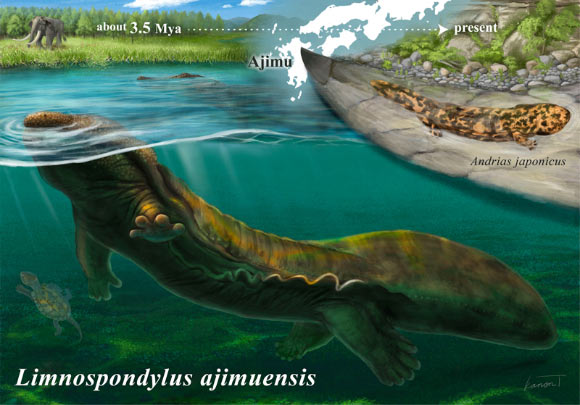
3.5-Million-Year-Old Fossil from Japan Reveals Lost Lineage of Giant Salamanders
Un fossile vieux de 3,5 millions d'années provenant du Japon révèle la lignée perdue de salamandres géantes
vertèbre Japon fossile nouvelle espèce
Un nouveau genre et une nouvelle espèce de salamandre cryptobranchidée qui vivait dans les lacs du Japon il y a environ 3,5 millions d’années ont été identifiés à partir de trois vertèbres fossiles, comblant ainsi une lacune majeure dans les archives fossiles de l’une des plus anciennes lignées d’amphibiens au monde. L'article Un fossile vieux de 3,5 millions d'années en provenance du Japon révèle une lignée perdue de salamandres géantes est apparu en premier sur Sci.News : Breaking Science News.
21/07/2026 sci-news ⚙ Traduction automatique
La première cloaque synapside révélée par un fossile vieux de 294 millions d'années
Allemagne fossile empreintes découverte évolution mammifères
Une trace fossile remarquable provenant d’Allemagne a fourni la plus ancienne preuve connue d’un cloaque dans la lignée des mammifères. Cette découverte aide les paléontologues à mieux comprendre l’évolution des premiers vertébrés terrestres et comble une lacune importante dans les archives fossiles. Le fossile provient de la célèbre localité fossilifère de Bromacker en Thuringe (Allemagne). Parmi les empreintes et
20/07/2026 everythingdinosaur ⚙ Traduction automatique
1 2 3 4 5 6 7 8 9 10 11 12 13 14 15 16 17 18 19 20 21 22 23 24 25 26 27 28 29 30 31 32 33 34 35 36 37